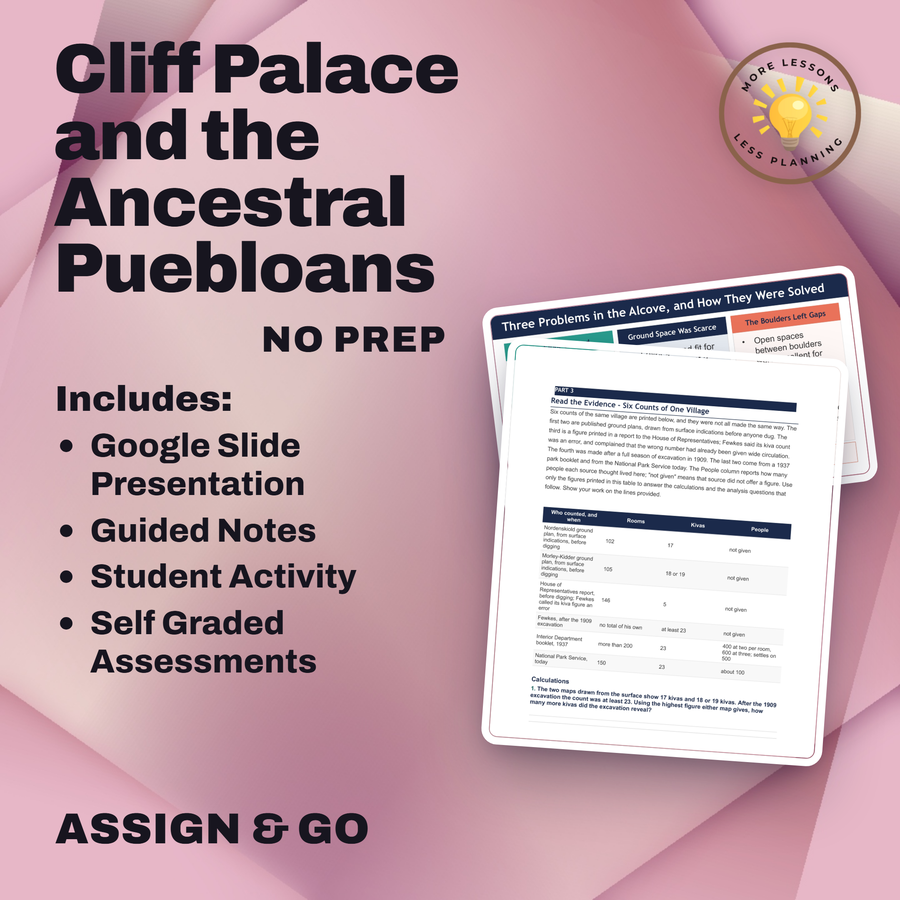
Cliff Palace and the Ancestral Puebloans
Quality reviewed September 2026
- Grades
- Grades 9-12
- Time
- About two 50-minute class periods
- Includes
- 11 ready-to-teach files
- Format
- Word (.docx) · PowerPoint (.pptx)
- Slide deck
- Guided notes
- Guided notes teacher key
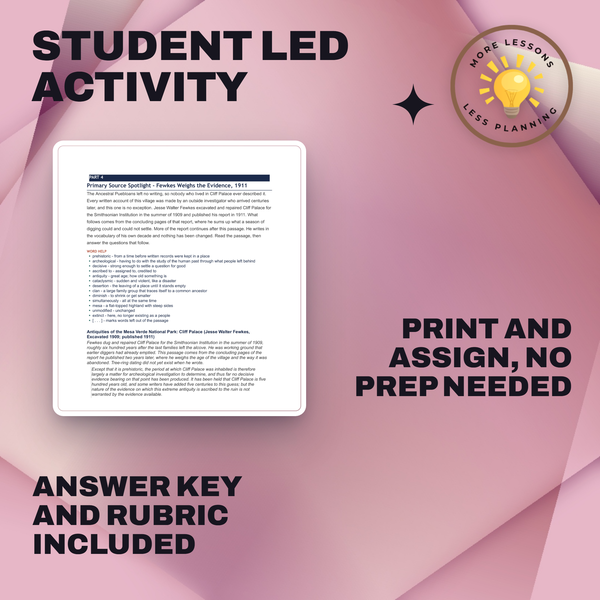
- Activity + answer key
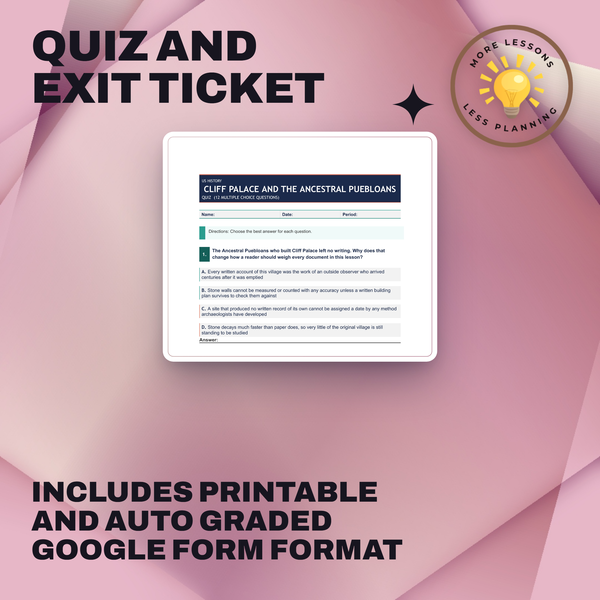
- Quiz + answer key
- Exit ticket + answer key
- Teacher guide
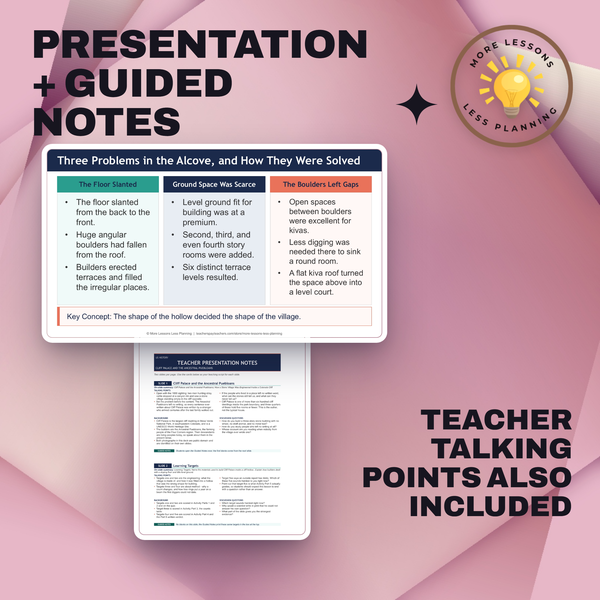
- Teacher presentation notes
What students do
- Compare five different counts of Cliff Palace's rooms and kivas, from Nordenskiold's 1891 map to the park service's modern total
- Read Jesse Walter Fewkes's 1911 excavation report and judge what evidence actually supports his conclusions
- Trace tree-ring dates on seven Mesa Verde cliff dwellings against the drought that began in 1276
- Sort statements about the site into observation and inference before writing a final verdict
What it covers
- How builders solved a sloping, boulder-filled alcove floor with terraces and sunken kivas
- Why the room count for Cliff Palace kept changing across a century of surveys
- How tree-ring dating fixed years for beams the original excavator could only guess at
- Why the village was left, and why its Pueblo and Hopi descendants call that a move, not a disappearance
Learning targets
- Name the materials used to build Cliff Palace inside a cliff hollow.
- Explain how builders dealt with a sloping floor and little level ground.
- Explain why the room counts for Cliff Palace kept changing over time.
- Explain how tree rings dated beams the first diggers could not date.
- Judge what an outside report can and cannot prove about these people.
Peek inside
Cliff Palace stands in a wide hollow worn into rock above a canyon.
Sandstone, mortar, and wooden beams were the three main materials.
Each block was shaped with harder stones from nearby river beds.
Rooms rise two and three stories; one tower rises four stories.
Key Concept: Every block, every beam, and every load of soil had to be carried into the alcove by hand.
Where the Village Stands
High above a floor, Cliff Palace stands inside a wide hollow worn back into the rock.
Builders shaped each sandstone block with stones carried up from nearby river beds.
A tower rises stories at the south end of the village.
1. A crew is rebuilding a fallen section of wall at Cliff Palace. They shape each block by hand, set the blocks in courses, and pack mud into the joints instead of using cement. The building method they are using is called .
Why this matters
Cliff Palace has been counted five separate times since Gustaf Nordenskiold mapped it in 1891, and no two counts agree on how many rooms and kivas are actually there. That disagreement is the real subject before students ever get to the terraces and sunken kivas that let builders work a sloping, boulder filled alcove.
I hold off on Fewkes's 1911 excavation report until students have already wrestled with the counting problem themselves, because then they catch him drawing conclusions his own evidence doesn't fully support. Tree ring dates pinned to the drought that began in 1276 settle questions Fewkes could only guess at, and by the end students stop treating the site's abandonment as a mystery and start calling it what Pueblo and Hopi descendants call it: a move.
From one teacher to another
Five different room counts for Cliff Palace come first, running from Gustaf Nordenskiold's 1891 map all the way to the park service's current total. Students have to explain why counting the same rooms produced five different numbers before I let them near the terraces, sunken kivas, and ash-tempered mortar that actually explain how the village was built. I close on Fewkes's 1911 excavation report, and watching him reach conclusions his own evidence can't fully back up is worth more than a lecture on the engineering ever could be.
Every file in this toolkit
-
Activity (Student)
Five different room counts for Cliff Palace go head to head here, from Nordenskiold's 1891 map to the park service's current total, and the class has to explain why counting the same rooms kept producing different numbers. Works solo, in pairs, or as a station.
-
Activity (Answer Key)
Grading guidance for the five-count comparison lives here, spelling out what separates a defensible reason for the discrepancy from a guess about Nordenskiold's or Fewkes's methods.
-
Exit Ticket (Student)
This one-page check asks students to judge, in under five minutes, what Fewkes's 1911 report actually proves about the people who built and left Cliff Palace, no extra prep period needed.
-
Exit Ticket (Answer Key)
This key marks exactly where Fewkes's 1911 report holds up and where his conclusions outrun his own evidence, so the Cliff Palace exit ticket grades in a few minutes, not a whole prep period.
-
Guided Notes (Student)
Cliff Palace's kivas, terraces, and the sloping alcove floor fill these fill-in-the-blank notes in slide order, so students build their own record of how builders solved a boulder-filled hollow instead of copying it off a screen.
-
Guided Notes (Teacher Key)
Terraces, sunken kivas, and the ash-tempered mortar that held Cliff Palace's masonry together are all filled in here, in the same order the slides present them. Keep it next to the laptop or pass it to a substitute cold.
-
Quiz (Student)
This paper quiz sticks to the sloping alcove floor, the sunken kivas, and how tree rings dated beams the original excavator couldn't, all pulled straight from the notes and slides covered in class.
-
Quiz (Answer Key)
The key walks through each Cliff Palace quiz question, from the sloping alcove floor to how tree-ring dates on seven dwellings line up against the drought that began in 1276, so grading takes one pass.
-
Slides
Five clashing room counts kick things off, then the Cliff Palace deck works through construction, kivas, and tree-ring dating before landing on Fewkes's 1911 report, matching the guided notes' order.
-
Teacher Guide
Expect the room to stall on the five conflicting room counts before Cliff Palace's kivas and terraces make sense, and this guide covers exactly how to pace that and frame Fewkes's 1911 report.
-
Teacher Presentation Notes
These notes walk each Cliff Palace slide, flagging how to introduce five clashing room counts before the terraces and kivas even come up, then how to frame Fewkes's 1911 report once it does.
Download
Where should I send the next one?
Everything here is free and it stays that way. Leave your email and I'll send you the new lessons as they go up. You can unsubscribe from any one of them.
Related resources
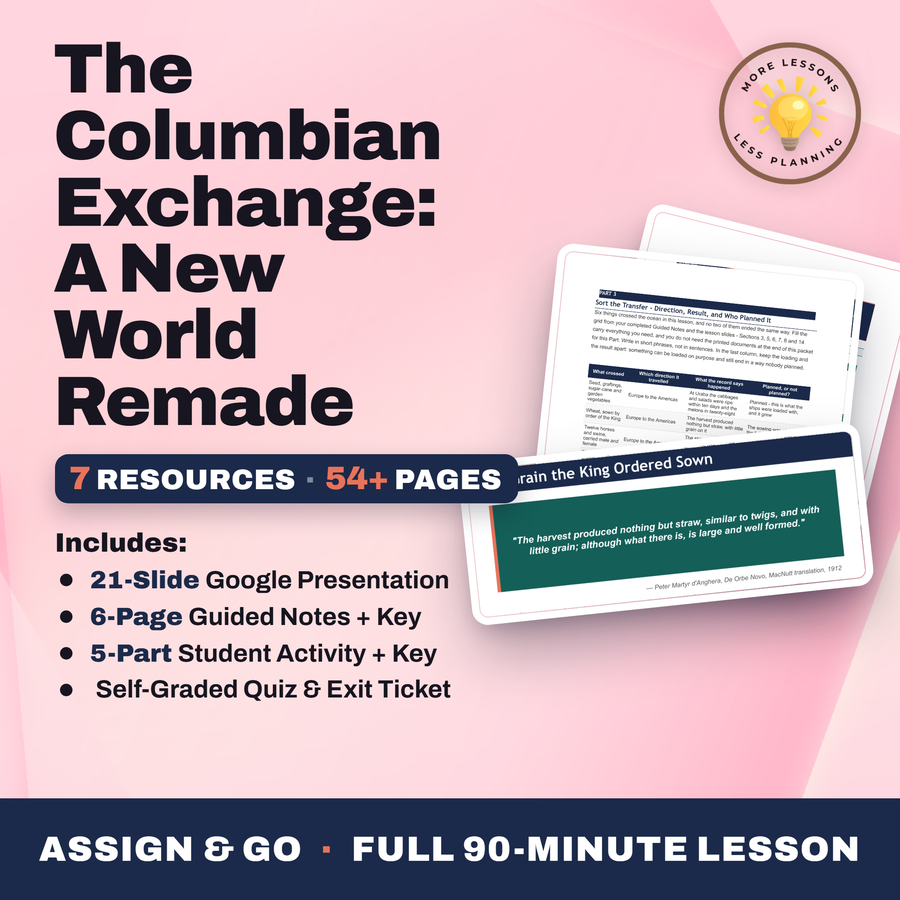
The Columbian Exchange: A New World Remade
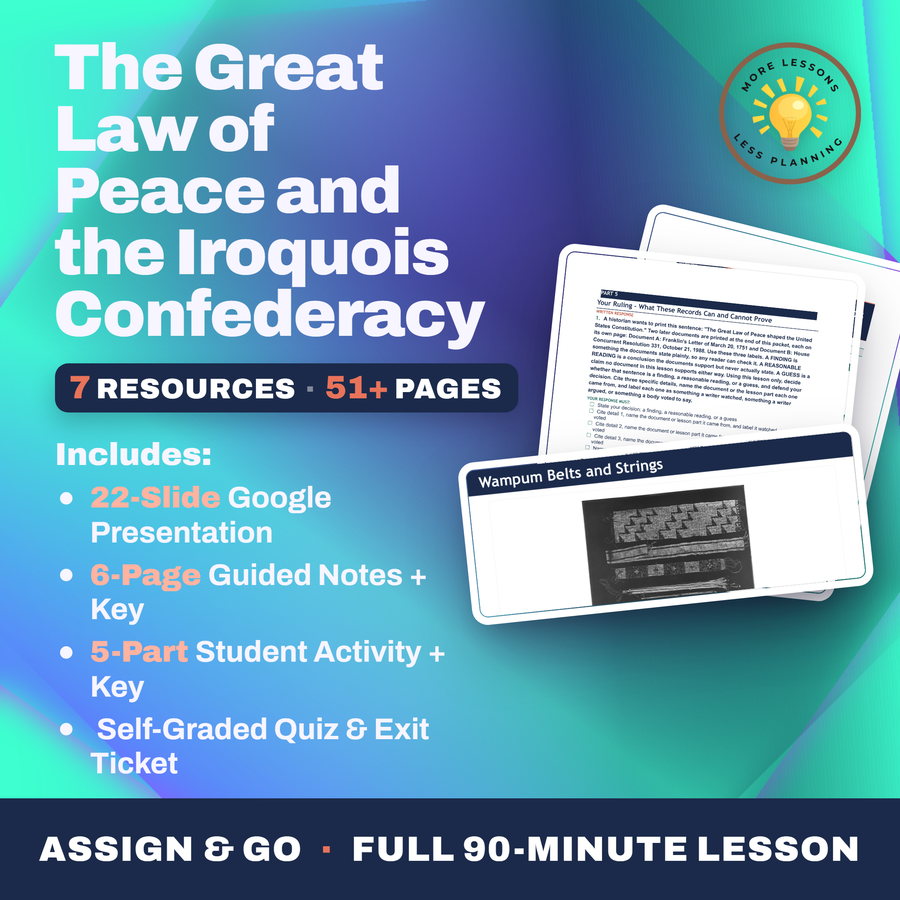
The Great Law of Peace and the Iroquois Confederacy
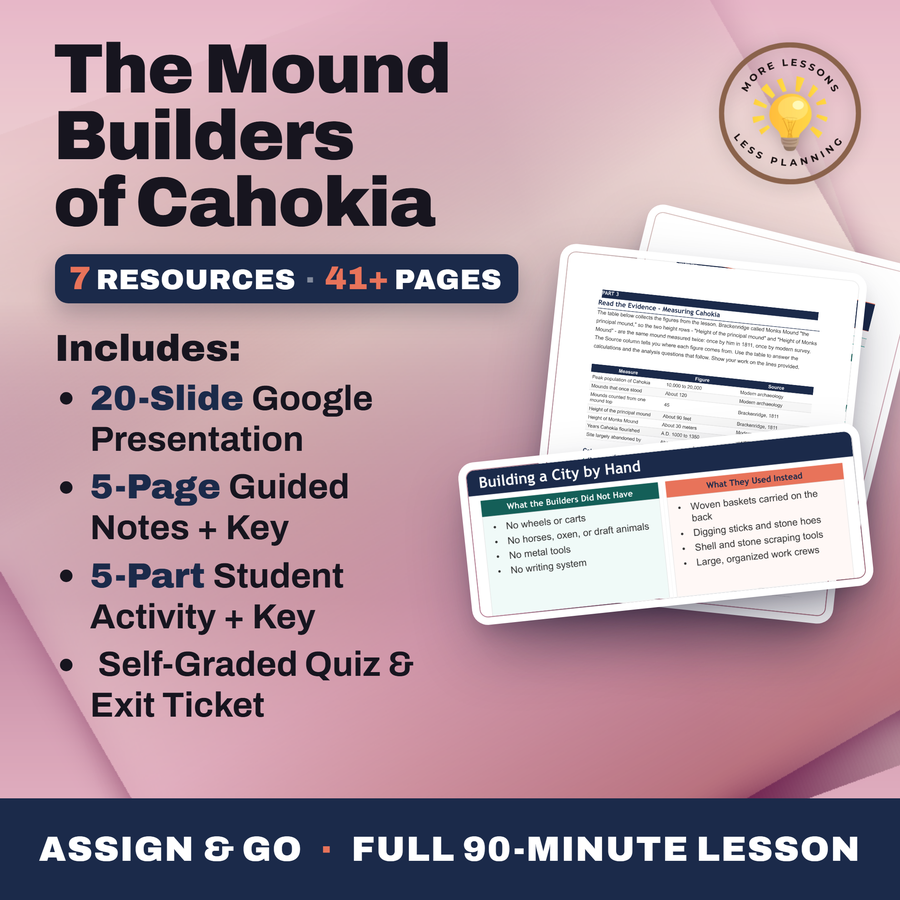
The Mound Builders of Cahokia
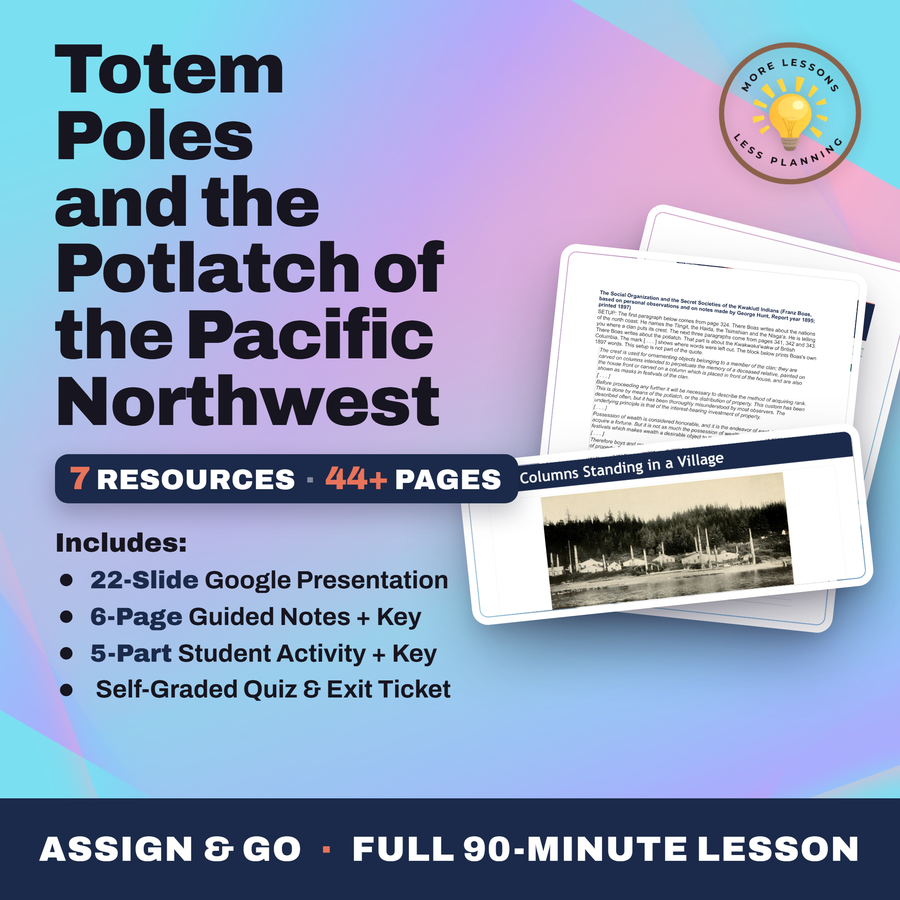
Totem Poles and the Potlatch of the Pacific Northwest
Bound Labor: How Servitude Became Slavery
Franklin's Philadelphia
Every lesson on this site is free to download and use. If one of them saved you a prep period, you can chip in a few bucks toward my three kids' daycare fund. That's genuinely where tips go.