
The Great Law of Peace and the Iroquois Confederacy
Quality reviewed September 2026
- Grades
- Grades 9-12
- Time
- About two 50-minute class periods
- Includes
- 11 ready-to-teach files
- Format
- Word (.docx) · PowerPoint (.pptx)
- Slide deck
- Guided notes
- Guided notes teacher key
- Activity + answer key
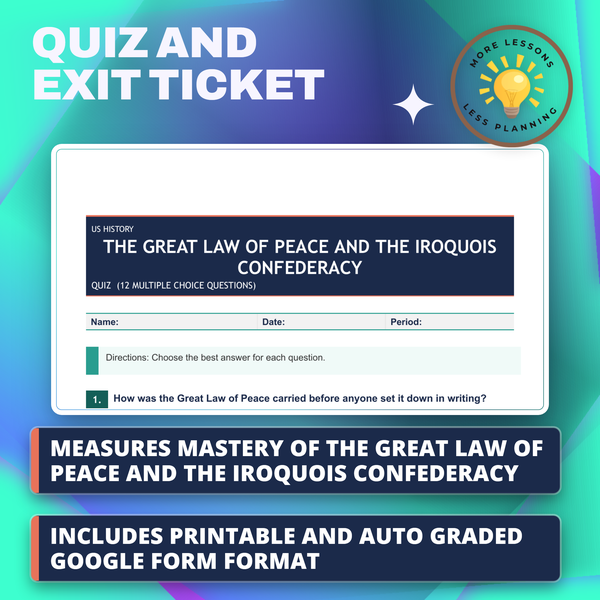
- Quiz + answer key
- Exit ticket + answer key
- Teacher guide
- Teacher presentation notes
What students do
- Trace how a Confederate Council question moves from the Mohawk and Seneca Lords to a Firekeepers' final ruling
- Compare three records of the same government - the 1916 printing, Colden's 1727 account, and Canassatego's 1744 speech
- Read part of the actual 1916 printed Great Law and answer sourcing, comprehension, and analysis questions on it
- Rule in writing on whether the Great Law shaped the US Constitution, labeling each cited detail watched, argued, or voted
What it covers
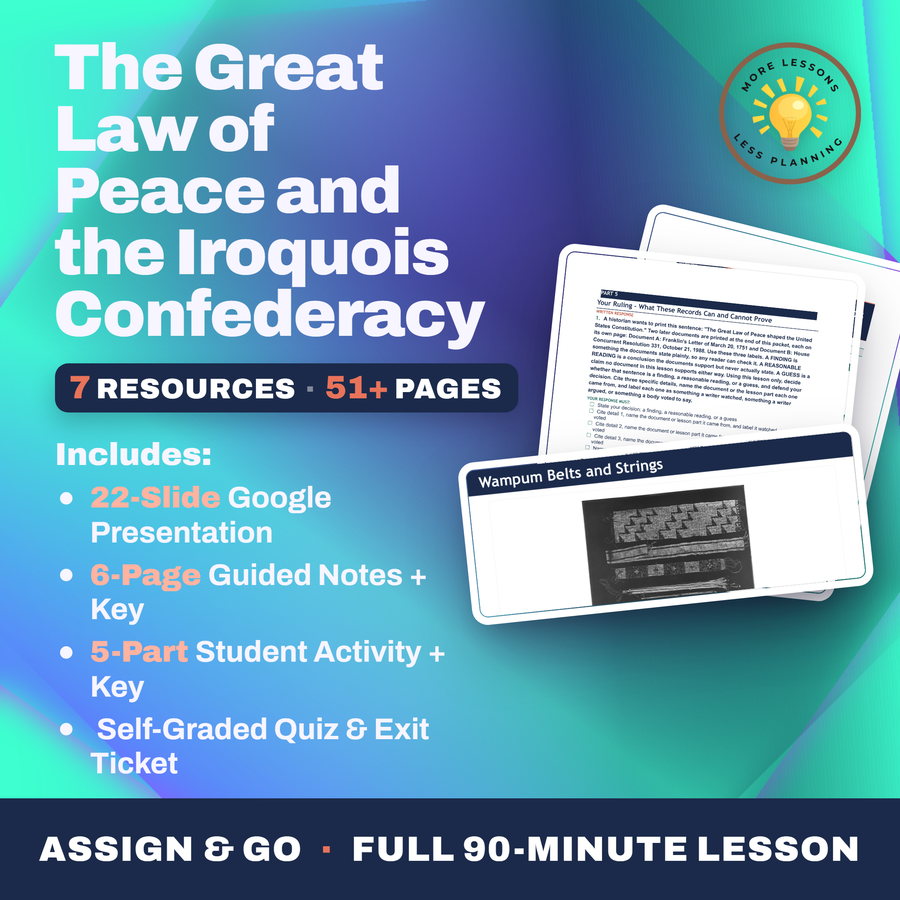
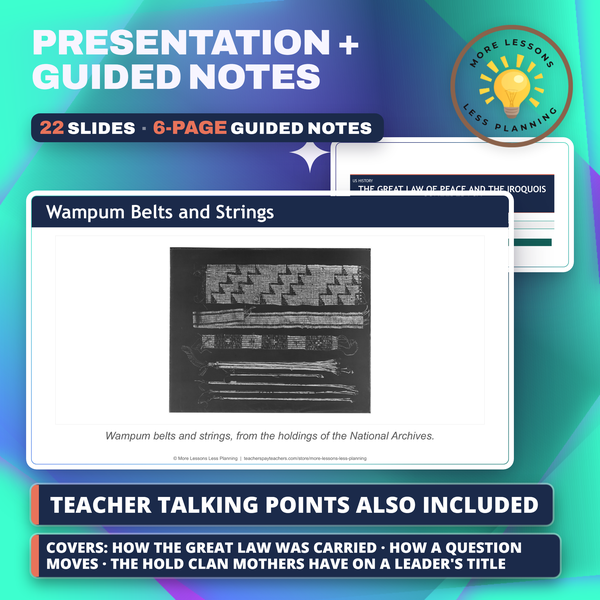
- How the Great Law was carried for centuries by trained sachems and wampum belts before it was ever written down
- Who set the 1916 printing down - Seth Newhouse, Albert Cusick, and Arthur C. Parker - and why that provenance matters
- The law's own words on clan mothers, female lineal descent, and how a title gets taken from an erring Lord
- Franklin's 1751 letter and House Concurrent Resolution 331, and what each one can and cannot prove about the Constitution
Learning targets
- Explain how the Great Law was carried for centuries with no writing.
- Describe how a question moves through the Confederate Council.
- Explain the hold clan mothers have on a leader's title.
- Name who set a record down, how long after, and from what standpoint.
- Weigh the evidence for and against the claim about the Constitution.
Peek inside
The Great Law of Peace is the constitution of the Iroquois Confederacy.
For many generations the Iroquois did not put their code in written form.
Trained sachems made it their business to learn it and hand it on.
Belts and strings of shell beads were made so each law could be recalled.
Key Concept: A law carried by trained memory is a record, not a hole in the evidence.
The Law Before Print
Trained sachems made it their to learn the law and hand it on.
The Iroquois did not put their in written form for many generations.
Belts and strings of shell beads were made so each law could be when it was needed.
1. A trained reader is handed a belt of shell beads, looks at the pattern, and gives back the wording of one law exactly. The beads worked into that belt are called .
Why this matters
A law that governed nations for centuries lived in memory and belts of wampum long before it ever reached a printed page. Students trace an actual dispute moving through the Confederate Council, from the Mohawk and Seneca Lords to a Firekeepers' ruling, and read the Great Law's own lines on clan mothers and female lineal descent, rules many students don't expect from a government this old.
What earns this lesson its slot is the sourcing work at the end. Franklin's 1751 letter and a 1988 congressional resolution both get used to claim the Great Law shaped the Constitution, and students have to decide whether either document actually proves that or just makes it a reasonable guess. Most walk in assuming a resolution settles it and walk out knowing better.
From one teacher to another
Nobody wrote the Great Law of Peace down when it was made, so before students get to the content I make them sit with how it survived: trained sachems who learned it by heart, and belts and strings of wampum that got read back aloud when a law needed recalling. From there they trace an actual question moving through the Confederate Council, Mohawk and Seneca Lords first, Firekeepers ruling if the two sides can't agree, and read the law's own lines on why titles run through the women's line. The centerpiece is the excerpt from the 1916 printing itself, and I make sure students know exactly whose hands it passed through, Seth Newhouse writing it out, Albert Cusick spending a month correcting it, Arthur C. Parker editing and printing it, because that's what lets them judge it as evidence. The last part is the one I care about most: they read Franklin's 1751 letter, insult and admiration in the same sentence, next to a 1988 congressional resolution, and have to rule for themselves whether either document actually proves the Great Law shaped the Constitution, or just makes it a reasonable guess.
Every file in this toolkit
-
Activity (Student)
A Confederate Council question moves from Mohawk and Seneca Lords to a Firekeepers' ruling in this activity, then students set three records of the same government side by side. Works solo, in pairs, or as a station.
-
Activity (Answer Key)
Both the Council tracing task and the three-record comparison get grading guidance here, showing what counts as a defensible claim about the 1916 printing versus Colden's or Canassatego's account.
-
Exit Ticket (Student)
In the last five minutes of class, students rule in writing on whether Franklin's 1751 letter or the 1988 congressional resolution actually proves the Great Law shaped the Constitution.
-
Exit Ticket (Answer Key)
Answers for the Great Law exit ticket show why Franklin's letter and the 1988 resolution back the claim at different strengths, so a stack of student rulings on the Constitution question grades fast.
-
Guided Notes (Student)
Wampum belts, the Confederate Council, and clan mothers fill these fill-in-the-blank notes in slide order, so students build their own record of how the Great Law moved for centuries with no writing at all.
-
Guided Notes (Teacher Key)
The Confederate Council's steps and the clan mothers' hold on a title are spelled out here in full, following the same order as the slides. Keep it open while you teach, or hand it to a sub who's never taught this lesson.
-
Quiz (Student)
Students answer for the Confederate Council's steps, the clan mothers' authority, and the 1916 printing on this paper quiz, none of it going beyond what the notes and slides taught that period.
-
Quiz (Answer Key)
Each Great Law quiz question gets its answer here, from how a Council question gets decided to why titles run through clan mothers and who carried the 1916 printing to press, question by question.
-
Slides
Students see wampum and oral transmission first, then the Confederate Council and clan mothers, before the deck closes on the 1916 printing and the Constitution question, all in guided notes order.
-
Teacher Guide
Where the Confederate Council's Lords and Firekeepers lose a class, and how to pace the run up to weighing Franklin's letter against the 1988 resolution, are both covered in this guide.
-
Teacher Presentation Notes
Each Great Law slide gets its own speaking notes here, starting with how to introduce wampum and oral memory before the Confederate Council and ending with how to frame the Constitution question.
Download
Where should I send the next one?
Everything here is free and it stays that way. Leave your email and I'll send you the new lessons as they go up. You can unsubscribe from any one of them.
Related resources
Cliff Palace and the Ancestral Puebloans
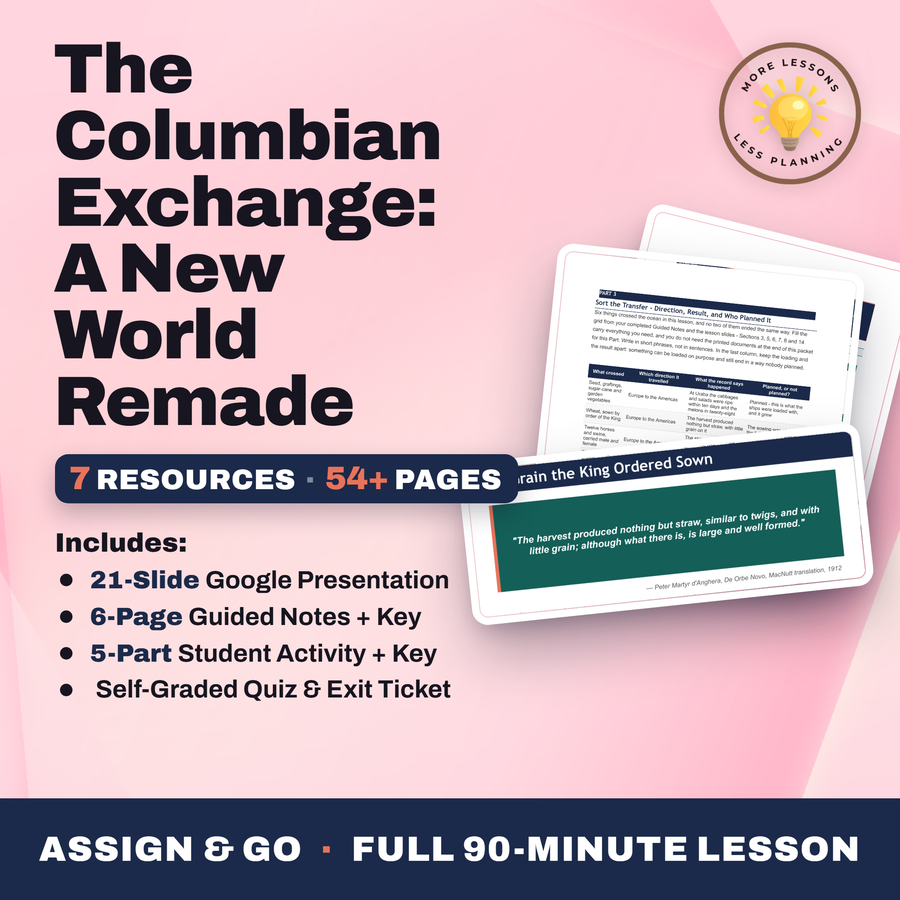
The Columbian Exchange: A New World Remade
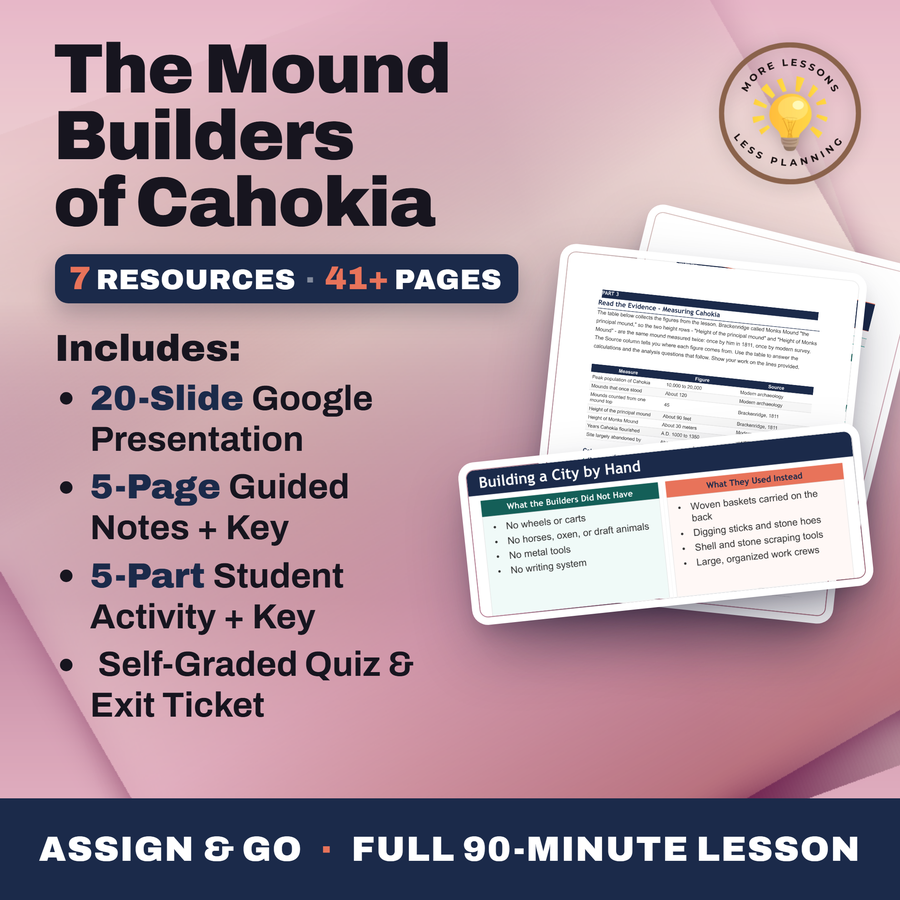
The Mound Builders of Cahokia
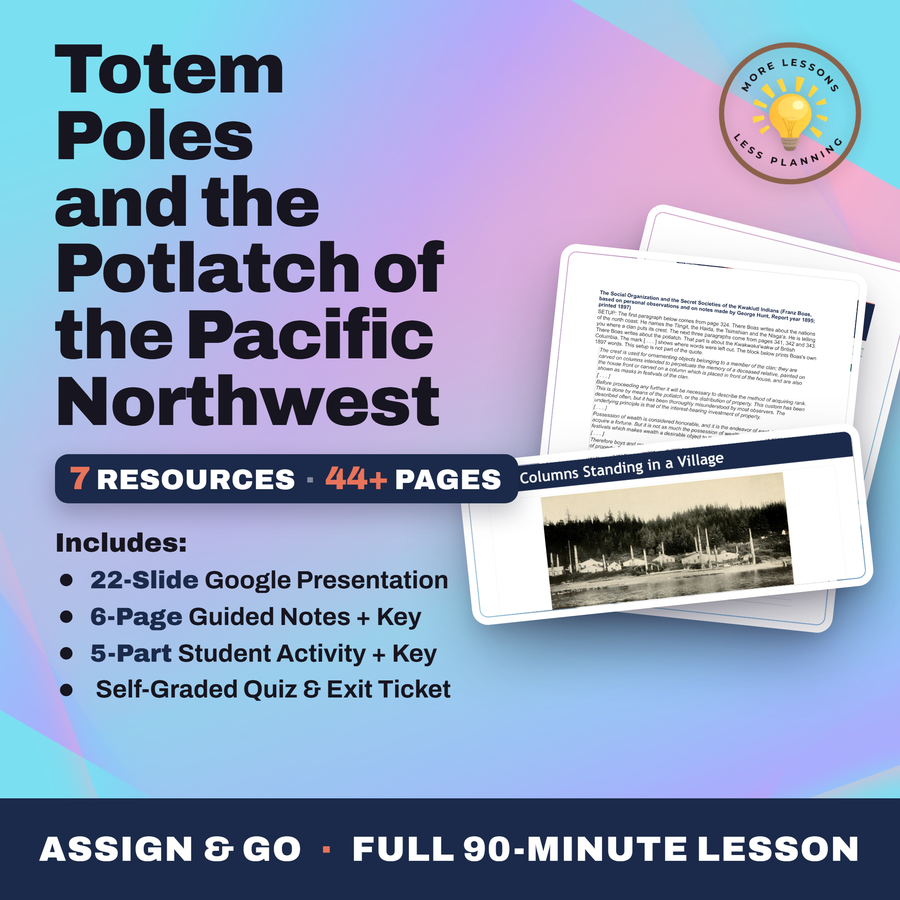
Totem Poles and the Potlatch of the Pacific Northwest
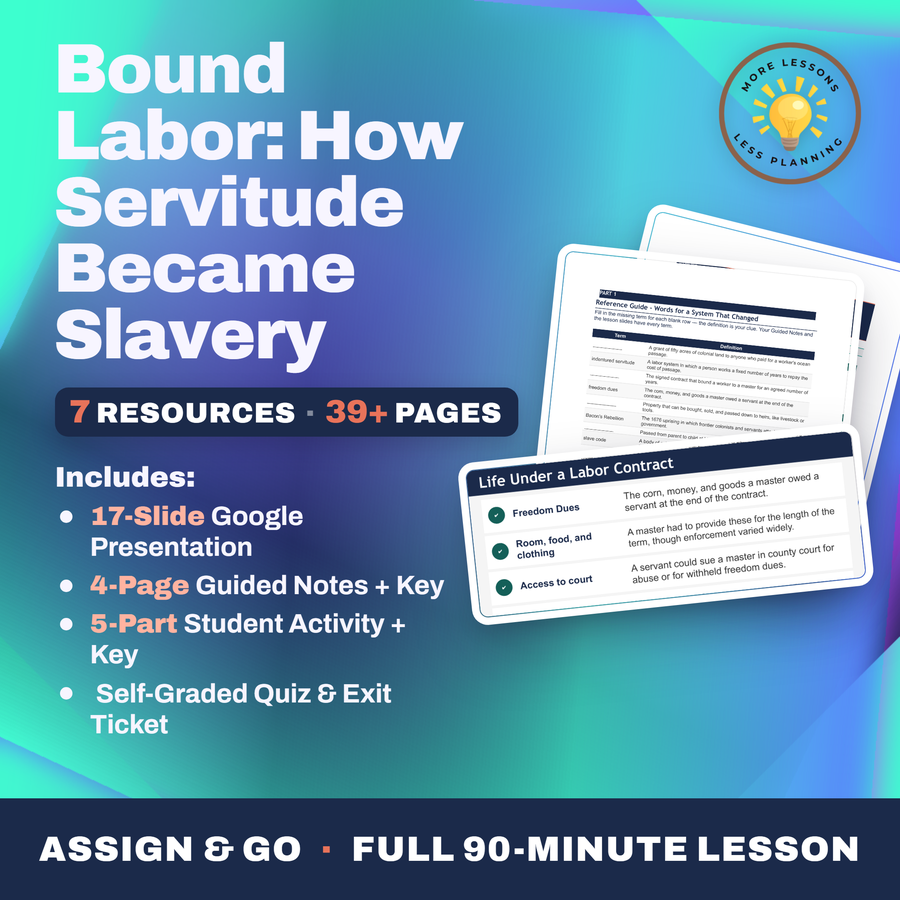
Bound Labor: How Servitude Became Slavery
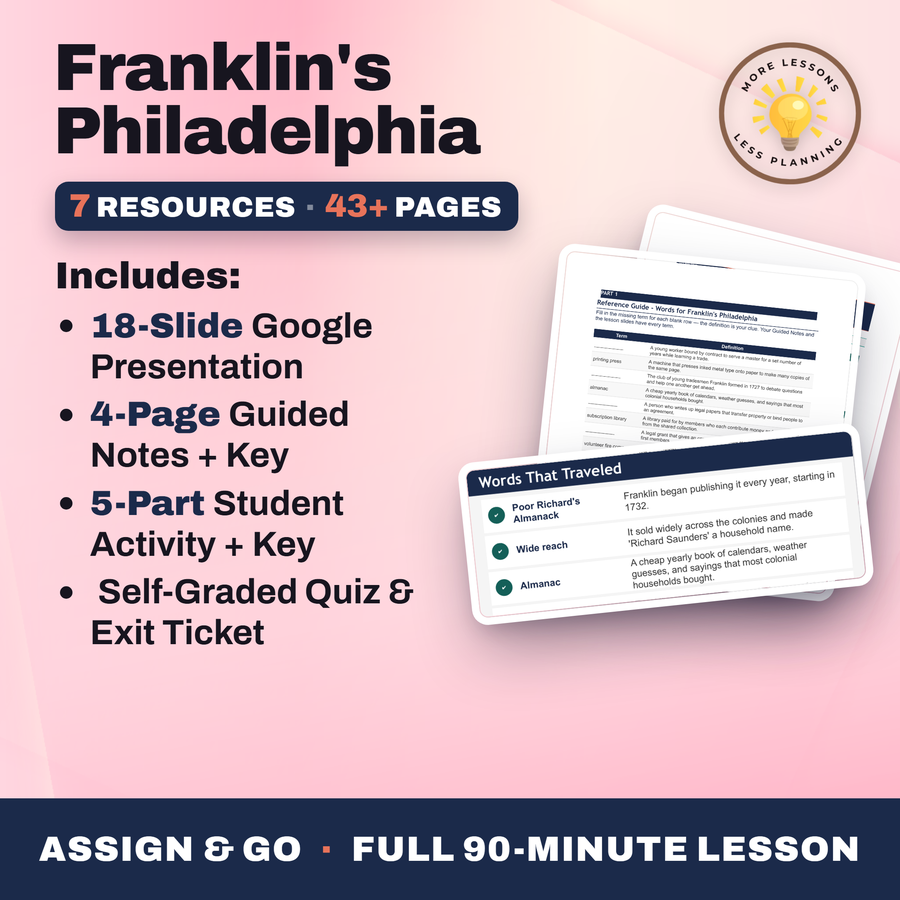
Franklin's Philadelphia
Every lesson on this site is free to download and use. If one of them saved you a prep period, you can chip in a few bucks toward my three kids' daycare fund. That's genuinely where tips go.