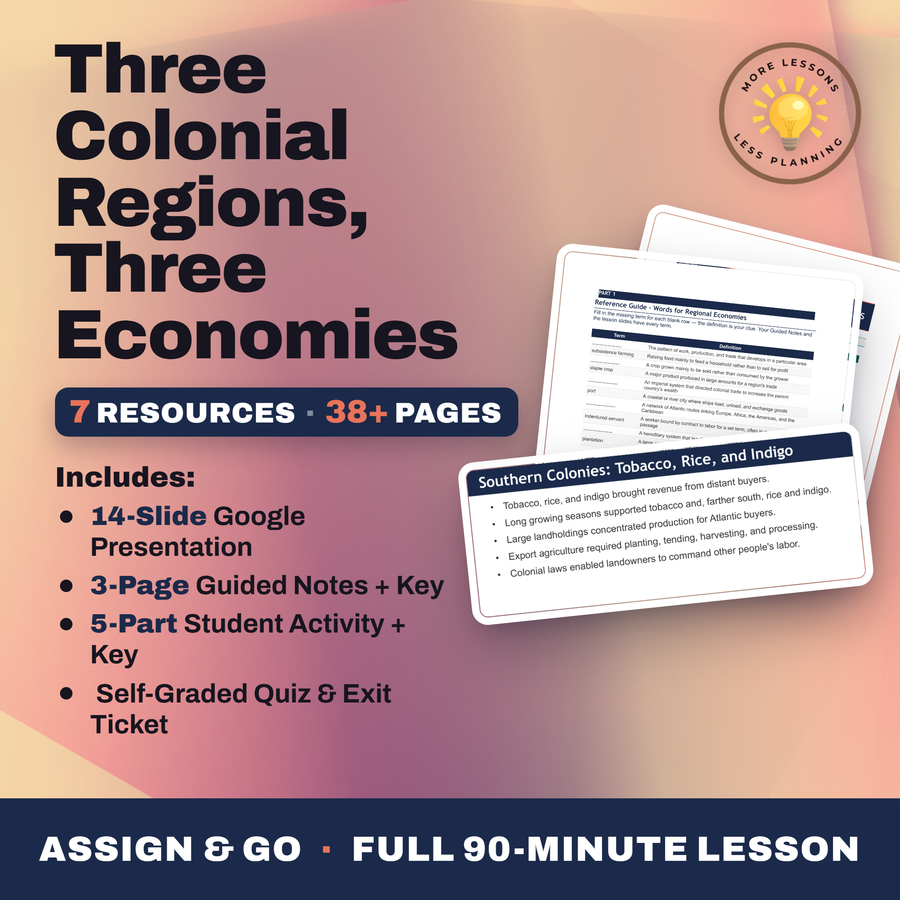

Three Colonial Regions, Three Economies
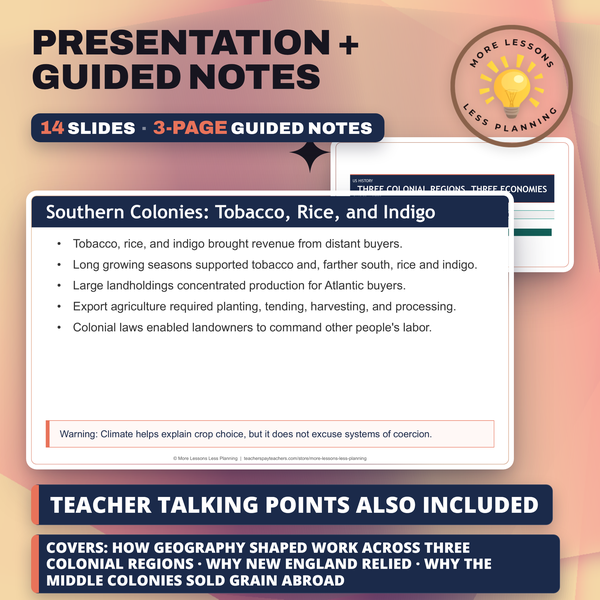
- Slide deck
- Guided notes
- Guided notes teacher key
- Activity + answer key
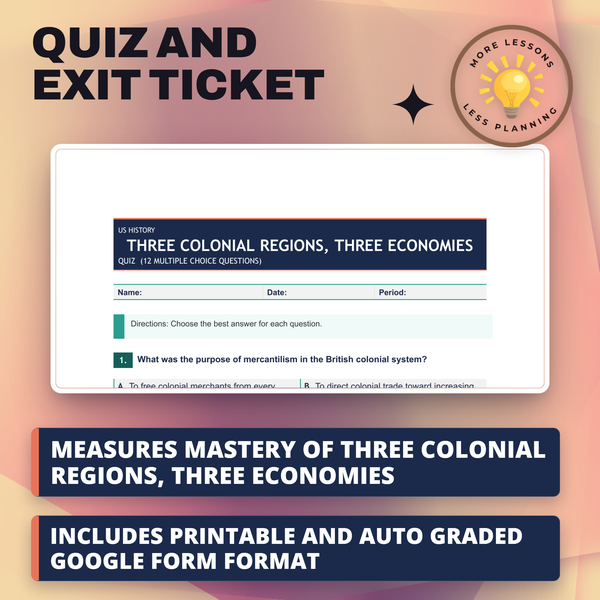
- Quiz + answer key
- Exit ticket + answer key
- Teacher guide
- Teacher presentation notes
Where should I send the next one?
Everything here is free and it stays that way. Leave your email and I'll send you the new lessons as they go up. You can unsubscribe from any one of them.
Every file in this toolkit
Related resources
Bound Labor: How Servitude Became Slavery
Puritan New England Life
The Great Awakening: Preaching That Crossed the Colonies
The Salem Witch Trials, 1692
Washington's First Command: The Ohio Valley, 1754
Cliff Palace and the Ancestral Puebloans
What students do
- Compare how coastline, soil, and growing season pushed three colonial regions toward three different economies
- Distinguish indentured servitude from chattel slavery using evidence from the lesson and from colonial law
- Read three passages from the 1775 book American Husbandry and name what its commercial lens shows and what it hides
- Trace how mercantilism and triangular trade connected all three regions to Atlantic markets
What it covers
- Why New England's economy leaned on the sea and shipbuilding instead of staple crops
- Why the Middle Colonies became the colonies' grain exporters
- How Southern plantation agriculture tied land to coerced labor
- How to read John Mitchell's 1755 map of British North America as an argument, not a picture
Learning targets
- Compare how geography shaped work across three colonial regions.
- Explain why New England relied on the sea and commerce.
- Explain why the Middle Colonies sold grain abroad.
- Connect plantation crops to coerced labor in Southern colonies.
- Judge how a 1775 writer described colonial work.
From one teacher to another
Most colonial-regions lessons stop at a sorting chart, so students memorize three lists but don't ever work out why. I wanted them doing the actual causal thinking: why thin soil and good harbors produce sailors and shipbuilders in one region while river access produces grain merchants in another. Labor gets treated with the same care, a fixed-term contract and a lifelong, race-based system kept deliberately distinct, and the 1775 source at the end asks students to credit what it documents about trade while naming exactly what its author's viewpoint erases.
Every lesson on this site is free to download and use. If one of them saved you a prep period, you can chip in a few bucks toward my three kids' daycare fund. That's genuinely where tips go.