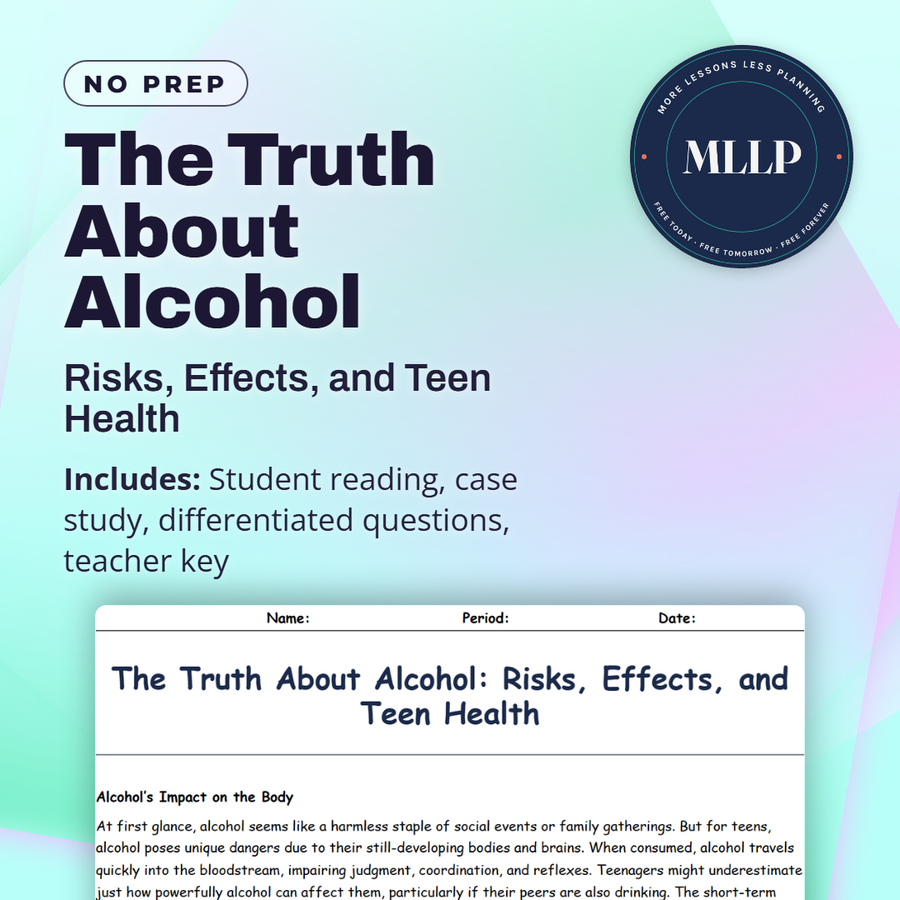
The Truth About Alcohol: Risks, Effects, and Teen Health
Quality reviewed September 2026
Facts verified September 21, 2026
- Subject
- Career & Life Skills
- Grades
- Grades 9-12
- Length
- 8-page student worksheet
- Time
- About one 50-minute class period
- Great for
- Sub plans and independent work
- Includes
- Reading passage, comprehension questions + full answer key
- Format
- Print-and-go PDF
What students do
- Match five terms - among them binge drinking, alcohol poisoning, and alcohol use disorder - to their definitions
- Fill in three blanks about alcohol poisoning, long-term dependency, and short-term effects
- Answer three multiple-choice questions on binge drinking, the legal drinking age, and organ damage
- Respond to three short-answer questions about peer pressure, stress alternatives, and support systems
What it covers
- Five sections on alcohol's short-term effects, binge drinking, long-term dependency, academic fallout, and healthier alternatives
- A table of facts on the legal drinking age, binge drinking, and long-term health risks
- A case study following a debate team captain whose drinking during a stressful season starts affecting her focus and grades
Start reading this worksheet
Alcohol’s Impact on the Body
At first glance, alcohol seems like a harmless staple of social events or family gatherings. But for teens, alcohol poses unique dangers due to their still-developing bodies and brains. When consumed, alcohol travels quickly into the bloodstream, impairing judgment, coordination, and reflexes. Teenagers might underestimate just how powerfully alcohol can affect them, particularly if their peers are also drinking. The short-term effects include slurred speech, loss of coordination, and poor decision-making. Over time, repeated heavy drinking can lead to addiction and severe health complications, including liver damage and heart problems. Since the legal drinking age in the U.S. is 21, underage drinking can also carry legal consequences. Some teens might view this age restriction as just another rule to break, but it exists because alcohol can be highly disruptive to critical stages of growth and mental development. By respecting these laws, young people give themselves time to mature physically and mentally before introducing a substance that can undermine both.
Binge Drinking and Alcohol Poisoning
A particularly dangerous pattern among some young people is binge drinking—consuming large amounts of alcohol in a short period. This behavior can result in alcohol poisoning, a life-threatening condition where the body can’t process the excessive amount of alcohol fast enough. Symptoms include vomiting, unconsciousness, and, in severe cases, coma or death. Binge drinking is fueled by peer pressure, a desire to fit in, or even attempts to cope with stress. However, it carries steep risks such as blackouts, reckless behavior, and long-term harm to the brain’s ability to form new memories. The social consequences of binge drinking can be just as devastating. Fights, vandalism, and unsafe sexual situations are more likely to happen under the influence. Additionally, teens caught in possession of alcohol or driving under the influence face legal issues that may follow them into adulthood. The potential for tragedy is far greater than many realize, making it crucial to fully understand the risks.
Long-Term Health Effects and Dependency
Drinking habits formed in adolescence can set the stage for future alcohol dependency. Heavy or frequent use can change how the brain perceives pleasure and reward, leading to a cycle of craving and overuse. Over time, the liver suffers from having to filter out toxins at a pace it wasn’t designed to handle. Conditions like cirrhosis can result, which is often irreversible. Besides the physical toll, mental health issues like depression and anxiety can worsen with chronic alcohol use. Interestingly, research shows that teens who start drinking at an earlier age are more likely to develop problems with alcohol use disorder later in life. This is because the adolescent brain is still building connections related to impulse control and decision-making. Interfering with these neural pathways through alcohol misuse can create patterns of behavior that are hard to break in the future.
Like what you read? The full reading, the case study, and every question set are in the free download below, along with the answer key.
Why this matters
Alcohol is the substance most students will actually be offered before graduation, often at a party where refusing feels harder than saying yes. Because it's legal for adults, a lot of teens assume the risk is lower than it is for other substances, which is exactly the gap this reading is built to close. Knowing what binge drinking does to the body, and having language for turning it down, is something students can use the very next weekend.
If you or someone you know is struggling, call or text 988 (Suicide & Crisis Lifeline, US) or talk to a trusted adult right away.
From one teacher to another
Marisol opens this one: a debate team captain under pressure to keep her record spotless, she starts drinking to unwind after a stressful leadership program, and her focus and grades slip before she or her friends fully notice. From there the reading works outward to binge drinking, alcohol poisoning, and the long-term risk of dependency, closing on a section about healthier ways to handle stress. I wanted the human cost to come before the data, since alcohol's social normalcy makes the data easy to wave off.
What you get
Download
Where should I send the next one?
Everything here is free and it stays that way. Leave your email and I'll send you the new lessons as they go up. You can unsubscribe from any one of them.
Related resources
Choosing a Drug-Free Lifestyle: Health, Goals, and You
Cocaine and the Teenage Brain
Crack Cocaine: Fast High, Harsh Consequences
Heroin and Teens: Understanding the Risks and Realities
How Addiction Changes the Brain: Science for Students
How to Handle Peer Pressure and Say No with Confidence
Every lesson on this site is free to download and use. If one of them saved you a prep period, you can chip in a few bucks toward my three kids' daycare fund. That's genuinely where tips go.