The Trump Tariffs: A Case Study
- Slide deck
- Guided notes
- Guided notes teacher key
- Activity + answer key
- Quiz + answer key
- Exit ticket + answer key
- Teacher guide
Where should I send the next one?
Everything here is free and it stays that way. Leave your email and I'll send you the new lessons as they go up. You can unsubscribe from any one of them.
Every file in this toolkit
Related resources
Big Tech Antitrust - Google Apple Amazon Meta
Credit Scores: The Number That Runs Your Life
Economic Systems - Capitalism vs Socialism vs Mixed
Externalities When Markets Hurt Others
Factors of Production - Land, Labor, Capital, and Entrepreneurship
Interest Rates: The Fed's Main Tool
What students do
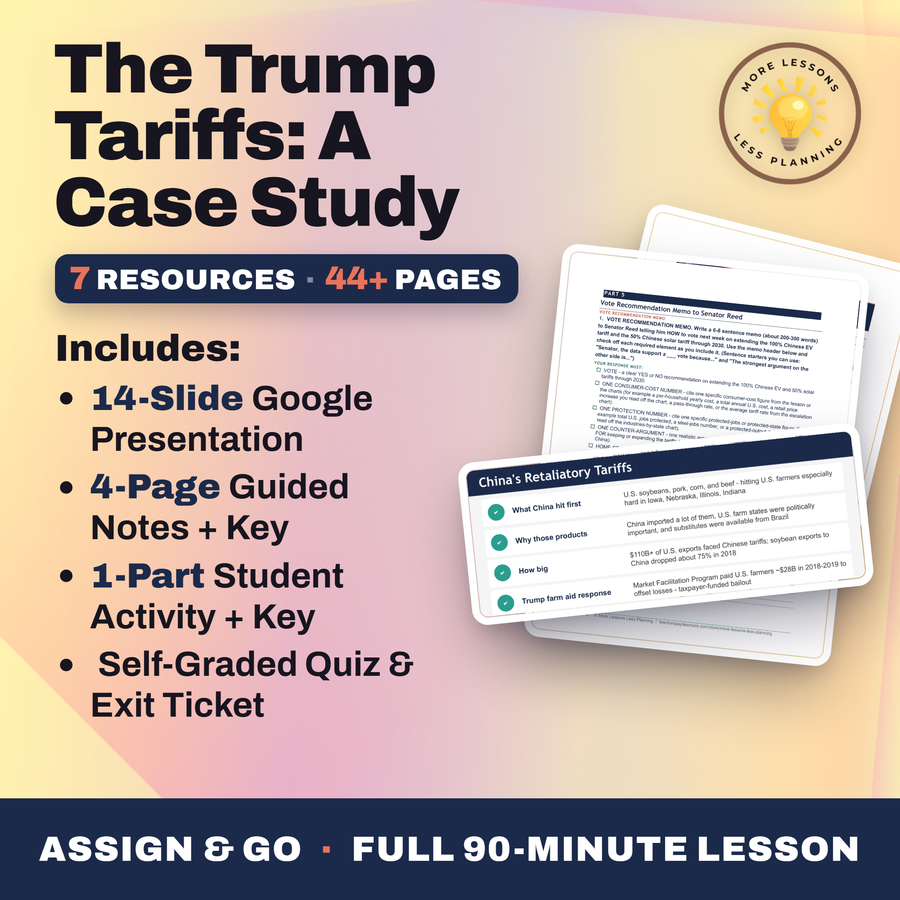
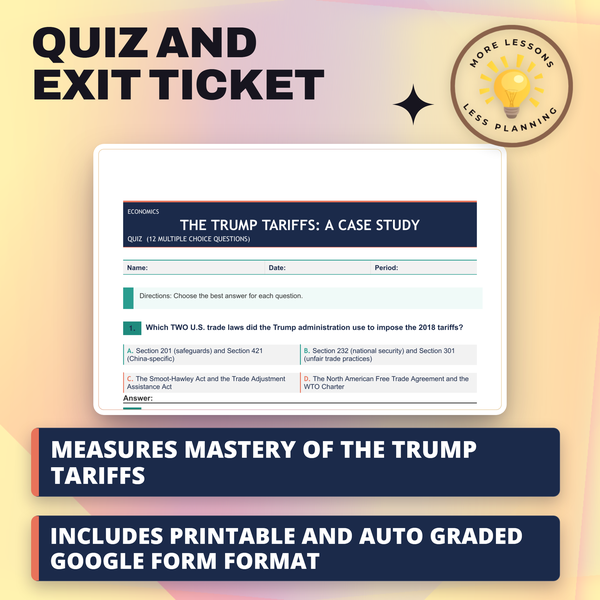
- Distinguish Section 232 tariffs from Section 301 tariffs and identify which industries each targeted
- Read the U.S.-China tariff escalation timeline chart to identify the largest single-year jump
- Extract retail price increases tied to specific tariffs, washing machines, solar panels, electronics, from a bar chart
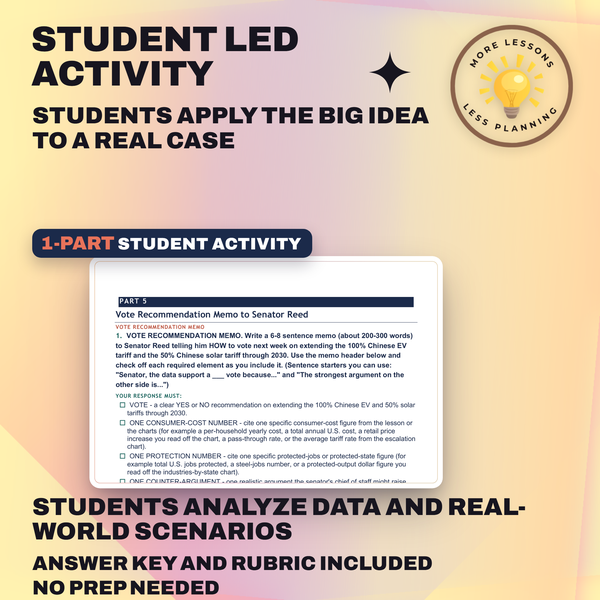
- Evaluate the empirical evidence on who benefited and who paid during the trade war
What it covers
- The two tariff authorities, Section 232 on national security grounds and Section 301 on unfair trade practices
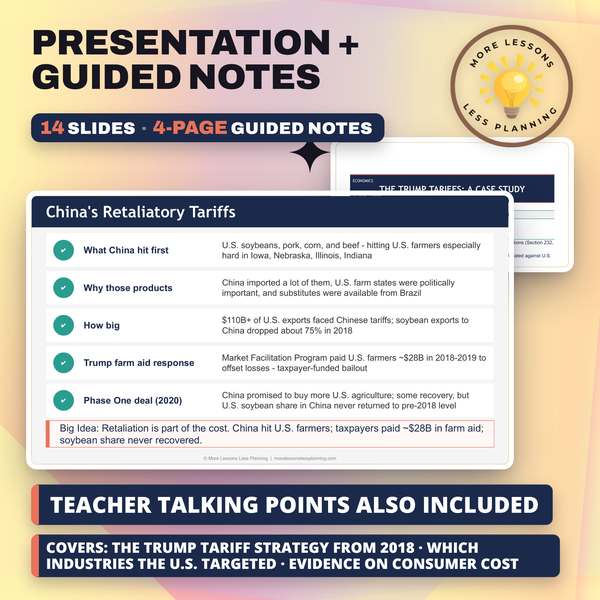
- China's retaliation against U.S. soybeans, pork, and Boeing aircraft, and the parallel EU dispute over steel and bourbon
- The 2024-2025 escalation and the trade-off between protecting manufacturers and raising consumer costs
Learning targets
- Trace the Trump tariff strategy from 2018 through 2026, naming the key actions (Section 232, Section 301, EU steel, 2024-2025 expansion)
- Identify which industries the U.S. targeted and how China and the EU retaliated against U.S. exports
- Evaluate evidence on consumer cost vs jobs gained to decide whether the tariff strategy worked
From one teacher to another
Who actually paid for the tariffs, the manufacturer that got protected or the family buying a washing machine? That's the question the case study makes students answer with real data instead of a political label, working the U.S.-China escalation timeline and a retail-price bar chart to see which industries got hit and which states felt it. I split Section 232 and Section 301 apart early, national security versus unfair trade, because conflating the two is where a lot of classes go sideways on this topic.
Every lesson on this site is free to download and use. If one of them saved you a prep period, you can chip in a few bucks toward my three kids' daycare fund. That's genuinely where tips go.