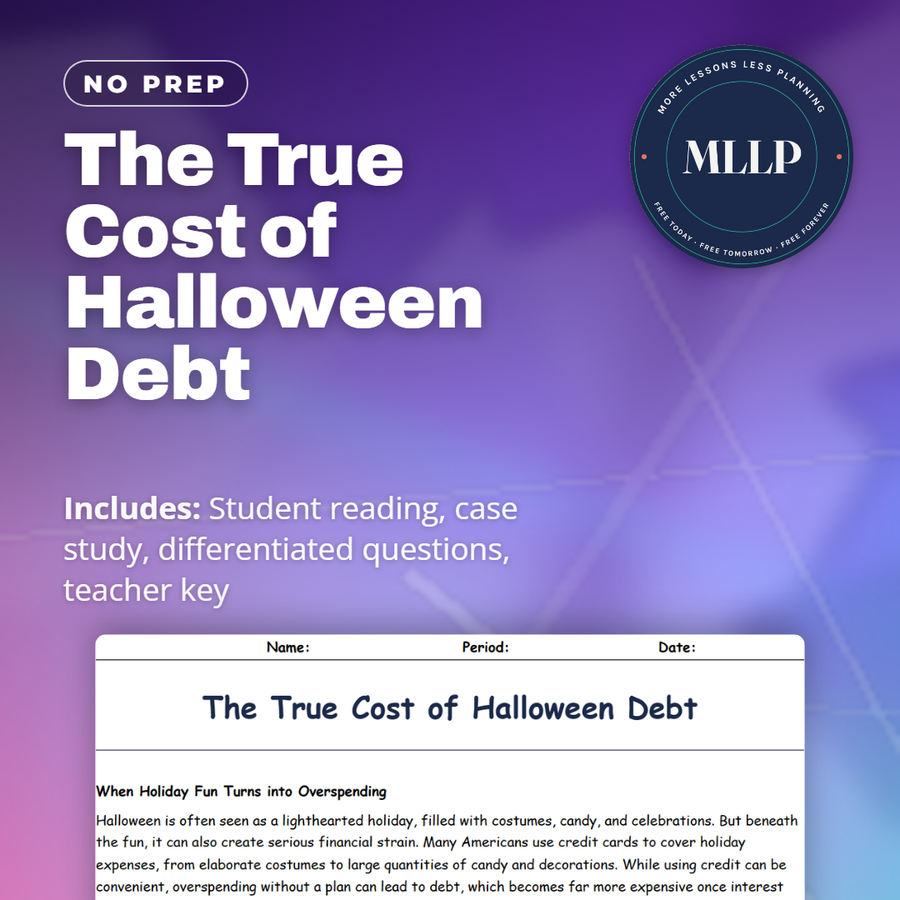
The True Cost of Halloween Debt
Quality reviewed September 2026
Facts verified September 9, 2026
- Subject
- Career & Life Skills
- Grades
- Grades 9-12
- Length
- 6-page student worksheet
- Time
- About one 50-minute class period
- Great for
- Sub plans and independent work
- Includes
- Reading passage, comprehension questions + full answer key
- Format
- Print-and-go PDF
What students do
- Distinguish between needs and wants in Halloween spending decisions
- Analyze how interest rates increase the long-term cost of borrowed money
- Evaluate Marcus's financial mistakes and alternative choices he could have made
- Calculate debt accumulation over time with fixed and minimum payments
What it covers
- Credit card debt and compound interest
- Distinguishing needs from wants in consumer choices
- Long-term consequences of impulse spending
Start reading this worksheet
When Holiday Fun Turns into Overspending
Halloween is often seen as a lighthearted holiday, filled with costumes, candy, and celebrations. But beneath the fun, it can also create serious financial strain. Many Americans use credit cards to cover holiday expenses, from elaborate costumes to large quantities of candy and decorations. While using credit can be convenient, overspending without a plan can lead to debt, which becomes far more expensive once interest charges are added. Financial experts warn that debt from holidays like Halloween reflects the difference between needs and wants. A need might be groceries or rent, while a want could be the newest costume or an expensive themed party. When wants are prioritized without budgeting, families may spend more than they can afford. Halloween may last only one night, but the debt can linger for months.
Interest and the Debt Cycle
One of the biggest risks of overspending during Halloween is the effect of interest rates. If a family spends $500 on Halloween using a credit card and cannot pay it off right away, interest quickly increases the total cost. For example, at a 20% annual interest rate, that $500 balance could grow to over $600 within a year if only minimum payments are made. This creates a cycle where debt accumulates faster than it can be repaid. Many families do not consider these hidden costs when they swipe a card for candy, decorations, or costumes. The key financial literacy lesson is that short-term fun should never compromise long-term stability. Understanding the true cost of debt helps students see why careful planning is essential.
Like what you read? The full reading, the case study, and every question set are in the free download below, along with the answer key.
Why this matters
A $200 night out should not turn into six months of payments, but students rarely believe that until they watch it happen to someone their own age. Marcus is not reckless, just ordinary: he charged $200 for one Halloween weekend, paid the minimum, and watched the balance grow from interest.
These students will carry a credit card within a few years, most without ever being taught what a minimum payment costs over time. Marcus gives us a way to talk about it that is not a lecture: which purchases were needs, which were wants, and which decision would have stopped the interest from compounding.
From one teacher to another
A single night of fun shouldn't cost six months of payments, but most students don't think that way until they see the math. Marcus's story makes it personal. He isn't irresponsible, just normal. He charged $200, made minimum payments, and suddenly owed even more because of interest. I use this to start conversations about the credit cards already in their future. It's not preachy; it's practical.
What you get
Download
Where should I send the next one?
Everything here is free and it stays that way. Leave your email and I'll send you the new lessons as they go up. You can unsubscribe from any one of them.
Related resources
Every lesson on this site is free to download and use. If one of them saved you a prep period, you can chip in a few bucks toward my three kids' daycare fund. That's genuinely where tips go.