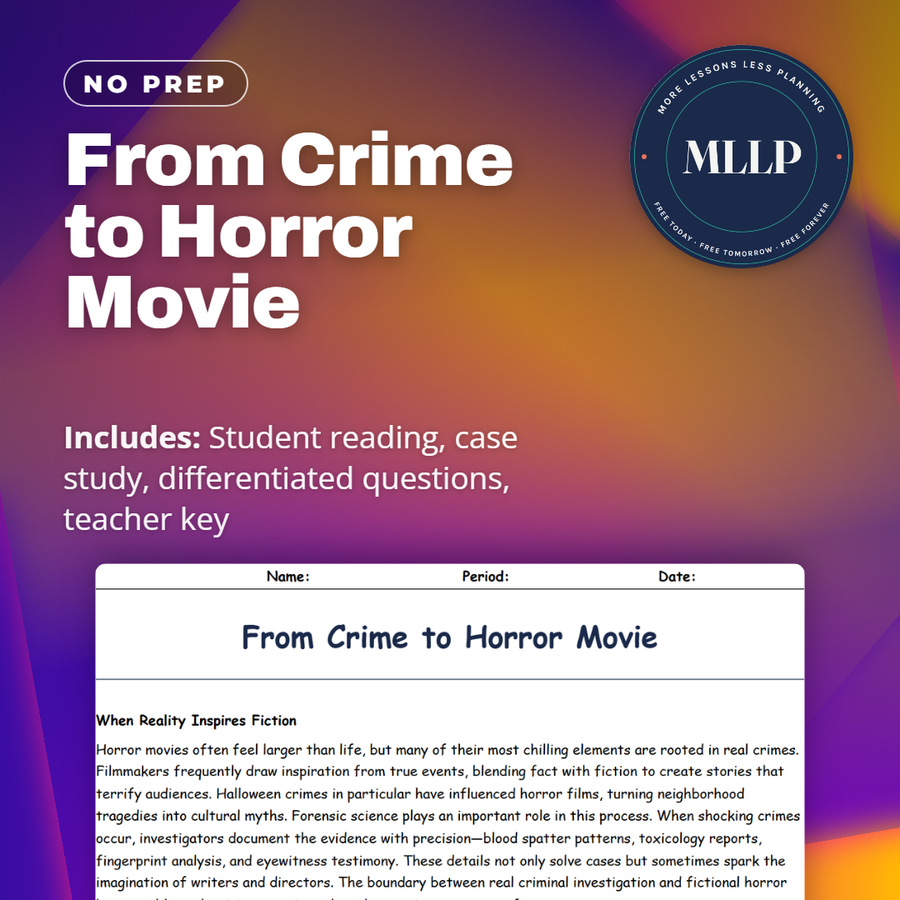
From Crime to Horror Movie
Quality reviewed September 2026
Facts verified September 9, 2026
- Subject
- ELA
- Grades
- Grades 9-12
- Length
- 6-page student worksheet
- Time
- About one 50-minute class period
- Great for
- Sub plans and independent work
- Includes
- Reading passage, comprehension questions + full answer key
- Format
- Print-and-go PDF
What students do
- Analyze how forensic evidence from real crimes influenced horror film storytelling and realism
- Examine the connection between the Gainesville Ripper case and the "Scream" film narrative
- Evaluate the ethical implications of adapting true tragedies into entertainment narratives
- Compare forensic methods used in real investigations versus their dramatization in films
What it covers
- Forensic science in criminal investigations
- True crime as inspiration for horror films
- Ethics of adapting crimes into entertainment
Start reading this worksheet
When Reality Inspires Fiction
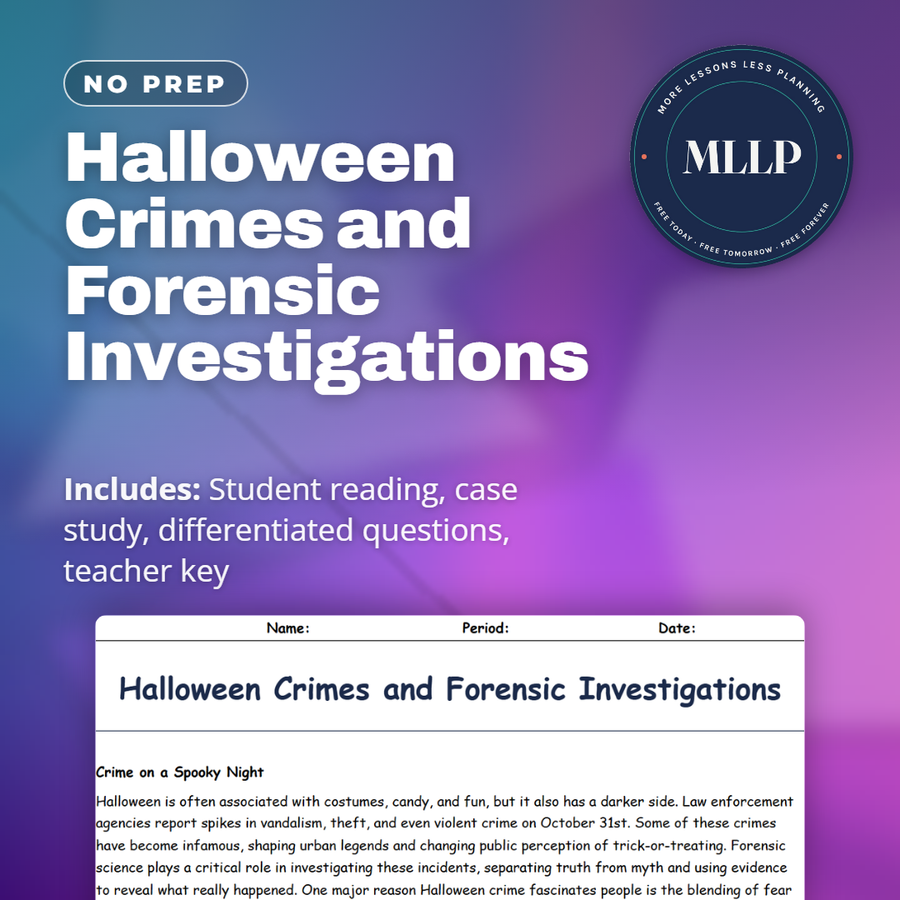
Horror movies often feel larger than life, but many of their most chilling elements are rooted in real crimes. Filmmakers frequently draw inspiration from true events, blending fact with fiction to create stories that terrify audiences. Halloween crimes in particular have influenced horror films, turning neighborhood tragedies into cultural myths. Forensic science plays an important role in this process. When shocking crimes occur, investigators document the evidence with precision: blood spatter patterns, toxicology reports, fingerprint analysis, and eyewitness testimony. These details not only solve cases but sometimes spark the imagination of writers and directors. The boundary between real criminal investigation and fictional horror becomes blurred, raising questions about how society processes fear.
The Science Behind the Stories
Forensic details often shape the realism of horror films. A movie scene where police use luminol to reveal hidden blood is based on actual laboratory practices. Ballistics analysis, DNA profiling, and psychological profiling have all been adapted from true investigations into fictional storytelling. This intersection of science and entertainment keeps audiences engaged. Viewers know the science is real, even if the story is not. Crimes that occur around Halloween are especially influential because they combine reality with the holiday’s cultural association with fear. When these cases are sensationalized in the media, they provide fertile ground for horror screenwriters. While the goal of investigators is to establish truth, the goal of filmmakers is to maximize fear, often exaggerating forensic details for dramatic effect.
Like what you read? The full reading, the case study, and every question set are in the free download below, along with the answer key.
Why this matters
"Scream" hit theaters in 1996, six years after the real Gainesville Ripper murders it drew from happened in 1990. Lining the film up against the actual case gives students a rare side by side: the DNA testing, crime scene analysis, and fingerprinting investigators used, next to how a screenplay dramatizes that process.
Horror fans tend to assume a movie's scares come from pure imagination, until they see a real case sitting underneath one. That discovery raises a harder question: what it costs a real community when its tragedy becomes someone else's entertainment. Comparing the two shows where forensic method ends and imagination begins.
From one teacher to another
The 1996 film "Scream" drew inspiration from the Gainesville Ripper case of 1990. This real case teaches students how forensic science, DNA testing, crime scene analysis, fingerprinting, gives investigators a factual basis for solving crimes. When we compare the actual investigation with how the film fictionalized it, students see that realism comes from grounded science, not imagination. Examining this connection helps them understand forensic methods and how evidence separates fact from myth.
What you get
Download
Where should I send the next one?
Everything here is free and it stays that way. Leave your email and I'll send you the new lessons as they go up. You can unsubscribe from any one of them.
Related resources
Every lesson on this site is free to download and use. If one of them saved you a prep period, you can chip in a few bucks toward my three kids' daycare fund. That's genuinely where tips go.