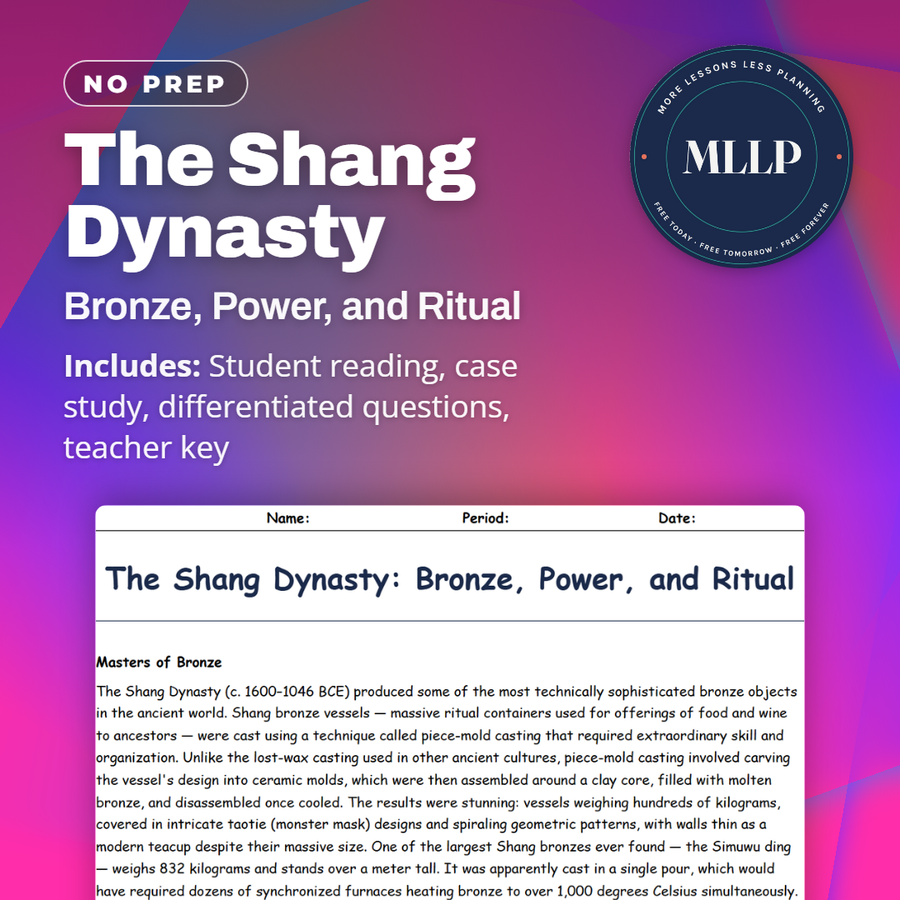
The Shang Dynasty: Bronze, Power, and Ritual
Quality reviewed September 2026
Facts verified September 21, 2026
- Subject
- Social Studies
- Grades
- Grades 9-12
- Length
- 9-page student worksheet
- Time
- About one 50-minute class period
- Great for
- Sub plans and independent work
- Includes
- Reading passage, comprehension questions + full answer key
- Format
- Print-and-go PDF
What students do
- Bronze in Shang society worked like a language, since the vessels a person owned announced their exact rank
- Sort Shang bronze vessel types by which social ranks were allowed to own them
- Fu Hao commanded armies and led rituals, and her unlooted tomb held over 460 bronzes
- Explain what sacrifice pits at Anyang reveal about the cost of Shang power
What it covers
- Piece-mold casting and how Shang bronze vessels displayed exact social rank
- Fu Hao's unlooted tomb and her role as both military commander and ritual specialist
- Evidence of mass human sacrifice at Anyang and what it reveals about Shang power
Start reading this worksheet
Masters of Bronze
The Shang Dynasty (c. 1600–1046 BCE) produced some of the most technically sophisticated bronze objects in the ancient world. Shang bronze vessels, massive ritual containers used for offerings of food and wine to ancestors, were cast using a technique called piece-mold casting that required extraordinary skill and organization. Unlike the lost-wax casting used in other ancient cultures, piece-mold casting involved carving the vessel's design into ceramic molds, which were then assembled around a clay core, filled with molten bronze, and disassembled once cooled. The results were stunning: vessels weighing hundreds of kilograms, covered in intricate taotie (monster mask) designs and spiraling geometric patterns, with walls thin as a modern teacup despite their massive size. The Simuwu ding, one of the largest Shang bronzes ever found, weighs 832 kilograms and stands over a meter tall. It was apparently cast in a single pour, which would have required dozens of synchronized furnaces heating bronze to over 1,000 degrees Celsius simultaneously. Coordinating that kind of effort required not just metallurgical skill but sophisticated social organization: someone was in charge, and many people were following instructions.
The Tomb of Fu Hao: A Warrior Queen's Legacy
In 1976, archaeologists at Anyang made one of the most remarkable discoveries in Chinese archaeological history: an intact royal tomb that had never been looted. The tomb belonged to Fu Hao, a consort of the Shang king Wu Ding who ruled in the 13th century BCE. Unlike most royal women in ancient history, Fu Hao was not merely a king's companion. She was a military commander who personally led campaigns against neighboring peoples, and a ritual specialist who oversaw important religious ceremonies. The contents of her tomb were extraordinary. Archaeologists recovered more than 460 bronze objects, 750 jade items, 560 bone objects including oracle bones with her name inscribed on them, and the skeletal remains of 16 human beings who were sacrificed and buried with her. Her bronze collection alone is larger than the entire known bronze output of many other ancient cultures of the period. The scale of her burial reflected both her personal power and the Shang belief that the dead needed real objects (not miniatures or substitutes) to maintain their status in the afterlife.
Human Sacrifice and the Archaeological Evidence
Fu Hao's tomb is not the only evidence of human sacrifice at Anyang. Excavations across the site have revealed hundreds of sacrifice pits containing the remains of humans (mostly young males, often decapitated or dismembered) buried as offerings during royal rituals. When a Shang king died and a new palace was dedicated, hundreds of people might be killed in the ceremonies that marked the transition. These individuals were almost certainly war captives from neighboring peoples who had been defeated by the Shang military. Oracle bone inscriptions sometimes record the number of prisoners taken in specific battles and note how many were sacrificed in subsequent rituals. This evidence complicates the image of the Shang as simply an advanced civilization: they were also a society in which power was demonstrated through violence on a massive scale, and where the boundaries between human beings and sacrificial animals were sometimes deliberately blurred.
Like what you read? The full reading, the case study, and every question set are in the free download below, along with the answer key.
Why this matters
The Shang used bronze the way later societies used titles, property, or currency, a visible object standing in for invisible social rank, and that pattern of turning status into something you can point to keeps showing up across history and in students' own lives. The evidence of mass human sacrifice at Anyang is a harder topic, but it is honest history, showing that a civilization can master metallurgy, writing, and organized government while also treating conquered people as disposable, a tension worth naming directly rather than smoothing over. Fu Hao's combination of military and religious authority is also worth pausing on, since it shows that power in the ancient world rarely separated the practical from the sacred the way it often does now.
From one teacher to another
Bronze in Shang society worked as a kind of language, where the size, design, and number of vessels a family owned announced their exact place in the social order to anyone who could read the signs. Students read about piece-mold casting, the technique behind vessels like the 832 kilogram Simuwu ding, and about Fu Hao, a Shang queen who commanded armies and performed rituals and whose unlooted tomb turned up more than 460 bronze objects when archaeologists found it in 1976. The reading also covers the sacrifice pits at Anyang, where hundreds of mostly young male war captives were killed during royal ceremonies, a detail that complicates any simple picture of Shang civilization as purely advanced. A case study follows Fu Hao herself preparing 13,000 soldiers for a campaign after three favorable divinations.
What you get
Download
Where should I send the next one?
Everything here is free and it stays that way. Leave your email and I'll send you the new lessons as they go up. You can unsubscribe from any one of them.
Related resources
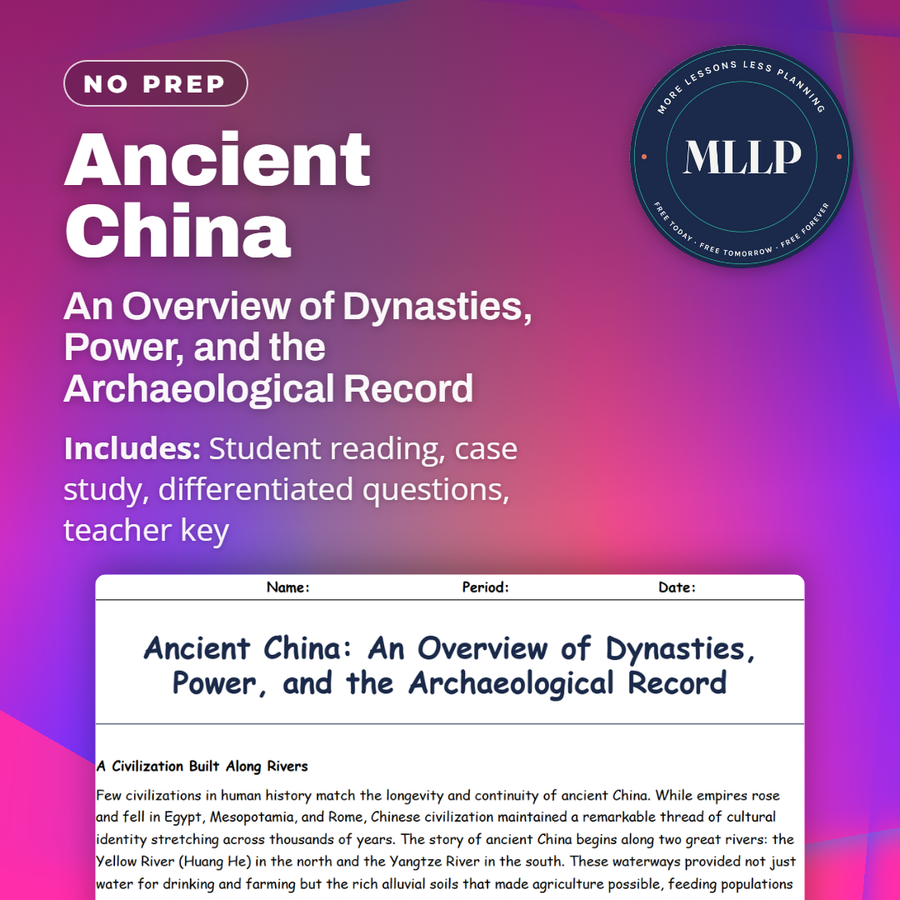
Ancient China: An Overview of Dynasties, Power, and the Archaeological Record
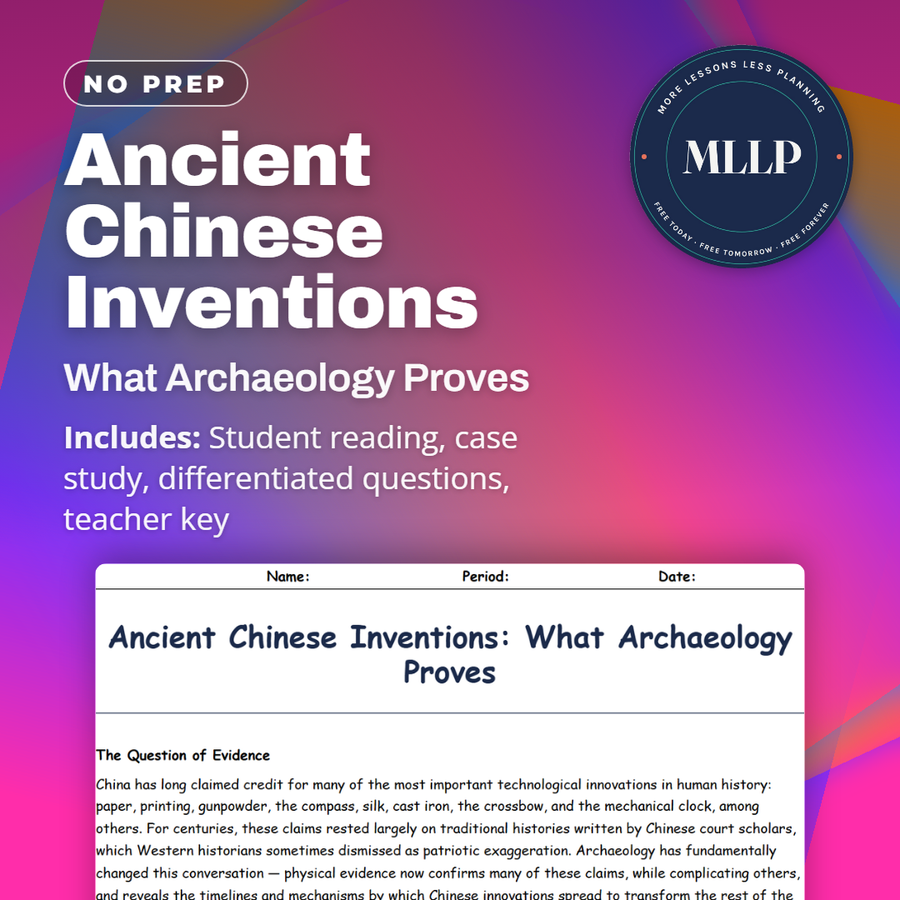
Ancient Chinese Inventions: What Archaeology Proves
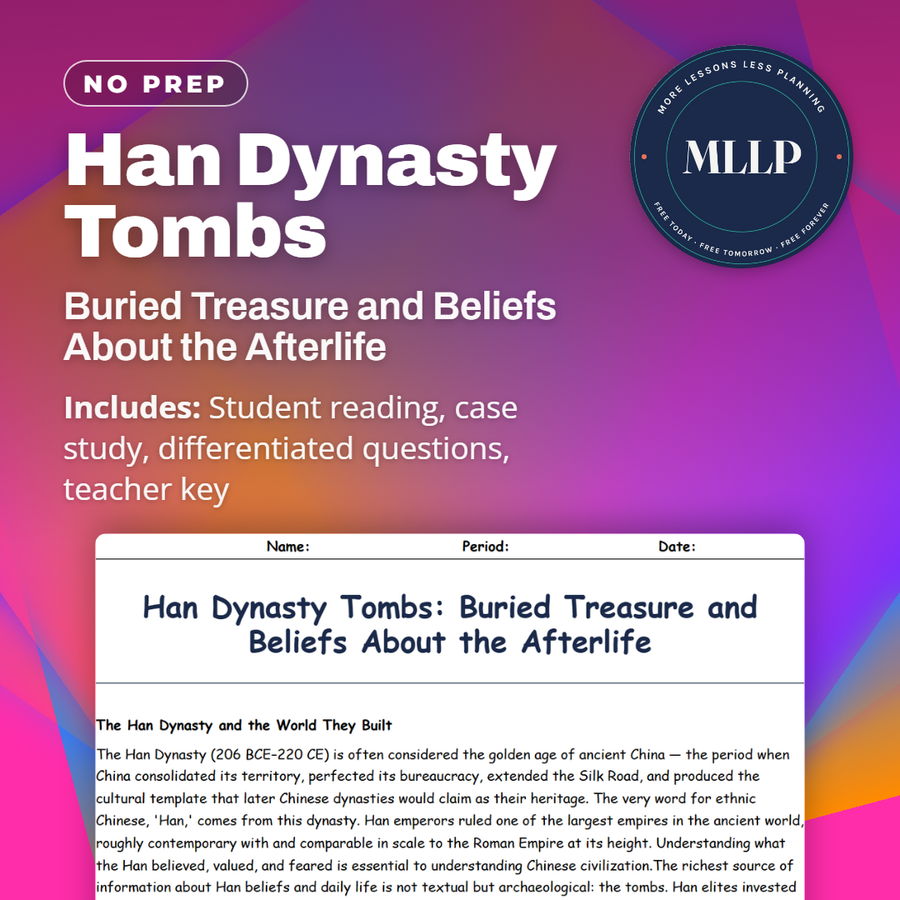
Han Dynasty Tombs: Buried Treasure and Beliefs About the Afterlife
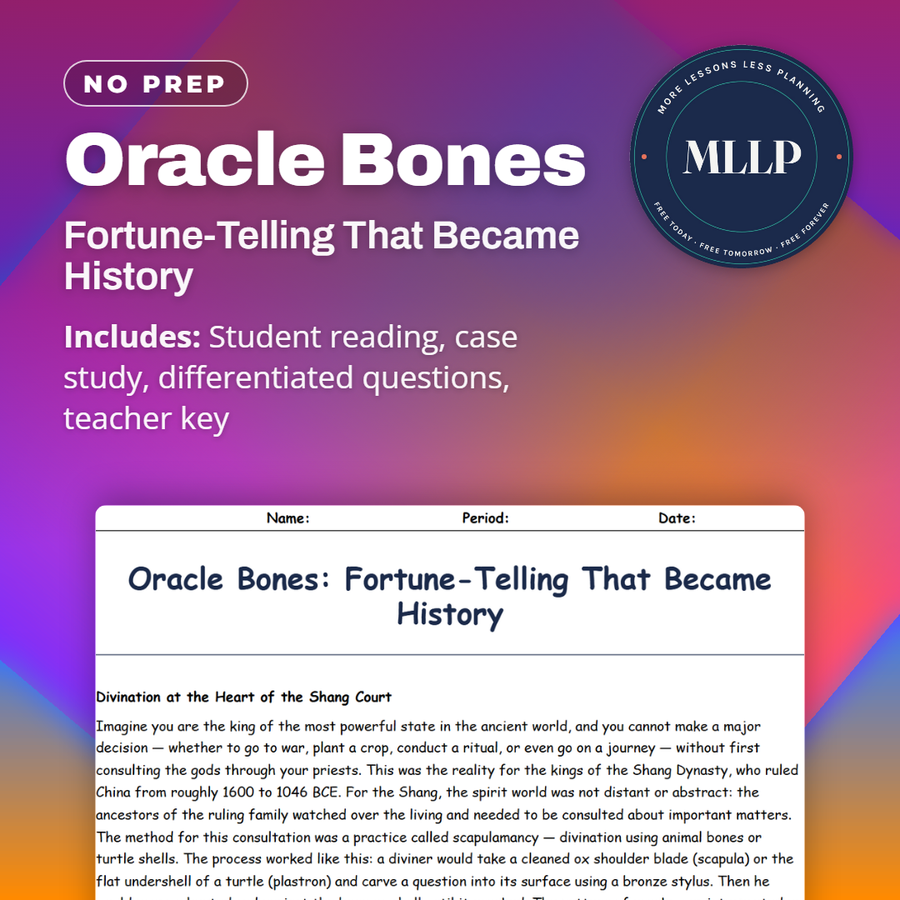
Oracle Bones: Fortune-Telling That Became History
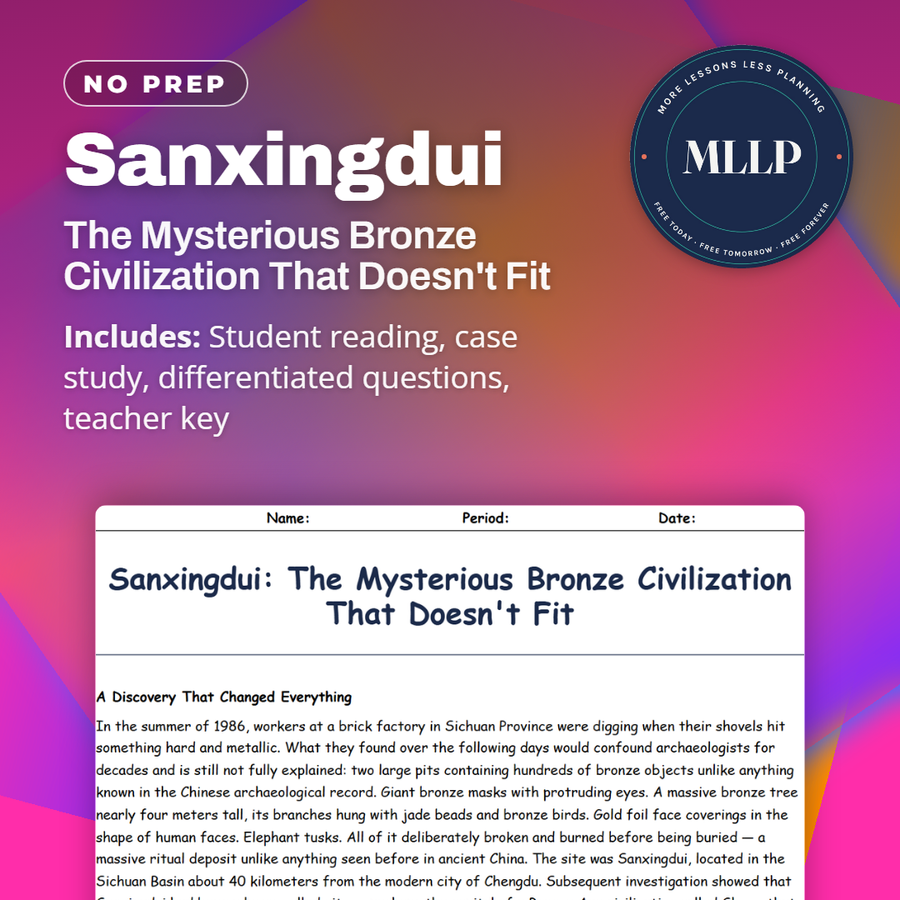
Sanxingdui: The Mysterious Bronze Civilization That Doesn't Fit
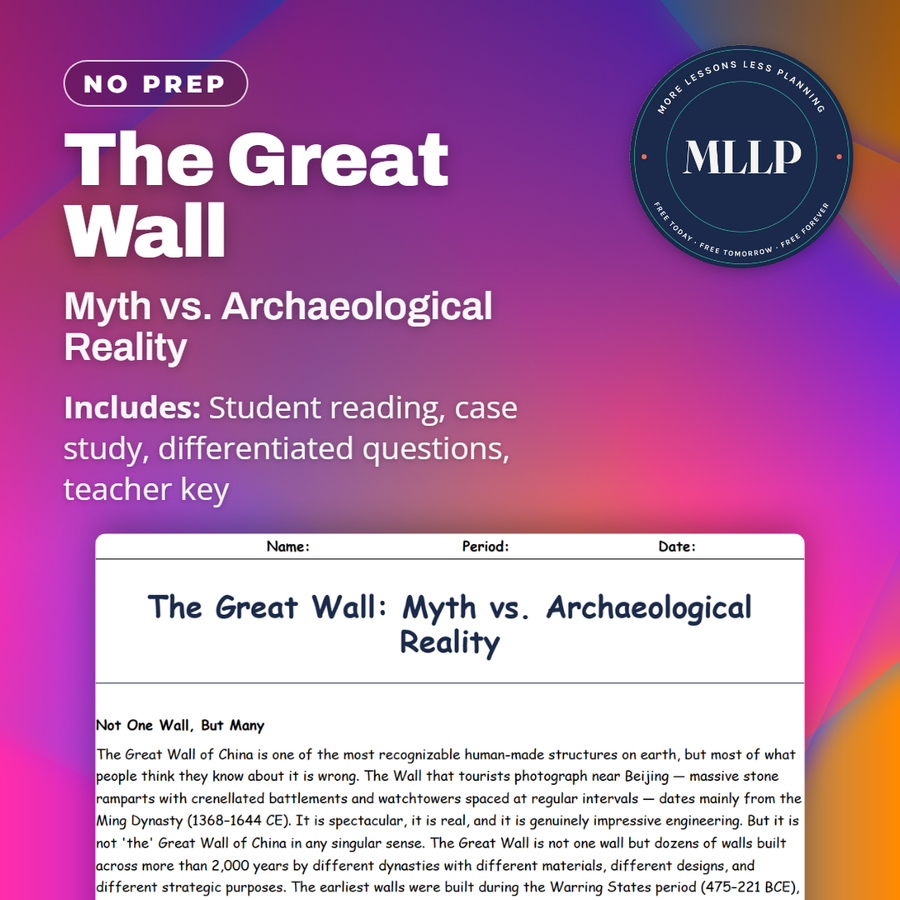
The Great Wall: Myth vs. Archaeological Reality
Every lesson on this site is free to download and use. If one of them saved you a prep period, you can chip in a few bucks toward my three kids' daycare fund. That's genuinely where tips go.