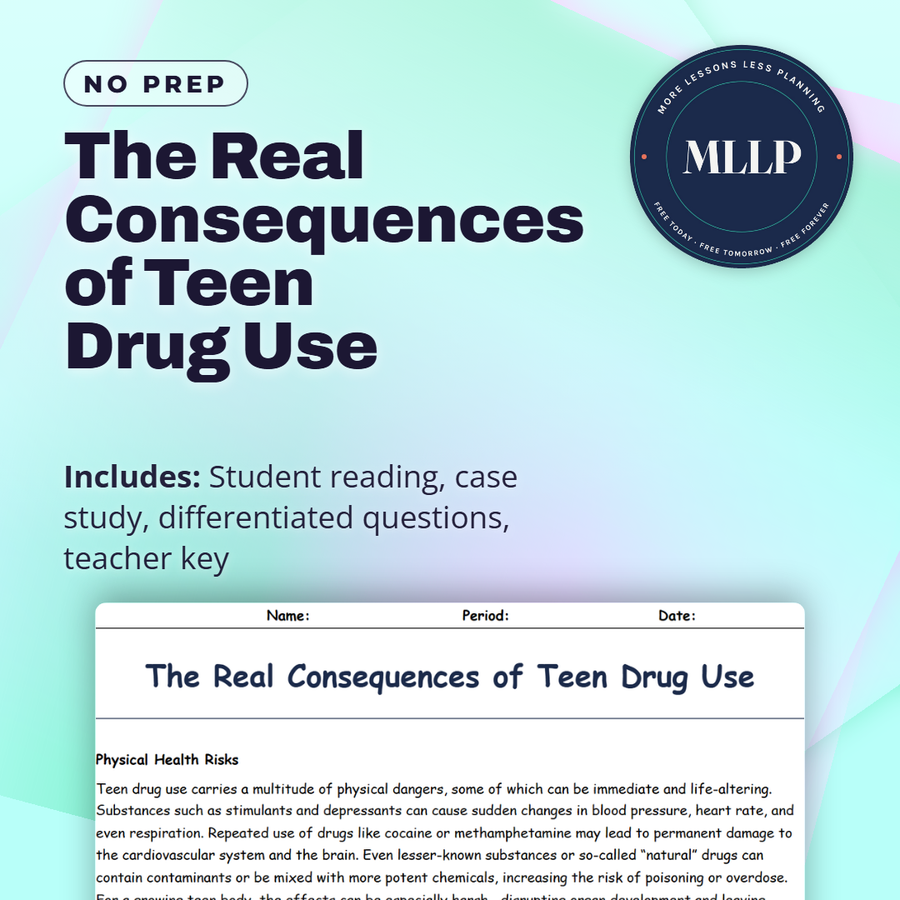
The Real Consequences of Teen Drug Use
Quality reviewed September 2026
Facts verified September 21, 2026
- Subject
- Career & Life Skills
- Grades
- Grades 9-12
- Length
- 8-page student worksheet
- Time
- About one 50-minute class period
- Great for
- Sub plans and independent work
- Includes
- Reading passage, comprehension questions + full answer key
- Format
- Print-and-go PDF
What students do
- Match five terms - among them overdose, self-medication, and criminal record - to their definitions
- Fill in three blanks about mental health, legal outcomes, and academic fallout from drug use
- Answer three multiple-choice questions on physical, mental, and legal consequences
- Respond to three short-answer questions about why grades slip and how family trust breaks down
What it covers
- Five sections on the physical, mental, academic, legal, and emotional consequences of teen drug use
- A table summarizing each consequence category next to its real-world impact
- A case study following a track athlete whose use of prescription pain medication costs him his season and his college prospects
Start reading this worksheet
Physical Health Risks
Teen drug use carries a multitude of physical dangers, some of which can be immediate and life-altering. Substances such as stimulants and depressants can cause sudden changes in blood pressure, heart rate, and even respiration. Repeated use of drugs like cocaine or methamphetamine may lead to permanent damage to the cardiovascular system and the brain. Even lesser-known substances or so-called “natural” drugs can contain contaminants or be mixed with more potent chemicals, increasing the risk of poisoning or overdose. For a growing teen body, the effects can be especially harsh, disrupting organ development and leaving lasting scars on overall health. One of the most insidious aspects of drug use is that it can encourage a cycle of poor self-care. People who are high or coming down from a substance might neglect adequate nutrition, hydration, or sleep. Over time, this weakens the immune system, making teens more susceptible to illnesses. Additionally, shared needles or drug paraphernalia can spread infections like HIV and hepatitis. Teens who believe they’re “invincible” may think these scenarios don’t apply to them, but the statistics tell a different story: many overdose incidents, hospitalizations, and even fatalities affect those under the age of 18.
Mental Health Impacts
Drug use can both stem from and exacerbate mental health issues. Substances may offer a temporary “escape” or momentary euphoria, but they often intensify underlying conditions like anxiety, depression, or paranoia. For adolescents whose brains are still forming key pathways, introducing psychoactive chemicals can alter mood regulation. This can result in volatile emotions and difficulty managing stress without substances. In some cases, drug-induced psychosis can occur, manifesting as hallucinations or delusions that leave lasting trauma. Teens experiencing mental health struggles might gravitate toward drugs for self-medication, not realizing they’re setting themselves up for a cycle that further deteriorates their emotional stability. The guilt and secrecy associated with illicit drug use can amplify feelings of isolation, fueling a downward spiral. Therapy and counseling become significantly more challenging when substance use obscures the real source of emotional distress. In severe instances, chronic drug abuse can trigger mental health crises that require hospitalization or long-term treatment.
Academic and Social Consequences
Drugs can derail academic life. Declining concentration, erratic attendance, and overall apathy toward schoolwork often follow substance abuse. Once grades slip, opportunities for college or vocational training may shrink. Beyond academics, substance use can fracture friendships, either because peers disapprove or because the teen user withdraws into new social circles where drug use is normalized. On the other hand, drug use can also rope someone into volatile relationships where manipulation and shared substance reliance become common. Family life typically suffers, too. Conflicts arise when parents discover secretive behavior, stolen money or valuables (sold to finance drug habits), and repeated lying. This breakdown of trust erodes the support system teens desperately need. Many find themselves estranged not only from parents but also from siblings who struggle to understand the changes they see. In worst-case scenarios, the emotional toll can prompt families to pursue legal actions or interventions if they believe it’s the only way to save their child from deeper harm.
Like what you read? The full reading, the case study, and every question set are in the free download below, along with the answer key.
Why this matters
Most drug-education conversations focus on the substance itself. This reading asks students to trace what comes after: the missed practice, the suspended season, the parent who blames herself, the record that follows a college application. That aftermath is the part teens rarely picture when a decision feels small in the moment, and naming it is what tends to change how they weigh a choice at a party.
If you or someone you know is struggling, call or text 988 (Suicide & Crisis Lifeline, US) or talk to a trusted adult right away.
From one teacher to another
This reading breaks teen drug use into five angles: what it does to the body, what it does to the mind, how it shows up in grades and friendships, what the legal system can do about it, and what it costs a family emotionally. A summary table lines up each consequence next to its real-world impact. Andre, a track athlete who turns to prescription pain medication to manage stress and injury, shows up in the back half of the reading, and watching his season, his college prospects, and his parents' trust unravel over a few pages makes the table's abstractions concrete.
What you get
Download
Where should I send the next one?
Everything here is free and it stays that way. Leave your email and I'll send you the new lessons as they go up. You can unsubscribe from any one of them.
Related resources
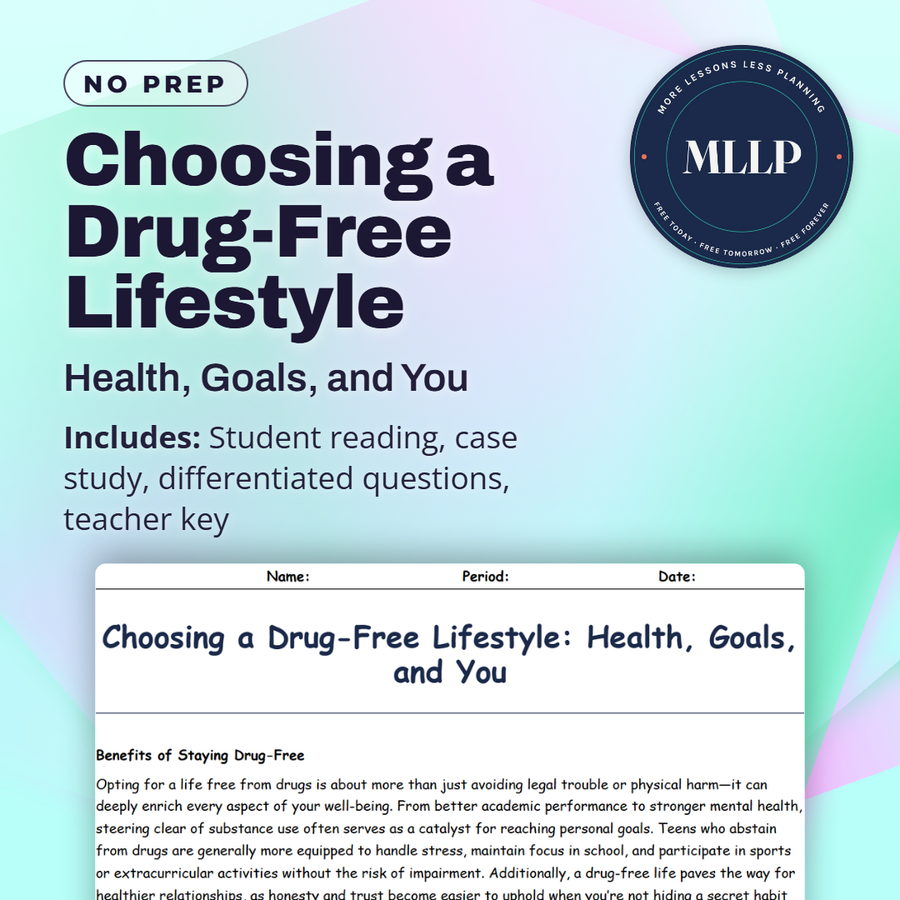
Choosing a Drug-Free Lifestyle: Health, Goals, and You
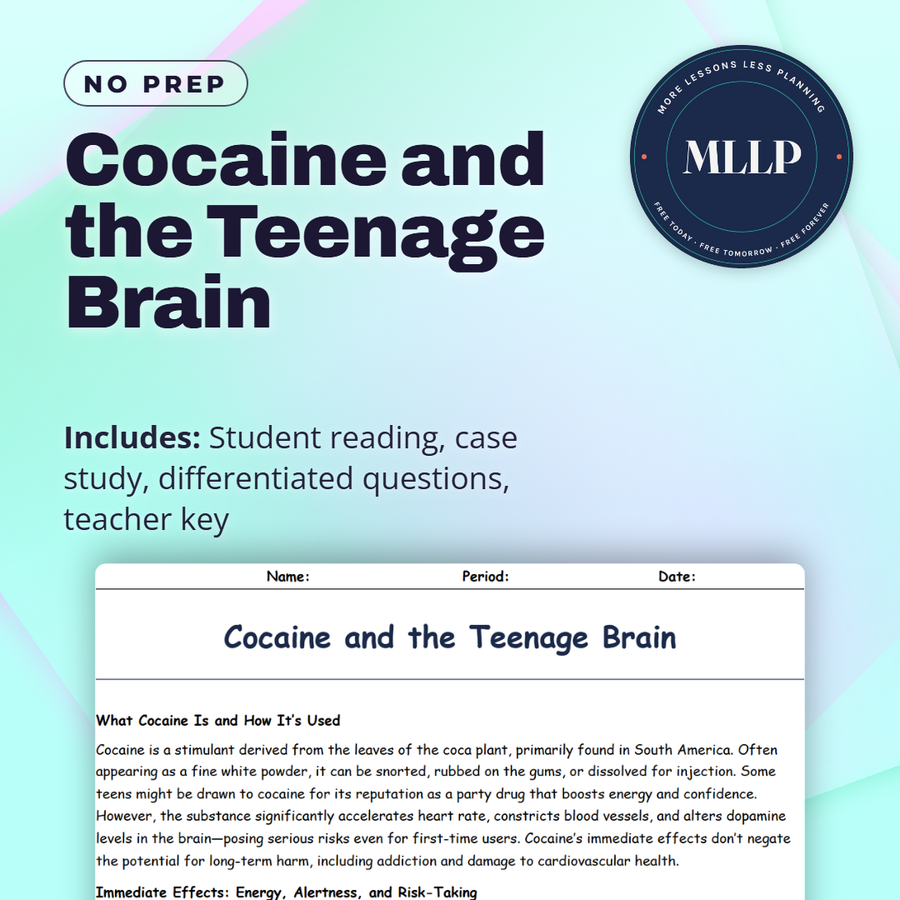
Cocaine and the Teenage Brain
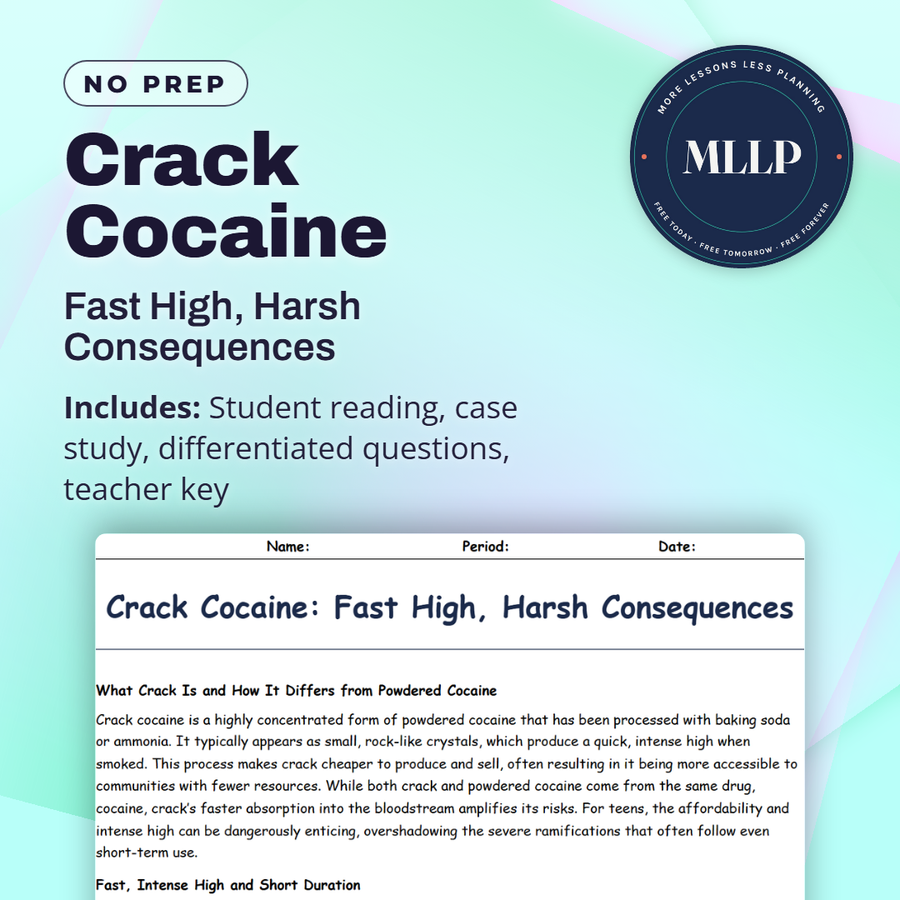
Crack Cocaine: Fast High, Harsh Consequences
Heroin and Teens: Understanding the Risks and Realities
How Addiction Changes the Brain: Science for Students
How to Handle Peer Pressure and Say No with Confidence
Every lesson on this site is free to download and use. If one of them saved you a prep period, you can chip in a few bucks toward my three kids' daycare fund. That's genuinely where tips go.