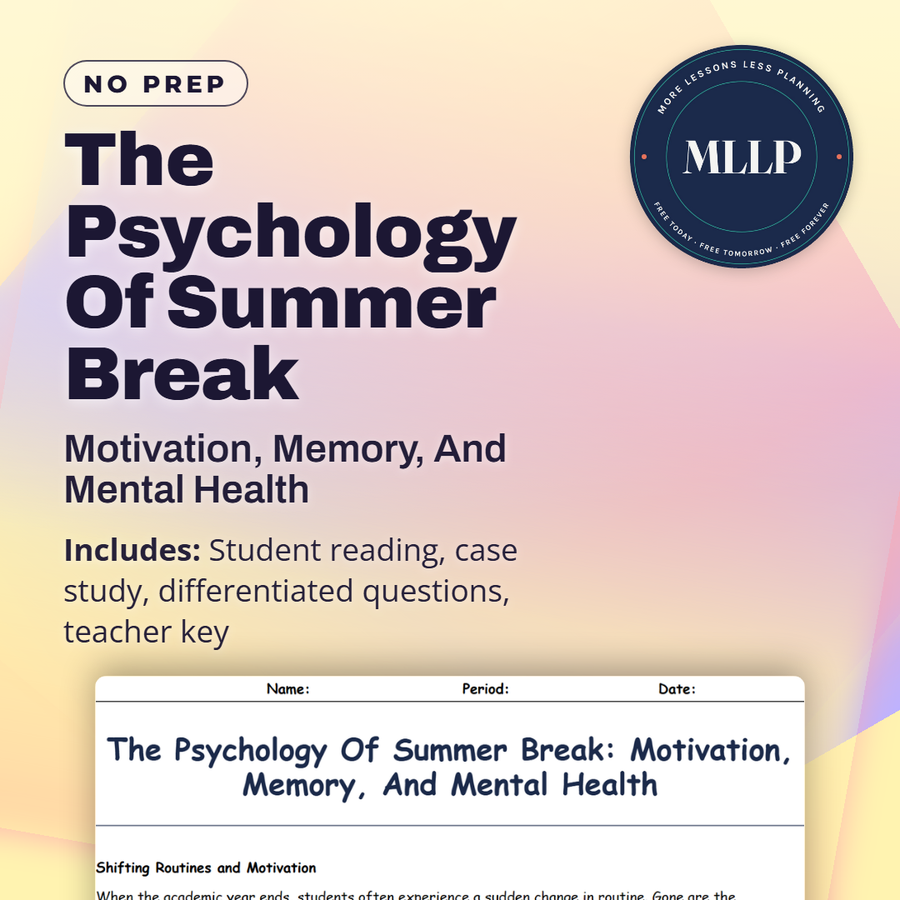
The Psychology Of Summer Break: Motivation, Memory, And Mental Health
Quality reviewed September 2026
Facts verified September 9, 2026
- Subject
- Social Studies
- Grades
- Grades 9-12
- Length
- 8-page student worksheet
- Time
- About one 50-minute class period
- Great for
- Sub plans and independent work
- Includes
- Reading passage, comprehension questions + full answer key
- Format
- Print-and-go PDF
What students do
- Analyze why Jenna's loss of structure initially triggered disconnection despite newly available "freedom"
- Distinguish between intrinsic and extrinsic motivation and explain why summer can help develop internal drive
- Evaluate the risk of summer slide and design mitigation strategies using self-directed learning opportunities
- Connect dopamine reward pathways to goal-setting, sleep patterns, and mental health during extended breaks
What it covers
- Motivation shifts when external structure disappears
- Learning loss and memory retention challenges
- Mental health, sleep hygiene, and purpose during breaks
Start reading this worksheet
Shifting Routines and Motivation
When the academic year ends, students often experience a sudden change in routine. Gone are the structured class schedules, homework deadlines, and early morning alarms. This shift can have a profound impact on motivation. Some students use the time to explore new hobbies, read for pleasure, or engage in community programs. Others, however, might struggle to find the same drive they had when assignments kept them accountable. Psychologists refer to this phenomenon as a shift in goal-directed behavior. Without the external pressure of grades and teacher expectations, an individual’s internal motivations play a much larger role in determining daily activities. Yet summer also provides opportunities for intrinsic motivation to flourish. Intrinsic motivation arises from genuine interest or personal satisfaction. For instance, a student may learn to play the guitar just because they love music, not because they are aiming for a grade. During the school year, extrinsic motivators such as quizzes, tests, and classroom participation points often drive learning. Summer break removes those external incentives, which can feel liberating or disorienting, depending on one’s mindset and self-regulation skills. The transition underscores the tension between doing something because we “have to” versus doing it because we “want to.” At the same time, summer can highlight the need for balance between rest and productivity. Psychologists emphasize the role of downtime in preventing burnout and fostering creativity. When the brain is not overloaded with academic tasks, there is more space for daydreaming and creative thought. Students who excel during the school year might suddenly discover new forms of self-expression—painting, skateboarding, creative writing—or even discover the joy of doing nothing for a while. This period of mental rest can be particularly beneficial, yet it also calls for healthy time management to avoid a complete plunge into endless screen time or idle hours.
Learning Loss, Memory, and Cognitive Function
While the break can provide essential rest, educators often worry about “summer slide,” the term used to describe learning loss during extended vacations. This can be especially pronounced in subjects such as math and foreign languages, where consistent practice is key to retaining information. According to several studies, students can lose up to two months’ worth of academic progress in areas they do not exercise over summer. However, this can vary widely, influenced by factors such as household resources, engagement in educational activities, and individual learning styles. From a cognitive psychology standpoint, memory and skill retention rely on repeated retrieval and application of knowledge. When the brain goes for months without reviewing key concepts, those neural pathways weaken. Yet it’s also crucial to note that not all forms of memory degrade equally. Procedural memory (like riding a bike or playing an instrument) tends to remain intact, while declarative memory (like formulas and vocabulary) is more susceptible to decay. Activities such as reading, puzzles, or cultural enrichment (like visiting museums) can mitigate this loss, allowing students to bridge academic gaps and re-enter school with minimal setback. Still, self-directed learning can flourish in the absence of strict curricula. A student fascinated by astronomy might devour documentaries and stargazing guides, effectively reinforcing and expanding their knowledge. Another might improve language proficiency through daily conversations with a friend or through online immersive tools. Summer break can thus serve as a time for specialized intellectual growth, shaped by personal interests rather than standardized syllabi.
Like what you read? The full reading, the case study, and every question set are in the free download below, along with the answer key.
Why this matters
Jenna's summer opened with no deadlines, no grades, and afternoons that dissolved into scrolling because nothing else pulled her attention. She was not lazy. Losing her external structure had shut off the dopamine that used to fire on cue, and doing nothing felt empty rather than restful.
Once she set her own goals, coding, guitar, morning walks, the same reward pathways fired again, from a different source. Students read this expecting a lecture and instead learn why procedural memory survives the break while declarative memory quietly decays, and leave with an actual plan.
From one teacher to another
Jenna's story captures something every high-achiever feels: when grades disappear and deadlines vanish, so does the engine running your day. She spiraled into afternoon-long scrolling until she realized that doing nothing was not actually restful. It was empty. Once she set loose personal goals (coding, guitar, morning walks), the dopamine started firing again, but differently than test-taking did. This worksheet explores the real mechanisms: how procedural memory (riding a bike) survives summer while declarative memory (formulas) decays, why erratic sleep wrecks mood even on vacation, and how intrinsic motivation, learning because you actually want to, does not emerge automatically. Students discover they can design their own summer rather than drift into it.
What you get
Download
Where should I send the next one?
Everything here is free and it stays that way. Leave your email and I'll send you the new lessons as they go up. You can unsubscribe from any one of them.
Related resources
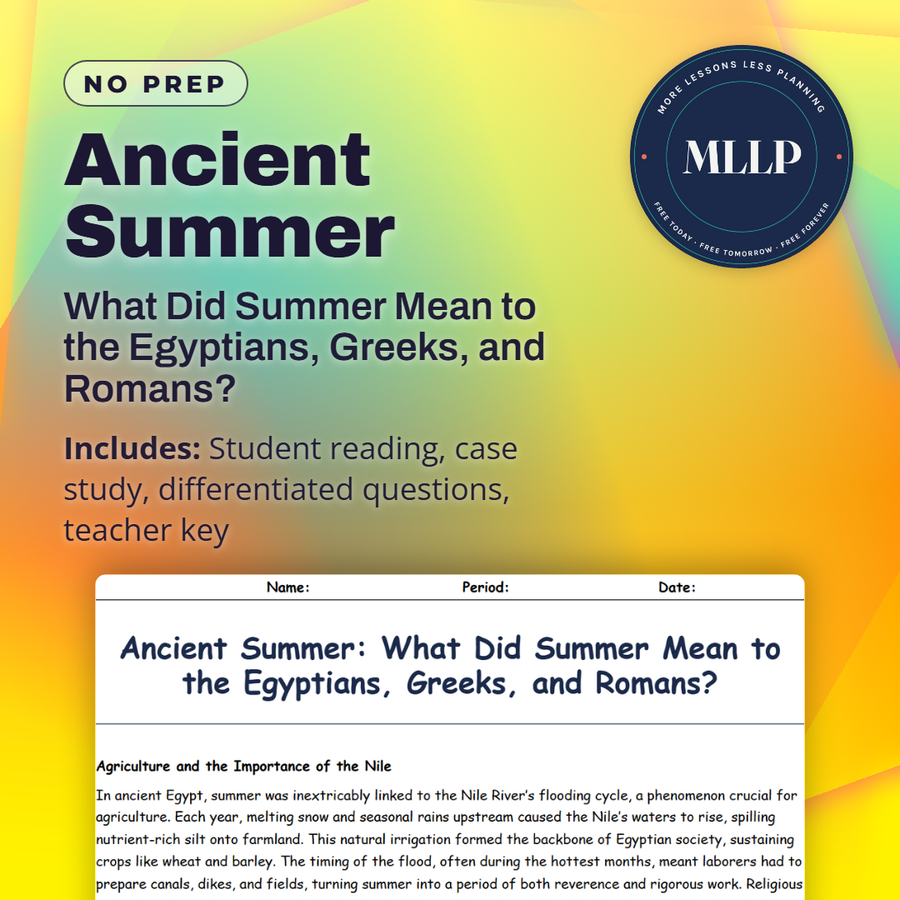
Ancient Summer: What Did Summer Mean to the Egyptians, Greeks, and Romans?
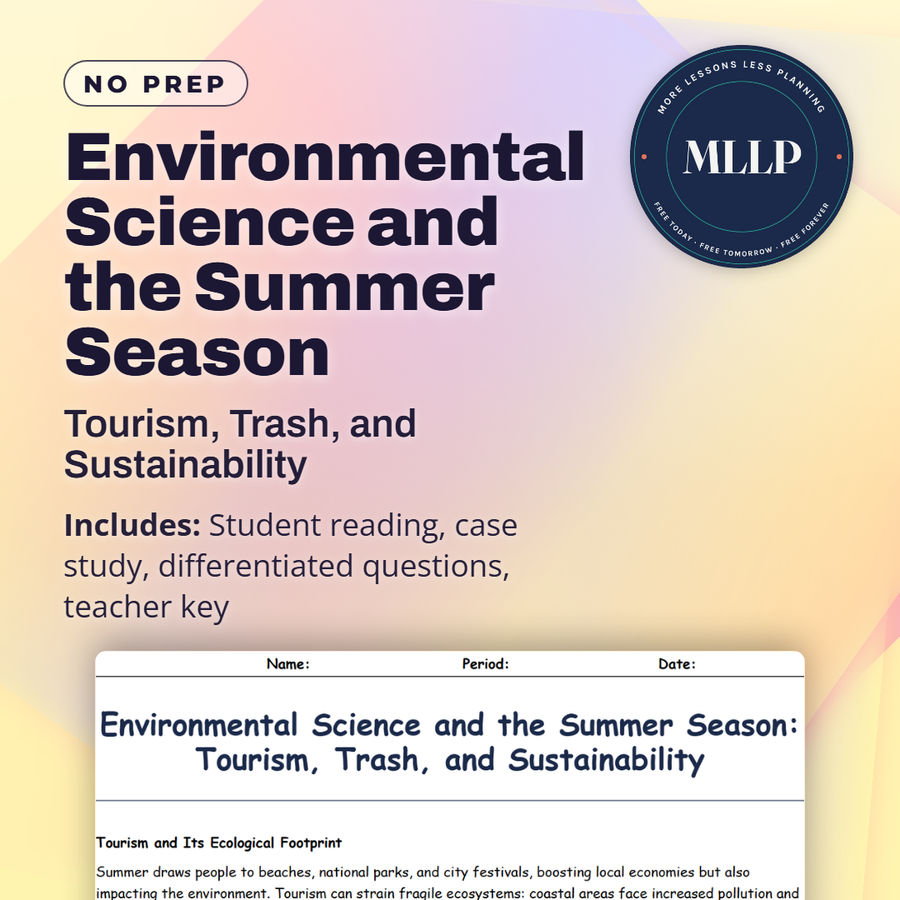
Environmental Science and the Summer Season: Tourism, Trash, and Sustainability
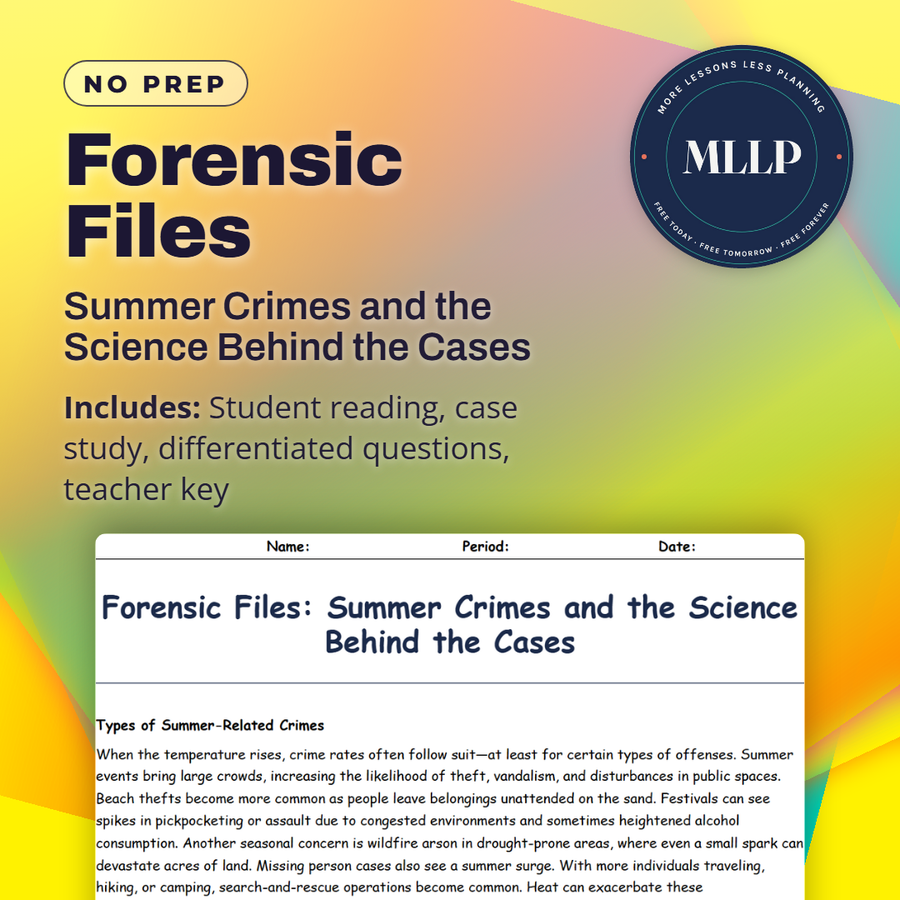
Forensic Files: Summer Crimes and the Science Behind the Cases

Summer Around the World: Global History of Festivals and Solstice Celebrations
Summer Science: The Biology Of Sunscreen And Skin Protection
The Economics Of Summer: Ice Cream, Travel, And Supply And Demand
Every lesson on this site is free to download and use. If one of them saved you a prep period, you can chip in a few bucks toward my three kids' daycare fund. That's genuinely where tips go.