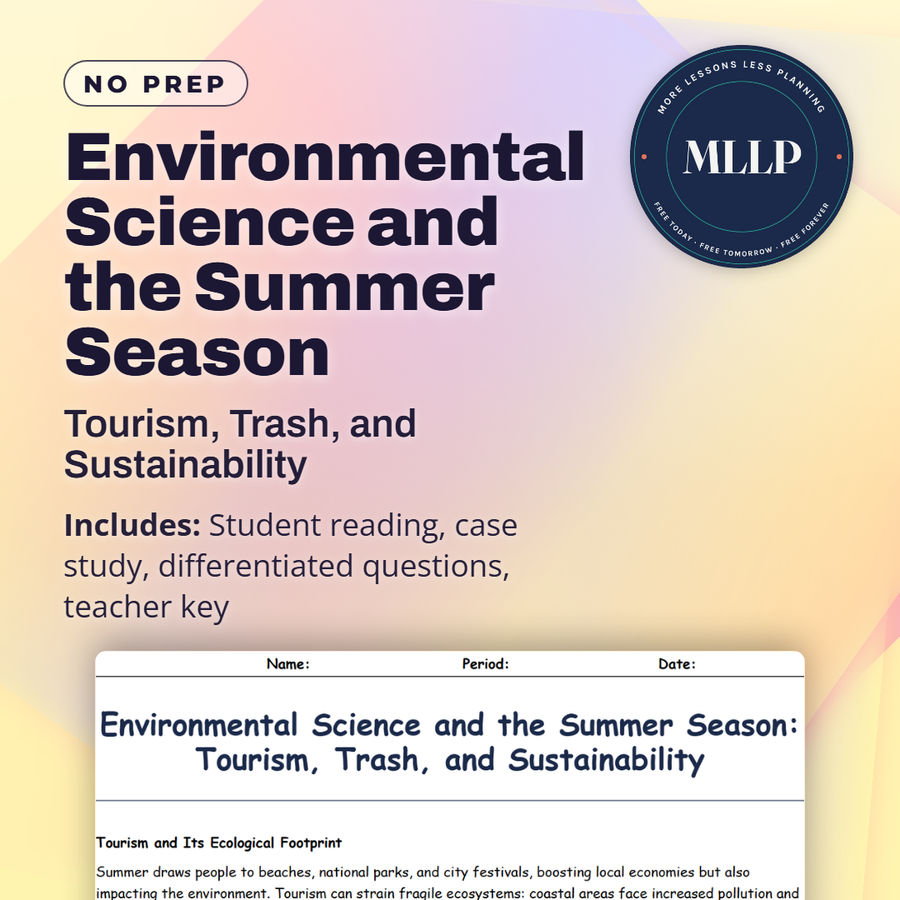
Environmental Science and the Summer Season: Tourism, Trash, and Sustainability
Quality reviewed September 2026
Facts verified September 9, 2026
- Subject
- Science
- Grades
- Grades 9-12
- Length
- 7-page student worksheet
- Time
- About one 50-minute class period
- Great for
- Sub plans and independent work
- Includes
- Reading passage, comprehension questions + full answer key
- Format
- Print-and-go PDF
What students do
- Analyze how a coastal community's cleanup initiative shifted consumer behavior and business practices
- Evaluate trade-offs between tourism revenue and ecosystem protection in popular summer destinations
- Identify sources of plastic pollution at beaches and propose sustainable alternatives
- Connect human choices during summer travel to downstream impacts on marine wildlife
What it covers
- Tourism and ecosystem strain
- Single-use plastics and marine debris
- Sustainable summer practices
Start reading this worksheet
Tourism and Its Ecological Footprint
Summer draws people to beaches, national parks, and city festivals, boosting local economies but also impacting the environment. Tourism can strain fragile ecosystems: coastal areas face increased pollution and disturbance to wildlife, while mountain trails show accelerated erosion under heavy foot traffic. The sheer volume of travelers often leads to more waste, from single-use plastics at food stalls to increased water consumption in hotels. Municipalities scramble to handle the surge, sometimes resorting to quick fixes like extra trash collections without deeper, sustainable solutions. Popular destinations often experience a phenomenon called “over-tourism,” where local infrastructure, such as roads and waste treatment facilities, becomes overwhelmed. Iconic beaches can suffer when tourists unknowingly trample dunes that protect against erosion or disturb nesting grounds for endangered species. Similarly, parks that see a spike in visitors may struggle to maintain trails or properly manage litter. Critics highlight the environmental costs that often go unaccounted for, even though tourism can be a powerful economic driver. Balancing the revenue gained from visitors with the preservation of natural habitats is an ongoing challenge for local governments and environmental organizations. From an educational standpoint, these environmental pressures present opportunities to demonstrate the cause-and-effect relationships between human activity and nature. Summer tourism doesn’t have to be inherently harmful if communities adopt mindful strategies. Public awareness campaigns about recycling, wildlife protection, and responsible water usage can help mitigate the worst effects of visitor influx. Ultimately, preserving these destinations also ensures they remain attractive to future travelers, creating a cycle of sustainability that benefits both economy and environment.
Single-Use Plastics and Seasonal Waste
Among the most visible signs of summer’s environmental impact is the abundance of single-use plastics—think disposable cups, straws, and food packaging. These items frequently end up as marine debris, threatening sea life and washing up on shorelines. Microplastics, tiny particles that break down from larger pieces, are increasingly found in fish, sea salt, and even the human body. Summer beach gatherings contribute significantly to this plastic load when discarded items aren’t properly disposed of or recycled. Local governments and environmental groups have taken steps to combat plastic pollution. Some coastal towns ban plastic bags or single-use straws altogether, offering alternatives like reusable tote bags or biodegradable straws. Others install water refill stations to encourage the use of refillable bottles instead of disposable ones. Yet these measures require community buy-in. Tourism agencies can run “pack-it-in, pack-it-out” campaigns, urging visitors to leave beaches and parks cleaner than they found them. The focus on consumer responsibility extends beyond basic clean-up, aiming to shift cultural norms around convenience and disposable goods. On a broader scale, plastics highlight systemic challenges. Waste management infrastructure might lag behind peak seasonal demands, leading to overflowing trash bins and littered beachscapes. Recycling capabilities vary from place to place, and contamination (like food residue in recyclable containers) can render an entire batch unrecyclable. Addressing summer’s waste crisis means more than just extra trash collection—it involves rethinking product design, consumer habits, and municipal policies that encourage reusability and reduce plastic reliance.
Like what you read? The full reading, the case study, and every question set are in the free download below, along with the answer key.
Why this matters
A crowded beach in July produces two things at nearly the same rate: sunburns and trash bags. Plastic from single-use cups works its way into fish and turns up as microplastics in sea salt, a connection this reading puts in front of students instead of leaving it vague. The coastal alliance case study follows what happened once volunteers showed up to run a cleanup.
I've noticed my students picture pollution as something a factory causes, never something that follows them on vacation. What changes their mind is the local snack stand that started discounting reusable cups the moment the cleanup crew arrived, proof a business adjusts fast once customers show they care.
From one teacher to another
Summer is when beaches fill up, and so do trash bins. I've noticed that students rarely think about how that ice cream cone's plastic wrapper ends up tangled around sea turtles until we walk through this worksheet's coastal alliance case study. The data gets their attention: single-use plastics showing up in fish, microplastics in sea salt. But what shifts their thinking is the business side, how a local snack stand switched to offering discounts for reusable cups just because volunteers showed up with a cleanup campaign. It's concrete proof that consumer choices ripple outward, and summer, with all its foot traffic and spending, is where those ripples show.
What you get
Download
Where should I send the next one?
Everything here is free and it stays that way. Leave your email and I'll send you the new lessons as they go up. You can unsubscribe from any one of them.
Related resources
Ancient Summer: What Did Summer Mean to the Egyptians, Greeks, and Romans?
Forensic Files: Summer Crimes and the Science Behind the Cases

Summer Around the World: Global History of Festivals and Solstice Celebrations
Summer Science: The Biology Of Sunscreen And Skin Protection
The Economics Of Summer: Ice Cream, Travel, And Supply And Demand
The Health Science of Summer Heat: Hydration, Heatstroke, and Body Systems
Every lesson on this site is free to download and use. If one of them saved you a prep period, you can chip in a few bucks toward my three kids' daycare fund. That's genuinely where tips go.