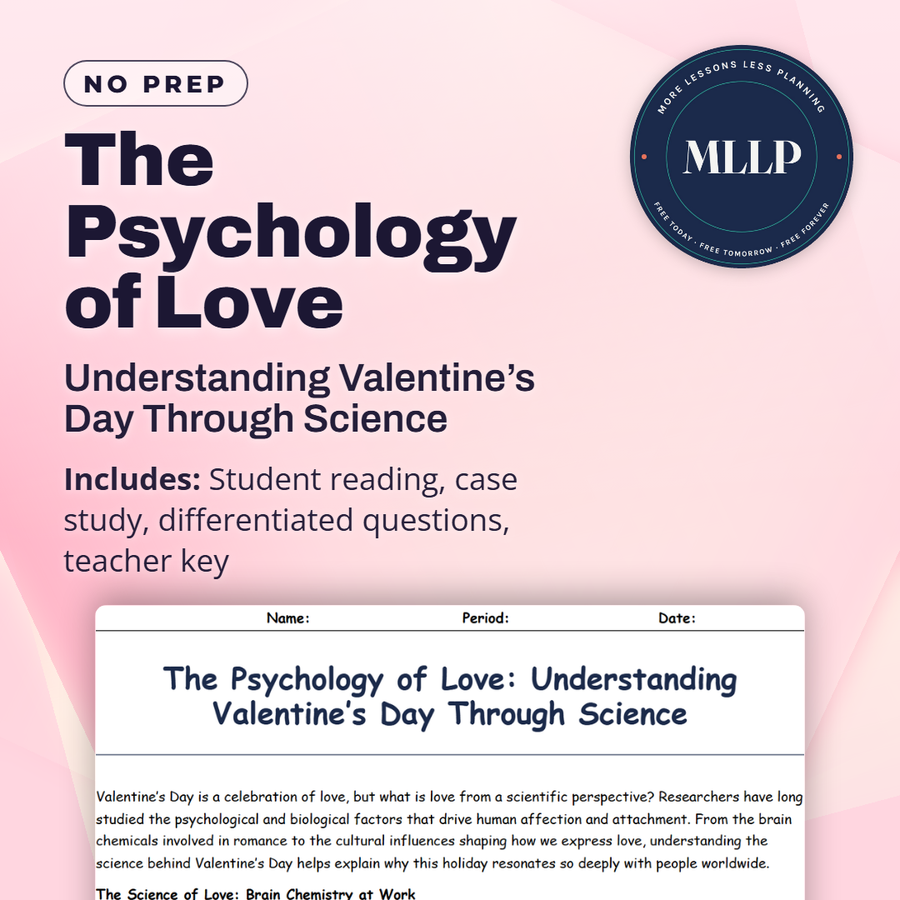
The Psychology of Love: Understanding Valentine’s Day Through Science
Quality reviewed September 2026
Facts verified September 9, 2026
- Subject
- Social Studies
- Grades
- Grades 9-12
- Length
- 7-page student worksheet
- Time
- About one 50-minute class period
- Great for
- Sub plans and independent work
- Includes
- Reading passage, comprehension questions + full answer key
- Format
- Print-and-go PDF
What students do
- Map dopamine, oxytocin, serotonin, and vasopressin to specific stages of relationship bonding
- Apply attachment theory to explain why mismatched styles create tension
- Compare how Western, Japanese, and Indian cultures express and celebrate love differently
- Analyze how brain chemistry and culture work together to shape romantic behavior
What it covers
- Brain chemicals and emotional bonding across relationship stages
- Attachment styles and their influence on relationship patterns
- Cultural norms and expressions of romantic love
Start reading this worksheet
Valentine’s Day is a celebration of love, but what is love from a scientific perspective? Researchers have long studied the psychological and biological factors that drive human affection and attachment. From the brain chemicals involved in romance to the cultural influences shaping how we express love, understanding the science behind Valentine’s Day helps explain why this holiday resonates so deeply with people worldwide.
The Science of Love: Brain Chemistry at Work
Love begins in the brain, not the heart. When people fall in love, their brains release a cascade of chemicals, including dopamine, oxytocin, and serotonin. Dopamine, often called the "feel-good" neurotransmitter, plays a central role in the early stages of attraction. It creates feelings of euphoria and reward, which is why spending time with someone you love feels so pleasurable. Oxytocin, sometimes referred to as the "love hormone," is released during moments of physical closeness, such as hugging or kissing. This chemical deepens emotional bonds and promotes feelings of trust and security. Some studies have found that couples with higher oxytocin levels report greater satisfaction and stability, though relationship quality and context matter too. Serotonin, on the other hand, affects mood regulation. Interestingly, people in the early stages of love often experience lower serotonin levels, which some researchers link to the obsessive thoughts characteristic of new relationships. The combination of these chemicals creates the unique emotional experience we call love. Over time, as relationships mature, the brain shifts from the intensity of initial attraction to the steadiness of long-term attachment. This transition involves other brain chemicals, such as vasopressin, which supports commitment and monogamy in many species, including humans.
Attachment Theory: Why We Love the Way We Do
Psychologists often explain romantic relationships through attachment theory, a framework originally developed to study the bonds between infants and their caregivers. According to this theory, the way individuals form attachments in childhood influences their romantic relationships later in life. People with secure attachment styles are generally comfortable with intimacy and trust. They find it easier to maintain healthy, stable relationships. In contrast, individuals with anxious attachment styles may crave closeness but fear rejection, leading to cycles of dependency and insecurity. Those with avoidant attachment styles tend to distance themselves emotionally, often struggling with commitment or vulnerability. These styles are tendencies, not fixed labels: a person can lean secure in one relationship and anxious in another, and patterns can shift over time with awareness and effort. Attachment theory also helps explain why some relationships thrive while others fail. For example, mismatched attachment styles—such as one partner being secure and the other avoidant—can create tension. Understanding these dynamics enables individuals to communicate better and build stronger emotional connections.
Like what you read? The full reading, the case study, and every question set are in the free download below, along with the answer key.
Why this matters
Four brain chemicals decide more about a relationship than most students consider: dopamine, oxytocin, serotonin, and vasopressin, each running a different stage of bonding. This reading pairs that chemistry with attachment styles, showing why a secure partner talks a conflict through while an avoidant one pulls away.
The section that changes the room is culture: students realize Valentine's Day is not universal, and how people express love was taught, not hardwired. By the end they hold three explanations at once, biological, psychological, cultural, instead of picking whichever feels most romantic.
From one teacher to another
What is love, really? The chemistry is the easy part: dopamine, oxytocin, serotonin, vasopressin all doing their jobs. But attachment styles explain why two people can react so differently to the same situation. A secure partner wants to talk things out. An avoidant one pulls away. The culture section blows their minds, Valentine's Day isn't universal, and the way people love is shaped by what they were taught love should look like. Students finish understanding that love is biological, psychological, and cultural all at once, which means there's no single "right way" to feel or express it.
What you get
Download
Where should I send the next one?
Everything here is free and it stays that way. Leave your email and I'll send you the new lessons as they go up. You can unsubscribe from any one of them.
Related resources
Animal Courtship Biology: Sexual Selection in the Wild
Famous Relationship Cases in Forensics: Evidence vs. Emotion in the Public Eye
Forensic Science and Domestic Violence
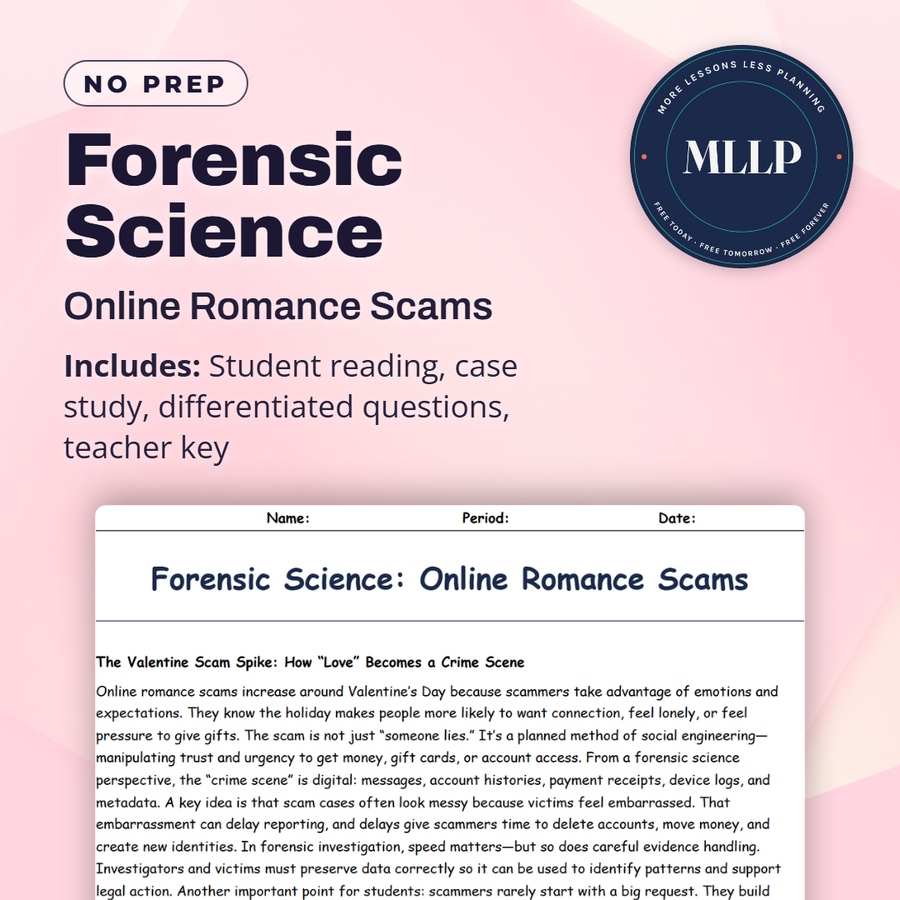
Forensic Science: Online Romance Scams
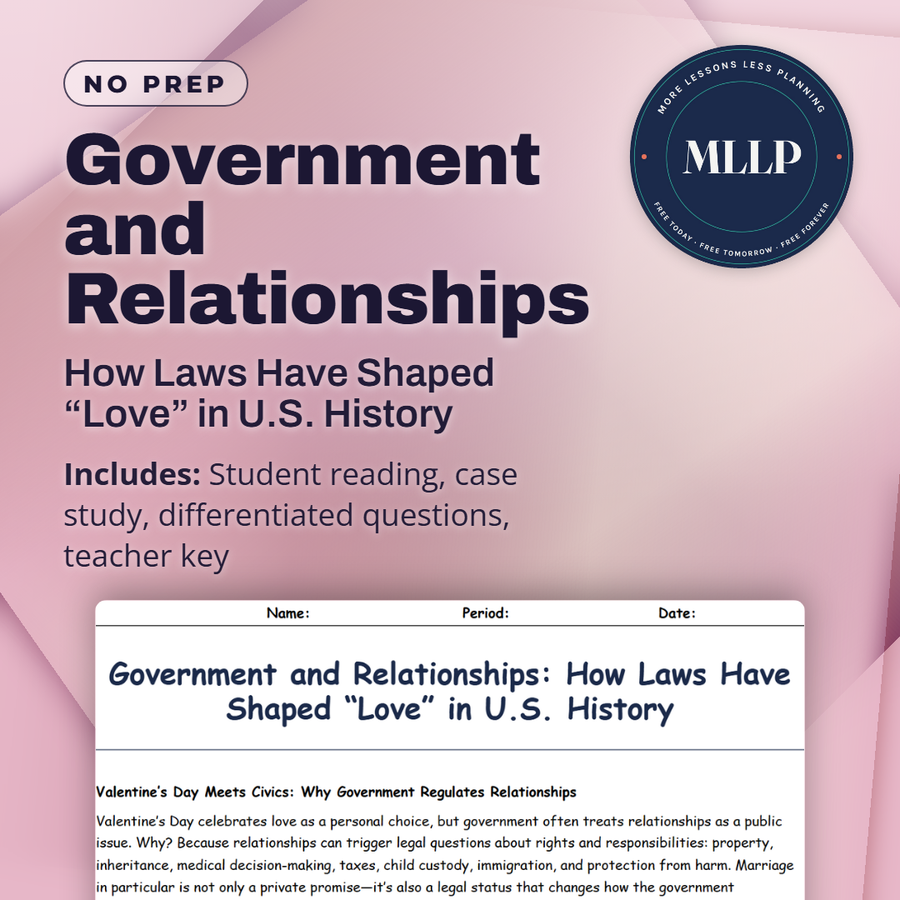
Government and Relationships: How Laws Have Shaped “Love” in U.S. History
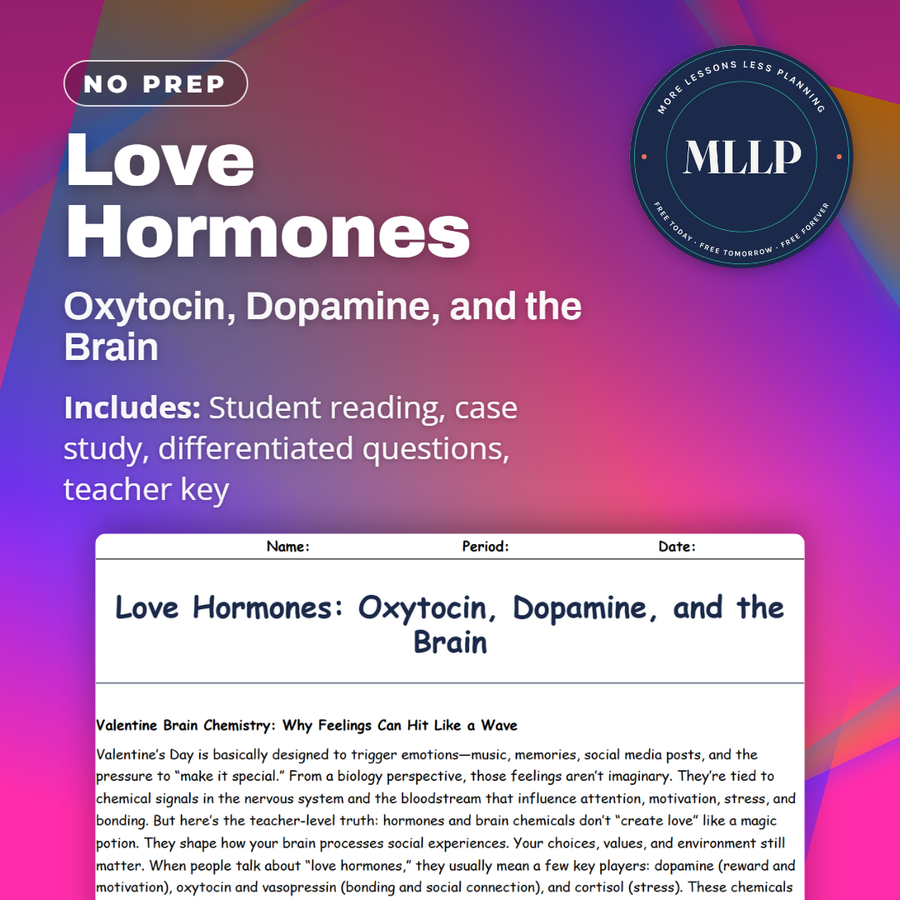
Love Hormones: Oxytocin, Dopamine, and the Brain
Every lesson on this site is free to download and use. If one of them saved you a prep period, you can chip in a few bucks toward my three kids' daycare fund. That's genuinely where tips go.