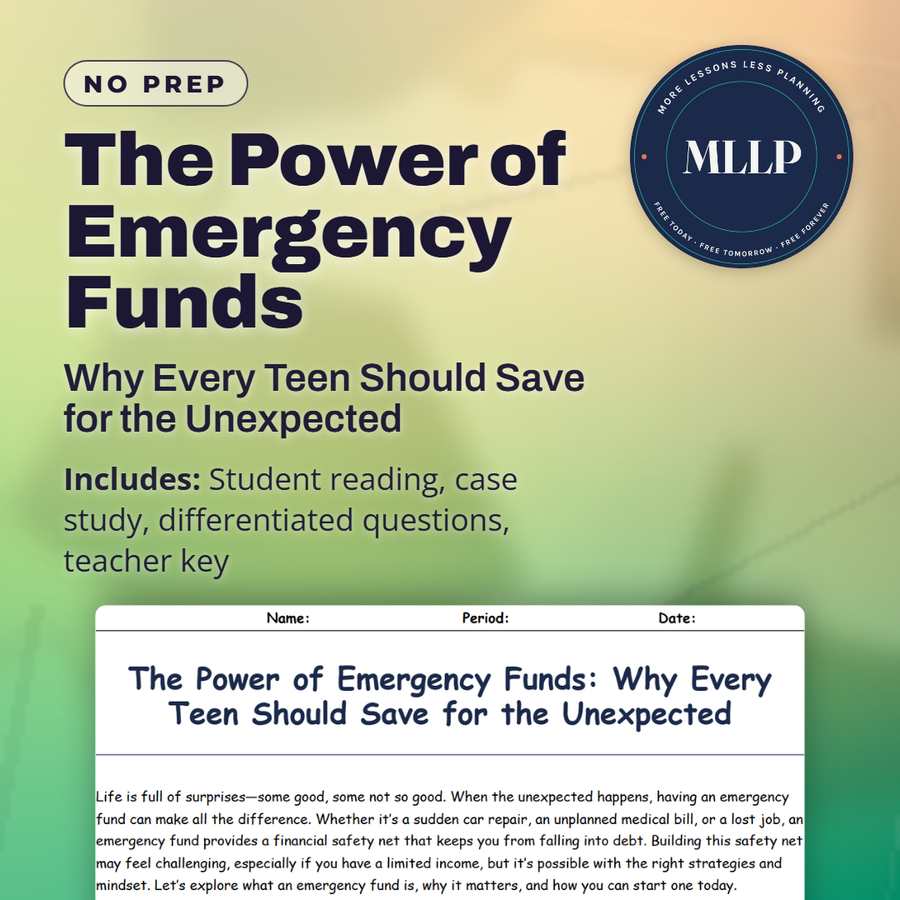
The Power of Emergency Funds: Why Every Teen Should Save for the Unexpected
Quality reviewed September 2026
Facts verified September 24, 2026
- Subject
- Career & Life Skills
- Grades
- Grades 9-12
- Length
- 7-page student worksheet
- Time
- About one 50-minute class period
- Great for
- Sub plans and independent work
- Includes
- Reading passage, comprehension questions + full answer key
- Format
- Print-and-go PDF
What students do
- Match five items on emergency funds, separate accounts, cash at home, and high-yield savings to what each one does
- Fill in the blanks on what an emergency fund is for, the recommended starting amount, and why a separate account helps
- Answer multiple choice questions on the purpose of an emergency fund, why to keep it separate from checking, and a good short-term savings target
- Write short answers on why saving for the unexpected matters, how to start a fund on a small income, and how high-yield accounts help
What it covers
- What an emergency fund is for and how much to aim for as a starting goal
- Strategies for building a fund on a small income, like automating savings and saving windfalls
- A case study on Jake, whose emergency fund covers a $450 car repair
Start reading this worksheet
Life is full of surprises—some good, some not so good. When the unexpected happens, having an emergency fund can make all the difference. Whether it’s a sudden car repair, an unplanned medical bill, or a lost job, an emergency fund provides a financial safety net that keeps you from falling into debt. Building this safety net may feel challenging, especially if you have a limited income, but it’s possible with the right strategies and mindset. Let’s explore what an emergency fund is, why it matters, and how you can start one today.
What Is an Emergency Fund?
An emergency fund is a sum of money set aside specifically for unplanned expenses. Think of it as a financial cushion. It’s not for buying concert tickets, upgrading your phone, or treating yourself to a fancy dinner. Instead, an emergency fund is there to help with unexpected, essential costs, such as: Car repairs (e.g., a flat tire or broken alternator) Medical bills not covered by insurance Replacing a broken laptop needed for school Helping cover expenses if you lose your part-time job Experts recommend saving at least three to six months’ worth of living expenses for a fully funded emergency account. However, for teens and young adults, starting with $500 to $1,000 is a great short-term goal. This amount can handle most smaller emergencies and prevent you from turning to credit cards or payday loans.
Why Are Emergency Funds So Important?
Without an emergency fund, even a small unexpected expense can create financial stress. Imagine needing $200 for a car repair but having no savings. You might be forced to borrow money, use a high-interest credit card, or skip paying another bill, which could lead to late fees or damaged credit. Beyond the practical benefits, having an emergency fund gives you peace of mind. Knowing you have a safety net reduces financial anxiety and helps you focus on your goals, whether that’s excelling in school, saving for college, or preparing for your first apartment.
Like what you read? The full reading, the case study, and every question set are in the free download below, along with the answer key.
Why this matters
Fifty dollars a month doesn't feel like much, until the day a $450 bill shows up out of nowhere the way it did for Jake, and by then it's too late to start saving for it. Most students will hit some version of an unplanned expense before they finish high school, and whether they have $500 set aside changes what that day ends up costing them. The reading's point about keeping the fund in a separate account is a small structural fix that removes the temptation to dip into it for something that isn't actually an emergency.
From one teacher to another
An emergency fund, the reading says, is money set aside strictly for essential surprises, like a car repair or a medical bill, not a concert ticket or a phone upgrade. While experts recommend three to six months of expenses, it suggests $500 to $1,000 as a realistic starting target for a teen. Several strategies get covered for building that fund on a limited income: automating a portion of every paycheck, cutting small recurring costs like buying coffee out, and saving windfalls like birthday money. A table compares keeping emergency money in a regular savings account, a high-yield account, or cash at home. Jake saves $50 a month from his grocery store job, and when his car needs a $450 repair, he pays it from his $600 fund instead of a credit card.
What you get
Download
Where should I send the next one?
Everything here is free and it stays that way. Leave your email and I'll send you the new lessons as they go up. You can unsubscribe from any one of them.
Related resources
Banking Basics: Checking, Savings, and Debit Cards Explained
Budgeting Basics: How to Plan and Track Your Spending
How to Avoid Debt: Smart Money Habits for Teens

Investing 101: Simple Ways to Grow Your Money Over Time
Needs vs. Wants: Making Smart Spending Choices
Saving for Success: How to Set Financial Goals and Stick to Them
Every lesson on this site is free to download and use. If one of them saved you a prep period, you can chip in a few bucks toward my three kids' daycare fund. That's genuinely where tips go.