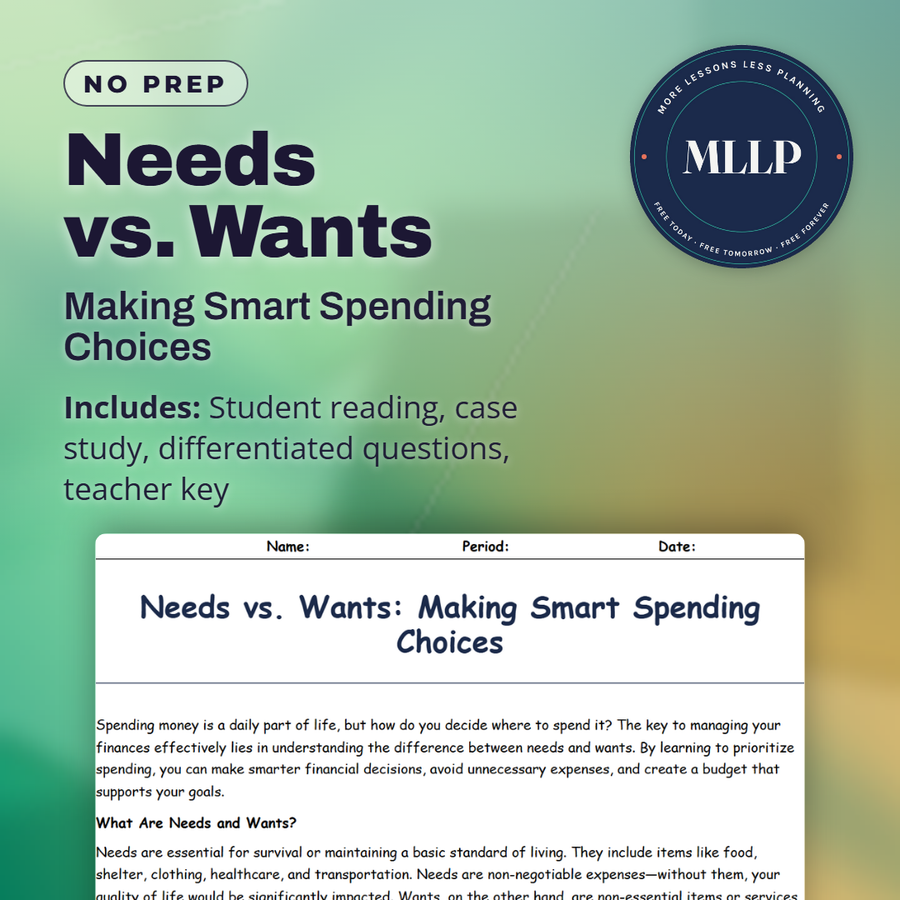
Needs vs. Wants: Making Smart Spending Choices
Quality reviewed September 2026
Facts verified September 24, 2026
- Subject
- Career & Life Skills
- Grades
- Grades 9-12
- Length
- 6-page student worksheet
- Time
- About one 50-minute class period
- Great for
- Sub plans and independent work
- Includes
- Reading passage, comprehension questions + full answer key
- Format
- Print-and-go PDF
What students do
- Match five terms including needs, wants, the pause rule, and budget to what each one means
- Fill in the blanks on which expenses count as needs, which count as wants, and why needs come first
- Answer multiple choice questions on which expense is a need, how the pause rule helps, and why budgeting for wants matters too
- Write short answers on why the needs versus wants distinction matters for a budget, how tracking expenses helps, and how to cut back on wants
What it covers
- The difference between needs like rent and groceries and wants like streaming and concert tickets
- Practical tips for sorting expenses, including the 24-hour pause rule before a purchase
- A case study on Jordan, who spends a first paycheck on wants and can't cover gas or the phone bill
Start reading this worksheet
Spending money is a daily part of life, but how do you decide where to spend it? The key to managing your finances effectively lies in understanding the difference between needs and wants. By learning to prioritize spending, you can make smarter financial decisions, avoid unnecessary expenses, and create a budget that supports your goals.
What Are Needs and Wants?
Needs are essential for survival or maintaining a basic standard of living. They include items like food, shelter, clothing, healthcare, and transportation. Needs are non-negotiable expenses—without them, your quality of life would be significantly impacted. Wants, on the other hand, are non-essential items or services that improve your lifestyle or bring enjoyment. These could include dining out, subscription services, designer clothing, or the latest tech gadgets. Understanding the difference between needs and wants is the foundation of smart spending. It can help you allocate your income wisely, ensuring that your necessities are covered before indulging in luxuries. For example, consider food. A loaf of bread and groceries to prepare meals are needs. However, dining out at a fancy restaurant or ordering delivery is often a want. Learning to recognize these distinctions can help you cut costs when money is tight.
Why Prioritizing Spending Matters
Prioritizing spending allows you to meet your financial obligations and work toward long-term goals, like saving for college or buying a car. When you focus on needs first, you ensure that your basic requirements are met. Wants can be fulfilled later, using discretionary income or planned savings. Failing to prioritize can lead to financial stress. Imagine spending your paycheck on concert tickets or luxury items, only to realize you can’t pay your rent or buy groceries. Smart spending starts with a clear understanding of what’s necessary and what can wait.
Like what you read? The full reading, the case study, and every question set are in the free download below, along with the answer key.
Why this matters
Jordan's paycheck story is the exact sequence a lot of students are about to live through themselves: spend on wants first, discover the needs are unpaid. Learning to sort an expense into one category or the other before spending it, the way the reading's table does, is a two-second habit that prevents a much bigger headache later. The pause rule in particular is something a student can start using on their very next purchase, no bank account or job required.
From one teacher to another
Needs, the reading explains, are the expenses you can't skip: food, shelter, clothing, healthcare, transportation. Wants are everything that makes life more enjoyable without being required, like dining out or the latest phone. A table of common expenses sorts things like rent, a Netflix subscription, and designer sneakers into one column or the other with a short reason for each call. The "pause rule" tells students to wait 24 hours on a non-essential purchase to see if it still feels worth it. Jordan gets a first paycheck and spends it on shoes, a video game, and lunch out with friends, then runs out of money for gas and the phone bill before the week is over.
What you get
Download
Where should I send the next one?
Everything here is free and it stays that way. Leave your email and I'll send you the new lessons as they go up. You can unsubscribe from any one of them.
Related resources
Banking Basics: Checking, Savings, and Debit Cards Explained
Budgeting Basics: How to Plan and Track Your Spending
How to Avoid Debt: Smart Money Habits for Teens
Investing 101: Simple Ways to Grow Your Money Over Time
Saving for Success: How to Set Financial Goals and Stick to Them
The Power of Emergency Funds: Why Every Teen Should Save for the Unexpected
Every lesson on this site is free to download and use. If one of them saved you a prep period, you can chip in a few bucks toward my three kids' daycare fund. That's genuinely where tips go.