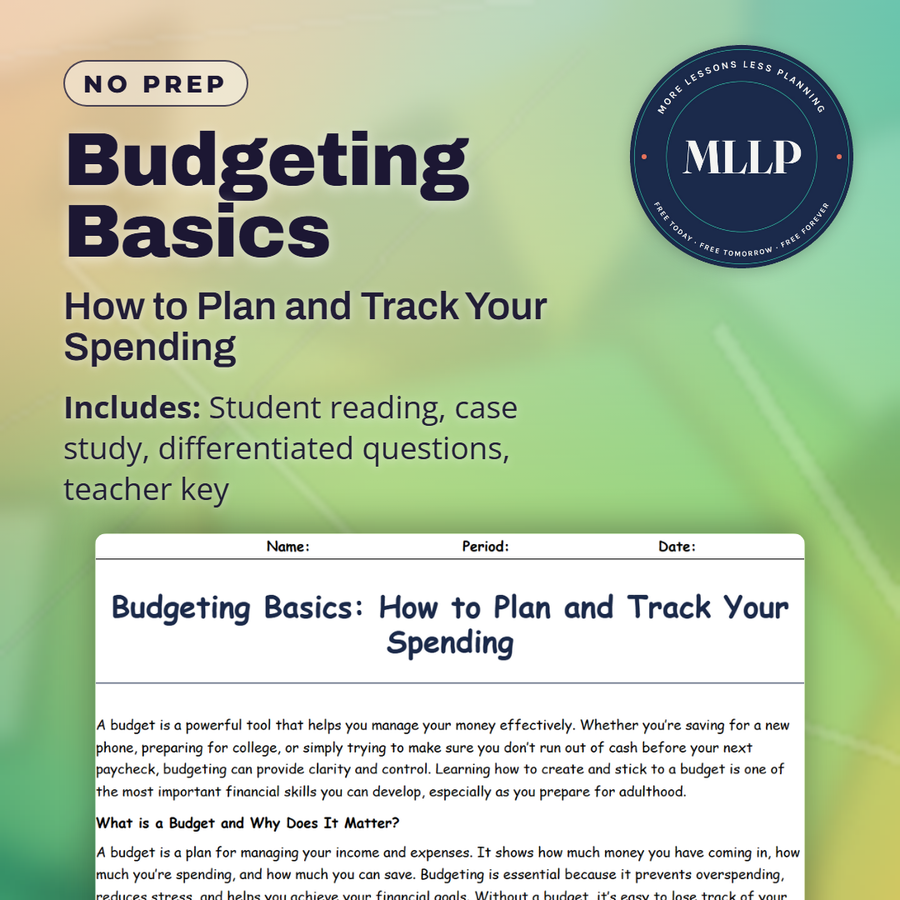
Budgeting Basics: How to Plan and Track Your Spending
Quality reviewed September 2026
Facts verified September 24, 2026
- Subject
- Career & Life Skills
- Grades
- Grades 9-12
- Length
- 6-page student worksheet
- Time
- About one 50-minute class period
- Great for
- Sub plans and independent work
- Includes
- Reading passage, comprehension questions + full answer key
- Format
- Print-and-go PDF
What students do
- Match five terms including fixed expense, variable expense, savings, and emergency fund to what each one means
- Fill in the blanks on what variable expenses are called, why savings should be non-negotiable, and what a budget tracks
- Answer multiple choice questions on the purpose of a budget, what counts as a variable expense, and why saving 10 to 20 percent of income matters
- Write short answers on reviewing a budget regularly, preparing for unexpected expenses, and how prioritizing savings pays off later
What it covers
- The five steps to building a budget, from listing income to reviewing and adjusting it
- Fixed expenses, variable expenses, savings, and unexpected expenses
- A case study on Maya, who budgets $400 a month to save $300 for prom in three months
Start reading this worksheet
A budget is a powerful tool that helps you manage your money effectively. Whether you’re saving for a new phone, preparing for college, or simply trying to make sure you don’t run out of cash before your next paycheck, budgeting can provide clarity and control. Learning how to create and stick to a budget is one of the most important financial skills you can develop, especially as you prepare for adulthood.
What is a Budget and Why Does It Matter?
A budget is a plan for managing your income and expenses. It shows how much money you have coming in, how much you’re spending, and how much you can save. Budgeting is essential because it prevents overspending, reduces stress, and helps you achieve your financial goals. Without a budget, it’s easy to lose track of your money and end up in debt. For teens, budgeting can help build good habits early. Whether it’s an allowance, a part-time job, or birthday money, knowing how to allocate funds ensures you’re prepared for both daily expenses and future goals. For example, if you earn $50 a week, budgeting can help you decide how much to save for long-term goals, like buying a car, and how much to spend on entertainment or snacks.
Steps to Create a Budget
Creating a budget may sound complicated, but it’s a straightforward process. Follow these steps to get started: Determine Your Income: List all sources of money, including part-time jobs, allowances, and side hustles. Make sure to calculate your income after any deductions, like taxes. Track Your Expenses: Write down everything you spend money on, no matter how small. Divide these expenses into categories, such as food, transportation, entertainment, and savings. Set Financial Goals: Decide what you want to accomplish with your money. Goals can be short-term, like saving for a concert ticket, or long-term, like building an emergency fund. Allocate Funds: Assign a portion of your income to each expense category. Prioritize needs, like food and transportation, before wants, like streaming subscriptions. Review and Adjust: Your budget isn’t set in stone. Check it regularly to make sure you’re staying on track and make adjustments as your income or expenses change.
Like what you read? The full reading, the case study, and every question set are in the free download below, along with the answer key.
Why this matters
Most students have never had to account for every dollar of an allowance or a paycheck, and Maya's math shows how fast an unspoken $150 disappears without a plan for it. The reading's insistence on treating savings as an expense rather than an afterthought is a habit that's much easier to build at 16 than at 30. Filling out the practice budget table gives students a low-stakes place to see what happens when planned and actual spending don't match.
From one teacher to another
Students get a five-step process for building a budget: figure out your income, track every expense, set financial goals, allocate funds to each category, then review and adjust as things change. The reading separates fixed expenses like a gym membership from variable ones like food and gas, and argues that savings belongs in the budget as its own line item, not whatever is left over. A blank budget table with planned and actual amounts for categories like transportation and entertainment gives students something to calculate. Maya earns $400 a month at a coffee shop and wants $300 for prom, so she lists her actual spending, finds $150 unaccounted for, and puts $100 of it toward prom every month while trimming $25 from entertainment.
What you get
Download
Where should I send the next one?
Everything here is free and it stays that way. Leave your email and I'll send you the new lessons as they go up. You can unsubscribe from any one of them.
Related resources
Banking Basics: Checking, Savings, and Debit Cards Explained
How to Avoid Debt: Smart Money Habits for Teens
Investing 101: Simple Ways to Grow Your Money Over Time
Needs vs. Wants: Making Smart Spending Choices
Saving for Success: How to Set Financial Goals and Stick to Them
The Power of Emergency Funds: Why Every Teen Should Save for the Unexpected
Every lesson on this site is free to download and use. If one of them saved you a prep period, you can chip in a few bucks toward my three kids' daycare fund. That's genuinely where tips go.