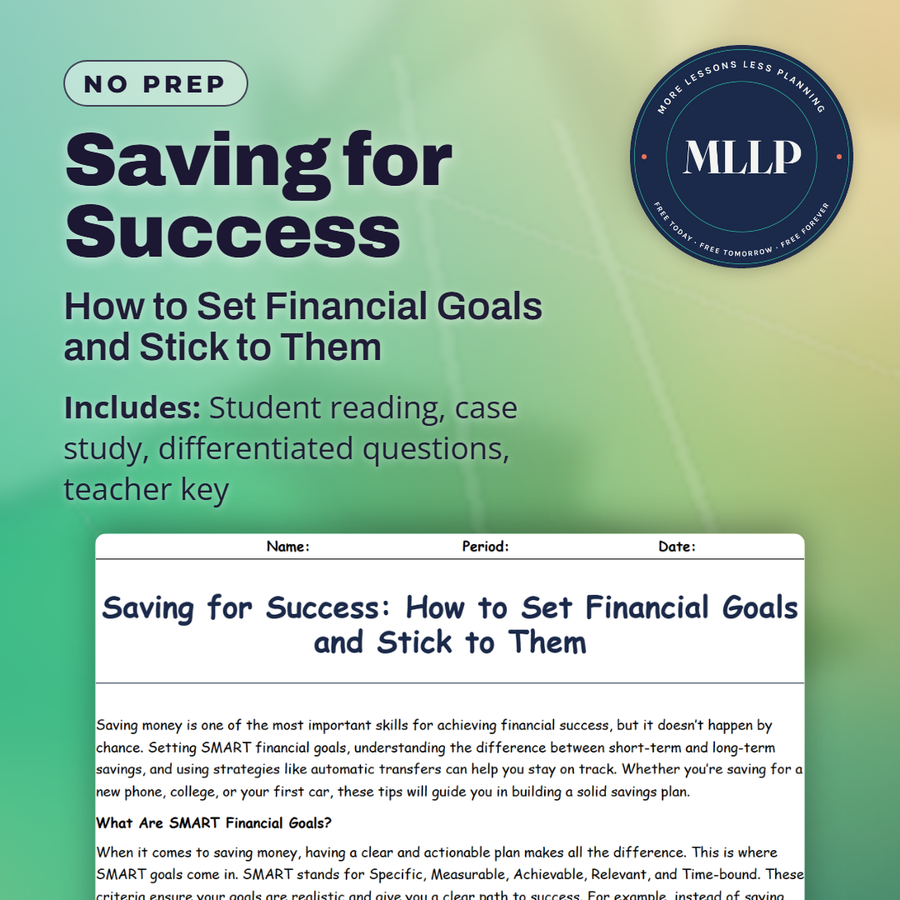
Saving for Success: How to Set Financial Goals and Stick to Them
Quality reviewed September 2026
Facts verified September 24, 2026
- Subject
- Career & Life Skills
- Grades
- Grades 9-12
- Length
- 6-page student worksheet
- Time
- About one 50-minute class period
- Great for
- Sub plans and independent work
- Includes
- Reading passage, comprehension questions + full answer key
- Format
- Print-and-go PDF
What students do
- Match five terms including SMART goals, short-term savings, long-term savings, and automatic transfers to what each one means
- Fill in the blanks on how long short-term savings goals take, what makes automatic transfers useful, and what long-term goals usually involve
- Answer multiple choice questions on what the A in SMART stands for, the best strategy for long-term savings, and why automatic transfers help
- Write short answers on why SMART goals work, two ways to avoid impulse spending, and how starting early helps long-term savings
What it covers
- SMART goals, and short-term versus long-term savings strategies
- Strategies for sticking to a savings plan, including automatic transfers and visual trackers
- A case study on Mia, who saves $2,500 in 12 months toward a $5,000 car with her parents' help
Start reading this worksheet
Saving money is one of the most important skills for achieving financial success, but it doesn’t happen by chance. Setting SMART financial goals, understanding the difference between short-term and long-term savings, and using strategies like automatic transfers can help you stay on track. Whether you’re saving for a new phone, college, or your first car, these tips will guide you in building a solid savings plan.
What Are SMART Financial Goals?
When it comes to saving money, having a clear and actionable plan makes all the difference. This is where SMART goals come in. SMART stands for Specific, Measurable, Achievable, Relevant, and Time-bound. These criteria ensure your goals are realistic and give you a clear path to success. For example, instead of saying, “I want to save money,” a SMART goal might be, “I will save $500 for a new laptop by putting aside $50 per month for 10 months.” This goal is specific (new laptop), measurable ($500), achievable (saving $50 per month), relevant (needed for school), and time-bound (10 months). By using SMART goals, you break your savings into smaller, more manageable steps. This reduces stress and helps you see progress along the way.
Short-Term vs. Long-Term Savings
Savings goals can be divided into two categories: short-term goals and long-term goals. Knowing the difference helps you prioritize your spending and create a realistic plan. Short-term savings are goals you aim to achieve within a year or less. These might include saving for holiday gifts, a concert ticket, or school supplies. Short-term savings are best kept in a simple savings account so the money is accessible when needed. Long-term savings take more time, usually over a year. Examples include saving for college, a car, or even future housing costs. These goals might involve higher amounts and could benefit from accounts with interest, like a high-yield savings account or investment accounts. Both types of savings are important, but how you approach them differs. For short-term goals, focus on consistency and discipline. For long-term goals, compound interest can work in your favor if you start saving early.
Like what you read? The full reading, the case study, and every question set are in the free download below, along with the answer key.
Why this matters
A vague goal like "save money" rarely survives contact with a weekend of temptation, and the reading's SMART framework gives students language for turning that into something they can actually act on. Mia's plan works because she broke $2,500 into monthly and weekly pieces instead of staring at one big number, which is the same trick that makes any savings goal feel possible instead of overwhelming. Automatic transfers in particular remove the daily willpower problem that sinks most savings plans before they start.
From one teacher to another
A SMART goal breaks down into five parts: specific, measurable, achievable, relevant, and time-bound, and the example "I will save $500 for a laptop in 10 months" hits every one of them. It splits savings into short-term goals you can reach within a year, best kept in a plain savings account, and long-term goals that benefit from interest-earning accounts. A table lines up examples like concert tickets and a college fund with their timeframe and best strategy. Strategies for staying consistent include automatic transfers, a visual tracker, and small rewards for hitting milestones. Mia wants a $5,000 car, and her parents agree to match up to $2,500, so she sets a goal of saving $210 a month, automates a $50 weekly transfer, and tracks her progress with a photo of the car on a chart.
What you get
Download
Where should I send the next one?
Everything here is free and it stays that way. Leave your email and I'll send you the new lessons as they go up. You can unsubscribe from any one of them.
Related resources
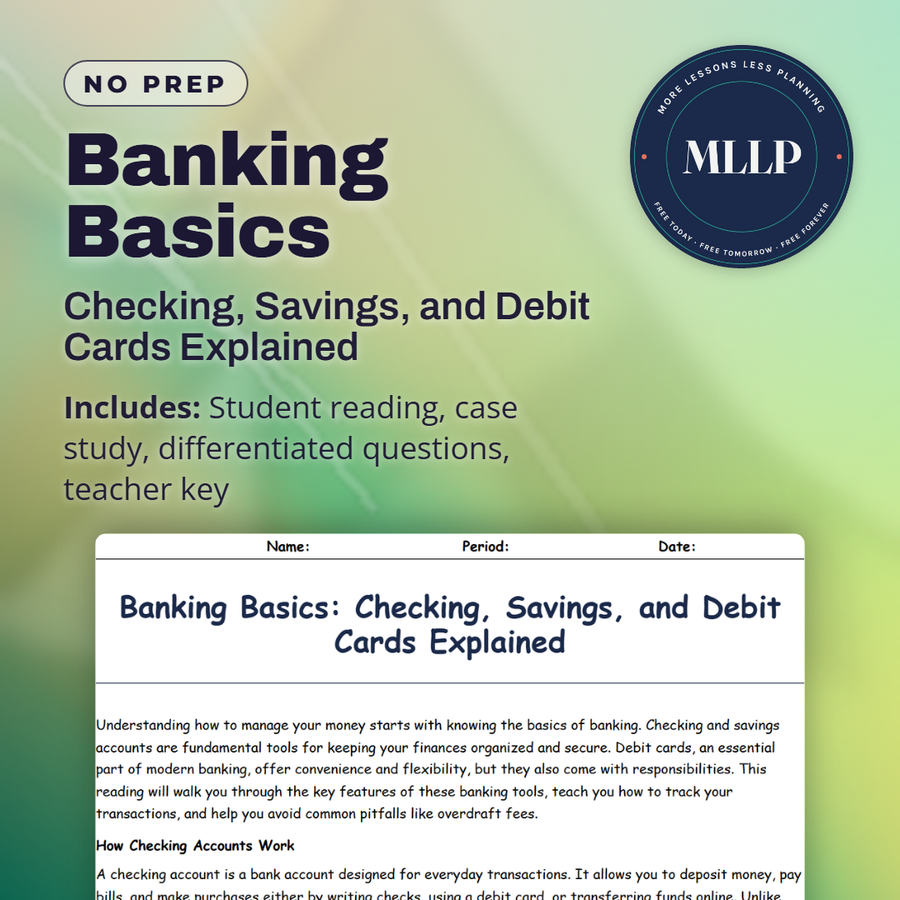
Banking Basics: Checking, Savings, and Debit Cards Explained
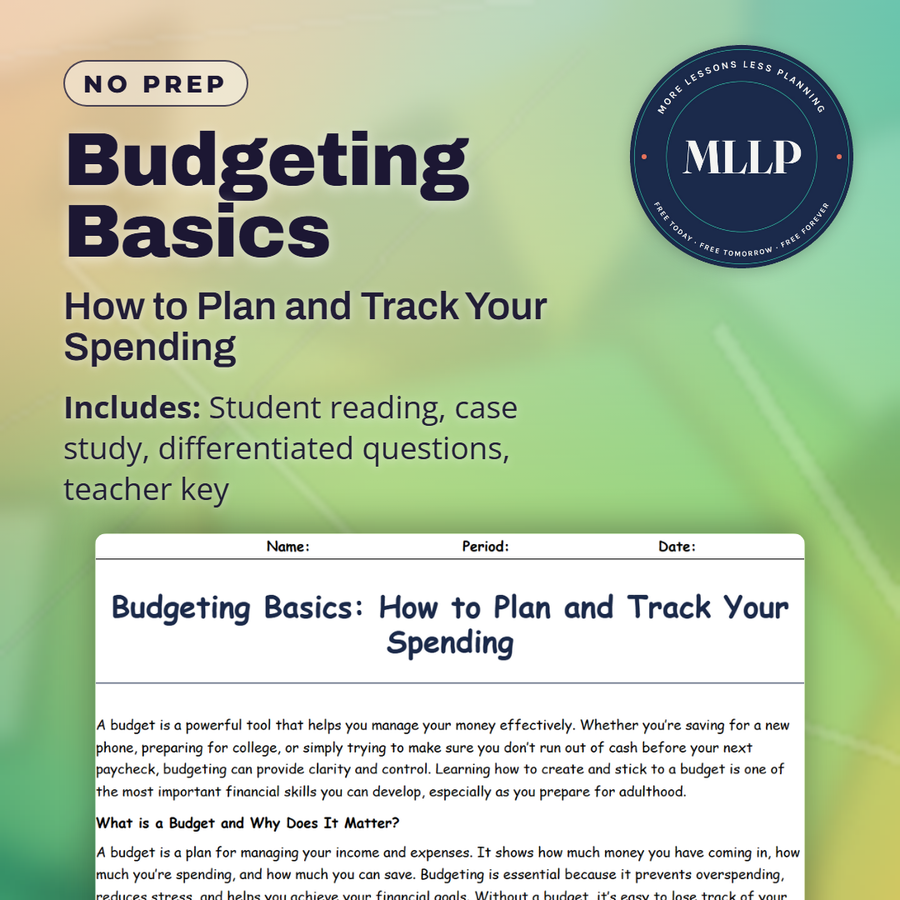
Budgeting Basics: How to Plan and Track Your Spending

How to Avoid Debt: Smart Money Habits for Teens

Investing 101: Simple Ways to Grow Your Money Over Time
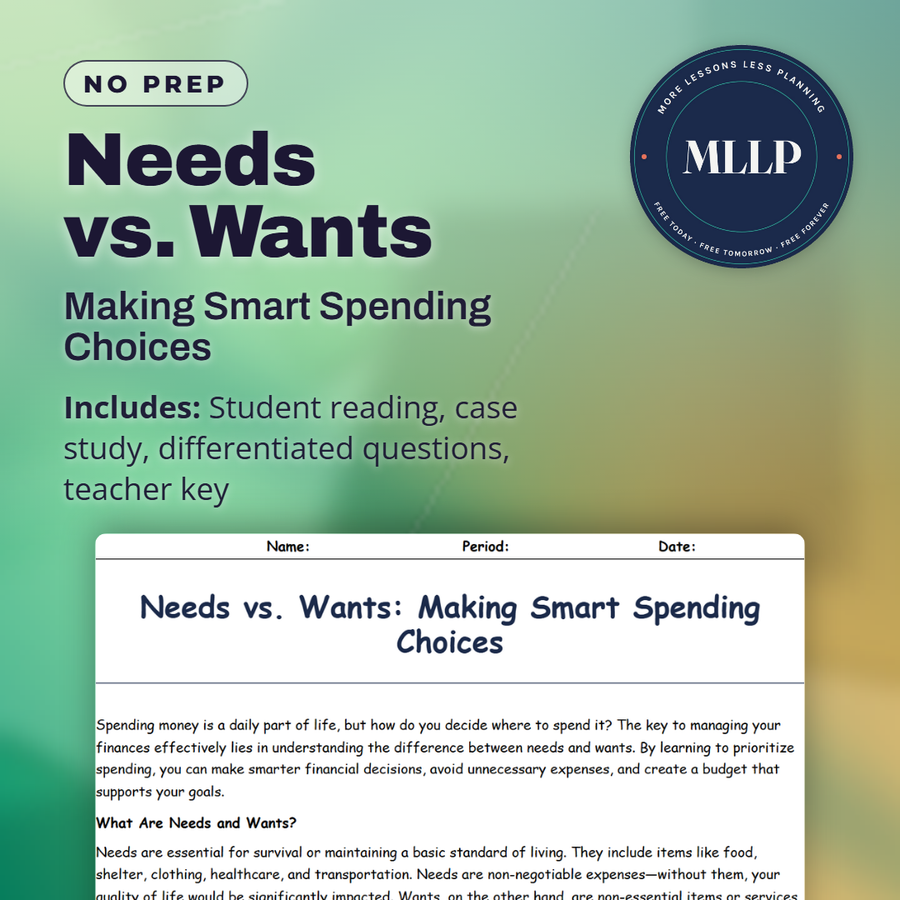
Needs vs. Wants: Making Smart Spending Choices

The Power of Emergency Funds: Why Every Teen Should Save for the Unexpected
Every lesson on this site is free to download and use. If one of them saved you a prep period, you can chip in a few bucks toward my three kids' daycare fund. That's genuinely where tips go.