The Labor Movement and Strikes
Quality reviewed September 2026
- Grades
- Grades 9-12
- Time
- About two 50-minute class periods
- Includes
- 11 ready-to-teach files
- Format
- Word (.docx) · PowerPoint (.pptx)
- Slide deck
- Guided notes
- Guided notes teacher key
- Activity + answer key
- Quiz + answer key
- Exit ticket + answer key
- Teacher guide
- Teacher presentation notes
What students do
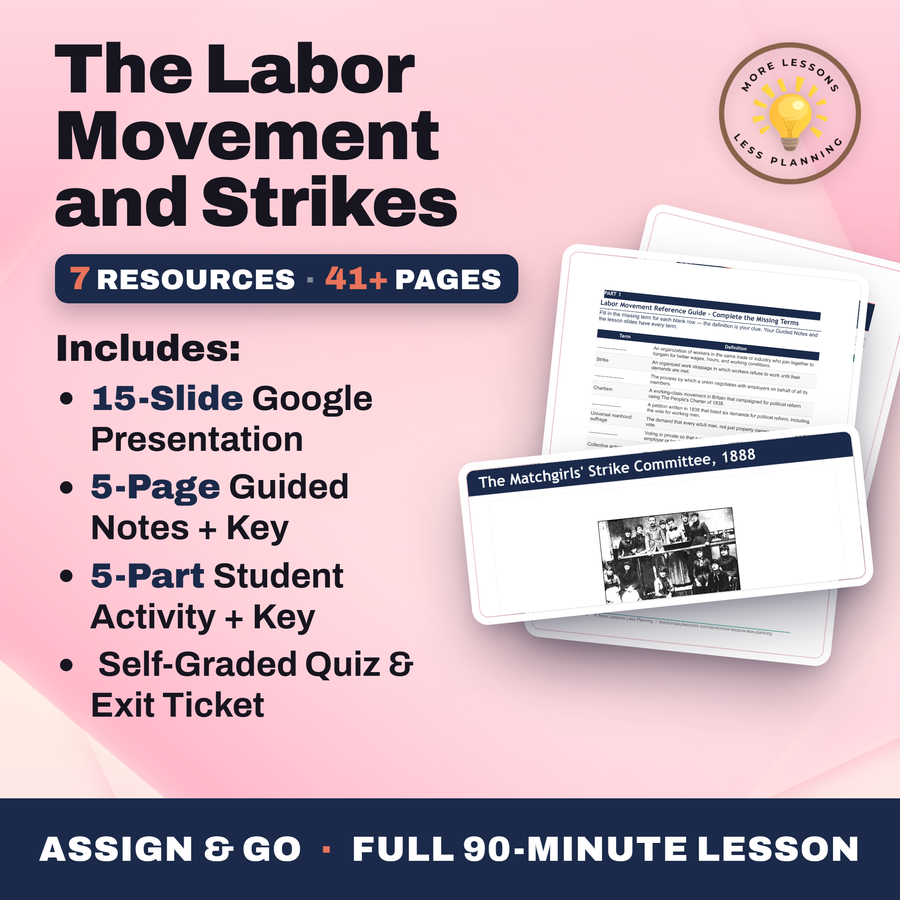
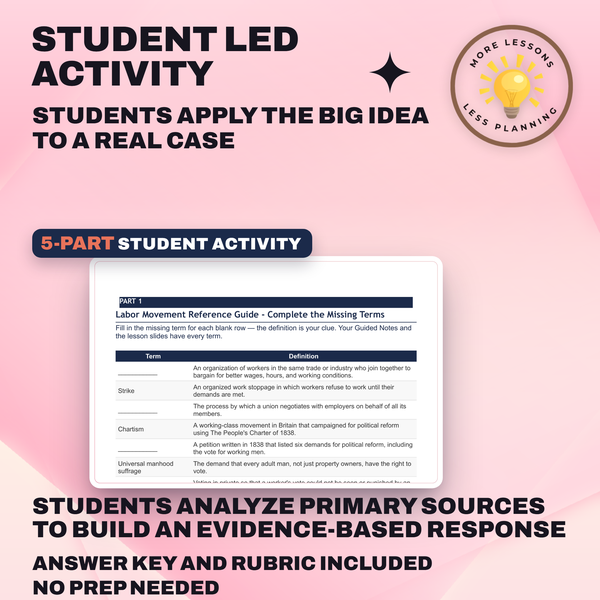
- Define trade union, strike, and collective bargaining as tools workers used during the Industrial Revolution
- Read excerpts from The People's Charter of 1838 and list its demands for political reform
- Explain why Chartists connected the vote to winning better wages, hours, and factory conditions
- Argue how collective action helped win reforms such as the Factory Acts even though the Charter was rejected
What it covers
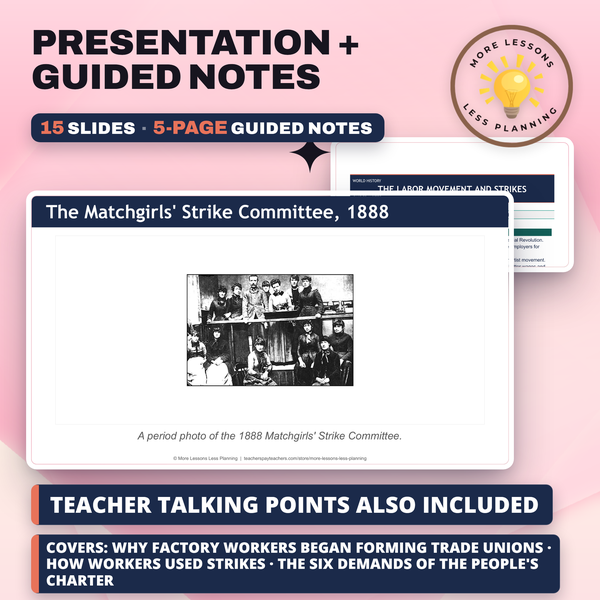
- Trade unions, strikes, and collective bargaining as tools workers organized during the Industrial Revolution
- The People's Charter's six demands, including universal manhood suffrage and the secret ballot
- Core vocabulary: Chartism, collective action, Factory Acts, labor movement, secret ballot
- The real text of The People's Charter (1838), published by the London Working Men's Association
Learning targets
- Explain why factory workers began forming trade unions during the Industrial Revolution.
- Describe how workers used strikes and collective bargaining to pressure employers for change.
- Identify the six demands of The People's Charter and the goals of the Chartist movement.
- Explain how winning a political voice was connected to workers winning better wages and conditions.
Peek inside
Factory workers often worked 12-14 hours a day, six days a week.
Wages were low; employers could cut pay or fire without warning.
Workers had no legal right to negotiate as a group.
Alone, a single worker had almost no power to change conditions.
Key Concept: Because a single worker had little power alone, workers began joining together to demand change.
No Power Alone
Factory workers often worked 12-14 hours a day, six days a .
Wages were low; employers could cut pay or without warning.
Workers had no legal right to negotiate as a .
Alone, a single worker had almost no power to change .
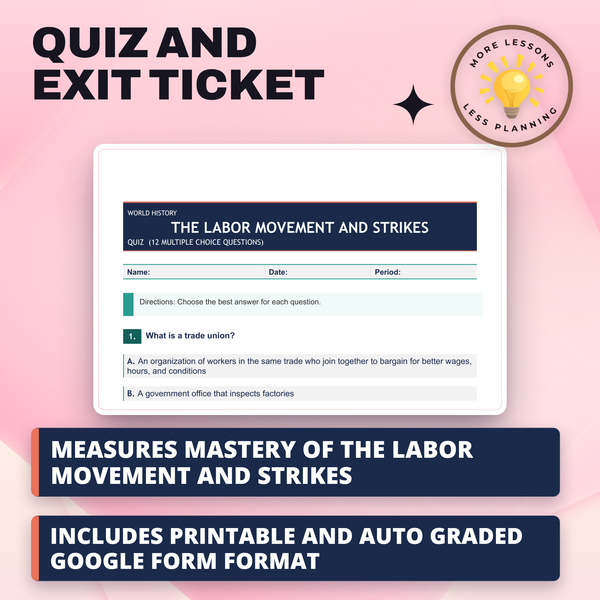
1. What do we call an organization of workers in the same trade who bargain together for better wages, hours, and conditions?
Why this matters
Six demands made up the People's Charter of 1838, and only one touched wages or hours directly, the rest asked for the vote itself, including a secret ballot so an employer couldn't see how a worker voted. Parliament rejected the Charter, but its signers had already argued that political power and economic conditions were the same fight.
Teaching strikes and unions as a story about wages alone would miss half of it, so this lesson makes the vote part of that story too, since the Chartists insisted on it themselves. Watching a movement lose its central demand and still help win reforms like the Factory Acts shows students how change actually happens.
From one teacher to another
This lesson touches on real labor conflict, and I built it to stay grounded in what workers actually organized and demanded rather than dramatizing the unrest. Students start with the basic tools of collective action - trade unions, strikes, collective bargaining - then read the real text of The People's Charter, the 1838 petition that laid out six demands for political reform, including the vote for working men and the secret ballot. The lesson makes them connect those two threads directly: why a movement built around factory hours and wages ended up demanding the vote, and why Chartists believed political voice was the only way to make economic gains stick. Parliament rejected the Charter itself, but students close by tracing how collective action still helped win real reforms like the Factory Acts over time. It pairs well right after an Industrial Revolution factory-conditions lesson, since it shows workers responding to those conditions rather than just enduring them.
Every file in this toolkit
Download
Where should I send the next one?
Everything here is free and it stays that way. Leave your email and I'll send you the new lessons as they go up. You can unsubscribe from any one of them.
Related resources
Cities and Slums
Life in the Factory
Railroads and the Transportation Revolution
Sparks of the Industrial Revolution
The Battle of Adwa
The Berlin Conference
Every lesson on this site is free to download and use. If one of them saved you a prep period, you can chip in a few bucks toward my three kids' daycare fund. That's genuinely where tips go.