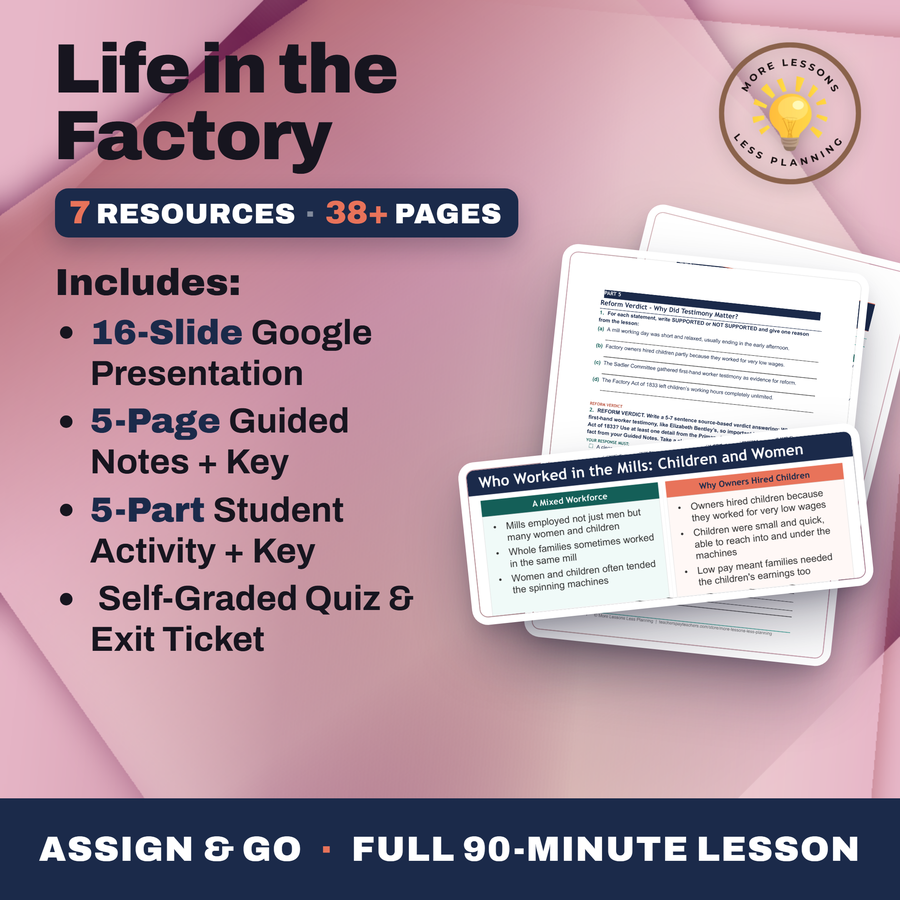
Life in the Factory
- Slide deck
- Guided notes
- Guided notes teacher key
- Activity + answer key
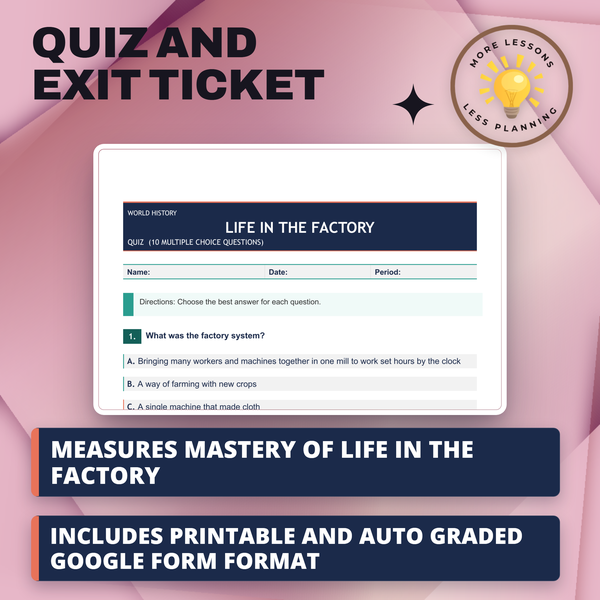
- Quiz + answer key
- Exit ticket + answer key
- Teacher guide
- Teacher presentation notes
Where should I send the next one?
Everything here is free and it stays that way. Leave your email and I'll send you the new lessons as they go up. You can unsubscribe from any one of them.
Every file in this toolkit
Related resources
Railroads and the Transportation Revolution
The Battle of Adwa

The Opium Wars and China
Aggression and Appeasement
Alliances and the Causes of WWI

Blitzkrieg and the Fall of France
What students do
- Describe the factory system and how the working day was organized by the clock and an overseer
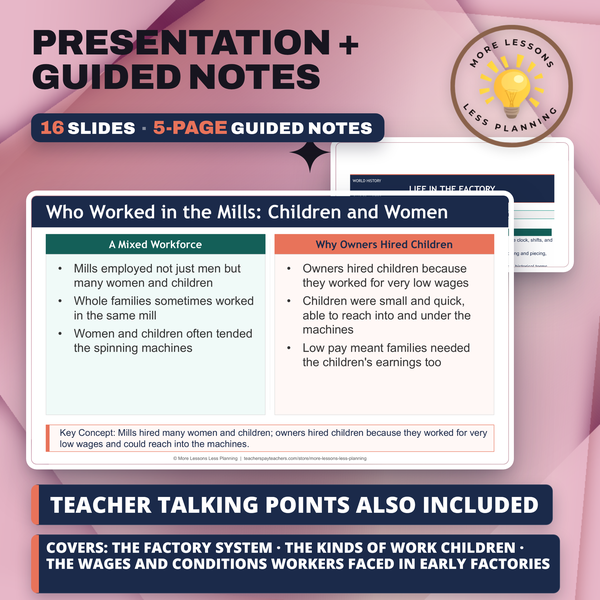
- Explain the tasks children and women performed on the machines, such as doffing and piecing
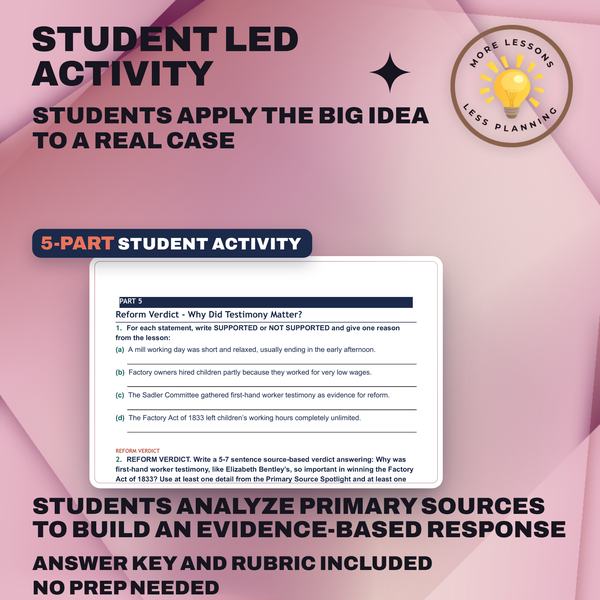
- Analyze Elizabeth Bentley's 1832 Sadler Committee testimony as a primary source
- Trace how that testimony helped win the Factory Act of 1833
What it covers
- What a working day looked like inside an early industrial mill, including wages and conditions
- How the Sadler Committee gathered worker testimony to expose factory conditions
- Key vocabulary including factory system, doffing, piecing, overseer, and child labor
Learning targets
- Describe the factory system and how the working day was organized by the clock, shifts, and an overseer.
- Explain the kinds of work children and women did in the mills, such as doffing and piecing, and why owners hired them.
- Describe the wages and conditions workers faced in early factories in plain historical terms.
- Explain how reformers on the Sadler Committee gathered worker testimony to expose factory conditions.
- Explain how that testimony helped win the Factory Act of 1833 and what the law did.
From one teacher to another
This lesson stays close to one worker's actual words, Elizabeth Bentley's 1832 testimony to the Sadler Committee, because a mill day described in the abstract loses details like doffing, piecing, and an overseer keeping everyone at the machines. Students trace how testimony like hers became evidence lawmakers could use, and how that evidence turned into the Factory Act of 1833. I wanted the reform to feel earned by the end, built from the evidence students already read for themselves.
Every lesson on this site is free to download and use. If one of them saved you a prep period, you can chip in a few bucks toward my three kids' daycare fund. That's genuinely where tips go.