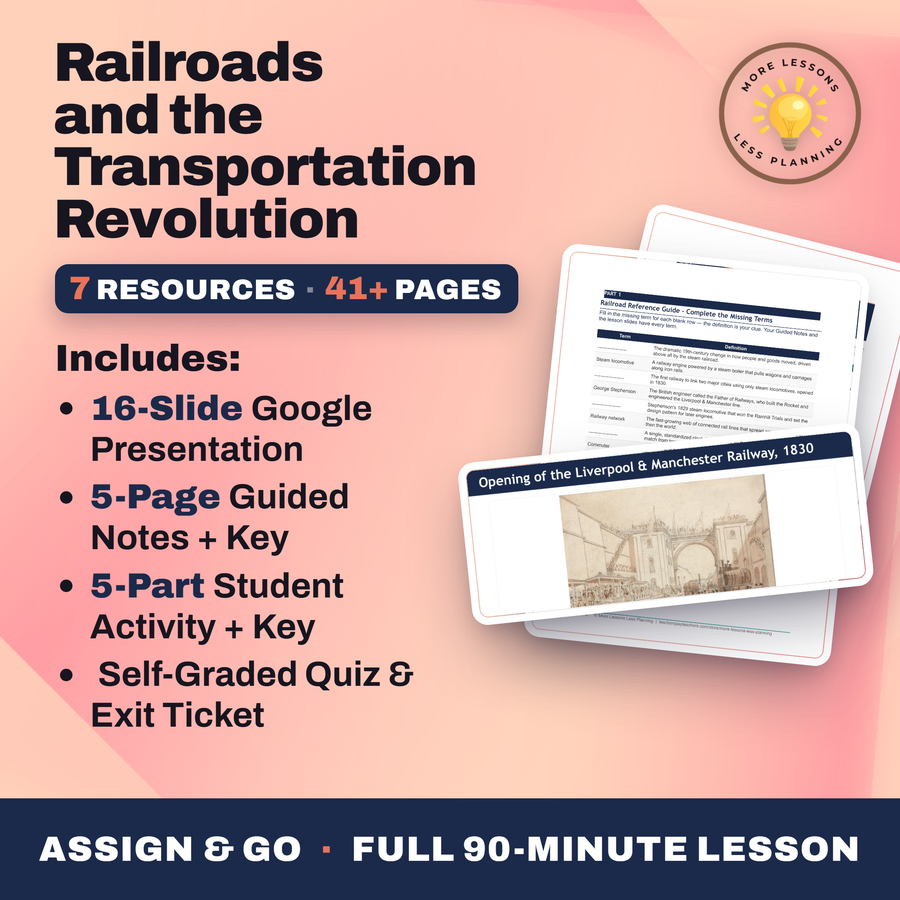
Railroads and the Transportation Revolution
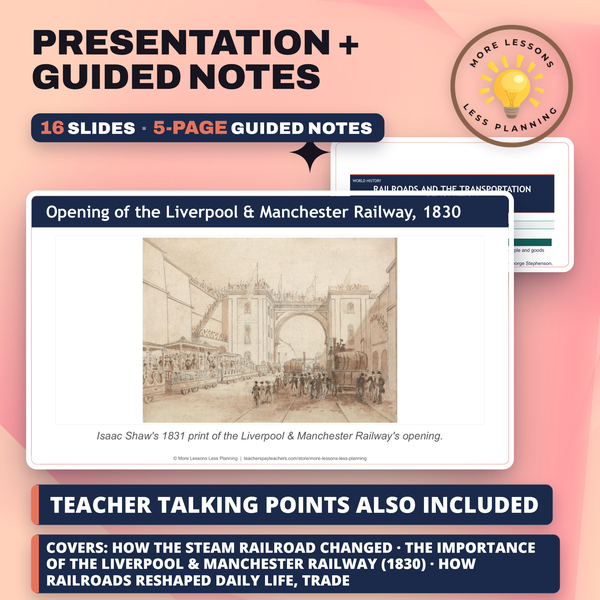
- Slide deck
- Guided notes
- Guided notes teacher key
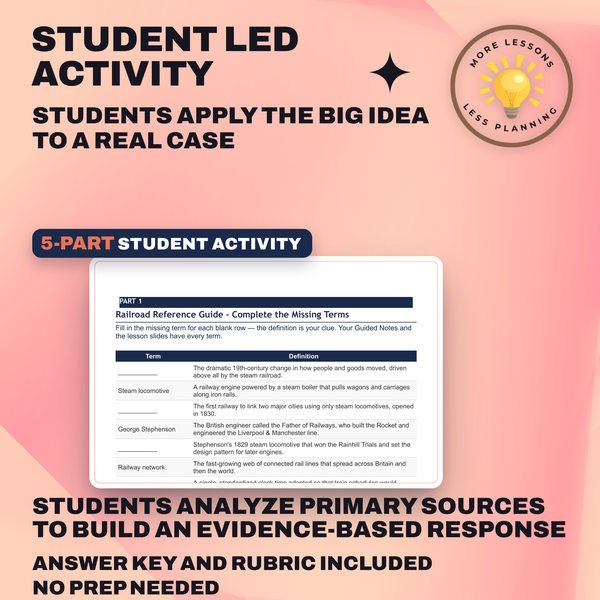
- Activity + answer key
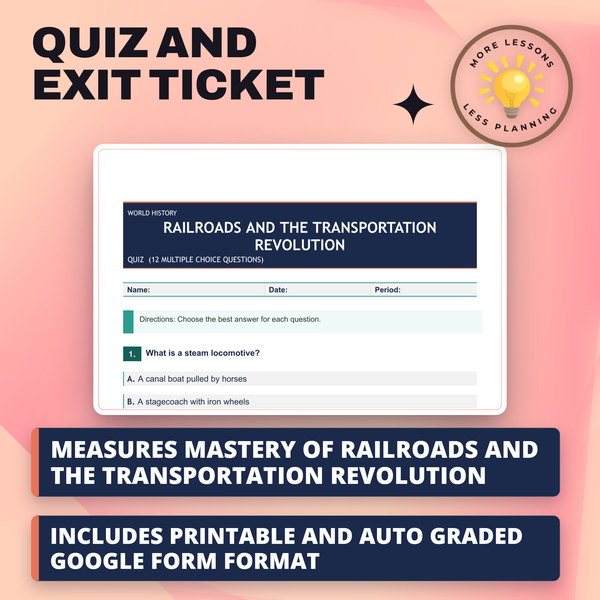
- Quiz + answer key
- Exit ticket + answer key
- Teacher guide
- Teacher presentation notes
Where should I send the next one?
Everything here is free and it stays that way. Leave your email and I'll send you the new lessons as they go up. You can unsubscribe from any one of them.
Every file in this toolkit
Related resources
Life in the Factory
The Battle of Adwa
The Opium Wars and China
Aggression and Appeasement
Alliances and the Causes of WWI

Blitzkrieg and the Fall of France
What students do
- Explain how the steam railroad changed the speed and cost of moving people and goods
- Describe the significance of the 1830 Liverpool and Manchester Railway and Stephenson's Rocket
- Analyze Fanny Kemble's 1830 eyewitness account of riding beside George Stephenson
- Map who benefited from the railroad and who was displaced by it, such as stagecoach drivers and canal workers
What it covers
- How the Liverpool and Manchester Railway and the Rocket launched the railway age in 1830
- Why railroads forced the adoption of standardized railway time
- Key vocabulary including steam locomotive, railway network, railway time, commuter, and displacement
Learning targets
- Explain how the steam railroad changed the speed and cost of moving people and goods during the Industrial Revolution.
- Describe the importance of the Liverpool & Manchester Railway (1830), George Stephenson, and the Rocket.
- Explain how railroads reshaped daily life, trade, and even the measurement of time.
- Identify who benefited from the railroad and who was displaced or harmed by it.
From one teacher to another
Fanny Kemble's account is the one primary source in my whole railroad unit where a person is visibly working out, in real time, what this new speed even feels like, and I built the lesson around that reaction. Students use her 1830 ride beside George Stephenson to get at something the vocabulary list alone can't, what it meant for a passenger's sense of distance to change overnight. The lesson doesn't let the railroad off easy either, since students have to name who it displaced along with who it made rich.
Every lesson on this site is free to download and use. If one of them saved you a prep period, you can chip in a few bucks toward my three kids' daycare fund. That's genuinely where tips go.