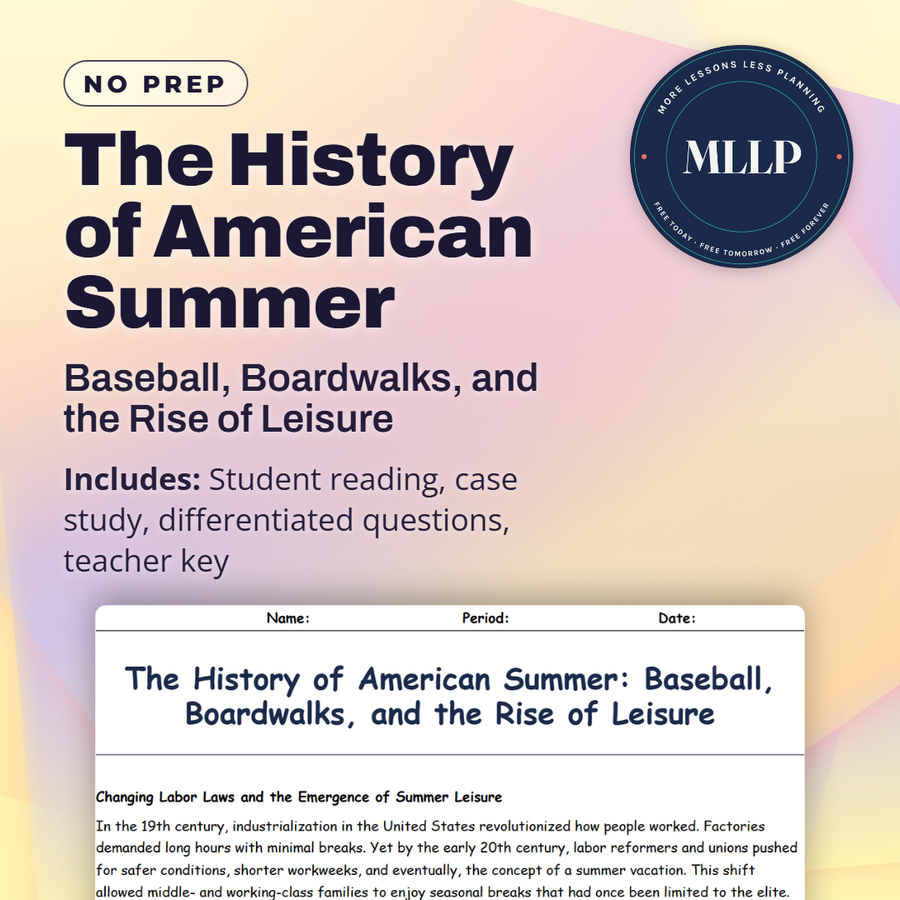
The History of American Summer: Baseball, Boardwalks, and the Rise of Leisure
Quality reviewed September 2026
Facts verified September 9, 2026
- Subject
- Social Studies
- Grades
- Grades 9-12
- Length
- 6-page student worksheet
- Time
- About one 50-minute class period
- Great for
- Sub plans and independent work
- Includes
- Reading passage, comprehension questions + full answer key
- Format
- Print-and-go PDF
What students do
- Analyze how labor reforms in the early 20th century created time and cultural space for summer vacation
- Explain why baseball became synonymous with American summer identity despite, and because of, economic inequality
- Evaluate how entrepreneurs sustained boardwalk culture during the Great Depression using low-cost attractions
- Trace the connection between highway expansion, road trip culture, and the democratization of national parks
What it covers
- Labor movements and the invention of leisure time
- Baseball, sports, and community identity
- Boardwalks, amusement parks, and road trip culture
Start reading this worksheet
Changing Labor Laws and the Emergence of Summer Leisure
In the 19th century, industrialization in the United States transformed how people worked. Factories demanded long hours with minimal breaks. Yet by the early 20th century, labor reformers and unions pushed for safer conditions, shorter workweeks, and eventually, the concept of a summer vacation. This shift allowed middle- and working-class families to enjoy seasonal breaks that had once been limited to the elite. As the workforce gained more free time, leisure culture expanded, giving rise to summer traditions that still shape American identity. Railroads and burgeoning transportation networks played a significant role, making travel faster and more affordable. Urban dwellers sought respite from crowded tenement housing, flocking to seaside towns or lake resorts when they could. Family outings became a hallmark of the warmer months, fueling the growth of local economies centered on recreation. Beach boardwalks, amusement parks, and resort hotels sprouted up, catering to the masses. By the 1920s and 1930s, the concept of a “summer break” was further integrated into school calendars, reflecting the agrarian roots of the nation and societal recognition of the health benefits associated with rest and vacation. This newfound leisure wasn’t just about fun; it also shifted patterns in consumerism. Marketing campaigns targeted families with summer-specific goods, from swimwear to picnic baskets. Advertisers promoted the idea of the “great American vacation,” reinforcing a cultural norm that saw downtime as a crucial aspect of the American dream. Over time, these changes in labor laws and social attitudes laid the foundation for iconic summer traditions that remain popular today.
Baseball and the American Summer
Few symbols capture the essence of an American summer quite like baseball. Dubbed “America’s Pastime,” baseball’s prominence grew in tandem with urbanization and the rise of spectator sports in the late 19th century. Initially played on makeshift fields and city lots, it soon evolved into a professional sport that drew large crowds and became a cornerstone of summer entertainment. Teams like the New York Yankees or the Chicago Cubs cultivated fierce hometown loyalty, and radio broadcasts allowed fans nationwide to share in the excitement. Over time, the baseball stadium became a social hub, uniting people from different classes and backgrounds. Peanuts, hot dogs, and the seventh-inning stretch became communal rituals. Children dreamed of catching foul balls and collecting baseball cards, while adults followed box scores in the newspapers. The long summer season provided ample time for teams to play multiple series, establishing baseball’s reputation as both a leisurely pastime and a high-stakes competition. Even during economic downturns, baseball persisted as an affordable form of mass entertainment, often seen as an expression of national pride. Beyond the major leagues, local sandlot games and minor league teams fostered community spirit, particularly in smaller towns. Traveling teams and barnstorming tours brought the sport to rural areas, ingraining baseball further into the American cultural landscape. As the sport expanded, it also mirrored social changes, such as racial integration with Jackie Robinson breaking the color barrier in 1947. Baseball thus became emblematic of summer’s relaxed but vibrant energy, reflecting broader shifts in society, culture, and identity.
Like what you read? The full reading, the case study, and every question set are in the free download below, along with the answer key.
Why this matters
Jersey Shore boardwalks sold nickel hot dogs and half-price rides during the Great Depression, and that was not businesses giving away profit. Owners knew families in hard times could still scrape together a few cents for an hour of escape, and those cents multiplied across a summer kept the boardwalk alive.
This corrects an assumption I hear from students, that leisure simply appeared once people had money: shorter workweeks were fought for, railroads made travel possible, and baseball shifted from an elite pastime to something a factory worker's family could attend. My students see the pattern once grandparents bring grandchildren to the same boardwalks, proof none of it was automatic.
From one teacher to another
The Jersey Shore's Depression-era boardwalks sold nickel hot dogs and half-price rides not because they were giving away profit. They knew that people needed escape, and a few hours on the boardwalk cost so little that families in hard times could afford it. This worksheet moves through how unions fought for shorter workweeks, how railroads made travel possible, and how baseball shifted from elite sport to mass entertainment. Students see that summer leisure wasn't handed to working people; it was fought for. And they recognize modern echoes in how grandparents bring grandchildren to the same boardwalks, how kids collect baseball cards, how road trips still mean freedom to most Americans.
What you get
Download
Where should I send the next one?
Everything here is free and it stays that way. Leave your email and I'll send you the new lessons as they go up. You can unsubscribe from any one of them.
Related resources
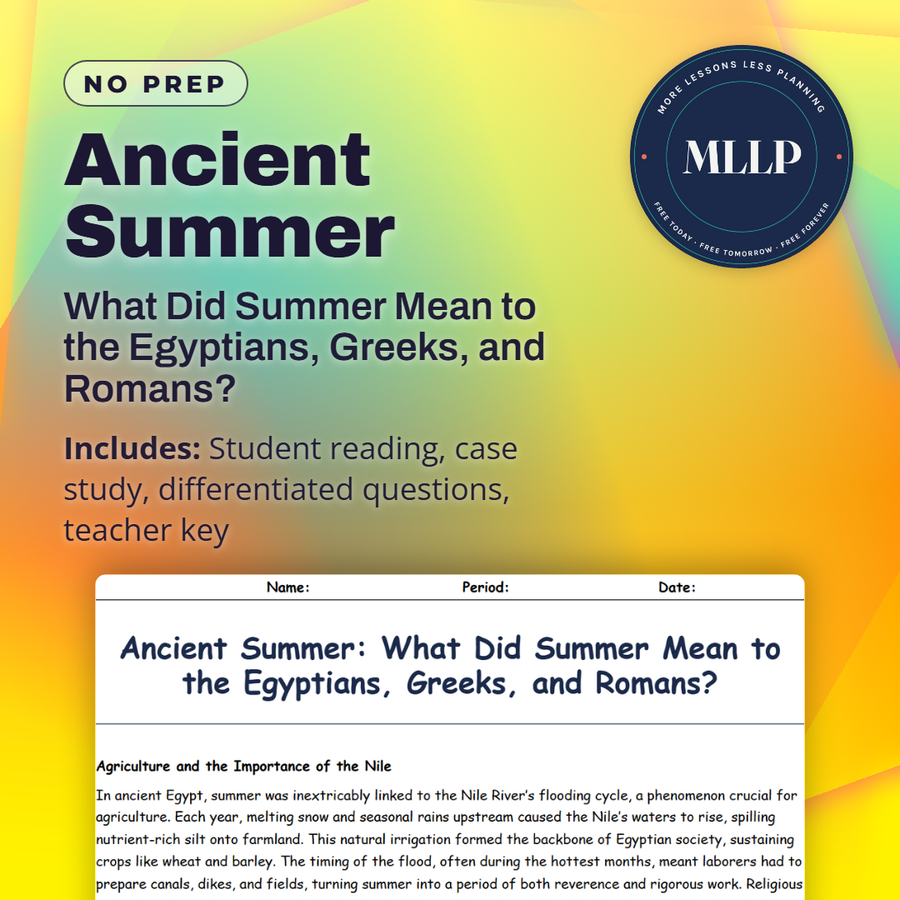
Ancient Summer: What Did Summer Mean to the Egyptians, Greeks, and Romans?
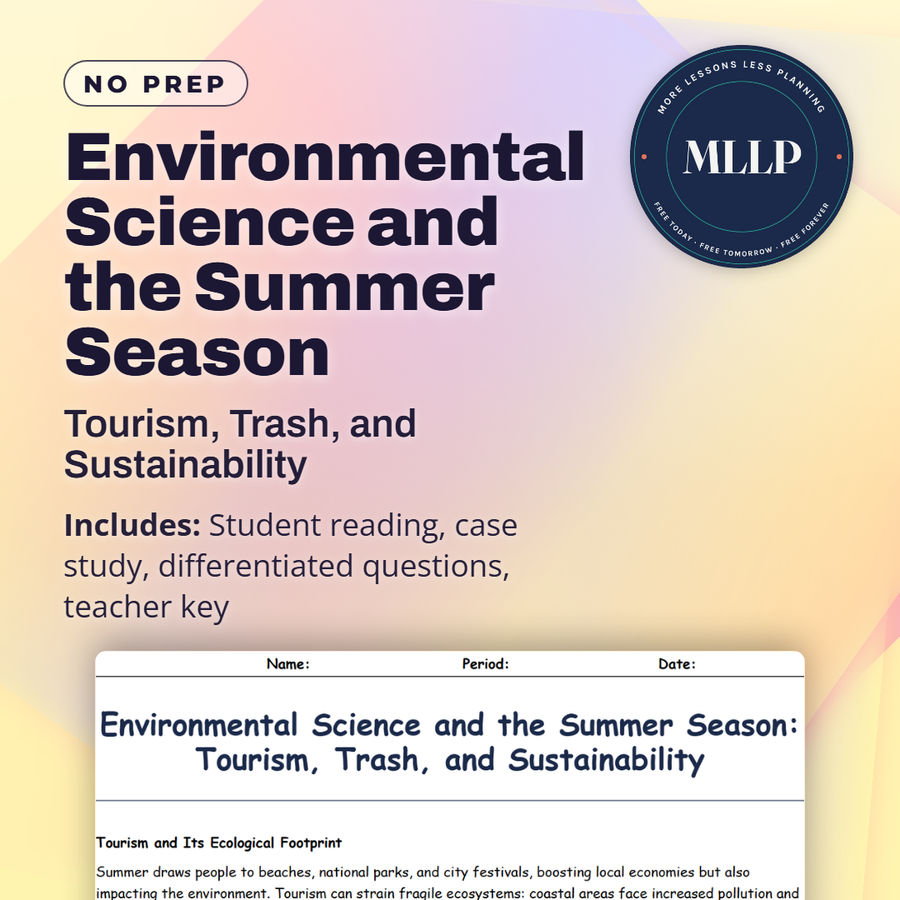
Environmental Science and the Summer Season: Tourism, Trash, and Sustainability

Forensic Files: Summer Crimes and the Science Behind the Cases
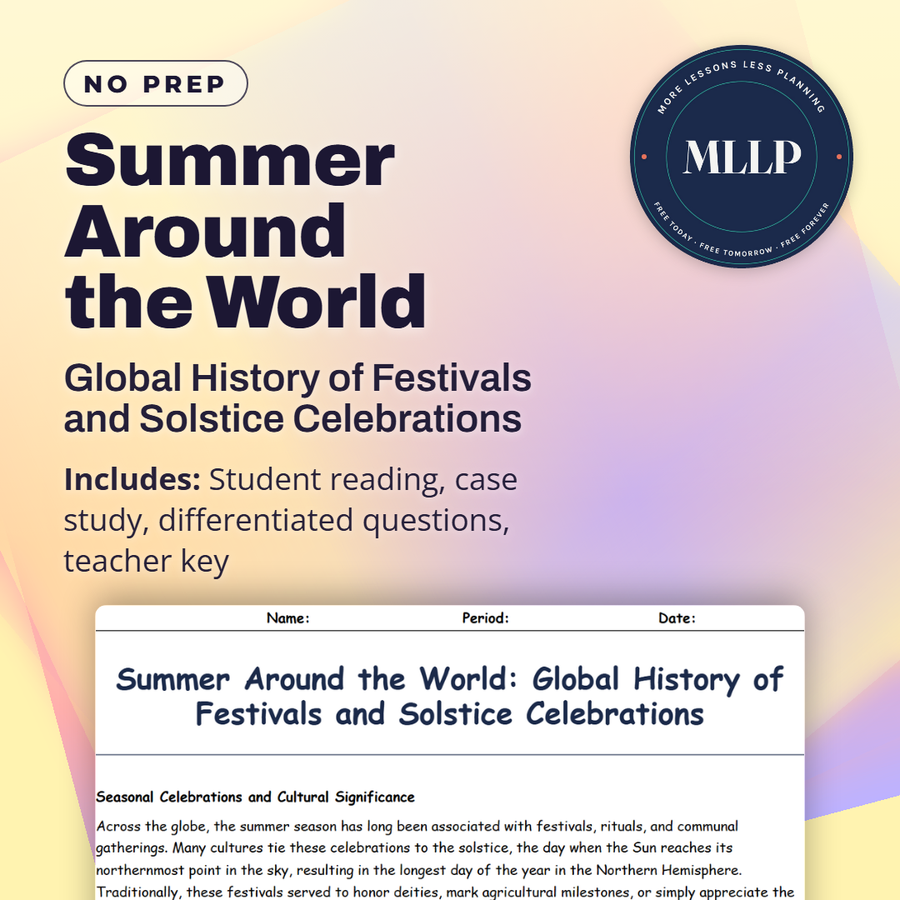
Summer Around the World: Global History of Festivals and Solstice Celebrations
Summer Science: The Biology Of Sunscreen And Skin Protection
The Economics Of Summer: Ice Cream, Travel, And Supply And Demand
Every lesson on this site is free to download and use. If one of them saved you a prep period, you can chip in a few bucks toward my three kids' daycare fund. That's genuinely where tips go.