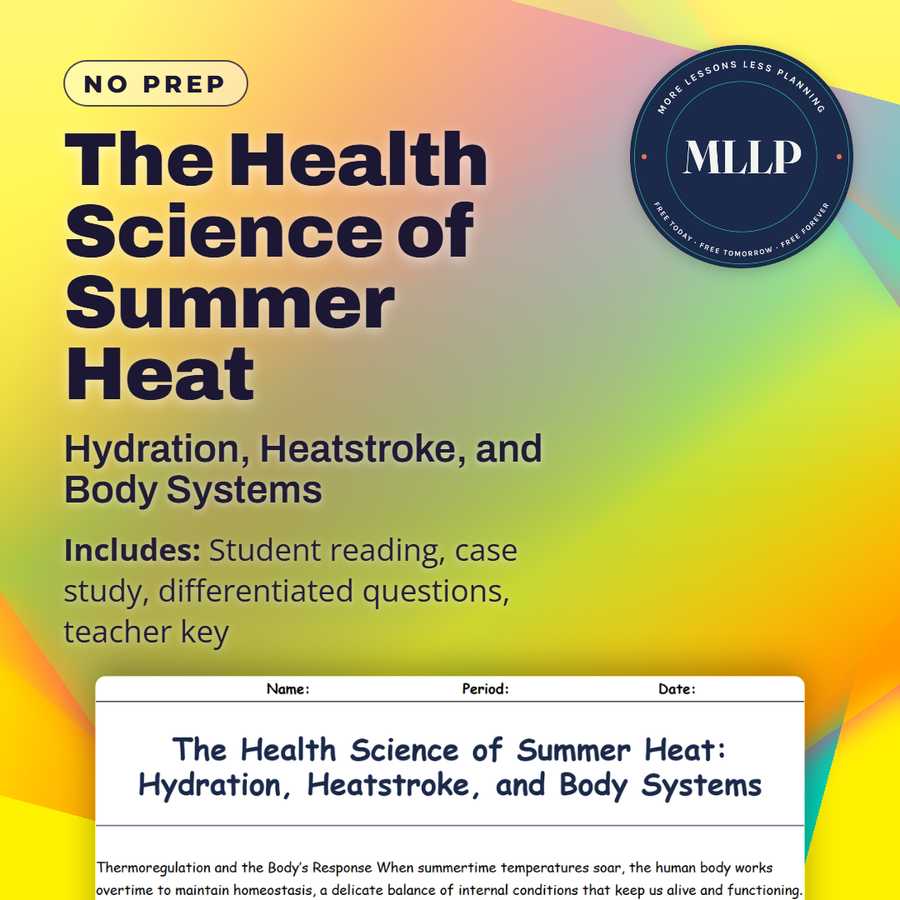
The Health Science of Summer Heat: Hydration, Heatstroke, and Body Systems
Quality reviewed September 2026
Facts verified September 9, 2026
- Subject
- Health & PE
- Grades
- Grades 9-12
- Length
- 7-page student worksheet
- Time
- About one 50-minute class period
- Great for
- Sub plans and independent work
- Includes
- Reading passage, comprehension questions + full answer key
- Format
- Print-and-go PDF
What students do
- Distinguish between heat exhaustion and heatstroke by comparing symptoms, core temperatures, and emergency responses
- Trace the path of fluid loss through sweating and explain why electrolyte replacement matters during intense heat
- Evaluate how environmental factors like reflective asphalt and humidity defeat the body's natural cooling mechanisms
- Analyze why vulnerable populations like elderly attendees and outdoor workers face higher heat-related illness risk
What it covers
- Thermoregulation and the body's heat response
- Hydration and electrolyte balance
- Heat illness symptoms and prevention
Start reading this worksheet
Thermoregulation and the Body’s Response When summertime temperatures soar, the human body works overtime to maintain homeostasis, a delicate balance of internal conditions that keep us alive and functioning. At the core of this balancing act is thermoregulation—the body’s ability to regulate its internal temperature. A primary defense mechanism is sweating, which cools the skin surface through evaporation. The cardiovascular system also kicks in: blood vessels near the skin’s surface dilate to allow more heat to escape, while heart rate may increase slightly to move warm blood more efficiently away from vital organs. Yet these natural cooling strategies have limits. Under extreme heat or high humidity, sweat may not evaporate quickly, causing body temperature to rise. Prolonged exposure can lead to heat exhaustion, where symptoms include dizziness, fatigue, and nausea. More severe is heatstroke, a medical emergency marked by a core temperature above 40°C (104°F). In such cases, the body’s thermoregulatory systems become overwhelmed, potentially causing organ damage, confusion, and even loss of consciousness. Monitoring these signs is crucial; timely intervention such as rest in a cool environment or hydrating with chilled fluids can make the difference between a quick recovery and a serious health crisis. In hot weather, dehydration escalates the problem. The body loses fluid through sweat, and if this fluid isn’t replaced, blood volume can drop, lowering blood pressure and straining the circulatory system. Meanwhile, the kidneys work to conserve water, resulting in more concentrated urine. This survival mechanism, while helpful, can exacerbate fatigue if fluid intake remains insufficient. Recognizing these interwoven processes underscores the importance of consistent hydration, especially during heat waves or prolonged physical activity in the sun.
Hydration and the Role of Electrolytes
Although water is essential, electrolytes—such as sodium, potassium, and chloride—are equally crucial for efficient bodily function. These charged minerals help regulate nerve signaling, muscle contraction, and acid-base balance. During sweating, not only is water lost, but also a portion of these electrolytes. If they aren’t replenished, imbalances can occur, leading to muscle cramps, weakness, or even cardiac irregularities. Sports drinks are commonly used to restore electrolytes during intense physical activity, though they’re not always necessary for every summer outing. Individuals must evaluate the intensity and duration of their activities. For most people engaging in moderate exercise under the sun, water combined with a balanced diet that includes fruits, vegetables, and some salty snacks can effectively maintain electrolyte levels. However, intense exercise or labor in extreme heat may warrant specialized rehydration strategies that incorporate electrolyte-enhanced fluids. Hydration tactics also extend to timing. Sipping water steadily throughout the day can be more beneficial than gulping large amounts infrequently. This consistent intake prevents sudden drops in fluid levels. Meanwhile, being mindful of certain diuretics like caffeinated beverages or alcohol is vital, as these can promote water loss and speed up dehydration under the hot sun.
Like what you read? The full reading, the case study, and every question set are in the free download below, along with the answer key.
Why this matters
A seventeen-year-old volunteer at a county fair ended up in a medical crisis because nobody around him, including him, understood what direct sun on asphalt does to a body's core temperature. He is close enough in age to the students reading about him that the danger stops feeling abstract.
What my students get wrong going in is assuming heatstroke is just being really thirsty. I watch them trace the cardiovascular system dilating vessels, the endocrine system adjusting hormones, and the nervous system pushing someone toward shade, and that is when they understand a body fighting a losing battle in real time, where minutes, not hours, decide how it ends.
From one teacher to another
The county fair heat wave landed a 17-year-old volunteer in medical crisis because he and many others underestimated what direct sun on asphalt actually does to your core temperature. The real insight in this worksheet goes past the physiology of sweating and kidney water conservation to the gap between what people think is dangerous and what actually is. Students work through body systems in action: the cardiovascular system dilating vessels, the endocrine system adjusting hormones, the nervous system screaming "seek shade." By the end, they understand that heatstroke is a thermoregulatory system overwhelmed, and minutes matter.
What you get
Download
Where should I send the next one?
Everything here is free and it stays that way. Leave your email and I'll send you the new lessons as they go up. You can unsubscribe from any one of them.
Related resources
Ancient Summer: What Did Summer Mean to the Egyptians, Greeks, and Romans?
Environmental Science and the Summer Season: Tourism, Trash, and Sustainability

Forensic Files: Summer Crimes and the Science Behind the Cases

Summer Around the World: Global History of Festivals and Solstice Celebrations
Summer Science: The Biology Of Sunscreen And Skin Protection
The Economics Of Summer: Ice Cream, Travel, And Supply And Demand
Every lesson on this site is free to download and use. If one of them saved you a prep period, you can chip in a few bucks toward my three kids' daycare fund. That's genuinely where tips go.