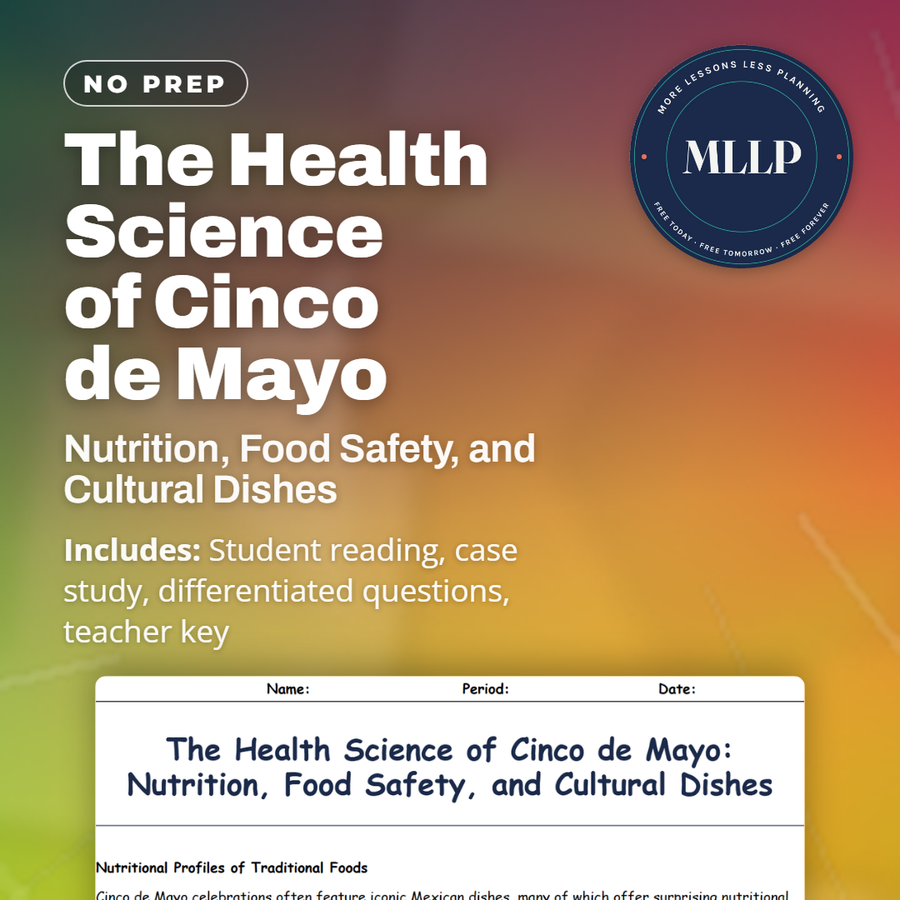
The Health Science of Cinco de Mayo: Nutrition, Food Safety, and Cultural Dishes
Quality reviewed September 2026
Facts verified September 9, 2026
- Subject
- Health & PE
- Grades
- Grades 9-12
- Length
- 7-page student worksheet
- Time
- About one 50-minute class period
- Great for
- Sub plans and independent work
- Includes
- Reading passage, comprehension questions + full answer key
- Format
- Print-and-go PDF
What students do
- Evaluate the nutritional profiles of traditional Cinco de Mayo dishes like beans, corn, and salsas
- Analyze cross-contamination risks in large outdoor festivals and food safety protocols
- Compare how small ingredient substitutions can reduce sodium and saturated fat without sacrificing flavor
- Assess how mindful eating practices balance cultural enjoyment with personal health goals
What it covers
- Nutrition and dietary balance
- Foodborne illness prevention
- Health behavior and cultural food traditions
Start reading this worksheet
Nutritional Profiles of Traditional Foods
Cinco de Mayo celebrations often feature iconic Mexican dishes, many of which offer surprising nutritional benefits. Beans, for instance, provide plant-based protein, fiber, and essential minerals like iron. Corn tortillas boast whole-grain advantages, contributing complex carbohydrates and dietary fiber. Meanwhile, salsas made from tomatoes, onions, and chili peppers supply vitamins A and C along with antioxidants. When prepared with minimal added fats, these dishes can form part of a balanced diet, demonstrating that festive cuisine need not compromise health. However, moderation is key. Certain recipes rely heavily on cheese, sour cream, or high-sodium sauces. While these ingredients add flavor, they also increase the saturated fat and sodium content of a meal. Health science educators often encourage substitutions like reduced-fat dairy products, fresh herbs, and natural seasonings to retain authenticity without sacrificing nutritional quality. The presence of fresh vegetables in many Cinco de Mayo dishes offers an excellent opportunity to boost micronutrient intake. For those aiming to maintain healthier eating patterns during Cinco de Mayo, portion control and mindful selection are crucial. Opting for soft corn tortillas over deep-fried shells or choosing grilled meats instead of fried options can make a significant difference. These small changes reflect a broader trend: the fusion of cultural authenticity with modern health awareness, demonstrating how traditional dishes can evolve without losing their essence.
Food Safety Practices in Festive Environments
During Cinco de Mayo festivities, large crowds and communal settings can pose food safety challenges. Outdoor booths, buffet lines, and high turnover in kitchens elevate the risk of foodborne illnesses. Maintaining proper temperature control for dishes containing meat, dairy, or eggs becomes critical. Health professionals emphasize routine checks with food thermometers and vigilant handwashing to minimize bacterial growth. Cross-contamination is another concern when raw ingredients like poultry or seafood come into contact with ready-to-eat items. Even something as simple as using the same cutting board for raw chicken and fresh vegetables can lead to contamination by Salmonella or E. coli. Festival organizers often distribute guidelines encouraging food handlers to use separate utensils and surfaces for different food groups. By embedding these practices into event planning, communities reduce the likelihood of an outbreak. Moreover, labeling foods for allergens—like nuts, shellfish, or dairy—helps protect individuals with dietary restrictions. With vegan and gluten-free options increasingly popular, festivals are responding by offering safe, inclusive choices. Ensuring food safety during Cinco de Mayo not only prevents health hazards but also enhances the event’s reputation, encouraging visitors to return year after year.
Balancing Flavor and Health
The iconic guacamole that often appears at Cinco de Mayo gatherings demonstrates the balance of flavor and health. Avocados are rich in monounsaturated fats, which can support cardiovascular health when consumed in moderation. Combine them with diced tomatoes, onions, and cilantro, and you add a nutritional punch of vitamins and phytochemicals. However, portion sizes and the type of accompaniments, like fried tortilla chips, can turn a healthy dip into a calorie-dense indulgence. Similarly, mole poblano—a hallmark sauce of Mexican cuisine—contains a complex array of spices, herbs, and ingredients like cocoa and chili peppers. While it delivers a burst of antioxidants, mole can also include high-calorie components such as added oils or sugary elements. Health-conscious chefs might reduce the oil content or use natural sweeteners to keep the flavor profile intact. By reimagining traditional recipes, today’s cooks can craft meals that celebrate Cinco de Mayo’s heritage without disregarding modern health standards. Encouraging mindful eating practices is another approach. Rather than speed-eating through plates of food, savoring each bite helps individuals tune into their body’s hunger and fullness cues. This shift can make a Cinco de Mayo meal both satisfying and healthful, blending cultural enjoyment with personal well-being.
Like what you read? The full reading, the case study, and every question set are in the free download below, along with the answer key.
Why this matters
A neighborhood cooking workshop ran a salsa contest between a fried recipe and a baked one, and the healthier version did not lose a single round. Families swapped lean chicken into taquitos and low-fat yogurt for sour cream, and the flavor held up well enough that nobody at the table felt like they were being lectured.
Health students expect a sodium lecture and get a cooking story instead, which is exactly why the substitutions stick. The food safety half does the harder work quietly: outdoor booths, buffet lines, and busy kitchens are where cross-contamination actually happens, and separating cutting boards matters more than any single ingredient swap.
From one teacher to another
The case study is a community cooking workshop where families compared baked taquitos with lean chicken against the fried version, swapped low-fat yogurt for sour cream, and ran a salsa contest that the healthier recipes did not lose. My health students expect a lecture on cutting sodium and get a reading about keeping the flavor instead. The food safety section is the practical part: outdoor booths, buffet lines, and busy kitchens are where cross-contamination happens, so separate cutting boards and holding temperatures matter. The reading also covers how regional Mexican cuisine varies, with beef and wheat in the north and seafood on the coasts, so students stop treating one menu as the whole tradition.
What you get
Download
Where should I send the next one?
Everything here is free and it stays that way. Leave your email and I'll send you the new lessons as they go up. You can unsubscribe from any one of them.
Related resources
American History and Cinco de Mayo: Cultural Exchange and Historical Narratives
Cinco de Mayo Biology: The Genetics and Agriculture of Mexican Cuisine
Cinco de Mayo Psychology: Identity, Celebration, and Social Dynamics
Cinco de Mayo and the Battle of Puebla: Turning Points in Mexican History
Environmental Impacts of Cinco de Mayo Celebrations: Sustainability and Festivals
The Economics of Cinco de Mayo: Celebrations, Commerce, and Cultural Commodification
Every lesson on this site is free to download and use. If one of them saved you a prep period, you can chip in a few bucks toward my three kids' daycare fund. That's genuinely where tips go.