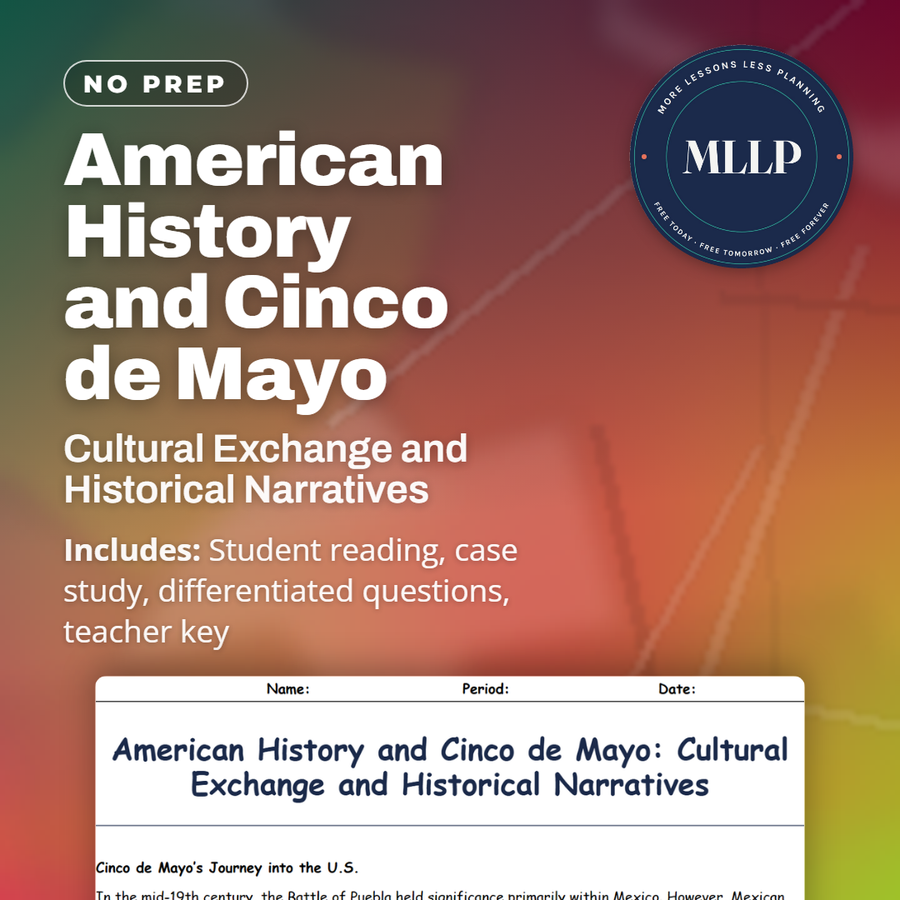
American History and Cinco de Mayo: Cultural Exchange and Historical Narratives
Quality reviewed September 2026
Facts verified September 9, 2026
- Subject
- Social Studies
- Grades
- Grades 9-12
- Length
- 6-page student worksheet
- Time
- About one 50-minute class period
- Great for
- Sub plans and independent work
- Includes
- Reading passage, comprehension questions + full answer key
- Format
- Print-and-go PDF
What students do
- Analyze how fusion foods and cultural exchanges shaped Cinco de Mayo celebrations in the U.S.
- Examine oral histories to understand how traditions evolved across generations
- Compare the Chicano Movement's use of the holiday with contemporary celebrations
- Trace the holiday's journey from localized immigrant traditions to national recognition
What it covers
- Cultural diffusion and Mexican-American identity
- Commercial evolution of cultural holidays
- Historical misconceptions and education
Start reading this worksheet
Cinco de Mayo’s Journey into the U.S.
In the mid-19th century, the Battle of Puebla held significance primarily within Mexico. However, Mexican immigrants in the southwestern United States soon incorporated its commemoration into their community gatherings. By celebrating Cinco de Mayo, they preserved a link to their homeland and offered a reminder of Mexico’s stand against European intervention. Over time, these localized events drew interest from neighbors of diverse backgrounds, gradually increasing the holiday’s visibility. In the 20th century, broader U.S. awareness of Cinco de Mayo expanded, partly through evolving media coverage and commercial promotions. Beer companies, for instance, saw a marketing opportunity around a springtime holiday that highlighted Mexican culture. Advertisements popularized certain stereotypes but also sparked curiosity, prompting some Americans to learn more about Mexican history. The duality of cultural exchange and commercialization remains a theme in how Cinco de Mayo is observed today. Historians point out that for many Mexican Americans, Cinco de Mayo represents more than an excuse to throw a party. It symbolizes ethnic pride, political resilience, and the celebration of a heritage that has contributed significantly to the United States. From music styles like mariachi to culinary staples, the cultural fabric woven by Mexican communities has influenced American society as a whole.
Mexican-American Identity and Civil Rights
The Chicano Movement of the 1960s and 1970s spotlighted Mexican-American civil rights, drawing parallels between the Battle of Puebla and contemporary struggles. Activists invoked Cinco de Mayo as a day to advocate for social justice, educational reforms, and political representation. Parades and rallies on May 5th became platforms to address inequalities while also celebrating the community’s distinct identity. In this context, Cinco de Mayo took on a renewed sense of purpose. It became both a commemoration of historical resistance and a modern statement against discrimination. Schools with significant Mexican-American populations often incorporated lessons on the holiday’s heritage, inspiring young people to embrace their bilingual, bicultural reality. While not all communities engaged with this deeper angle, the association between Cinco de Mayo and civil rights issues contributed to its expansion and recognition throughout the United States. Over the decades, local governments in regions with large Latino populations have supported Cinco de Mayo festivals as a way to promote cultural awareness. Grants, permits, and logistical support helped these events flourish. This backing was sometimes met with skepticism from critics who viewed the holiday as overly commercialized. Nonetheless, the day’s role in reinforcing cultural identity remained central to many Mexican-American communities.
Evolving Narratives and Shared Traditions
As Cinco de Mayo gained traction in mainstream American culture, its historical roots sometimes blurred. Outside Mexico, misconceptions arose—many believed it to be Mexico’s Independence Day, which actually falls on September 16th. Efforts by educators and historians have attempted to correct these inaccuracies, emphasizing how the holiday commemorates a victory against French forces in 1862. On the positive side, the holiday’s expanding recognition fostered cultural exchange. Non-Latino communities began participating in Cinco de Mayo celebrations, trying traditional foods and music, and learning about Mexican heritage. This cross-pollination often benefitted Mexican-American performers, artists, and restaurant owners, allowing them to showcase their work to broader audiences. However, debates about cultural appropriation also surfaced. Some critics argue that celebrations focusing too heavily on partying and costumes trivialize Mexican history and identity. Balancing festive enjoyment with respectful acknowledgment of Cinco de Mayo’s origins remains an ongoing challenge. Yet, many advocates see the holiday’s popularity as an opportunity to promote deeper understanding and dismantle stereotypes.
Like what you read? The full reading, the case study, and every question set are in the free download below, along with the answer key.
Why this matters
An 1862 battle victory over French forces is not the kind of anniversary that usually survives a century, let alone becomes a national party in another country. Cinco de Mayo did, moving from an immigrant community's memorial to a stage for 1960s civil rights activism to a mainstream holiday beer companies now claim too.
What students get wrong is treating the holiday as fixed instead of a moving argument over who defines it. Reading oral histories from elders next to the commercial version they already know makes them ask why a fusion-food festival and a civil rights rally can both legitimately claim May 5th.
From one teacher to another
I use this when we study cultural adaptation and identity in America. Students see how an 1862 military victory became a platform for civil rights activism in the 1960s, then a mainstream holiday shaped by both commercial interests and genuine community pride. The case study features a border town festival with fusion foods, oral histories from elders, and art exhibits that made students think about what had changed and what endured. They dig into how beer companies and community organizations both claim a piece of May 5. By the end, they understand how a single holiday can carry completely different meanings depending on who's celebrating it.
What you get
Download
Where should I send the next one?
Everything here is free and it stays that way. Leave your email and I'll send you the new lessons as they go up. You can unsubscribe from any one of them.
Related resources
Cinco de Mayo Biology: The Genetics and Agriculture of Mexican Cuisine
Cinco de Mayo Psychology: Identity, Celebration, and Social Dynamics
Cinco de Mayo and the Battle of Puebla: Turning Points in Mexican History
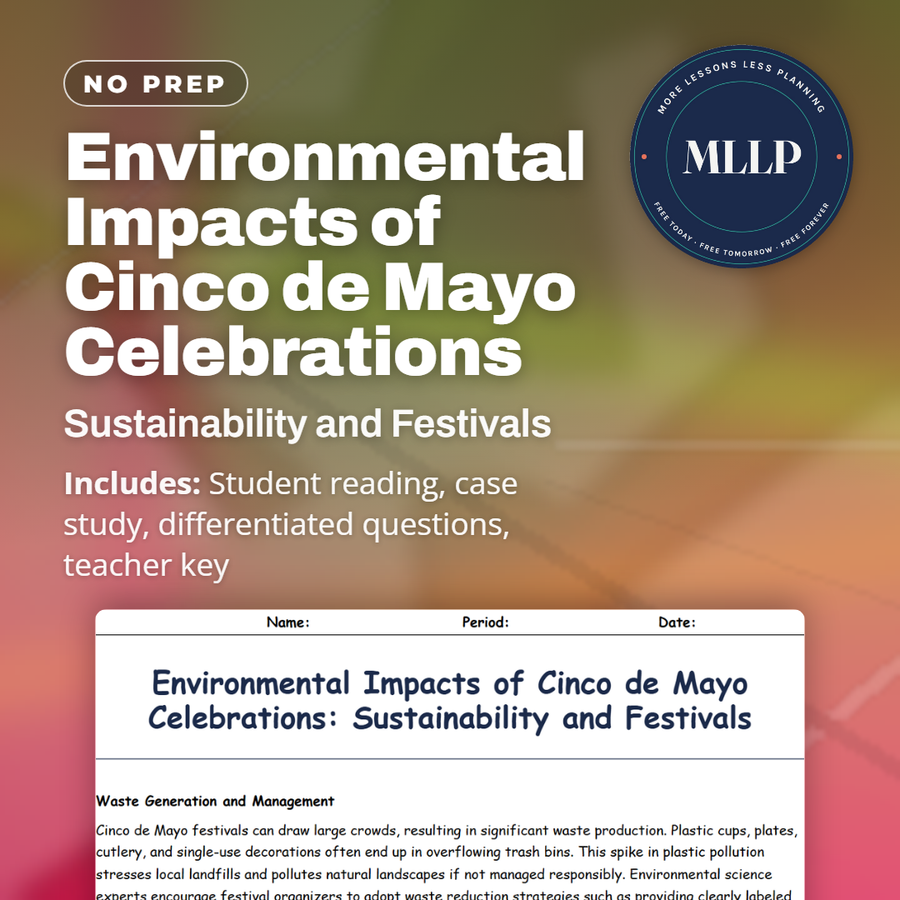
Environmental Impacts of Cinco de Mayo Celebrations: Sustainability and Festivals
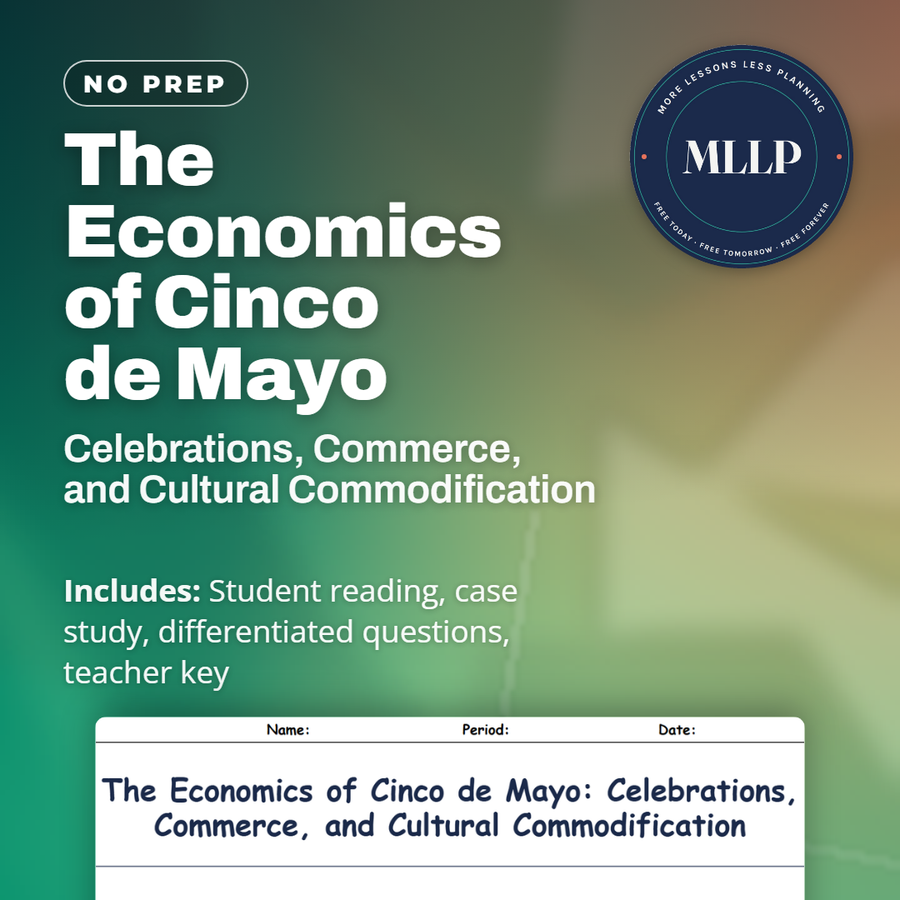
The Economics of Cinco de Mayo: Celebrations, Commerce, and Cultural Commodification
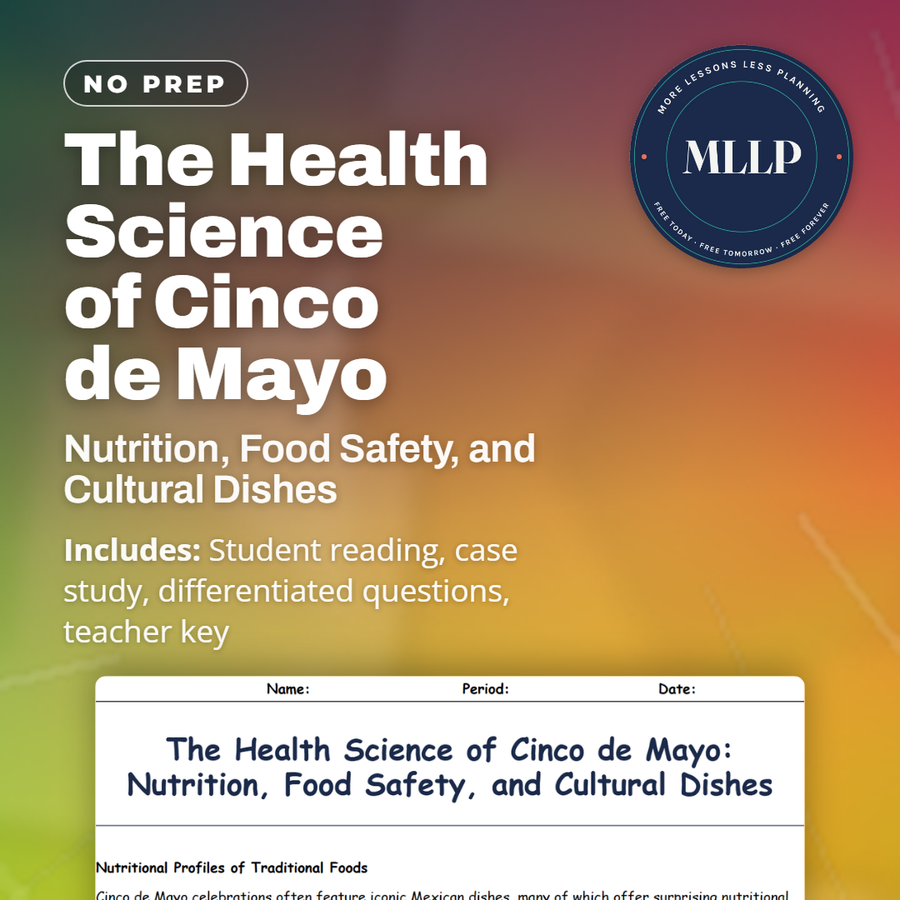
The Health Science of Cinco de Mayo: Nutrition, Food Safety, and Cultural Dishes
Every lesson on this site is free to download and use. If one of them saved you a prep period, you can chip in a few bucks toward my three kids' daycare fund. That's genuinely where tips go.