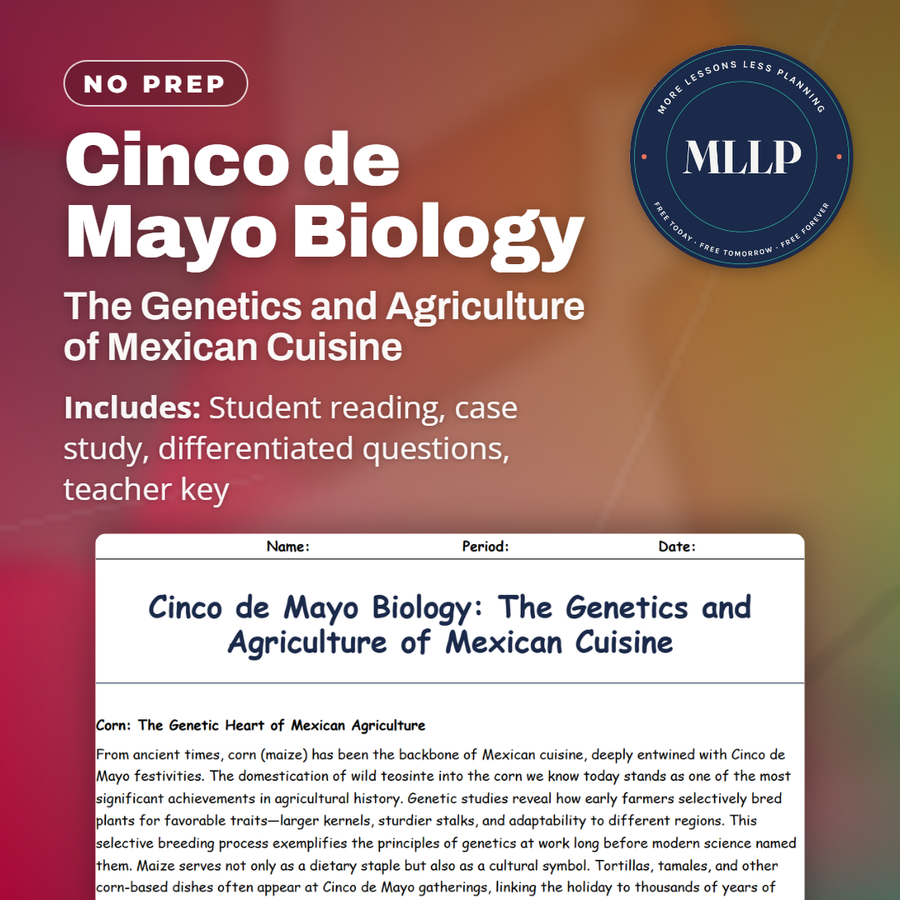
Cinco de Mayo Biology: The Genetics and Agriculture of Mexican Cuisine
Quality reviewed September 2026
Facts verified September 9, 2026
- Subject
- Science
- Grades
- Grades 9-12
- Length
- 7-page student worksheet
- Time
- About one 50-minute class period
- Great for
- Sub plans and independent work
- Includes
- Reading passage, comprehension questions + full answer key
- Format
- Print-and-go PDF
What students do
- Trace the genetic domestication of maize from wild teosinte to modern corn varieties
- Analyze how capsaicin evolved as a plant defense and how birds and mammals respond differently
- Evaluate sustainability practices like agroforestry in avocado production
- Compare heirloom pepper preservation with commercial hybrid farming
What it covers
- Crop domestication and selective breeding
- Plant evolution and ecological adaptation
- Biodiversity and sustainable agriculture
Start reading this worksheet
Corn: The Genetic Heart of Mexican Agriculture
From ancient times, corn (maize) has been the backbone of Mexican cuisine, deeply entwined with Cinco de Mayo festivities. The domestication of wild teosinte into the corn we know today stands as one of the most significant achievements in agricultural history. Genetic studies reveal how early farmers selectively bred plants for favorable traits—larger kernels, sturdier stalks, and adaptability to different regions. This selective breeding process exemplifies the principles of genetics at work long before modern science named them. Maize serves not only as a dietary staple but also as a cultural symbol. Tortillas, tamales, and other corn-based dishes often appear at Cinco de Mayo gatherings, linking the holiday to thousands of years of agricultural tradition. Biologists analyze maize at the molecular level to understand how genes dictate traits like drought resistance, pest tolerance, and nutritional profile. By using genetic engineering, researchers can even create corn varieties fortified with essential vitamins. This mirrors the spirit of innovation that helped early Mesoamerican civilizations thrive. Yet, debates exist about the use of genetically modified organisms (GMOs). While some argue that these engineered crops can solve food shortages and reduce pesticide use, others worry about ecological impacts and loss of genetic diversity. Understanding corn’s genetic heritage underscores why safeguarding heirloom varieties is crucial. For Cinco de Mayo, celebrating authentic recipes often means preserving these indigenous strains, ensuring that both history and biodiversity remain alive.
Chili Peppers: Evolution and Spiciness
Another star of Cinco de Mayo cuisine is the chili pepper. Varieties like jalapeños, poblanos, and serranos contribute distinct flavors and levels of heat. The spiciness we associate with peppers originates from capsaicin, a chemical compound evolutionarily designed to deter certain mammals from eating them. Birds, however, remain unaffected by capsaicin’s heat, helping peppers spread their seeds. This evolutionary quirk demonstrates a unique co-evolutionary dance between plants and their consumers. Plant biologists study the Scoville scale, a measurement of a pepper’s heat, to classify chili varieties. Environmental factors—like soil composition and sunlight—can alter capsaicin concentration, making peppers spicier in some regions than others. Selective breeding has also produced an array of cultivars with varying flavors and heat profiles. For instance, the poblano pepper, often featured in mole poblano sauce, offers a milder, smoky taste that complements the dish’s complexity. Modern agricultural techniques aim to optimize pepper yields, protect against pests, and meet commercial demands for consistent flavor. However, small-scale farmers stress the importance of biodiversity, cultivating heirloom strains with unique taste profiles that mass production sometimes overlooks. On Cinco de Mayo, chili peppers take center stage in salsas and garnishes, reminding diners of the intricate interplay of evolution, botany, and culinary innovation.
Avocados and Sustainable Practices
Avocados, essential for guacamole and other Mexican dishes, have skyrocketed in global popularity. Regions like Michoacán in Mexico are prime avocado-growing areas due to their volcanic soil and favorable climate. The biology behind this fruit’s rich texture lies in its high monounsaturated fat content, which also makes it a nutritious dietary choice. Avocados are pollinated primarily by insects like bees, highlighting the ecological interdependence that influences yield. Sustainability is a growing concern within avocado production. Some farming practices strain water resources and contribute to deforestation, leading biologists and environmental scientists to research more eco-friendly methods. Agroforestry, for example, integrates avocado trees with other plant species to maintain soil health and biodiversity. Such practices can also support local wildlife, creating a balanced ecosystem. On a day like Cinco de Mayo, when avocado-based dips and sauces are ubiquitous, understanding these ecological impacts prompts consumers to consider the source of their ingredients. Biotech companies also explore genetic solutions for disease-resistant avocados, aiming to reduce fungicides and pesticides. Yet, these scientific developments must balance productivity with ecological preservation. By combining modern research with traditional farming knowledge, growers can cultivate avocados in ways that respect both the land and the cultural heritage tied to Mexican cuisine.
Like what you read? The full reading, the case study, and every question set are in the free download below, along with the answer key.
Why this matters
Corn did not start out looking like the corn on a dinner table. Teosinte, its wild ancestor, had a handful of hard kernels in a husk, and it took generations of selective breeding to produce the ears students recognize now. The same pressure shows up in capsaicin, which peppers evolved against mammals, while birds, unaffected by it, spread the seeds instead.
Selective breeding is easy to picture as something modern, done in a lab. Tracing a pepper called Pimiento Antigua back from near extinction through seed banks shows students it has always been this hands-on, and it sets up the harder question: whether a GMO built to solve food shortages is worth what it costs a crop's diversity.
From one teacher to another
Students connect Cinco de Mayo foods to 7,000 years of plant genetics in this worksheet. They learn why corn's selective breeding is a textbook example of how humans act as environmental pressure, shaping traits across generations. A case study follows a farming community rescuing an heirloom pepper called Pimiento Antigua from near extinction through seed banks and sustainable practices. They grapple with the tension: GMOs can solve food shortages, but do they threaten diversity? They see how guacamole's creamy monounsaturated fats and mole's antioxidants tie directly to chemistry and evolution. By the end, they realize every Cinco de Mayo dish is a product of agricultural innovation.
What you get
Download
Where should I send the next one?
Everything here is free and it stays that way. Leave your email and I'll send you the new lessons as they go up. You can unsubscribe from any one of them.
Related resources
American History and Cinco de Mayo: Cultural Exchange and Historical Narratives

Cinco de Mayo Psychology: Identity, Celebration, and Social Dynamics
Cinco de Mayo and the Battle of Puebla: Turning Points in Mexican History
Environmental Impacts of Cinco de Mayo Celebrations: Sustainability and Festivals
The Economics of Cinco de Mayo: Celebrations, Commerce, and Cultural Commodification
The Health Science of Cinco de Mayo: Nutrition, Food Safety, and Cultural Dishes
Every lesson on this site is free to download and use. If one of them saved you a prep period, you can chip in a few bucks toward my three kids' daycare fund. That's genuinely where tips go.