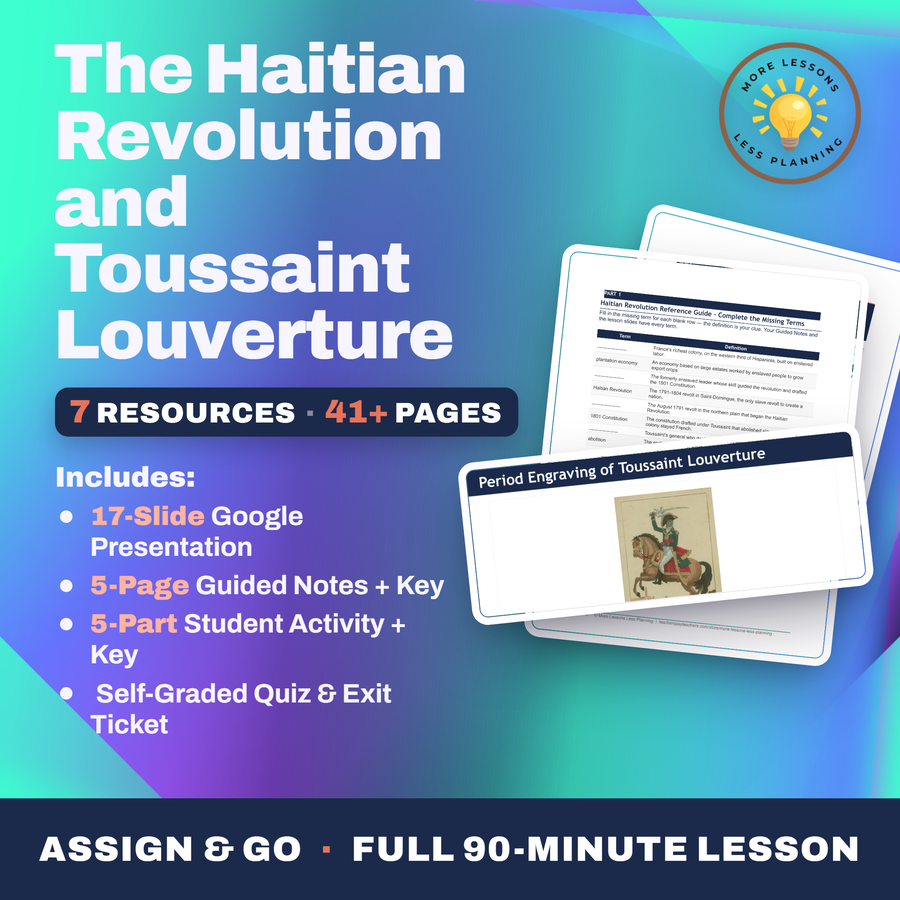

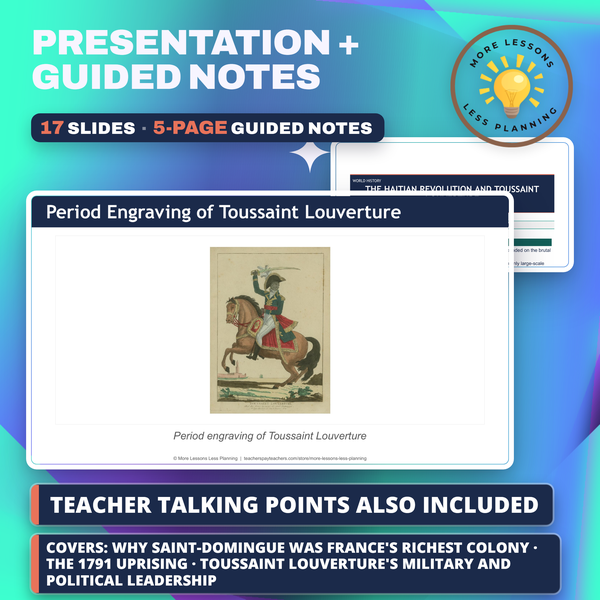
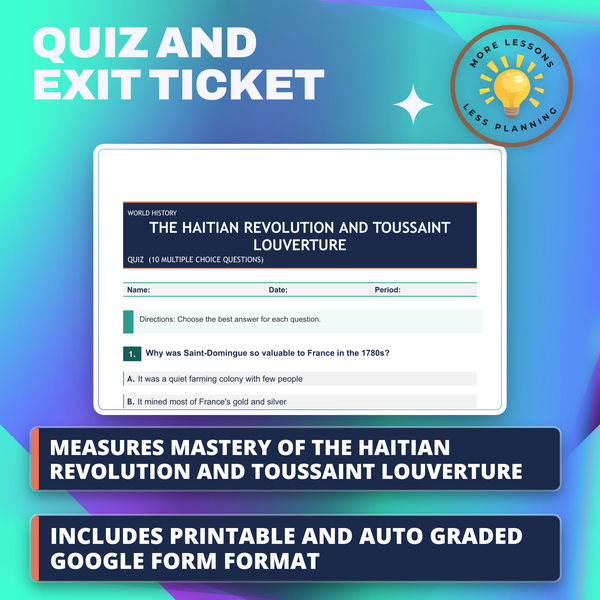
The Haitian Revolution and Toussaint Louverture
Quality reviewed September 2026
- Grades
- Grades 9-12
- Time
- About two 50-minute class periods
- Includes
- 11 ready-to-teach files
- Format
- Word (.docx) · PowerPoint (.pptx)
- Slide deck
- Guided notes
- Guided notes teacher key
- Activity + answer key
- Quiz + answer key
- Exit ticket + answer key
- Teacher guide
- Teacher presentation notes
What students do
- Explain how Saint-Domingue's wealth as France's richest colony rested entirely on enslaved labor
- Trace the August 1791 uprising and Toussaint Louverture's rise from enslaved man to governor
- Read Article 3 of the 1801 Constitution and weigh its abolition of slavery against Article 28's naming of Toussaint governor for life
- Explain why it was Dessalines, not Toussaint, who declared Haiti's independence in 1804
What it covers
- Saint-Domingue's economy and the roughly half a million enslaved people who built its wealth
- The 1801 Constitution's declaration that slavery was "forever abolished" on the territory
- Toussaint's capture, deportation, and death at Fort de Joux in 1803
- Dessalines's January 1804 declaration naming the new nation Haiti
Learning targets
- Explain why Saint-Domingue was France's richest colony and how it depended on the brutal labor of enslaved people on sugar and coffee plantations.
- Describe the 1791 uprising and explain why the Haitian Revolution is the only large-scale slave revolt in history to create an independent nation.
- Explain Toussaint Louverture's military and political leadership and the 1801 Constitution that abolished slavery while the colony remained nominally French.
- Explain that Toussaint was captured and deported in 1802 and died in a French prison in 1803, and that it was Dessalines who declared independence in 1804.
- Connect Haiti's founding to the Enlightenment ideals of liberty and the rights of man that the American and French Revolutions invoked but did not extend to the enslaved.
Peek inside
Saint-Domingue was a French colony on the western third of Hispaniola.
By the 1780s it was the richest colony in the world.
Its plantations produced a large share of the sugar and coffee sold in Europe.
A plantation economy grows export crops on estates worked by enslaved people.
All of that wealth rested on the forced labor of enslaved Africans.
1. France's richest colony, on the western third of Hispaniola and built on enslaved-labor plantations, was called .
Why this matters
Roughly half a million enslaved people produced the wealth that made Saint-Domingue the richest colony in the world in the 1780s, and none of it belonged to them. Toussaint Louverture, born into that system, led the revolution and had a constitution drafted in 1801 declaring slavery forever abolished, only to die in a French prison before independence came.
Toussaint's story resists a clean ending, and I don't smooth that out: he wrote freedom into law and didn't live to see the nation it created, which fell to Dessalines to declare in 1804. Holding his achievement and his defeat together teaches more about the Enlightenment's limits than a lecture on its ideals.
From one teacher to another
Saint-Domingue was the richest colony in the world in the 1780s, and every bit of that wealth came from the forced labor of the roughly half a million enslaved people who outnumbered everyone else on the island. I ask students to hold two facts side by side: Toussaint Louverture, born enslaved, became the revolution's most skilled political and military leader and had a constitution drafted that abolished slavery forever - and he was still captured, deported, and dead in a French mountain prison before independence was ever declared. It was Jean-Jacques Dessalines who finished what Toussaint started, naming the new nation Haiti on January 1, 1804. Students read the constitution's own words and reckon with what it meant for enslaved people to take the Enlightenment's promise of liberty more seriously than the nations that had proclaimed it.
Every file in this toolkit
Download
Where should I send the next one?
Everything here is free and it stays that way. Leave your email and I'll send you the new lessons as they go up. You can unsubscribe from any one of them.
Related resources
Causes of the French Revolution
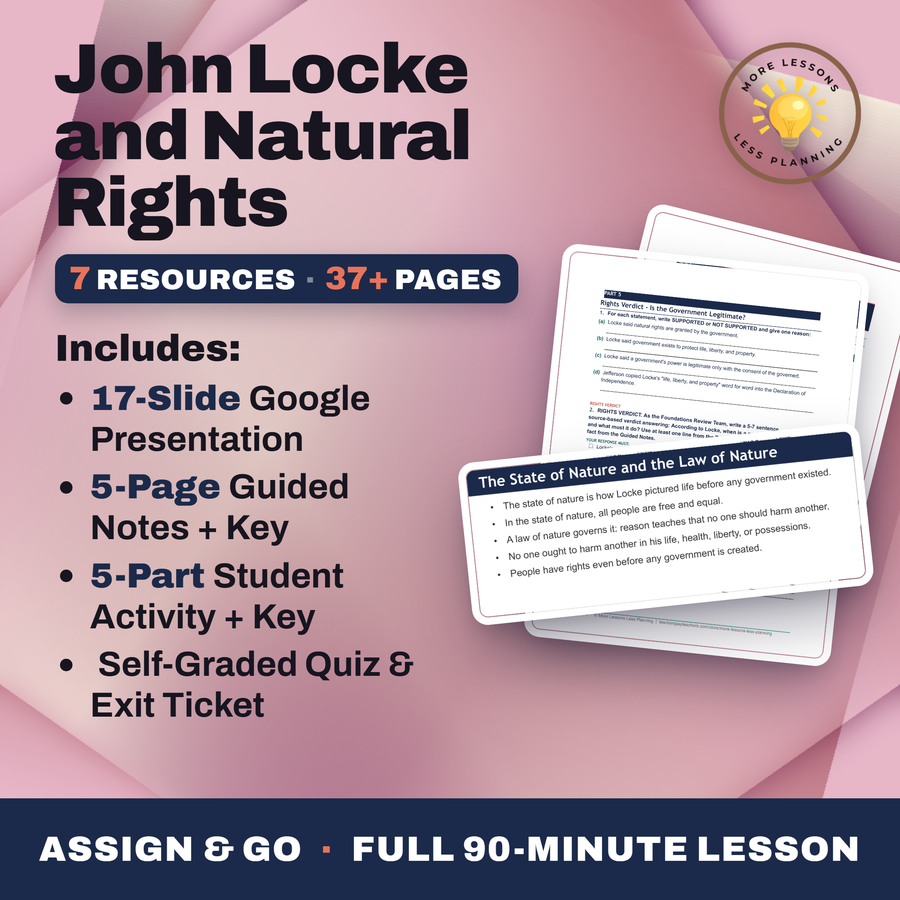
John Locke and Natural Rights
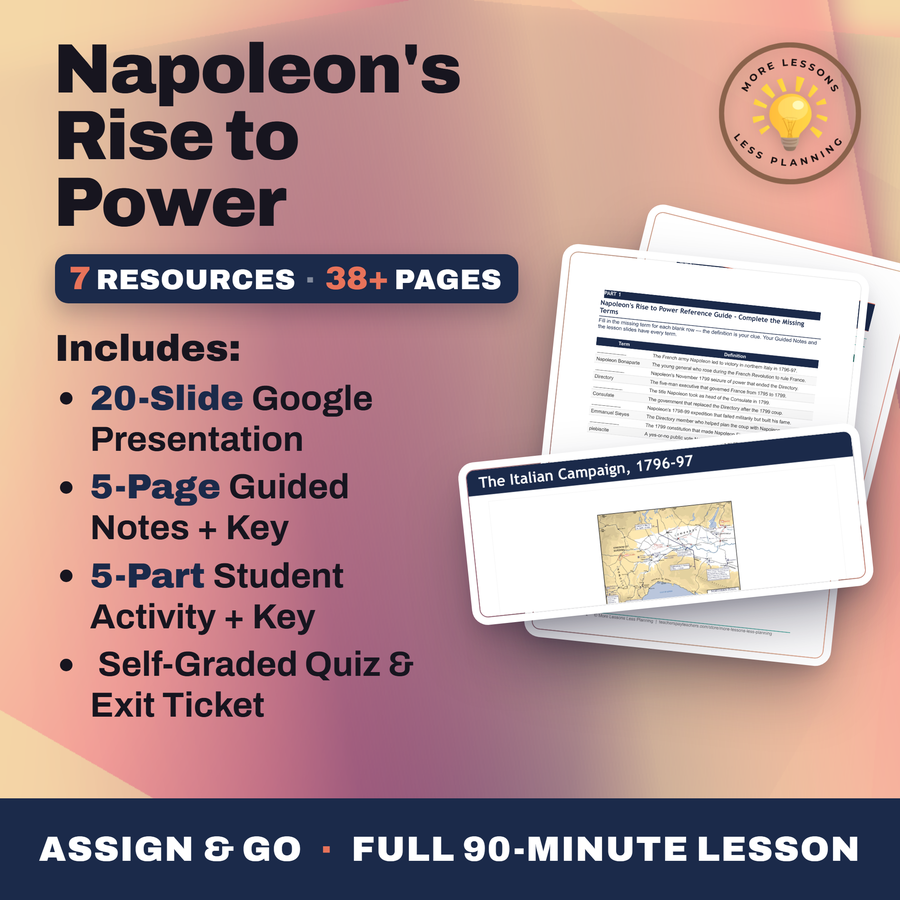
Napoleon's Rise to Power
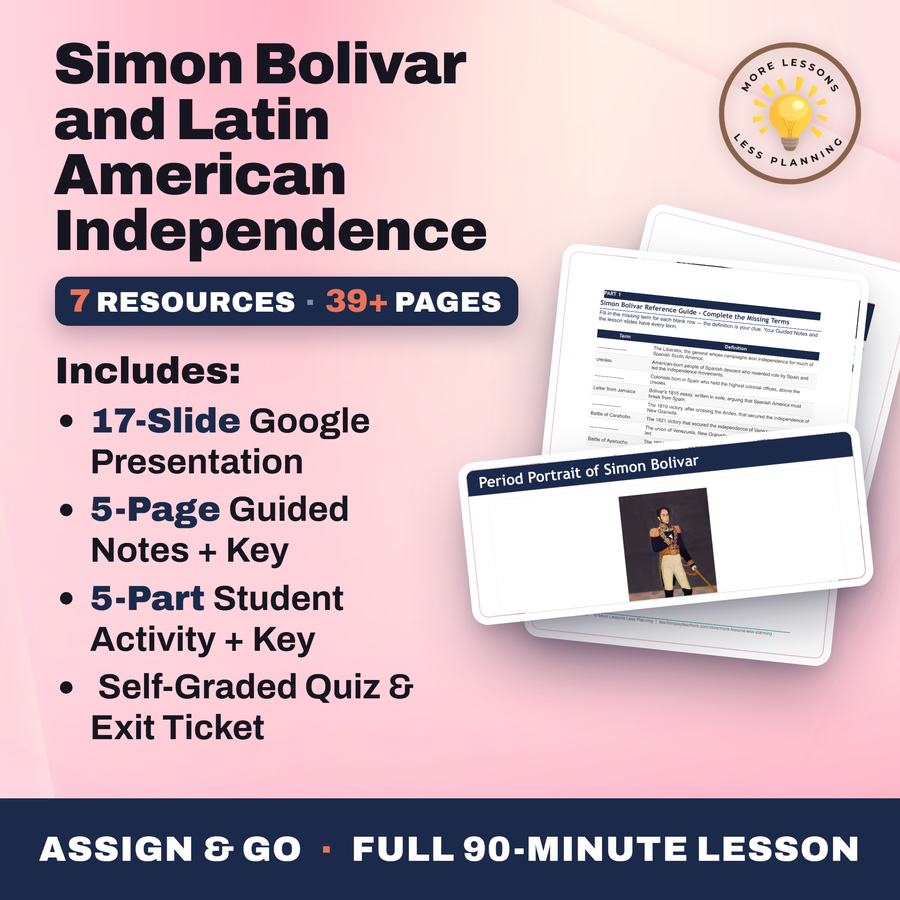
Simon Bolivar and Latin American Independence
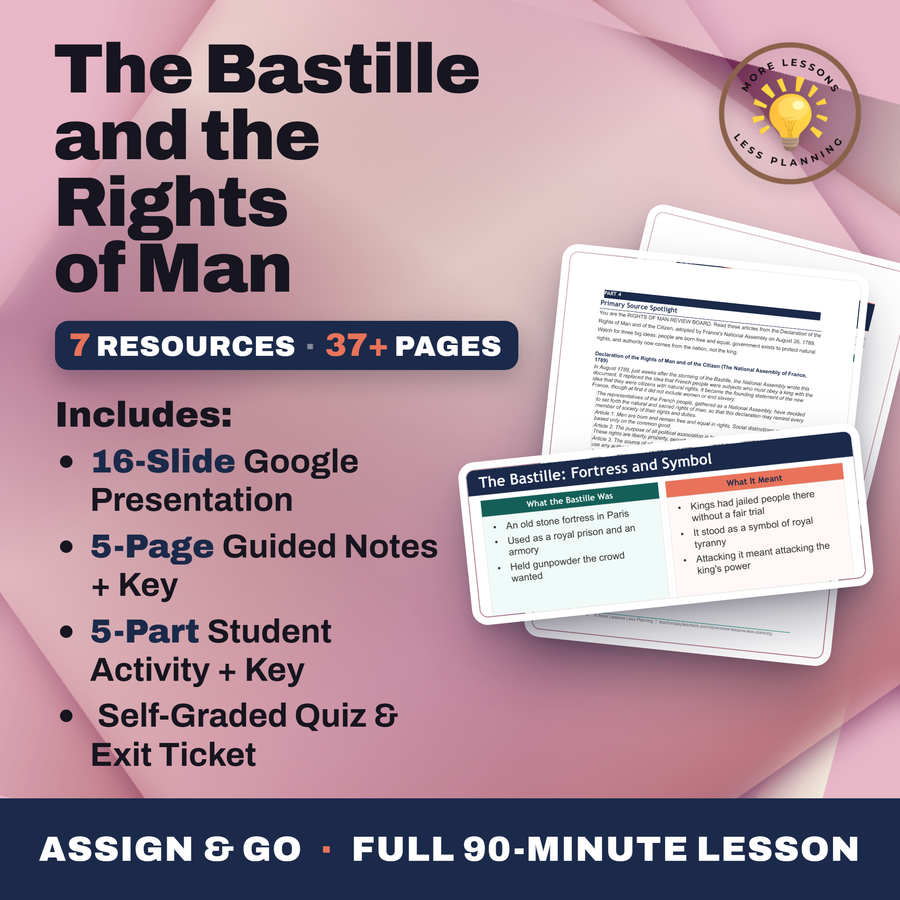
The Bastille and the Rights of Man
The Declaration of Independence
Every lesson on this site is free to download and use. If one of them saved you a prep period, you can chip in a few bucks toward my three kids' daycare fund. That's genuinely where tips go.