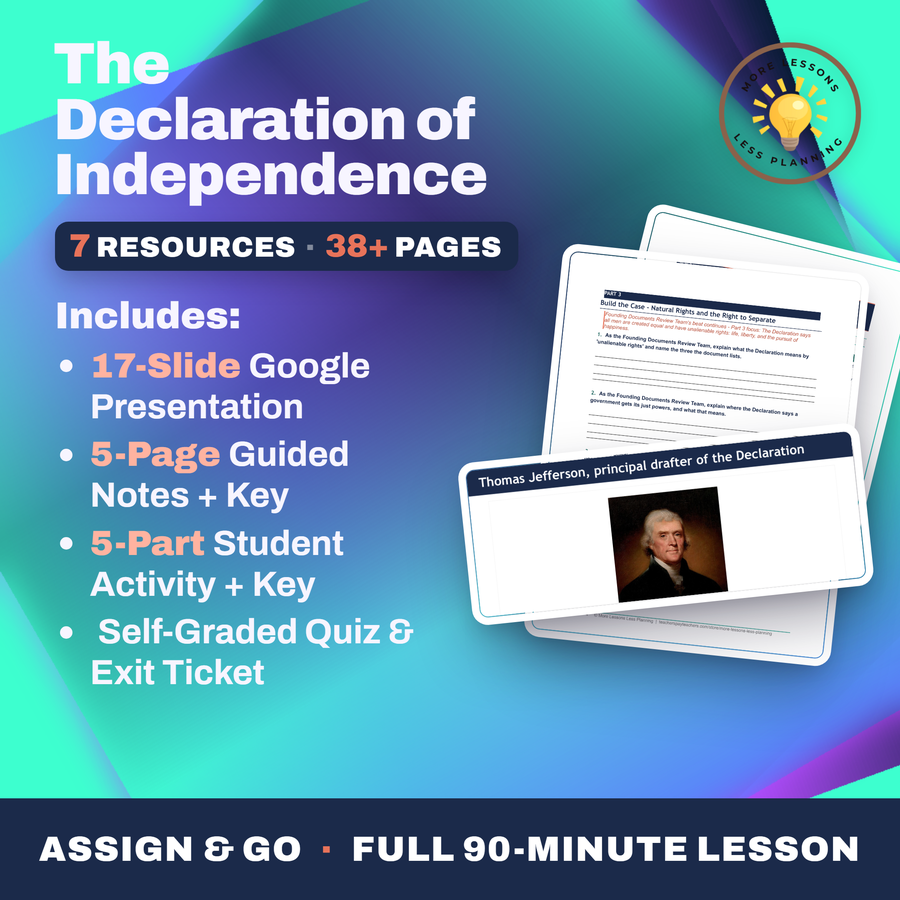
The Declaration of Independence
Quality reviewed September 2026
- Grades
- Grades 9-12
- Time
- About two 50-minute class periods
- Includes
- 11 ready-to-teach files
- Format
- Word (.docx) · PowerPoint (.pptx)
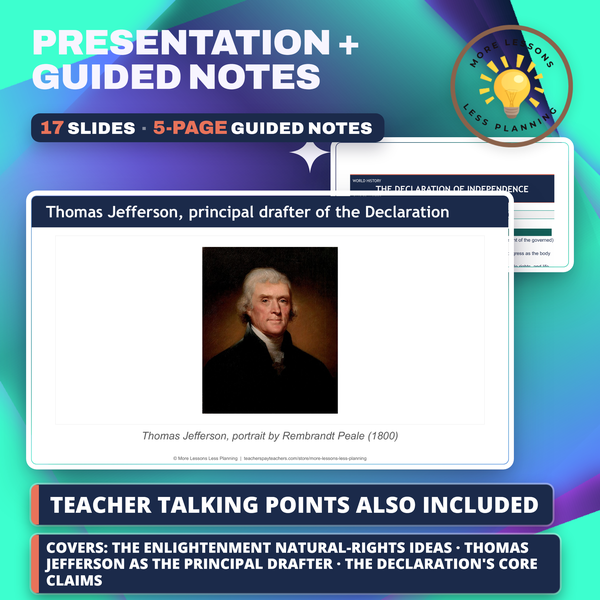
- Slide deck
- Guided notes
- Guided notes teacher key
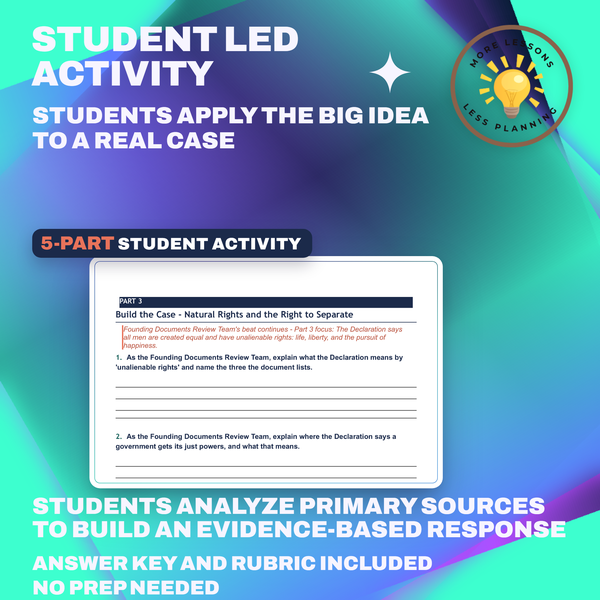
- Activity + answer key
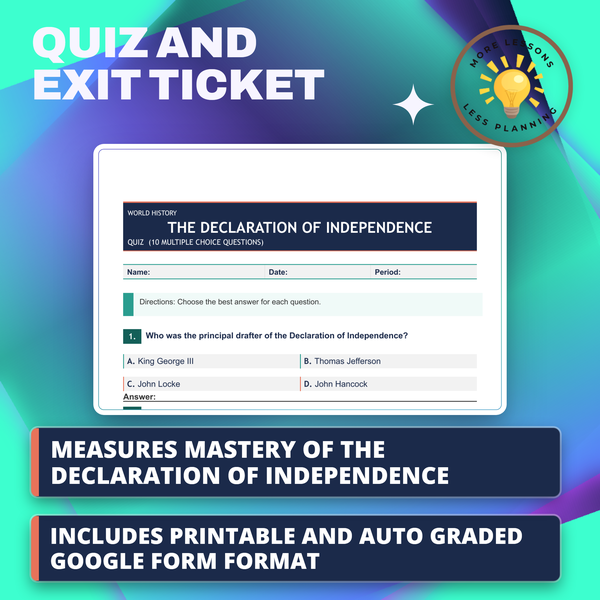
- Quiz + answer key
- Exit ticket + answer key
- Teacher guide
- Teacher presentation notes
What students do
- Read the Declaration's core claims and explain what it means that all men are created equal and have unalienable rights
- Trace how Jefferson adapted Locke's language on life, liberty, and property into the Declaration's own words
- Explain why the Declaration says government only holds power because the governed consent to it
- Analyze how the Declaration turned Enlightenment philosophy into a concrete act of revolution
What it covers
- The Enlightenment natural-rights ideas behind the Declaration, including consent of the governed
- Jefferson as principal drafter and the Continental Congress that adopted the Declaration in 1776
- The Declaration's core claims, including the people's right to alter or abolish a destructive government
- How the Declaration moved from abstract philosophy to a revolutionary act
Learning targets
- Explain the Enlightenment natural-rights ideas (life, liberty, property; consent of the governed) that shaped the Declaration of Independence.
- Identify Thomas Jefferson as the principal drafter and the Continental Congress as the body that adopted the Declaration in 1776.
- Explain the Declaration's core claims: all men are created equal, unalienable rights, and life, liberty, and the pursuit of happiness.
- Explain that governments derive their just powers from the consent of the governed and that the people may alter or abolish a destructive government.
- Explain how the Declaration turned abstract Enlightenment philosophy into a concrete revolutionary act.
Peek inside
Rights Before the Revolution
Enlightenment thinkers argued that all people are born with rights that no king grants.
The English philosopher John named the rights life, liberty, and property.
Locke said government exists to these rights.
A government's power comes from the of the governed.
1. The 1776 document that announced the colonies' separation from Britain and stated its natural-rights philosophy is the .
Why this matters
An argument only becomes a revolution once people agree to put their names under it in public, and that is the step the Declaration represents. The Continental Congress adopted Jefferson's draft in 1776, turning claims about unalienable rights and the consent of the governed into a collective act instead of one man's argument.
Locke's fingerprints are all over the document: unalienable rights, consent of the governed, the right to alter or abolish a government that fails its people. What changes here is that the argument gets adopted by the Congress and tied to an actual break from Britain, and I make sure students notice that shift from philosophy to action rather than skim past it.
From one teacher to another
I teach the Declaration in a Global Studies context, so I built this one to treat it as a world-historical document instead of just a Fourth of July reading. Students work through the actual claims: that all men are created equal, that people have unalienable rights to life, liberty, and the pursuit of happiness, and that government only holds power because the governed consent to it. They trace how Jefferson took Locke's language, life, liberty, and property, and reshaped it into the Declaration's own words, and they read the Declaration's own argument for why people have the right to abolish a government that stops protecting them. It's built to sit right alongside the Enlightenment philosophy unit, so students see the Declaration as the moment that philosophy turned into an actual revolution. Guided notes track the slides, the activity comes with a full answer key, and the quiz and exit ticket both include keys.
Every file in this toolkit
Download
Where should I send the next one?
Everything here is free and it stays that way. Leave your email and I'll send you the new lessons as they go up. You can unsubscribe from any one of them.
Related resources
Causes of the French Revolution
John Locke and Natural Rights
Napoleon's Rise to Power
Simon Bolivar and Latin American Independence
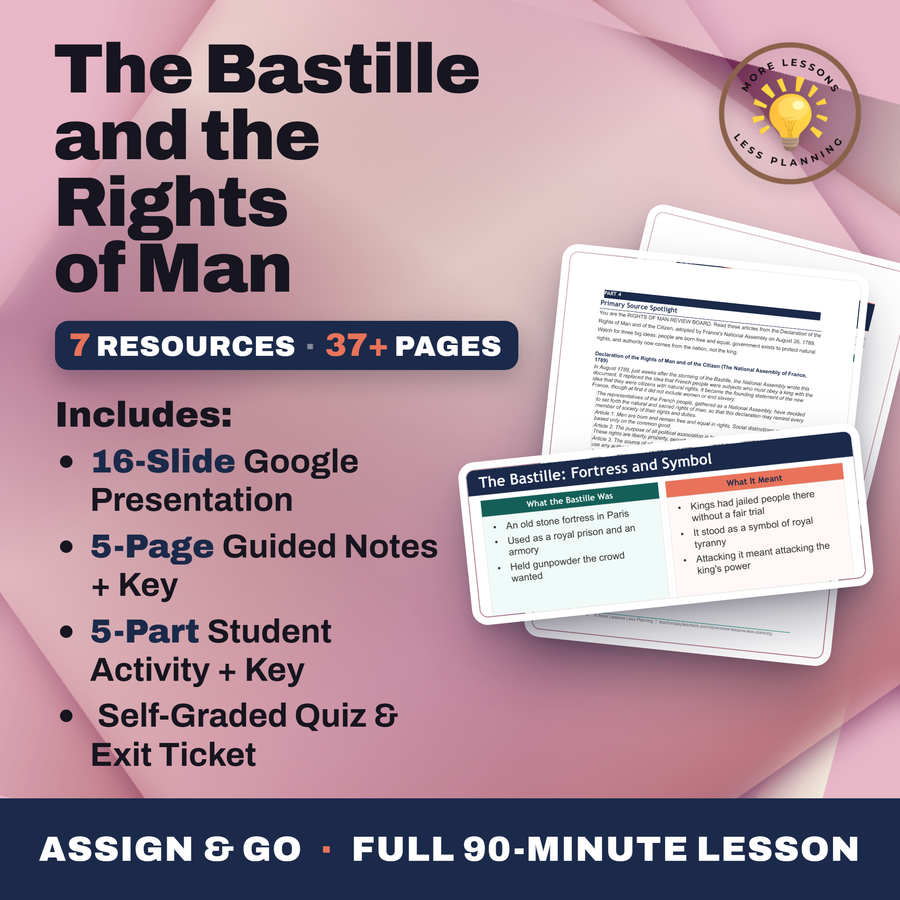
The Bastille and the Rights of Man
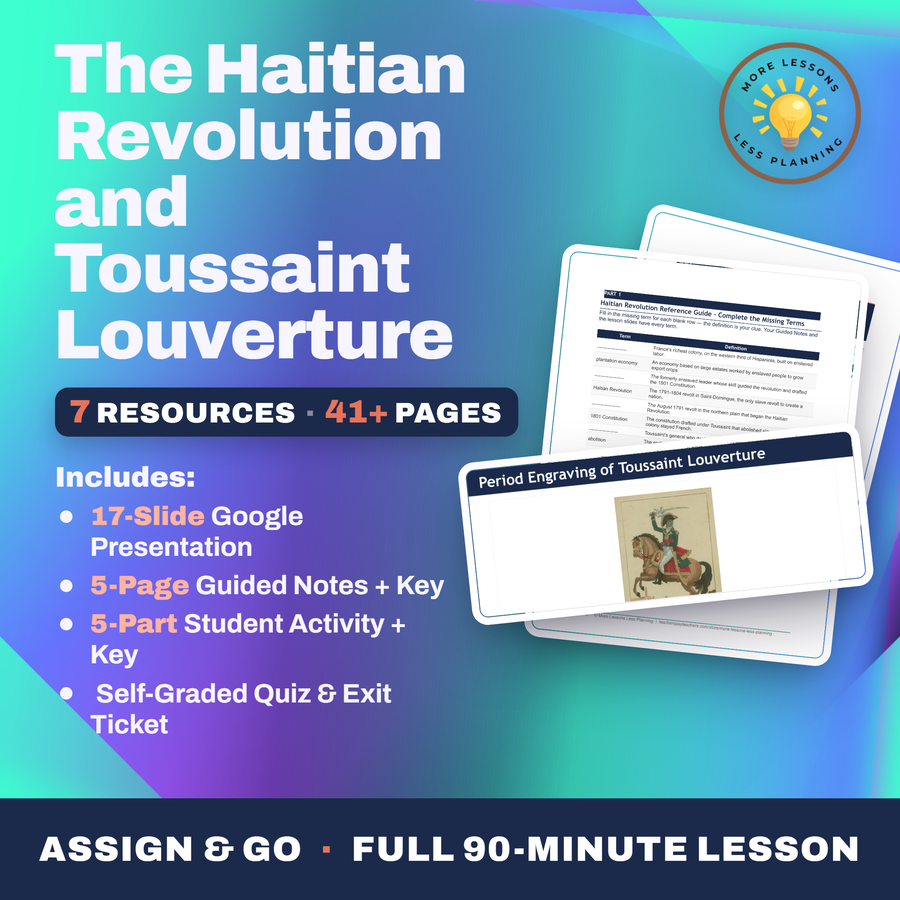
The Haitian Revolution and Toussaint Louverture
Every lesson on this site is free to download and use. If one of them saved you a prep period, you can chip in a few bucks toward my three kids' daycare fund. That's genuinely where tips go.