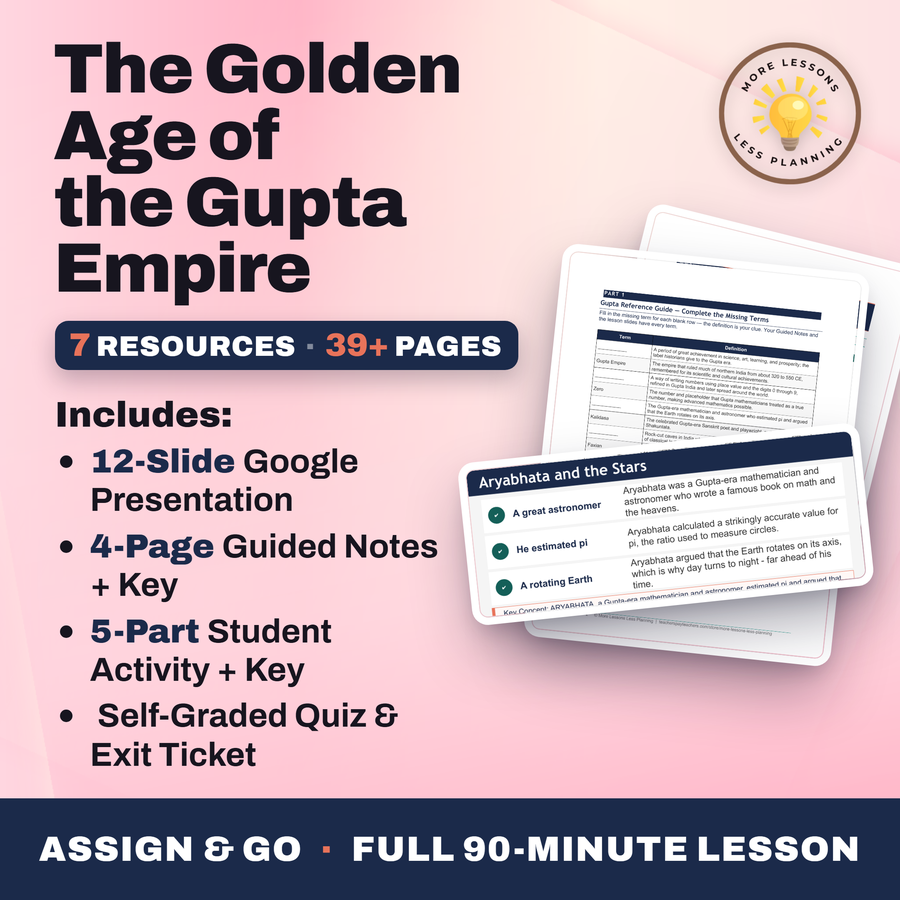
The Golden Age of the Gupta Empire
Quality reviewed September 2026
- Subject
- World History
- Grades
- Grades 9-12
- Time
- About two 50-minute class periods
- Includes
- 11 ready-to-teach files
- Format
- Word (.docx) · PowerPoint (.pptx)
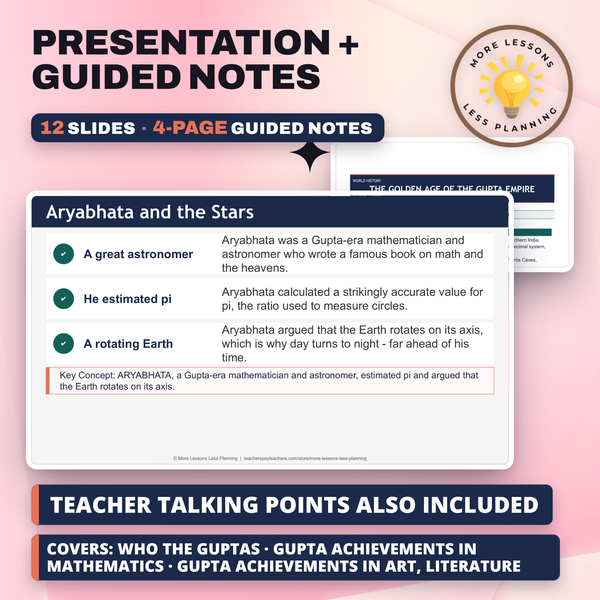
- Slide deck
- Guided notes
- Guided notes teacher key
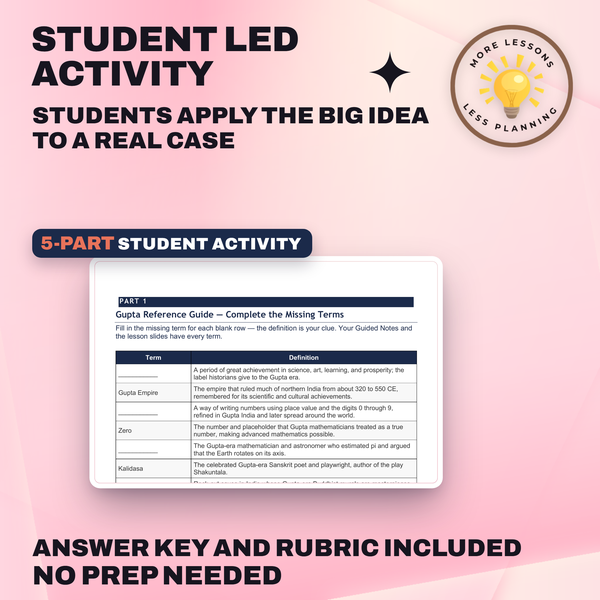
- Activity + answer key
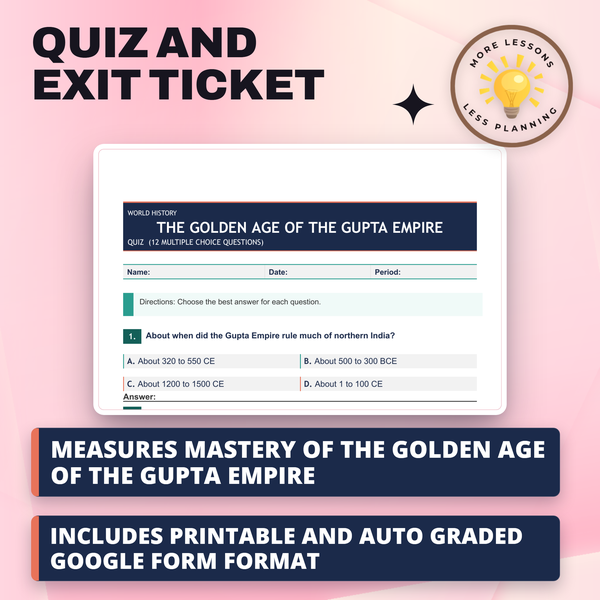
- Quiz + answer key
- Exit ticket + answer key
- Teacher guide
- Teacher presentation notes
What students do
- Explain how Gupta mathematicians treated zero as a true number, not just a placeholder
- Connect Aryabhata's estimate of pi to his claim that the Earth rotates on its axis
- Read Faxian's 5th-century travel account and weigh an admiring outsider's evidence
- Explain why Golden Age is a judgment historians make, not a plain fact about everyone's life
What it covers
- The decimal system and zero, and why they made advanced math possible
- Aryabhata's work in astronomy, Kalidasa's plays, and the murals at the Ajanta Caves
- Trade in silk, spices, cotton, and ivory that funded Gupta India's wealth
- Faxian's account of a peaceful Middle Kingdom, read as one traveler's view
Learning targets
- Explain who the Guptas were and identify when the Gupta Empire ruled northern India.
- Describe Gupta achievements in mathematics and science, including the decimal system, zero, and the astronomer Aryabhata.
- Describe Gupta achievements in art, literature, and trade, including the Ajanta Caves, Kalidasa, and long-distance trade.
- Explain why 'Golden Age' is a historical judgment, and analyze the traveler Faxian's account by considering who wrote it, when, and how reliable it is.
Peek inside
1. Q1. What term do historians give to a period of great achievement in science, art, and learning — the label attached to the Gupta era? (two words)
Why this matters
Silk, spices, cotton, and ivory moving through Gupta trade routes funded the mathematics and art that make this period famous, so the golden age label actually rests on an economy most surveys skip past in favor of Aryabhata's math. Wealth from trade is the less flashy half of the story, but it paid for the flashy half.
Aryabhata gets most of the attention, so I pair his math with Kalidasa's plays and the murals at the Ajanta Caves, since a period judged golden on numbers alone is a thinner case than one built from an equal mix of science and art.
From one teacher to another
Golden Age gets thrown around a lot, so before my students can use the label they have to earn it, which means checking Gupta India's real math and art against the evidence. Aryabhata estimating pi and arguing the Earth spins on its axis usually gets a reaction, and Faxian's travel account gives them a real eyewitness voice describing a peaceful, orderly kingdom he was only passing through. I want them leaving with the achievements memorized, sure, but also with the habit of asking who's calling something golden, and for whom. It keeps a survey lesson from turning into a highlight reel.
Every file in this toolkit
Download
Where should I send the next one?
Everything here is free and it stays that way. Leave your email and I'll send you the new lessons as they go up. You can unsubscribe from any one of them.
Related resources
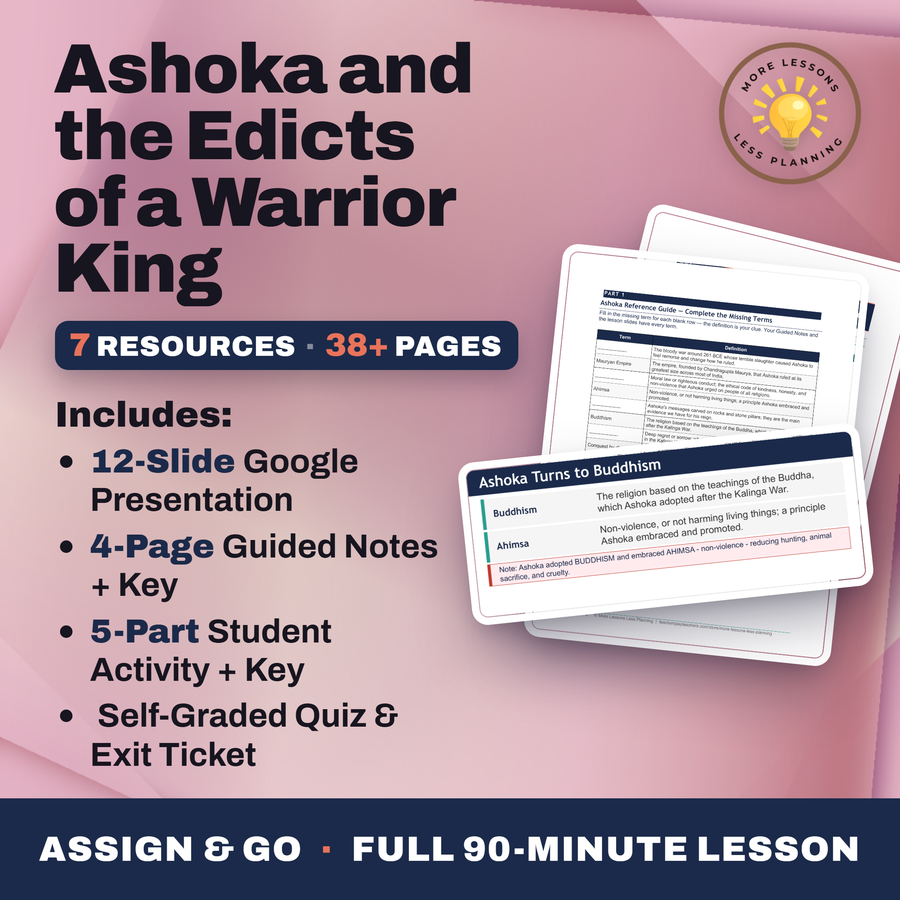
Ashoka and the Edicts of a Warrior King
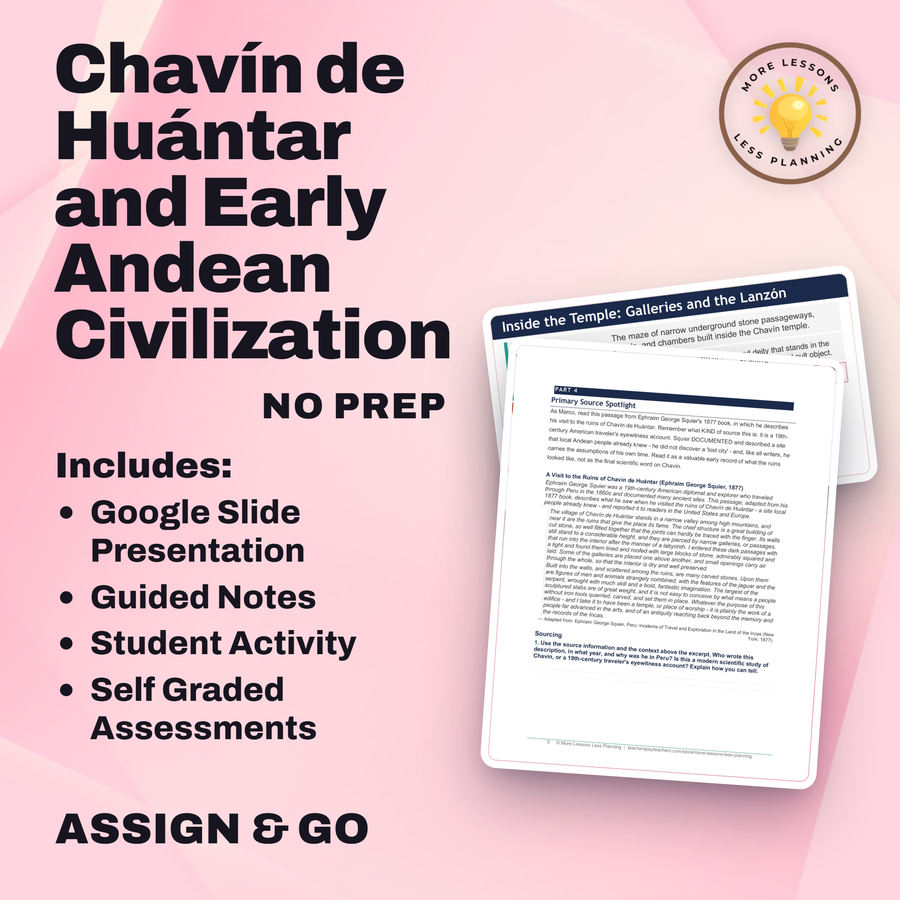
Chavín de Huántar and Early Andean Civilization
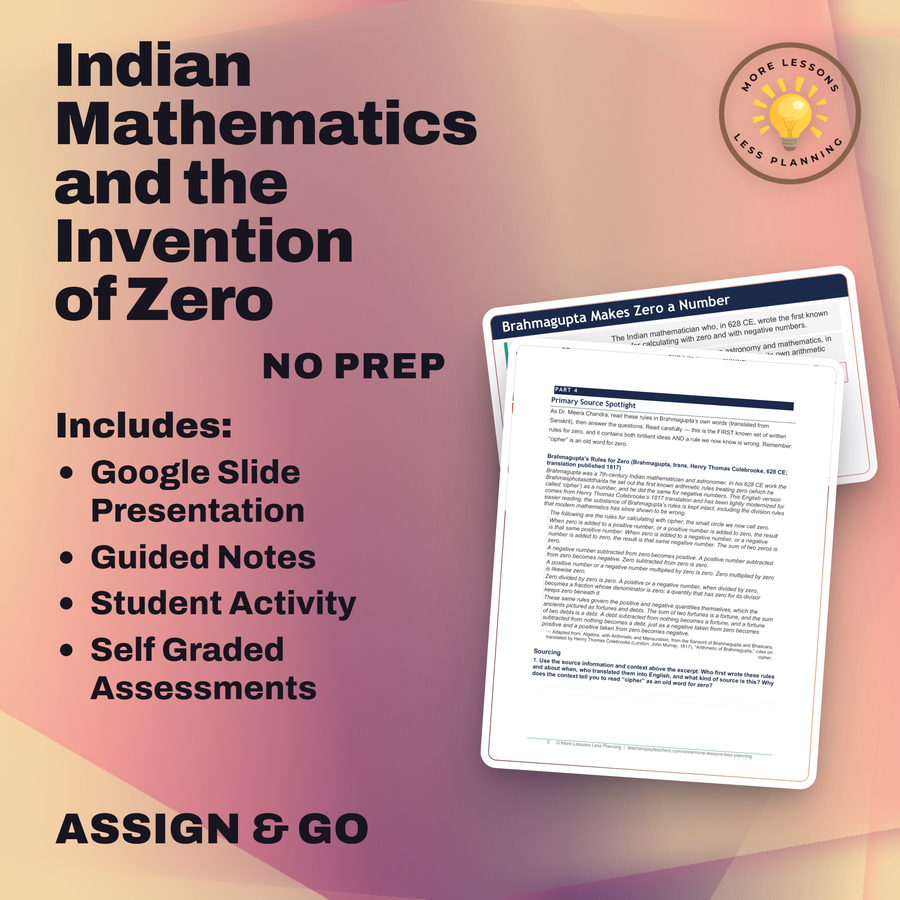
Indian Mathematics and the Invention of Zero
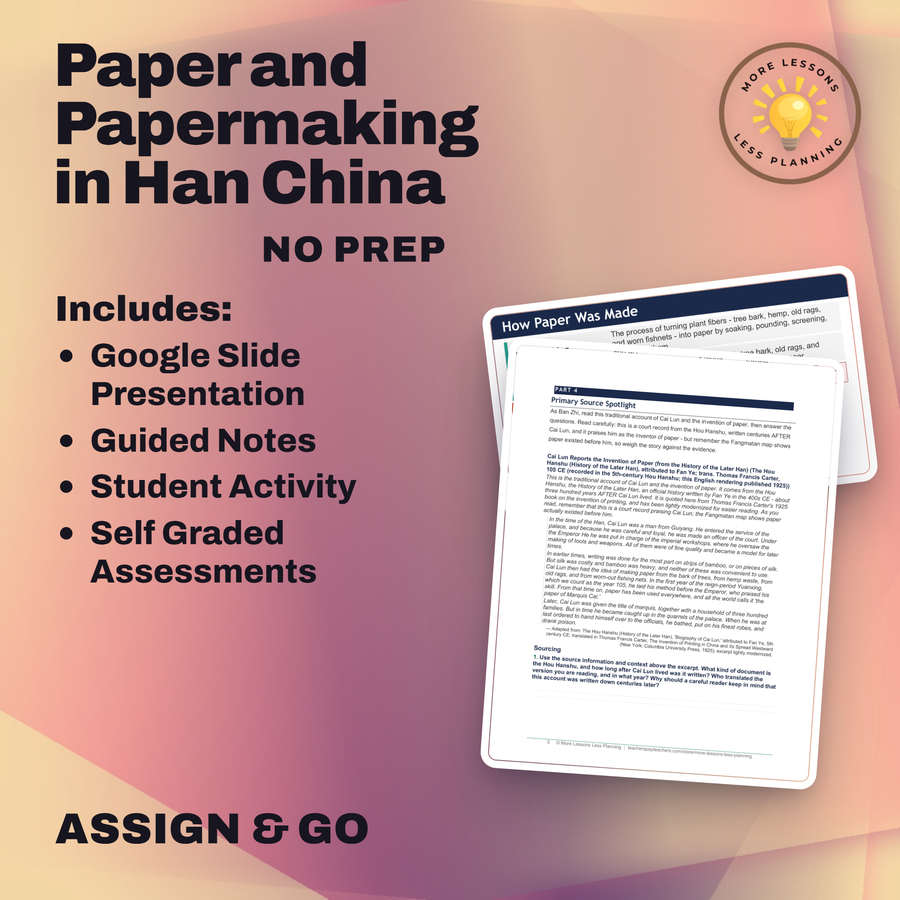
Paper and Papermaking in Han China
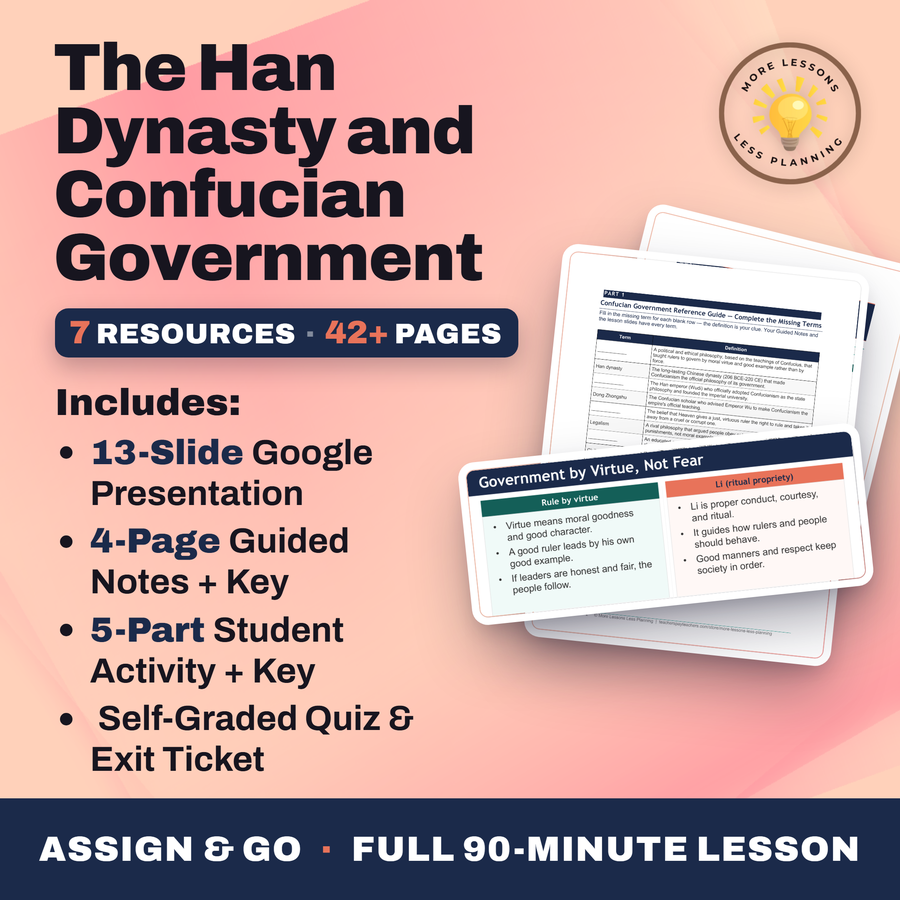
The Han Dynasty and Confucian Government
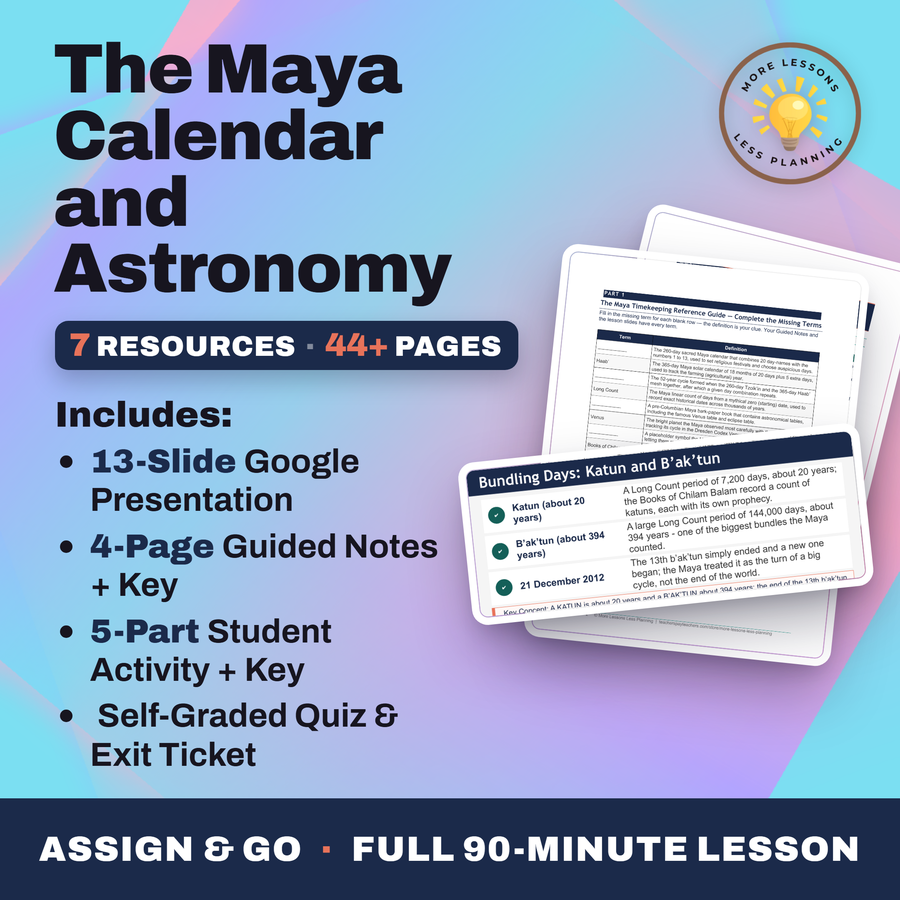
The Maya Calendar and Astronomy
Every lesson on this site is free to download and use. If one of them saved you a prep period, you can chip in a few bucks toward my three kids' daycare fund. That's genuinely where tips go.