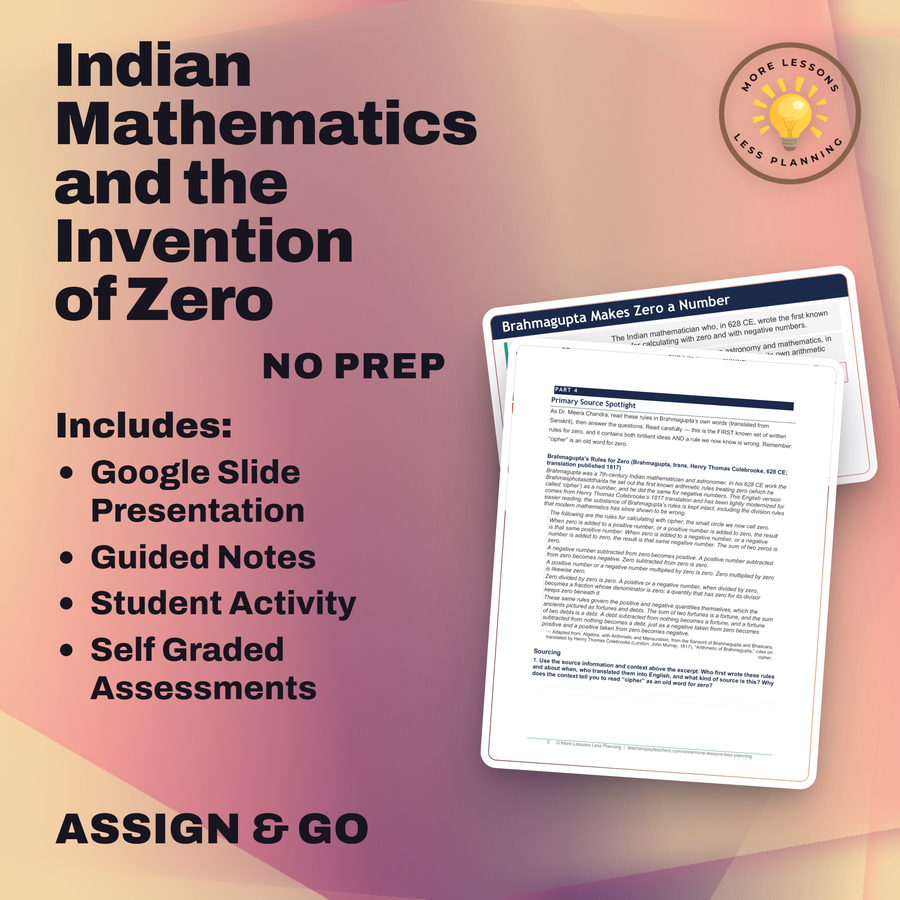

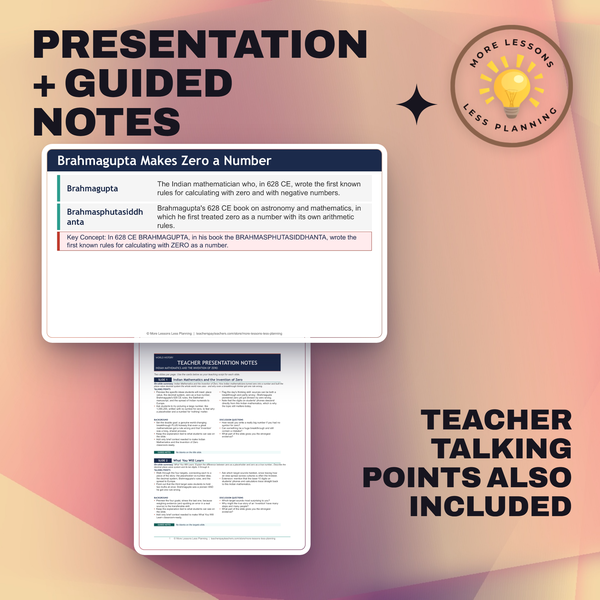
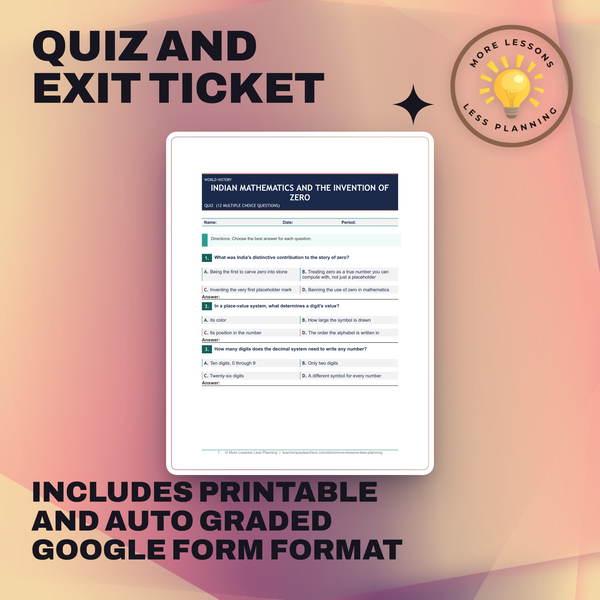
Indian Mathematics and the Invention of Zero
Quality reviewed September 2026
- Subject
- World History
- Grades
- Grades 9-12
- Time
- About two 50-minute class periods
- Includes
- 11 ready-to-teach files
- Format
- Word (.docx) · PowerPoint (.pptx)
- Slide deck
- Guided notes
- Guided notes teacher key
- Activity + answer key
- Quiz + answer key
- Exit ticket + answer key
- Teacher guide
- Teacher presentation notes
What students do
- Explain the difference between using zero as a placeholder and treating zero as a true number
- Trace how the decimal place-value system lets any number be written with just ten digits
- Read Brahmagupta's own 628 CE rules for zero and identify which rule modern mathematics shows was wrong
- Weigh evidence like the Bakhshali manuscript's dot symbol against Brahmagupta's written rules for zero
What it covers
- The difference between zero as a placeholder and zero as a number you can add, subtract, and multiply
- Brahmagupta's Brahmasphutasiddhanta (628 CE) and its first-ever arithmetic rules for zero and negative numbers
- The rule Brahmagupta got wrong, division by zero, and why that mistake still matters in math class today
- How Indian numerals traveled through al-Khwarizmi and the Islamic world to become "Arabic numerals" in Europe
Learning targets
- Explain the difference between using zero as a placeholder and treating zero as a true number, and identify India's contribution.
- Describe the decimal place-value system and how it lets any number be written with just ten digits, 0 through 9.
- Explain Brahmagupta's role in writing the first rules for zero and negative numbers, including which rule modern mathematics shows was wrong.
- Trace how Indian numerals and the decimal system spread through the Islamic world to Europe as 'Arabic numerals,' and weigh evidence such as the Bakhshali manuscript and Brahmagupta's own words.
Peek inside
Place value
The idea that a digit's value depends on its position in a number, so the 2 in 205 means two hundred while the 2 in 25 means twenty.
Roman numerals
An older number system (I, V, X, L, C) with no symbol for nothing and no place value, which made large numbers and arithmetic clumsy.
Key Concept: In a PLACE VALUE system a digit's worth depends on its position; ROMAN NUMERALS had no symbol for nothing and no place value.
1. Q1. What did Indian mathematicians treat as a true number you can add, subtract, and multiply — a milestone beyond using it only as a placeholder? (one word)
Why this matters
Every number a student writes today uses a place-value system built so ten digits can represent any quantity. That system carries a mislabel most people never question: Brahmagupta wrote the first surviving rules for zero as a real number in 628 CE, yet Europe still calls the result "Arabic numerals" because the idea passed through al-Khwarizmi and the Islamic world first.
The value here is watching students realize a real mathematician published a written rule that turned out wrong. Division by zero survives in Brahmagupta's own text as a mistake, not a footnote, and weighing a primary source as evidence changes how a class reads every other document.
From one teacher to another
I like handing students a genuine mathematical rule that a brilliant 7th-century mathematician got wrong, because it tells them math history isn't a straight line of geniuses getting everything right on the first try. Brahmagupta's own 628 CE rules treat zero as a real number you can calculate with, not just an empty placeholder, and students read his actual rules before they find out which one, his rule for dividing by zero, modern math has since overturned. From there we trace how those Indian numerals moved through al-Khwarizmi and the Islamic world and picked up the label "Arabic numerals" on the way to Europe, which is its own lesson in how credit for an idea doesn't always land where it started.
Every file in this toolkit
Download
Where should I send the next one?
Everything here is free and it stays that way. Leave your email and I'll send you the new lessons as they go up. You can unsubscribe from any one of them.
Related resources
Ashoka and the Edicts of a Warrior King
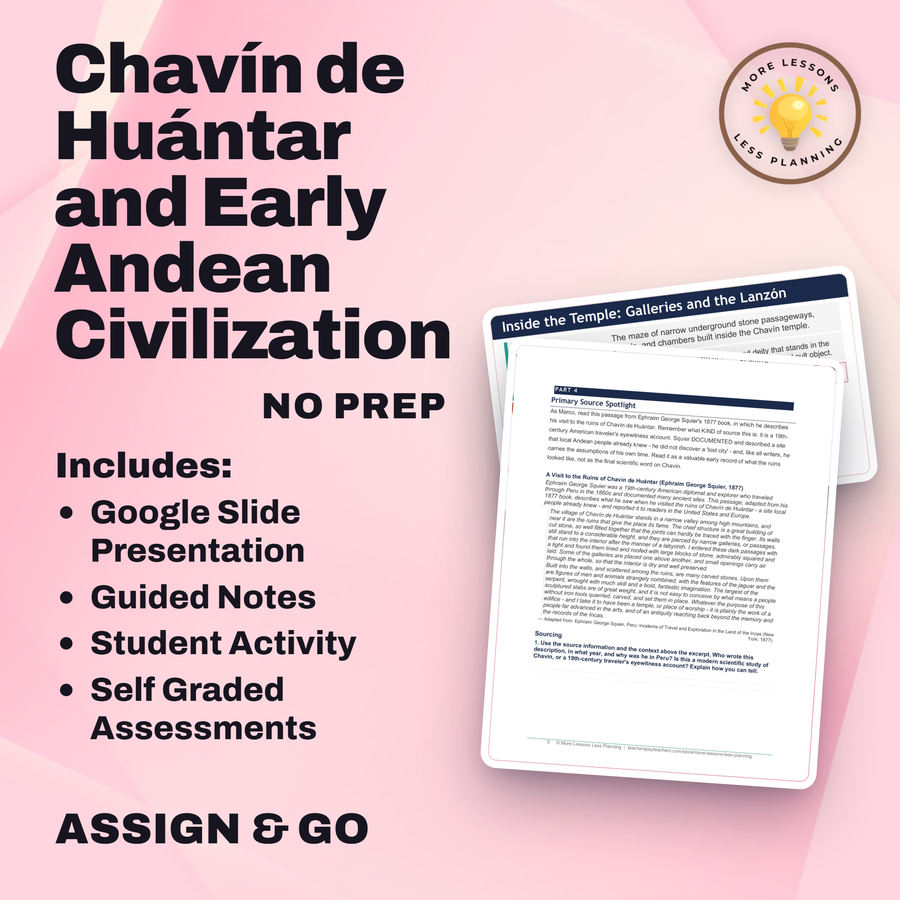
Chavín de Huántar and Early Andean Civilization
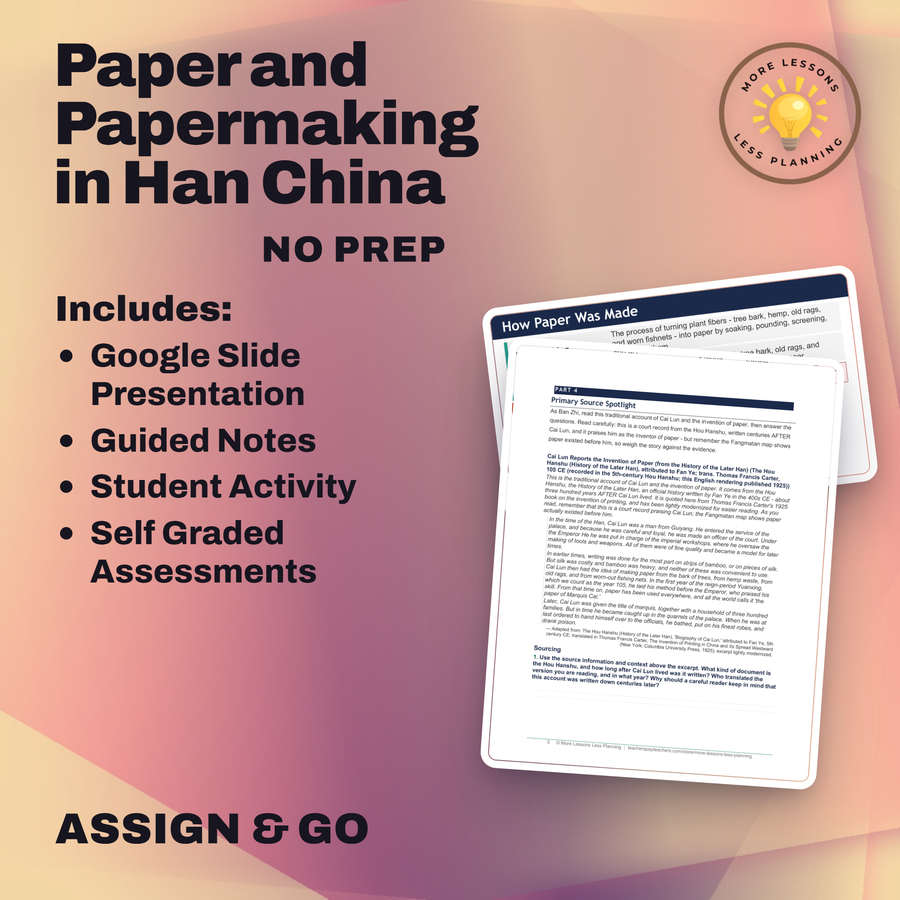
Paper and Papermaking in Han China

The Golden Age of the Gupta Empire
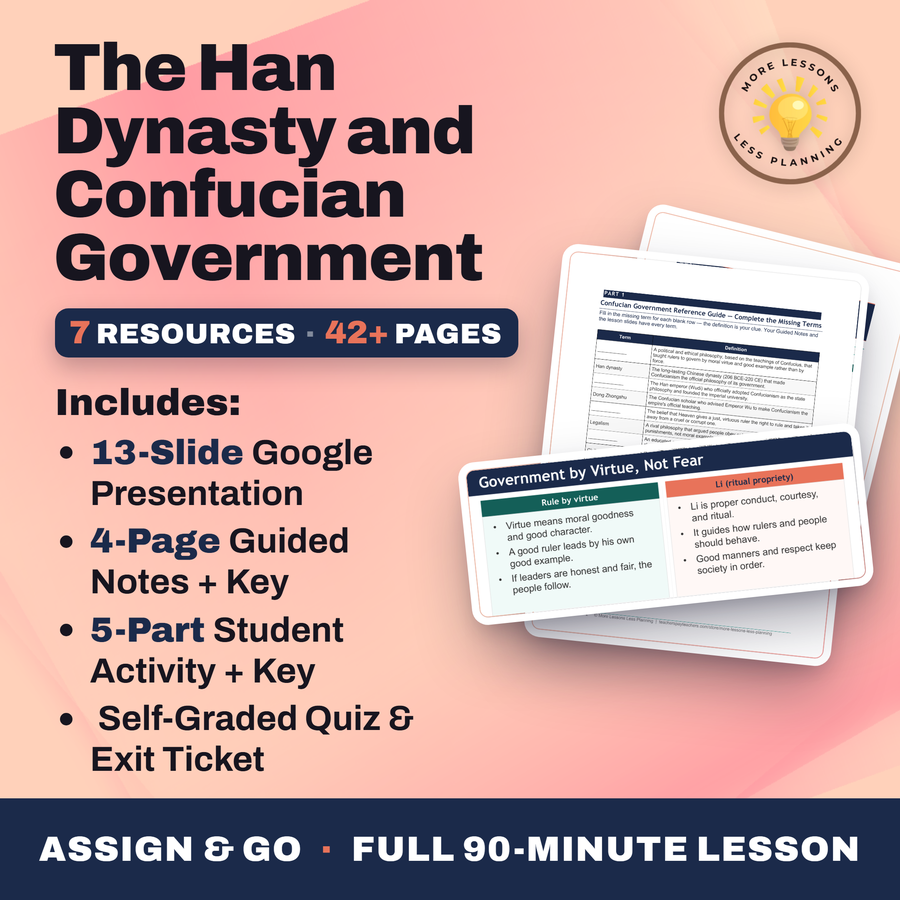
The Han Dynasty and Confucian Government
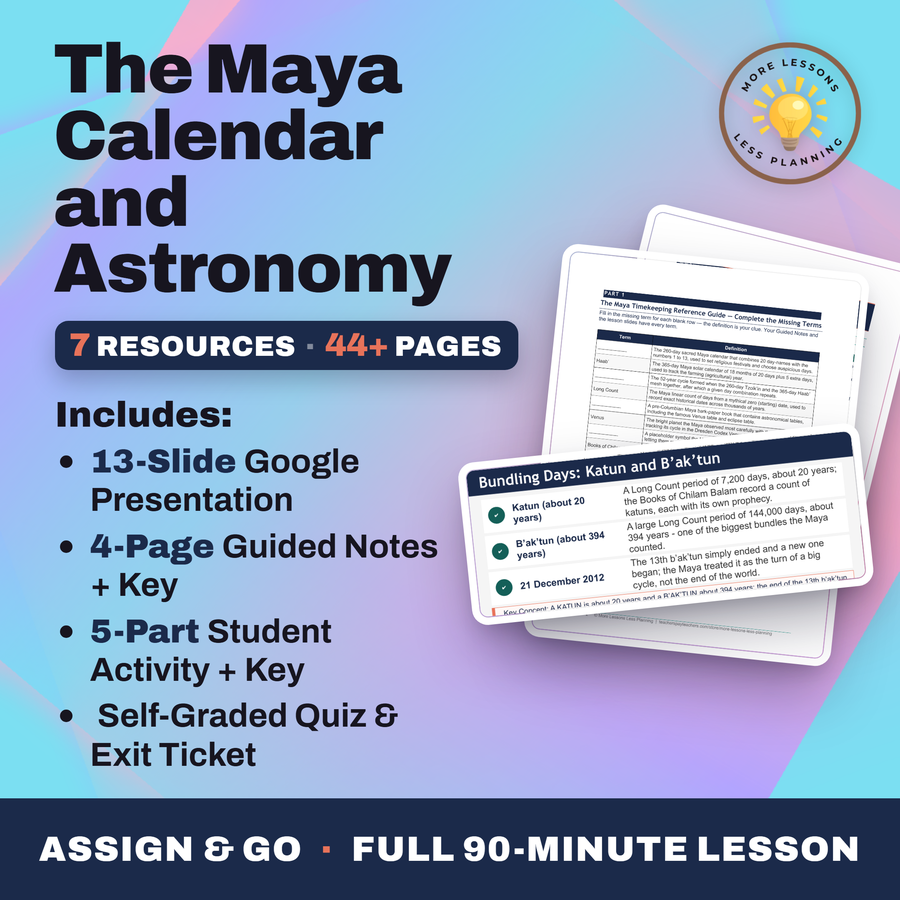
The Maya Calendar and Astronomy
Every lesson on this site is free to download and use. If one of them saved you a prep period, you can chip in a few bucks toward my three kids' daycare fund. That's genuinely where tips go.