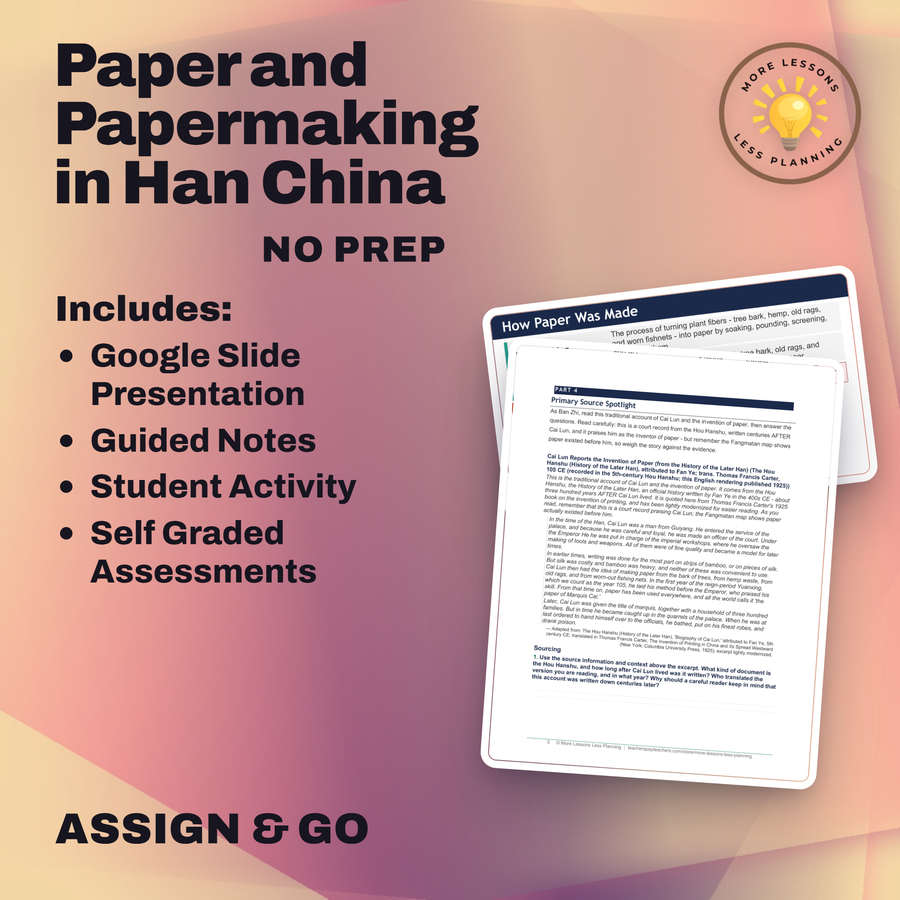
Paper and Papermaking in Han China
Quality reviewed September 2026
- Subject
- World History
- Grades
- Grades 9-12
- Time
- About two 50-minute class periods
- Includes
- 11 ready-to-teach files
- Format
- Word (.docx) · PowerPoint (.pptx)
- Slide deck
- Guided notes
- Guided notes teacher key
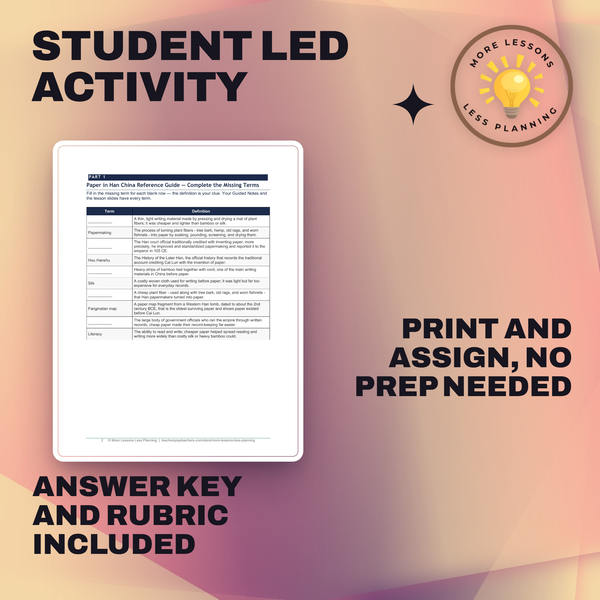
- Activity + answer key
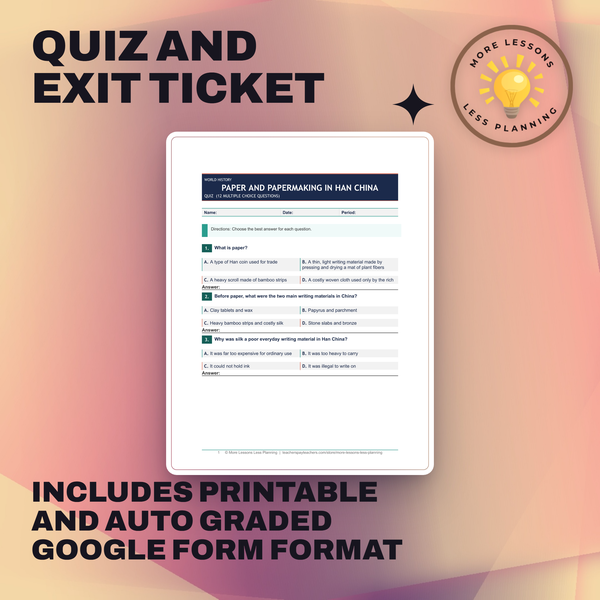
- Quiz + answer key
- Exit ticket + answer key
- Teacher guide
- Teacher presentation notes
What students do
- Compare paper to the heavy bamboo strips and costly silk it replaced in the Han court
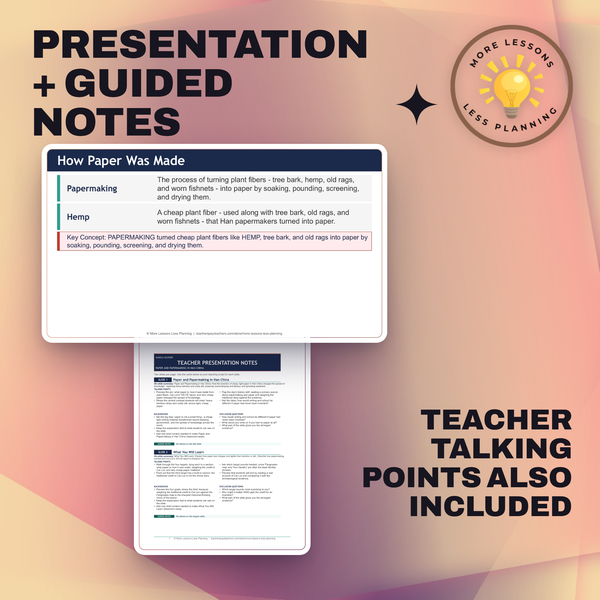
- Trace how papermakers turned tree bark, hemp, rags, and old fishnets into a usable sheet
- Read the Hou Hanshu's account of Cai Lun and weigh it against the older Fangmatan map
- Explain how cheaper paper reshaped Han bureaucracy and helped spread literacy
What it covers
- Why bamboo was too heavy and silk too costly for everyday Han record-keeping
- Cai Lun's 105 CE report to Emperor He, and what the Hou Hanshu actually credits him with
- The Fangmatan map, proof paper existed roughly two centuries before Cai Lun
- How cheaper, lighter paper helped a growing bureaucracy and spread literacy
Learning targets
- Explain how the invention of paper in Han China gave people a cheaper, lighter writing material than heavy bamboo strips or costly silk.
- Describe how papermaking worked - turning plant fibers such as tree bark, hemp, old rags, and worn fishnets into paper - and identify Cai Lun's 105 CE report of the process to Emperor He.
- Analyze a primary source (the Hou Hanshu account of Cai Lun) and distinguish the TRADITIONAL attribution of paper's invention from the archaeological evidence of the Fangmatan map, which shows paper existed before Cai Lun.
- Explain why cheaper paper mattered for record-keeping, bureaucracy, and literacy, and how papermaking later spread westward out of China.
Peek inside
Bamboo strips
Heavy strips of bamboo tied together with cord.
One of the main writing materials before paper.
A single book could weigh many pounds.
Silk
The Problem With the Old Materials
STRIPS were heavy strips of bamboo tied together with cord, one of the main writing materials in China before paper.
was a costly woven cloth used for writing before paper; it was light but far too expensive for everyday records.
1. Q1. What is the name for the thin, light writing material, made by pressing and drying a mat of plant fibers, that was cheaper and lighter than bamboo or silk? (one word)
Why this matters
Bamboo strips took an entire cart to move a single record, and silk cost too much for routine paperwork, which left Han clerks stuck choosing between heavy and expensive until paper solved a problem any growing bureaucracy eventually runs into.
Crediting one person for an invention is a habit worth breaking early. The Hou Hanshu names Cai Lun, but the Fangmatan map is paper too, made roughly two centuries earlier, and setting the court record against the archaeology teaches students that written history and physical evidence do not always agree, and both still count.
From one teacher to another
My students love a good "this famous guy didn't actually invent it" story, and Cai Lun hands them one built right into the primary source. The Hou Hanshu praises him for bringing paper to Emperor He in 105 CE, but the Fangmatan map, a scrap dug out of a tomb, is paper too, and it's about two hundred years older. I have them read the court record and the archaeology side by side so they can sort out what Cai Lun actually did versus what the official history credits him with, then connect it to why a Han clerk drowning in bamboo strips would have cared either way.
Every file in this toolkit
Download
Where should I send the next one?
Everything here is free and it stays that way. Leave your email and I'll send you the new lessons as they go up. You can unsubscribe from any one of them.
Related resources
Ashoka and the Edicts of a Warrior King
Chavín de Huántar and Early Andean Civilization
Indian Mathematics and the Invention of Zero
The Golden Age of the Gupta Empire
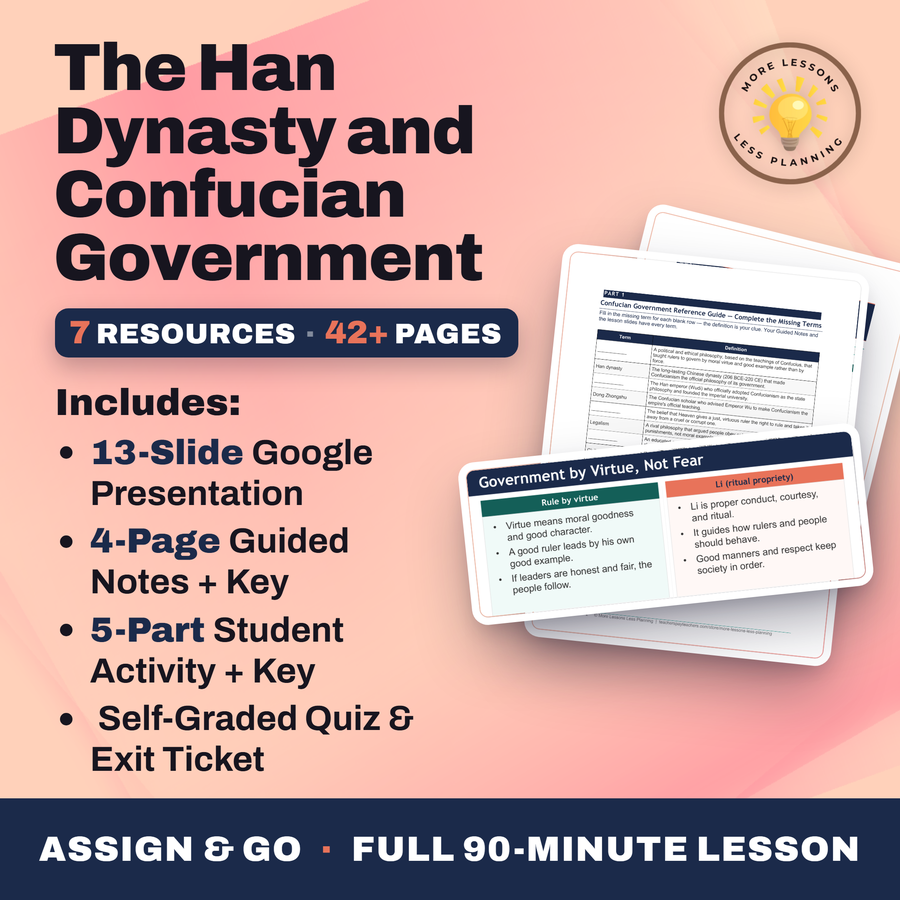
The Han Dynasty and Confucian Government
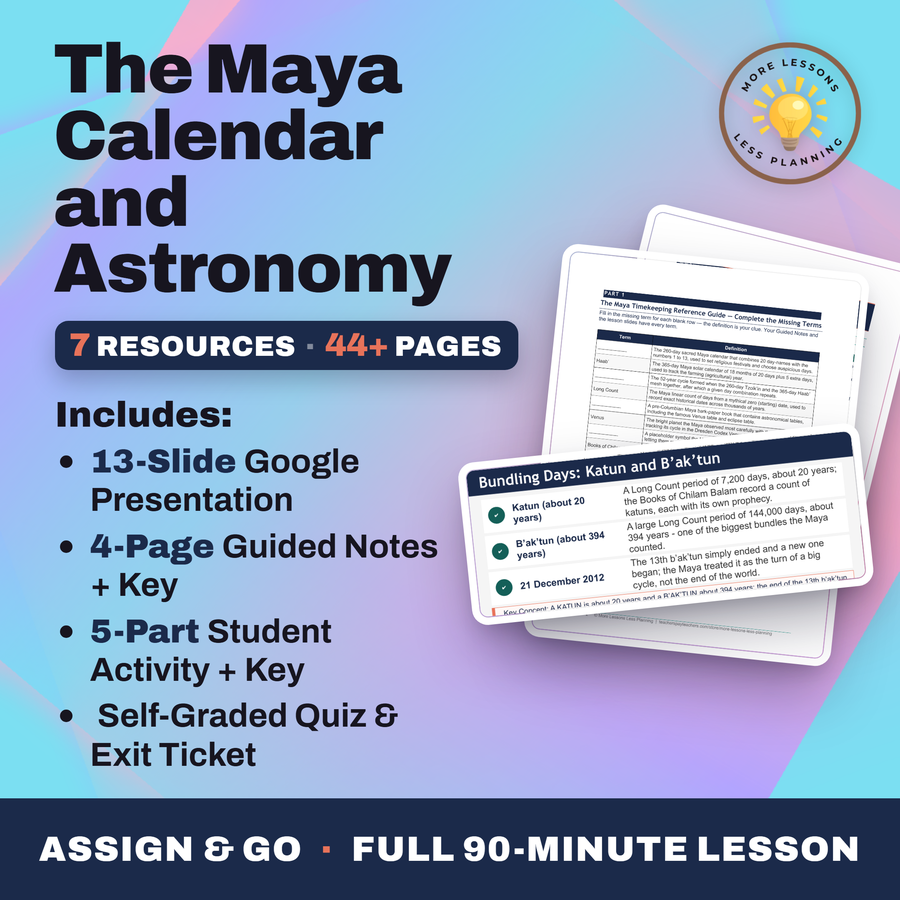
The Maya Calendar and Astronomy
Every lesson on this site is free to download and use. If one of them saved you a prep period, you can chip in a few bucks toward my three kids' daycare fund. That's genuinely where tips go.