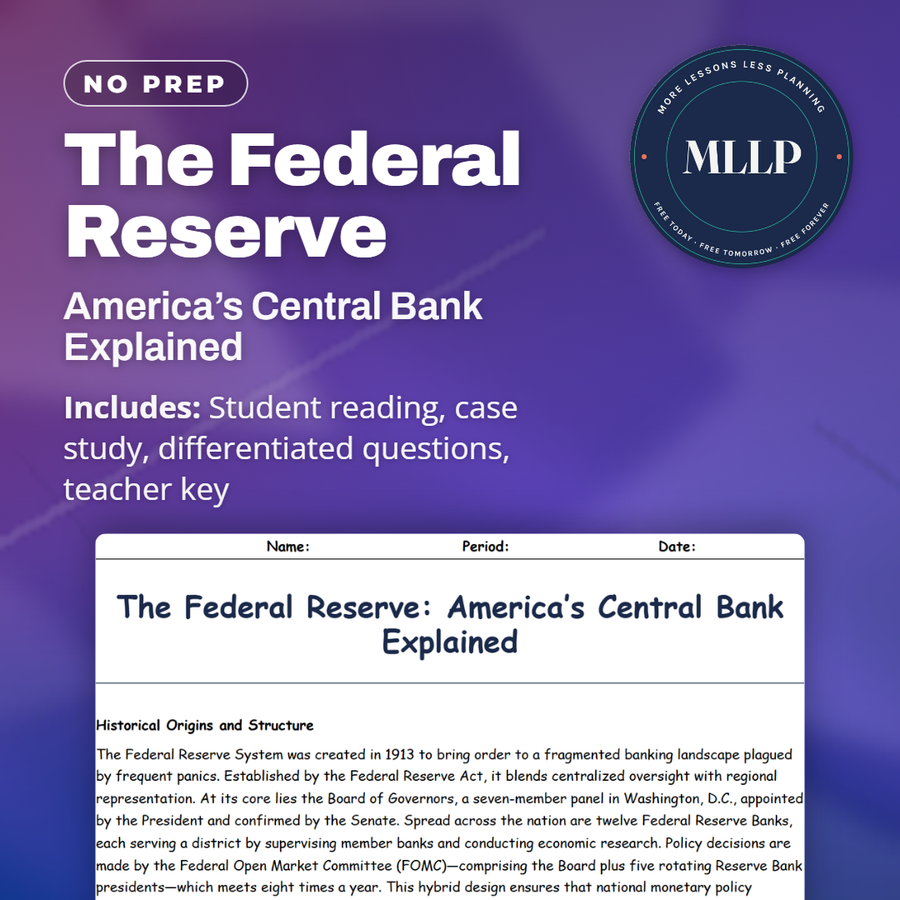
The Federal Reserve: America’s Central Bank Explained
Quality reviewed September 2026
Facts verified September 8, 2026
- Grades
- Grades 9-12
- Length
- 8-page student worksheet
- Time
- About one 50-minute class period
- Great for
- Sub plans and independent work
- Includes
- Reading passage, comprehension questions + full answer key
- Format
- Print-and-go PDF
What students do
- Diagram the Federal Reserve's hybrid structure: Board of Governors, twelve regional Fed Banks, and the Federal Open Market Committee (FOMC) that meets eight times yearly
- Identify the Fed's monetary policy tools (open market operations, discount rate, interest on excess reserves) and how they adjust bank reserves and short-term rates
- Analyze the 2008 Fed crisis response: Term Auction Facility loans to banks, Commercial Paper Funding Facility support for money markets, asset-backed securities lending
- Explain how the Fed coordinates with other central banks via dollar swap lines to prevent currency shortages and stabilize global financial markets
What it covers
- Federal Reserve structure and dual mandate: price stability and maximum employment; regional representation balances national oversight with local conditions
- Monetary policy tools and transmission: open market operations, discount window lending, and interest on excess reserves to influence the federal funds rate
- The 2008 crisis: how conventional tools reached limits; unconventional facilities (TAF, CPFF, TALF) addressed frozen credit markets; stress tests and TARP capital injections restored confidence
Start reading this worksheet
Historical Origins and Structure
The Federal Reserve System was created in 1913 to bring order to a fragmented banking landscape plagued by frequent panics. Established by the Federal Reserve Act, it blends centralized oversight with regional representation. At its core lies the Board of Governors, a seven-member panel in Washington, D.C., appointed by the President and confirmed by the Senate. Spread across the nation are twelve Federal Reserve Banks, each serving a district by supervising member banks and conducting economic research. Policy decisions are made by the Federal Open Market Committee (FOMC), comprising the Board plus five rotating Reserve Bank presidents, which meets eight times a year. This hybrid design ensures that national monetary policy remains responsive to local conditions, balancing regional insights with overarching mandates for stability and growth.
Monetary Policy Tools
To steer the economy, the Fed wields several tools. Its primary instrument is open market operations: buying and selling U.S. Treasuries to adjust bank reserves and influence short-term interest rates. When the Fed buys securities, it injects liquidity, lowering borrowing costs and encouraging spending. Selling reverses the effect. The discount rate is the interest charged to banks borrowing directly from Reserve Banks; changes here signal policy stances and affect broader lending rates. A newer innovation, Interest on Excess Reserves (IOER), allows the Fed to pay banks interest on reserves held beyond requirements, creating a floor under the federal funds rate. Together, these tools enable the Fed to pursue its dual mandates of stable prices and maximum employment.
Regulatory and Supervisory Roles
Beyond setting rates, the Fed supervises and regulates banking organizations to ensure safety and soundness. Through regular examinations, it enforces capital adequacy and liquidity standards, including those under the Basel III framework. The Fed also oversees consumer-protection laws, like the Truth in Lending Act, and anti–money laundering regulations. In crises, it can apply special supervision measures, requiring heightened capital or liquidity buffers for at-risk institutions. Additionally, the Fed operates key payment systems, such as Fedwire Funds and FedACH, ensuring large-value and retail payments clear securely and efficiently across the financial system.
Like what you read? The full reading, the case study, and every question set are in the free download below, along with the answer key.
Why this matters
For most of its history the Fed set interest rates and stayed out of the news. That changed in 2008, when frozen credit markets forced it to build new lending facilities, like the Term Auction Facility, just to keep banks able to borrow at all.
The president cannot call the Fed and order a rate cut, which surprises students once they trace the Board, the twelve regional banks, and the FOMC's independence. The dollar swap lines with other central banks reframe the Fed as a global actor, not just a domestic one.
From one teacher to another
I use this reading when I want students to understand the Fed as more than a name they hear in the news. The structure explanation (Board, regional banks, FOMC) shows why the Fed is quasi-independent and why presidents must appoint governors but cannot directly order rate changes. The monetary policy tools section makes FOMC meetings concrete: open market operations buy and sell Treasuries to steer the federal funds rate, but the discount window and interest on reserves provide additional levers. The 2008 case study is the centerpiece. Students see how the Fed evolved from a routine interest-rate setter to an emergency crisis-manager standing up facilities to keep credit markets breathing. The dollar swap lines explanation, why other central banks need dollars and how Fed lending prevents global meltdowns, broadens their view. By the end, they grasp the Fed's evolving role and why monetary policy matters during both normal times and crises.
What you get
- Answer Key
-
Student Worksheet
The Federal Reserve was created in 1913 to calm a banking system plagued by recurring panics, long before anyone needed it to run a stress test. In 2008, banks that failed the reading's Project Stress Test received equity injections for preferred shares under the Treasury's TARP program, and by mid-2009 interbank lending had resumed, commercial paper rates had fallen, and business lending was slowly recovering.
Download
Where should I send the next one?
Everything here is free and it stays that way. Leave your email and I'll send you the new lessons as they go up. You can unsubscribe from any one of them.
Related resources
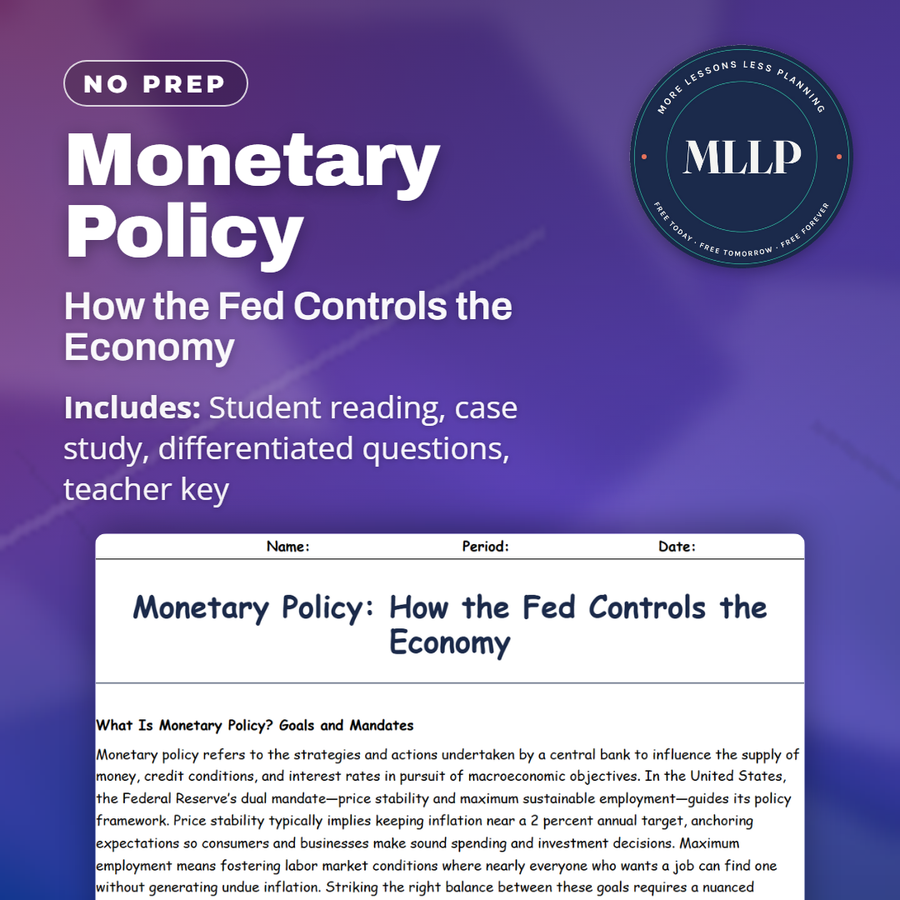
Monetary Policy: How the Fed Controls the Economy
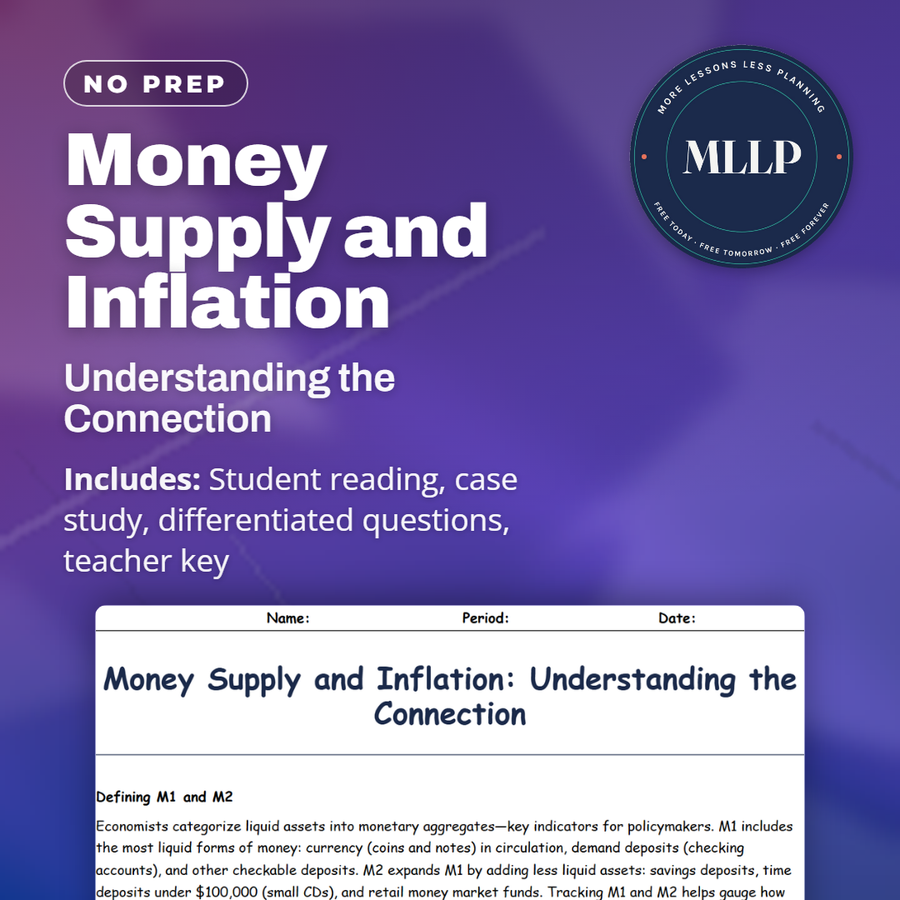
Money Supply and Inflation: Understanding the Connection
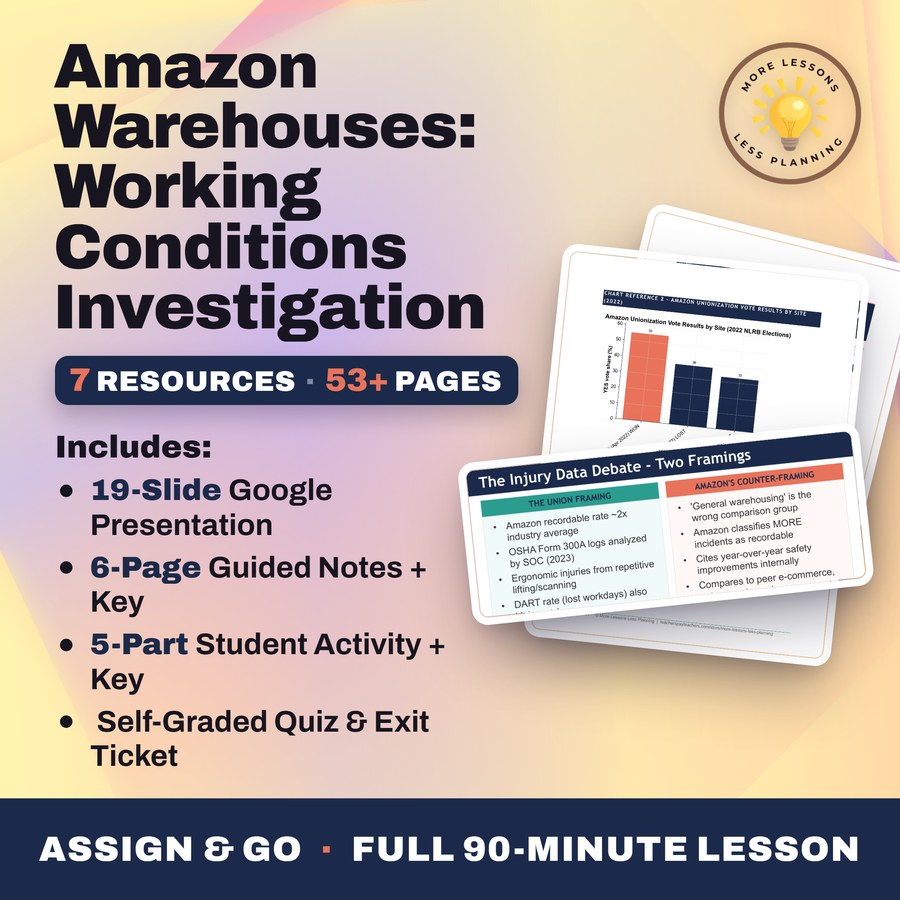
Amazon Warehouses: Working Conditions Investigation
Anti-Trust Laws and Regulation: Promoting Fair Competition
Barriers to Entry: What Keeps Competitors Out
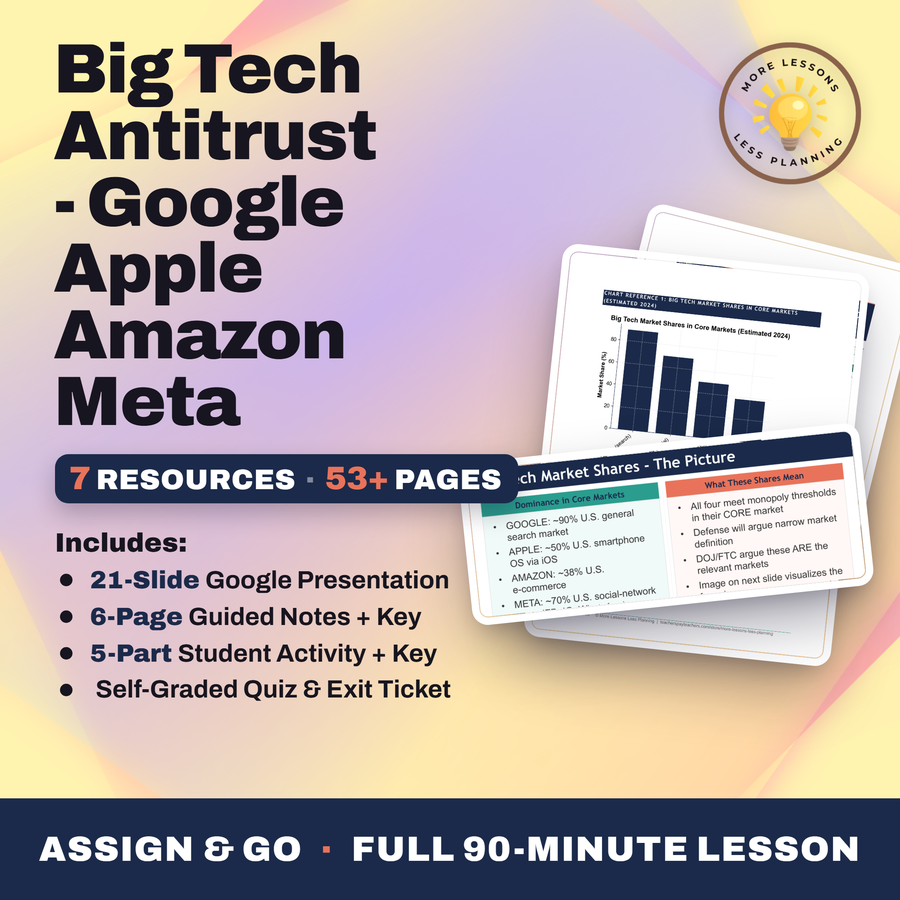
Big Tech Antitrust - Google Apple Amazon Meta
Every lesson on this site is free to download and use. If one of them saved you a prep period, you can chip in a few bucks toward my three kids' daycare fund. That's genuinely where tips go.