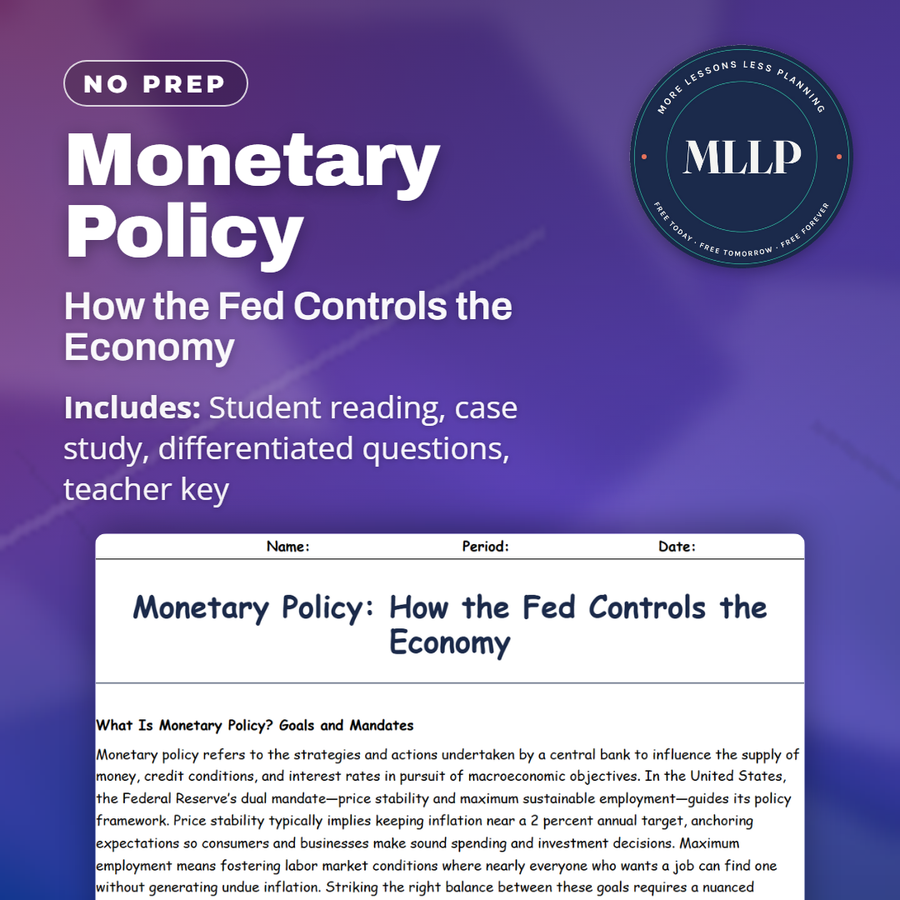
Monetary Policy: How the Fed Controls the Economy
Quality reviewed September 2026
Facts verified September 8, 2026
- Grades
- Grades 9-12
- Length
- 7-page student worksheet
- Time
- About one 50-minute class period
- Great for
- Sub plans and independent work
- Includes
- Reading passage, comprehension questions + full answer key
- Format
- Print-and-go PDF
What students do
- Identify and explain the three primary monetary policy tools: open market operations, discount rate changes, and reserve requirement adjustments
- Trace how Fed policy changes ripple through the economy via interest rate, credit, wealth, and exchange rate transmission channels
- Analyze the 2008-2014 quantitative easing programs and how the Fed compressed long-term interest rates to revive housing finance and credit markets
- Explain why conventional interest-rate cuts become ineffective near zero and why forward guidance helps shape economic expectations
What it covers
- Monetary policy goals and mandates: price stability and maximum employment; how the Federal Reserve pursues these dual mandates
- Transmission mechanisms from policy to Main Street: interest rates, credit access, asset prices, and export competitiveness
- Unconventional tools when rates hit zero: quantitative easing (large-scale asset purchases), forward guidance, and crisis interventions like the 2008 QE programs
Start reading this worksheet
What Is Monetary Policy? Goals and Mandates
Monetary policy refers to the strategies and actions undertaken by a central bank to influence the supply of money, credit conditions, and interest rates in pursuit of macroeconomic objectives. In the United States, the Federal Reserve’s dual mandate, price stability and maximum sustainable employment, guides its policy framework. Price stability typically implies keeping inflation near a 2 percent annual target, anchoring expectations so consumers and businesses make sound spending and investment decisions. Maximum employment means fostering labor market conditions where nearly everyone who wants a job can find one without generating undue inflation. Striking the right balance between these goals requires a nuanced understanding of how money moves through the economy and how policy tools affect behavior. By adjusting monetary conditions, the Fed influences everything from mortgage rates to corporate borrowing costs, shaping aggregate demand and overall economic performance.
Primary Tools of Monetary Policy
The Fed wields three conventional instruments, each affecting banks’ ability to lend and the public’s cost of credit: Open Market Operations are the Fed’s most-used tool: purchasing Treasuries injects reserves into the banking system, lowering the federal funds rate, while selling securities drains reserves, pushing rates up. Changing the discount rate, typically set above the federal funds target, provides a safety valve for liquidity and signals policy intentions. Altering reserve requirements can have powerful effects on credit creation but is used sparingly due to its blunt impact on bank operations. Together, these tools allow the Fed to calibrate monetary conditions to either stimulate growth or cool inflationary pressures.
Transmission Mechanisms: From Policy to Main Street
Once the Fed adjusts its policy tools, changes ripple through the economy via several channels: Interest Rate Channel: Lower policy rates reduce banks’ borrowing costs, leading to cheaper loans (mortgages, auto loans, business lines of credit), which spur spending and investment. Credit Channel: More reserves enable banks to extend additional loans, increasing household and corporate access to credit. Wealth Effect: Asset purchases in OMOs raise bond and equity prices; higher portfolio values boost consumer confidence and spending. Exchange Rate Channel: Lower domestic rates can weaken the currency, making exports more competitive and imports costlier, further stimulating domestic production. These transmission mechanisms operate with varying lags, sometimes six to twelve months, explaining why policymakers rely on economic forecasts to anticipate future conditions rather than reacting solely to current data.
Like what you read? The full reading, the case study, and every question set are in the free download below, along with the answer key.
Why this matters
Most students think the Fed just flips a switch and rates change the next day. A rate decision actually travels through mortgage costs, business credit lines, and asset prices before it reaches a paycheck or car loan. Tracing that path is what makes monetary policy useful instead of abstract.
By 2008, rate cuts had nowhere left to go once rates hit zero, so the Fed bought long-term securities directly and talked publicly about its future plans. Students leave understanding forward guidance as a real policy tool, not just caution in front of cameras.
From one teacher to another
I use this reading to help students move beyond "the Fed controls interest rates" to see how those rates actually matter to their future. The passage breaks down open market operations clearly, then traces how a Fed rate cut reaches borrowers through lower mortgage costs and business credit lines. The QE case study drives home why conventional tools broke down in 2008 and what creative solutions (buying MBS, long-term Treasuries, communicating intent) look like. Students leave understanding the Fed's dual mandate and why the FOMC meeting eight times per year, not in response to headlines but to economic forecasts, reflects how monetary policy works on long lags.
What you get
- Answer Key
-
Student Worksheet
QE1 bought $600 billion in mortgage bonds in 2008, then QE2 added $600 billion in Treasury purchases and QE3 opened continuous purchases at $40 billion a month. The balance sheet grew from about $900 billion in September 2008 to more than $4 trillion by 2014, and 10-year yields fell from over 4 percent in early 2008 to around 2 percent by mid-2012.
Download
Where should I send the next one?
Everything here is free and it stays that way. Leave your email and I'll send you the new lessons as they go up. You can unsubscribe from any one of them.
Related resources
Money Supply and Inflation: Understanding the Connection
The Federal Reserve: America’s Central Bank Explained
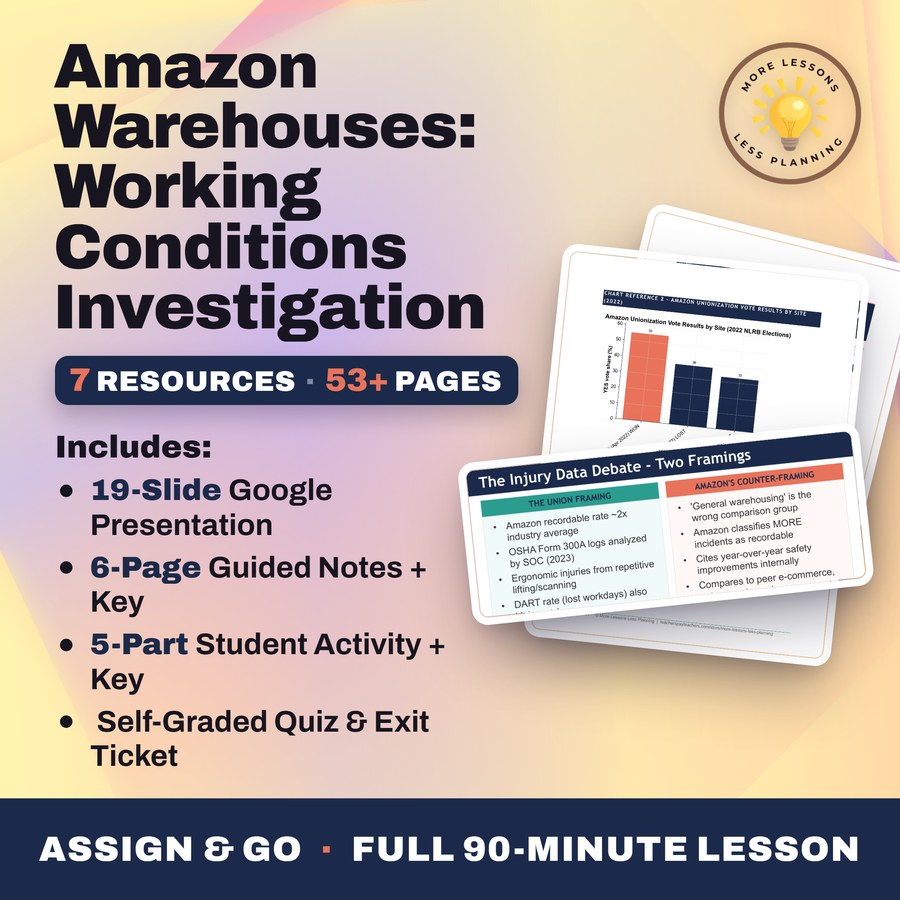
Amazon Warehouses: Working Conditions Investigation
Anti-Trust Laws and Regulation: Promoting Fair Competition
Barriers to Entry: What Keeps Competitors Out
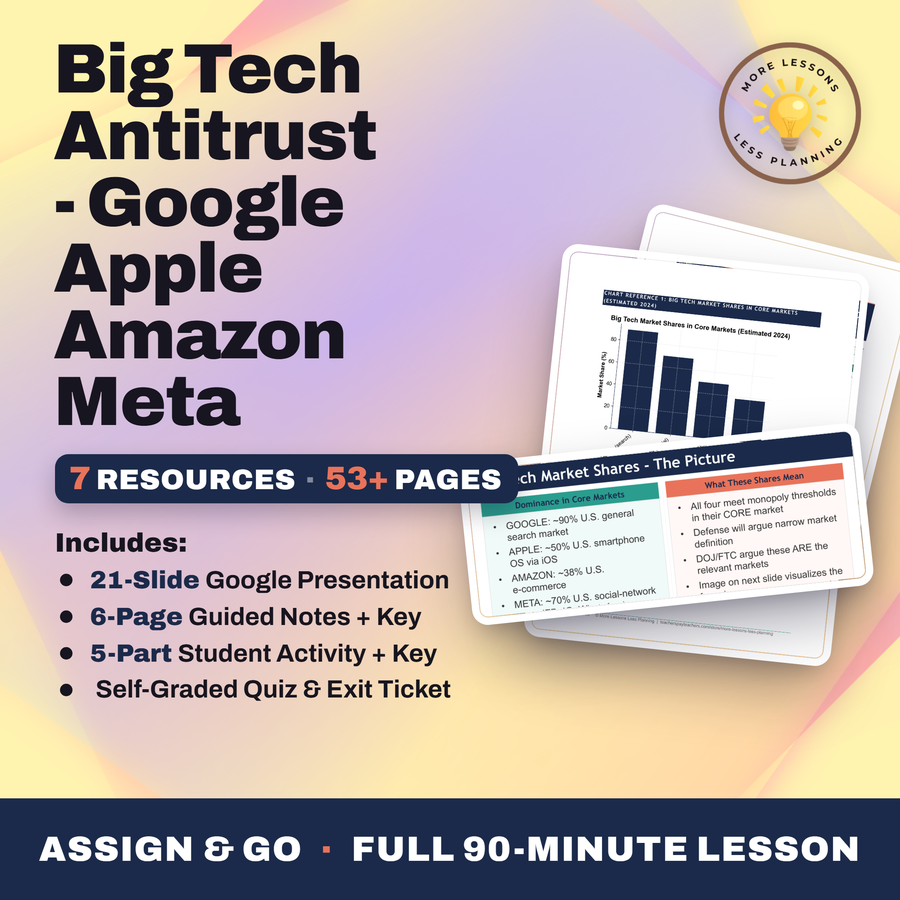
Big Tech Antitrust - Google Apple Amazon Meta
Every lesson on this site is free to download and use. If one of them saved you a prep period, you can chip in a few bucks toward my three kids' daycare fund. That's genuinely where tips go.