

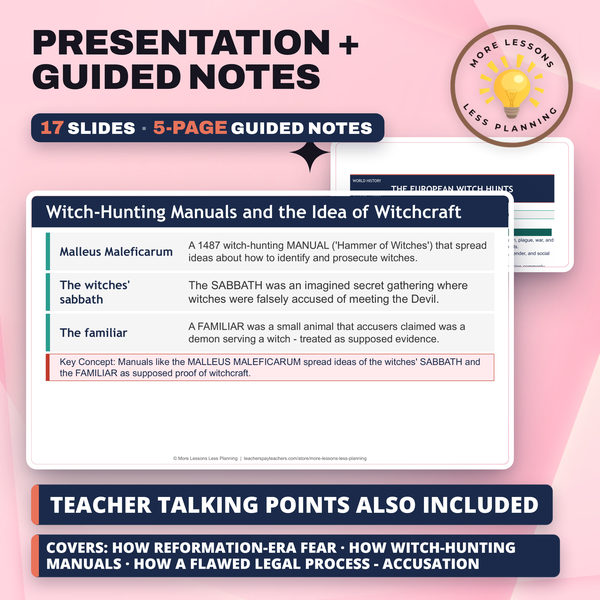

The European Witch Hunts
- Slide deck
- Guided notes
- Guided notes teacher key
- Activity + answer key
- Quiz + answer key
- Exit ticket + answer key
- Teacher guide
- Teacher presentation notes
Where should I send the next one?
Everything here is free and it stays that way. Leave your email and I'll send you the new lessons as they go up. You can unsubscribe from any one of them.
Every file in this toolkit
Related resources
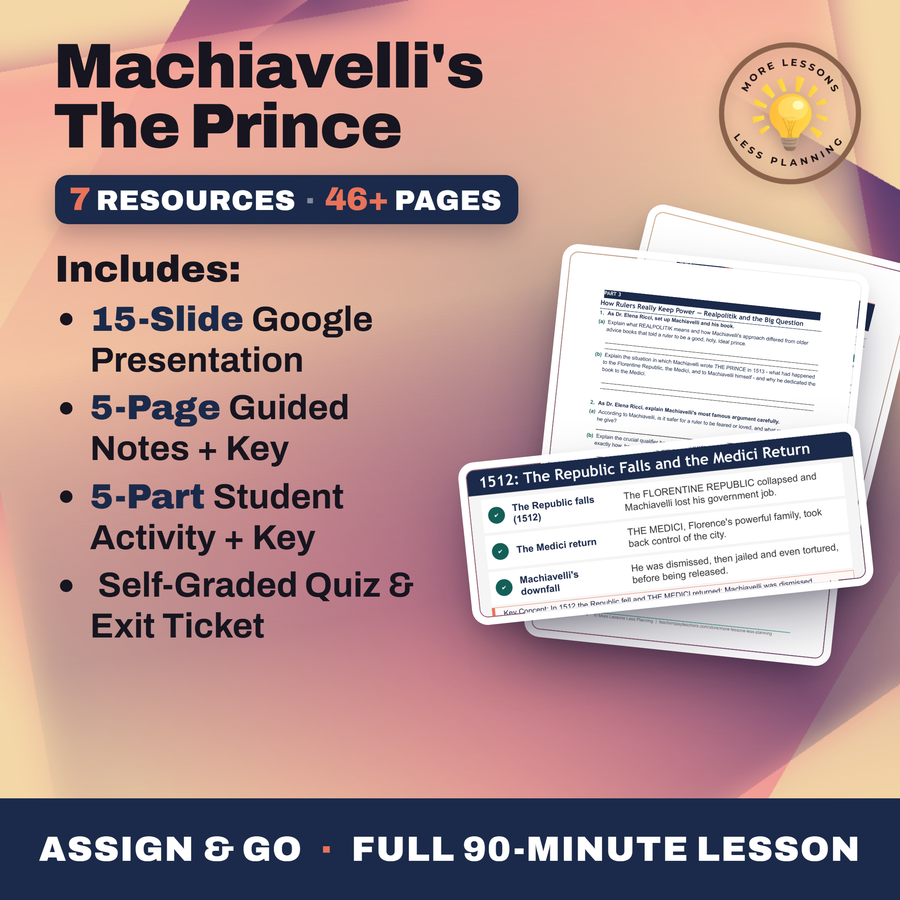
Machiavelli's The Prince
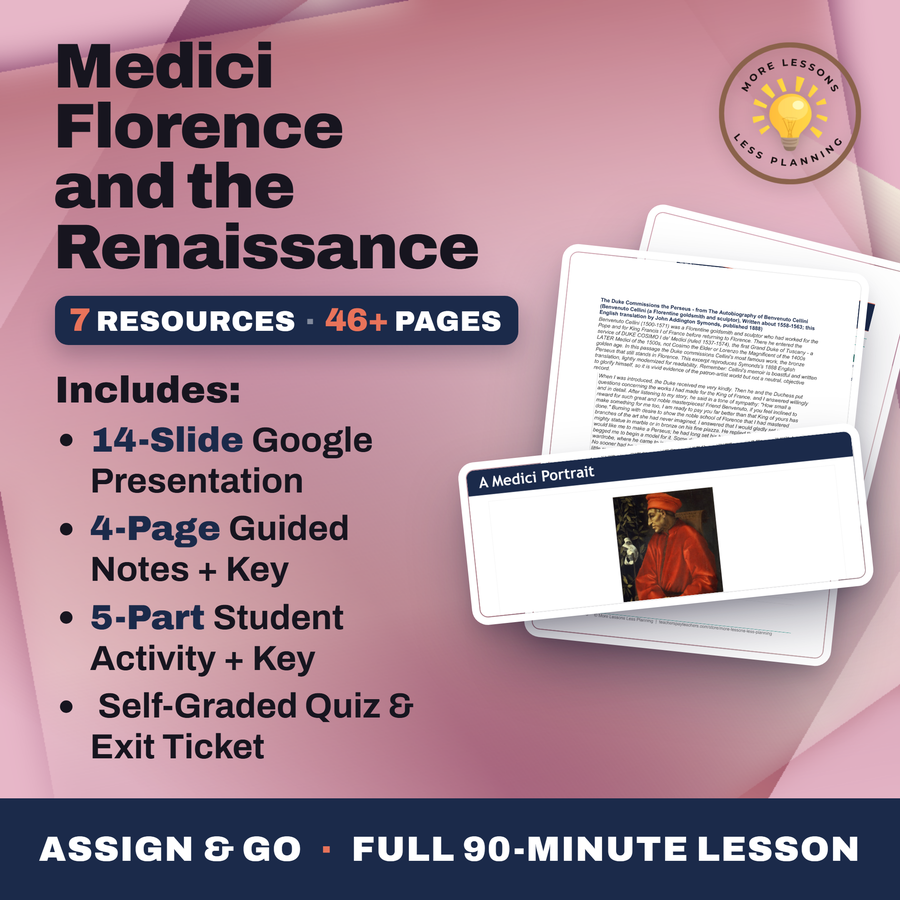
Medici Florence and the Renaissance
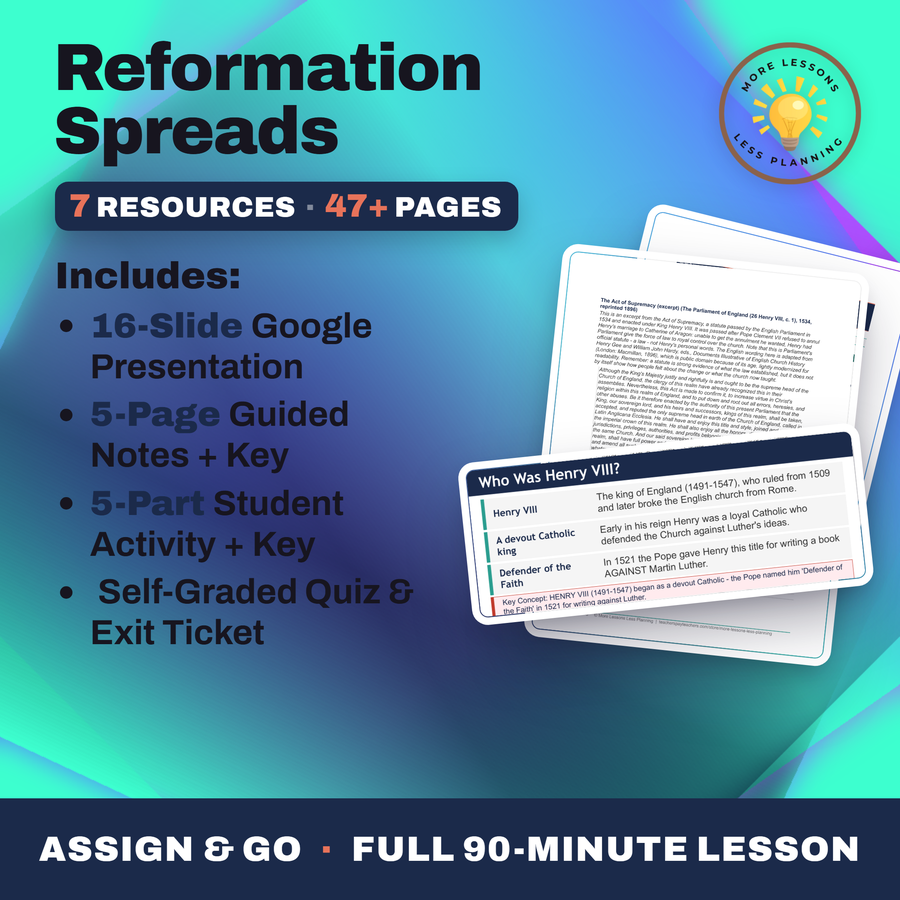
Reformation Spreads
The St. Bartholomew's Day Massacre
Aggression and Appeasement

Alliances and the Causes of WWI
What students do
- Analyze an adapted excerpt of a 1566 English witch-trial pamphlet from Chelmsford, reading courtroom testimony and confession as a primary source
- Explain how Reformation-era religious division, plague, and war created the fear that fueled the witch hunts
- Trace how an inquisitorial legal process turned rumor and confession extracted under torture into "proof" of guilt
- Evaluate why rising skepticism and higher legal standards of evidence brought the witch hunts to an end
What it covers
- How witch-hunting manuals like the Malleus Maleficarum spread ideas about identifying and prosecuting witches
- Why most of the accused were women, often older, poor, or widowed, scapegoated for a community's misfortune
- The inquisitorial trial process and why confessions extracted under torture are unreliable evidence
- Historians' estimate of roughly 40,000 to 60,000 executions, concentrated between about 1560 and 1630
Learning targets
- Explain how Reformation-era fear and religious upheaval - religious division, plague, war, and a shared fear of the Devil - created the conditions for the European witch hunts.
- Describe how witch-hunting manuals (such as the Malleus Maleficarum), gender, and social scapegoating shaped who was accused and why.
- Explain how a flawed legal process - accusation, interrogation, and confession commonly extracted under torture - turned ordinary fear into legal persecution, and why such confessions are unreliable.
- Analyze a primary source - an adapted excerpt of a 1566 English witch-trial pamphlet - reading it critically as courtroom testimony, and explain how fear became legal persecution.
From one teacher to another
I refuse to let this topic turn into spectacle, so the lesson never reproduces torture or execution detail, only the fear and the flawed legal process that let rumor become proof. The activity centers on a witch-trial pamphlet from 1566, printed in Chelmsford, and I picked it because the courtroom testimony students weigh is the real thing, not somebody's retelling of it. What actually ended the hunts wasn't outrage, it was courts demanding real proof instead of coerced confessions, and that's the note I want the lesson to end on.
Every lesson on this site is free to download and use. If one of them saved you a prep period, you can chip in a few bucks toward my three kids' daycare fund. That's genuinely where tips go.