Machiavelli's The Prince
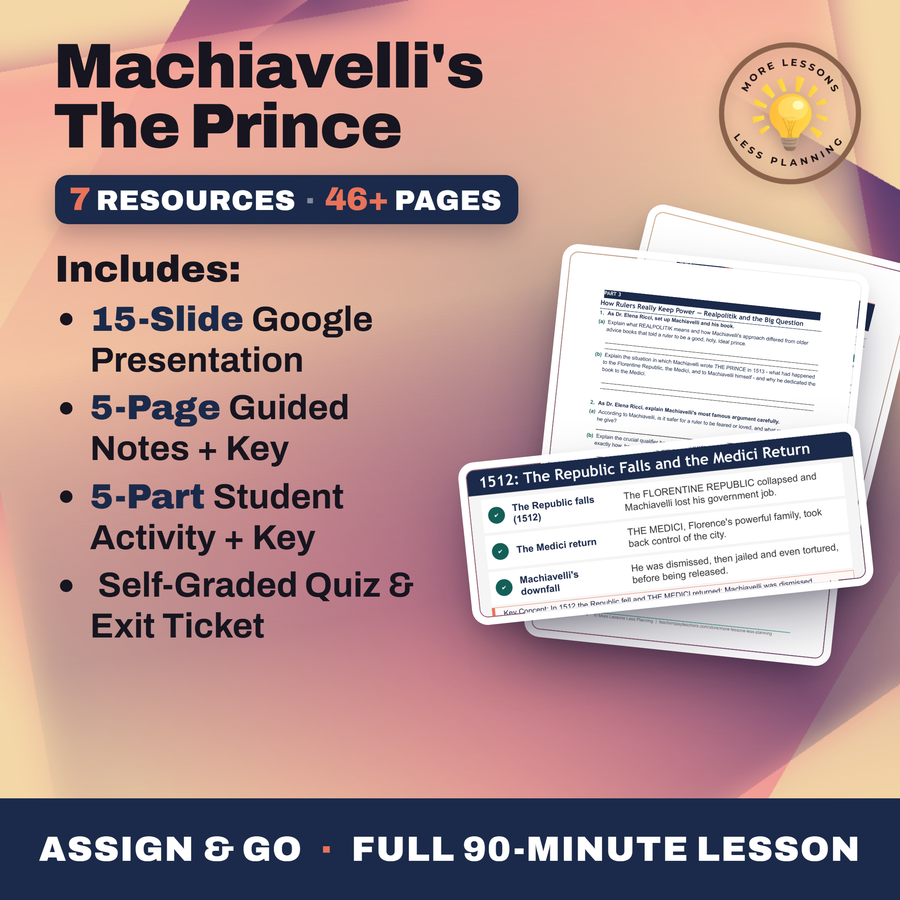
- Slide deck
- Guided notes
- Guided notes teacher key
- Activity + answer key
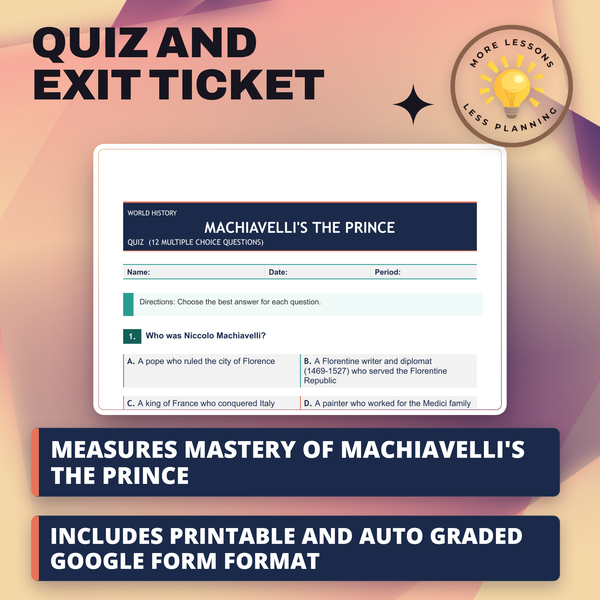
- Quiz + answer key
- Exit ticket + answer key
- Teacher guide
- Teacher presentation notes
Where should I send the next one?
Everything here is free and it stays that way. Leave your email and I'll send you the new lessons as they go up. You can unsubscribe from any one of them.
Every file in this toolkit
Related resources
Medici Florence and the Renaissance
Reformation Spreads
The European Witch Hunts
The St. Bartholomew's Day Massacre
Aggression and Appeasement
Alliances and the Causes of WWI
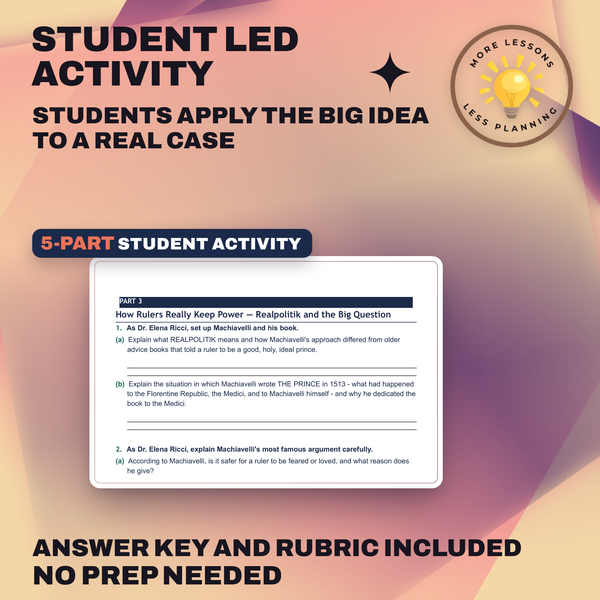
What students do
- Explain the political fall that led Machiavelli to write The Prince in 1513, dismissed, imprisoned, and tortured after the Republic collapsed
- Debate Machiavelli's central question of whether a ruler is safer feared or loved
- Decode why Machiavelli's real rule adds a qualifier most people skip, feared but never hated
- Analyze an excerpt from Chapter XVII of The Prince against the fact that Machiavelli was himself a lifelong republican
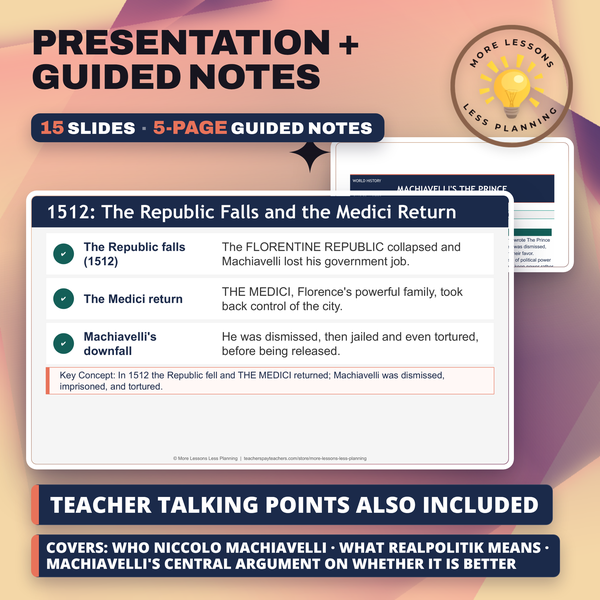
What it covers
- Realpolitik as politics judged by what actually works rather than by conventional morality
- Fortune and virtu, Machiavelli's own terms for luck and a ruler's skill in seizing it
- Why "Machiavellian" is a later insult, not a word or phrase he ever wrote himself
- The genuine scholarly debate over whether The Prince endorses these methods or quietly criticizes them
Learning targets
- Explain who Niccolo Machiavelli was and the political situation in which he wrote The Prince (1513): after the Florentine Republic fell and the Medici returned, Machiavelli was dismissed, imprisoned, and tortured, and dedicated the book to the Medici partly to win their favor.
- Explain what realpolitik means and how Machiavelli separated the analysis of political power from conventional Christian morality - describing how rulers actually gain and keep power rather than how they ideally should behave.
- Analyze Machiavelli's central argument on whether it is better for a ruler to be feared or loved, including his crucial qualification that a ruler should be feared but must avoid being hated.
- Analyze a primary source - an adapted excerpt from The Prince, Chapter XVII - and read it critically, recognizing the scholarly debate over whether Machiavelli endorsed these methods or was coldly analyzing (even quietly criticizing) them, given that he was himself a lifelong republican.
From one teacher to another
Students get a real puzzle here instead of a settled answer: the same man who wrote The Prince also wrote the Discourses on Livy praising republican government, so was he genuinely advising cruelty, or coldly describing how power actually works while living under a regime that had just tortured him. Reading his own qualifier, feared but never hated, catches students who only know the pop-culture version of "Machiavellian" and forces them to separate what he actually argued from what history later did with his name. It's a short excerpt but it holds up an entire period's worth of thinking about power and morality.
Every lesson on this site is free to download and use. If one of them saved you a prep period, you can chip in a few bucks toward my three kids' daycare fund. That's genuinely where tips go.