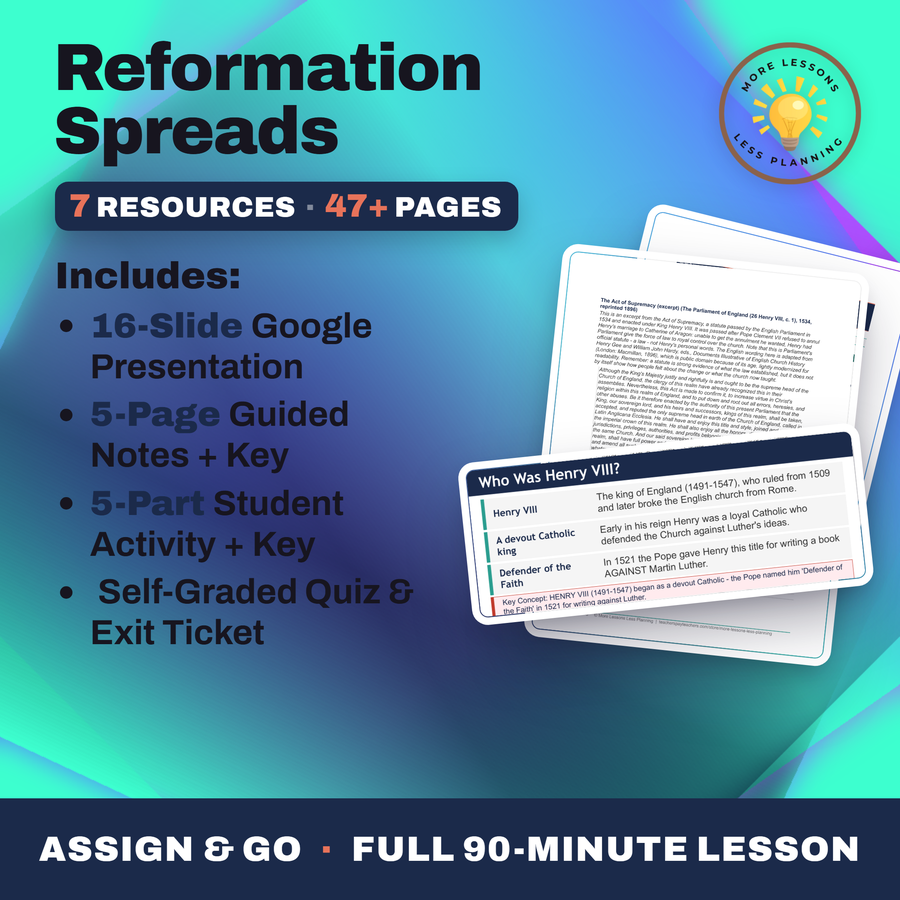


Reformation Spreads
- Slide deck
- Guided notes
- Guided notes teacher key
- Activity + answer key
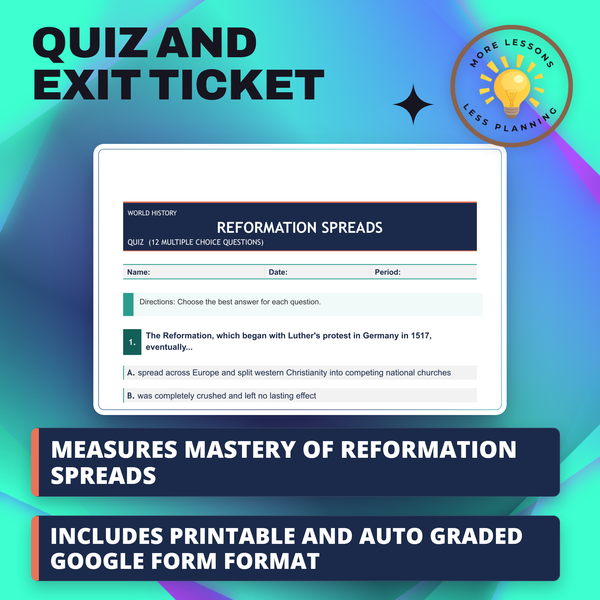
- Quiz + answer key
- Exit ticket + answer key
- Teacher guide
- Teacher presentation notes
Where should I send the next one?
Everything here is free and it stays that way. Leave your email and I'll send you the new lessons as they go up. You can unsubscribe from any one of them.
Every file in this toolkit
Related resources
Machiavelli's The Prince
Medici Florence and the Renaissance

The European Witch Hunts
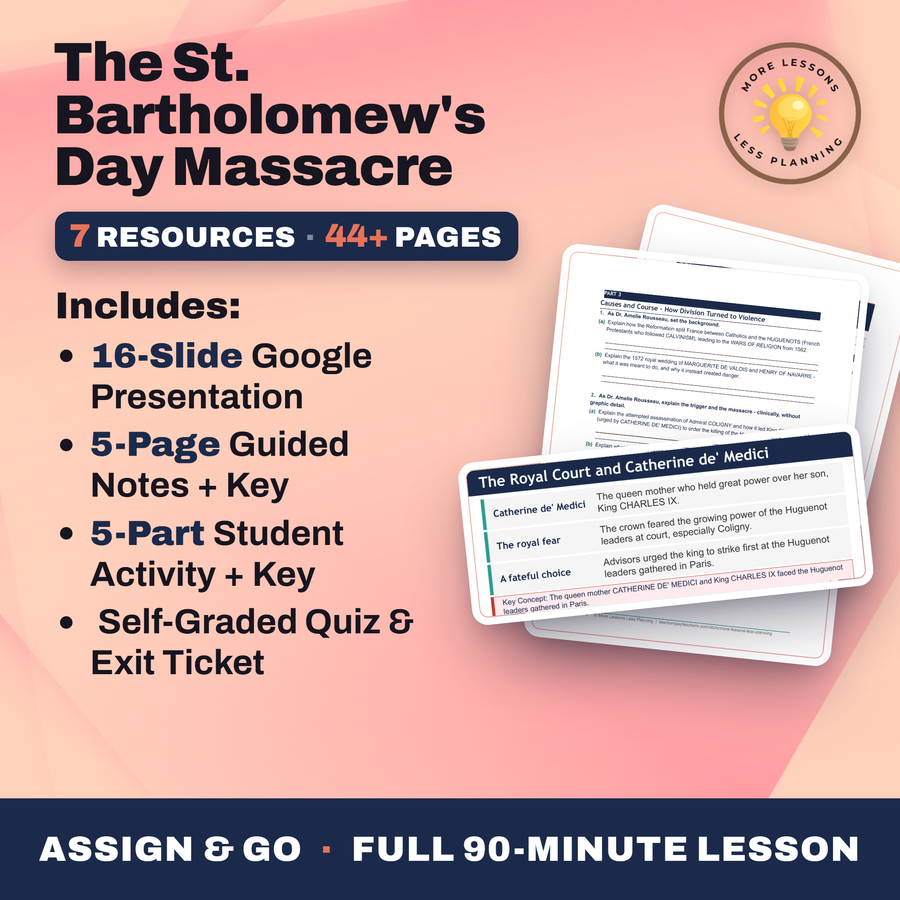
The St. Bartholomew's Day Massacre
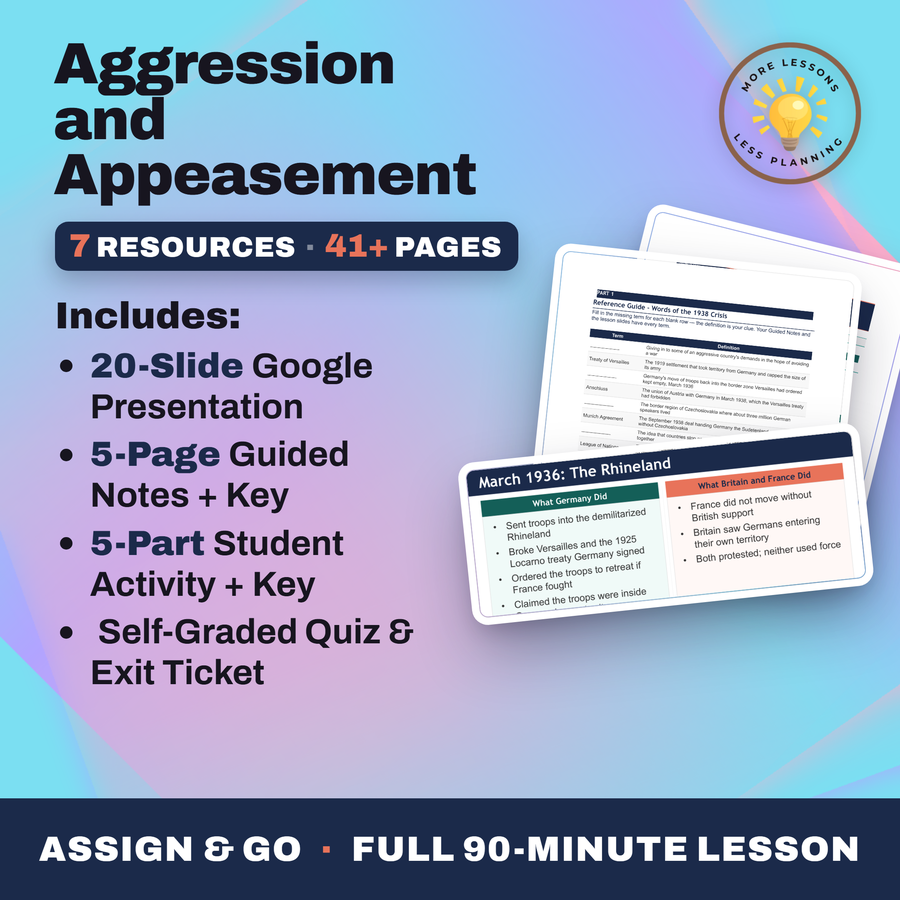
Aggression and Appeasement
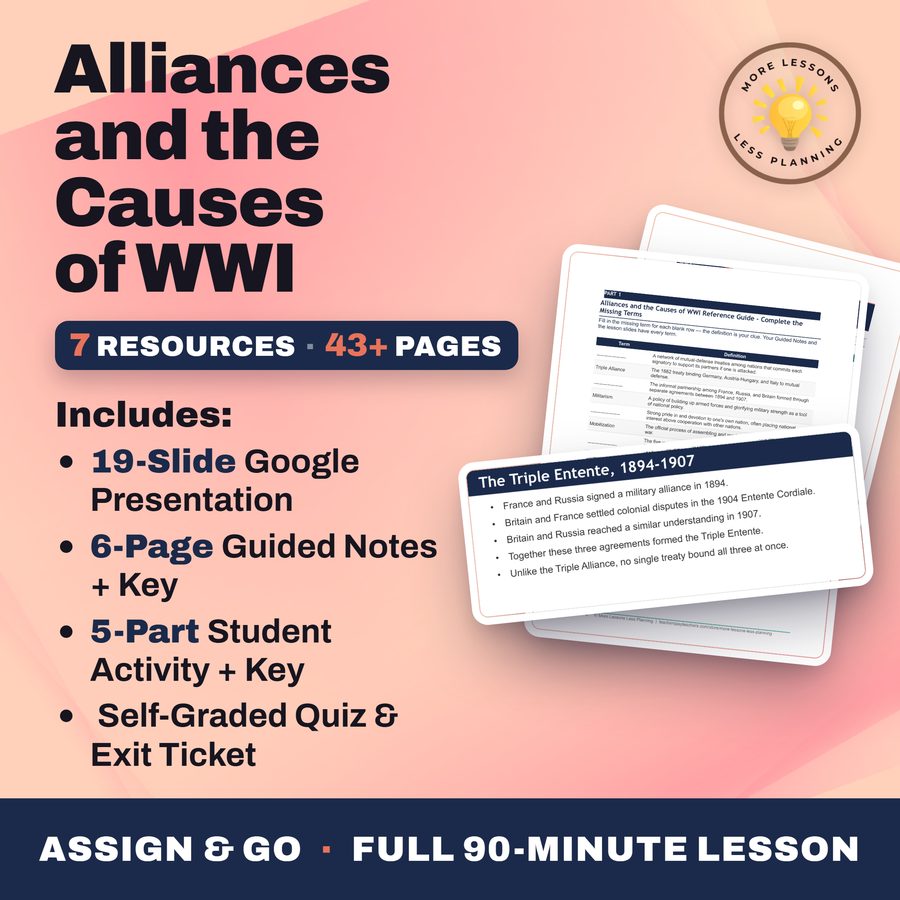
Alliances and the Causes of WWI
What students do
- Explain why Henry VIII wanted his marriage to Catherine of Aragon annulled and why Pope Clement VII refused
- Analyze an excerpt of the 1534 Act of Supremacy as a legal statute, not a sermon
- Argue why Henry's break with Rome was political and dynastic rather than a doctrinal protest like Luther's
- Map how the Reformation splintered into competing national churches, Lutheran, Reformed, and Anglican, alongside the Catholic Church
What it covers
- What the Act of Supremacy actually did, making the king head of the church, and what it did not do
- Why England stayed largely Catholic in doctrine under Henry, with Protestant belief developing later under Edward VI and Elizabeth I
- Catherine of Aragon and Anne Boleyn as the personal story behind a national political shift
- England as a case study for how a ruler, not a theologian, could nationalize a church
Learning targets
- Explain how the Reformation spread beyond Germany and split western Christianity into competing national churches - Lutheran, Reformed/Calvinist, and Anglican - alongside the Catholic Church that remained.
- Explain, using England as a case study, why Henry VIII broke with Rome: his demand for an annulment of his marriage to Catherine of Aragon so he could marry Anne Boleyn, and Pope Clement VII's refusal - a break that was primarily political and dynastic, not a doctrinal protest like Luther's.
- Explain what the Act of Supremacy (1534) did - it made the king 'the only supreme head in earth of the Church of England,' placing the church under royal rather than papal authority - and, honestly, what it did NOT do: it did not instantly make England doctrinally Protestant.
- Analyze a primary source - an adapted excerpt of the Act of Supremacy - reading it critically as a legal statute, and explain how England's break created a national church under the crown, with Protestant doctrine developing later under Edward VI and Elizabeth I.
From one teacher to another
I use England as the case study here because it lets me make a distinction students almost never get elsewhere, that breaking from Rome and becoming Protestant were two separate events separated by years, not one moment. Henry's own motives were personal and political, an annulment he wanted and a pope who said no, and I keep that front and center so students don't mistake him for a second Luther. The Act of Supremacy itself is short enough to read closely in one sitting, and reading exactly what it says versus what it's often assumed to say is where the real learning happens.
Every lesson on this site is free to download and use. If one of them saved you a prep period, you can chip in a few bucks toward my three kids' daycare fund. That's genuinely where tips go.