The Epic of Gilgamesh
Quality reviewed September 2026
- Subject
- World History
- Grades
- Grades 9-12
- Time
- About two 50-minute class periods
- Includes
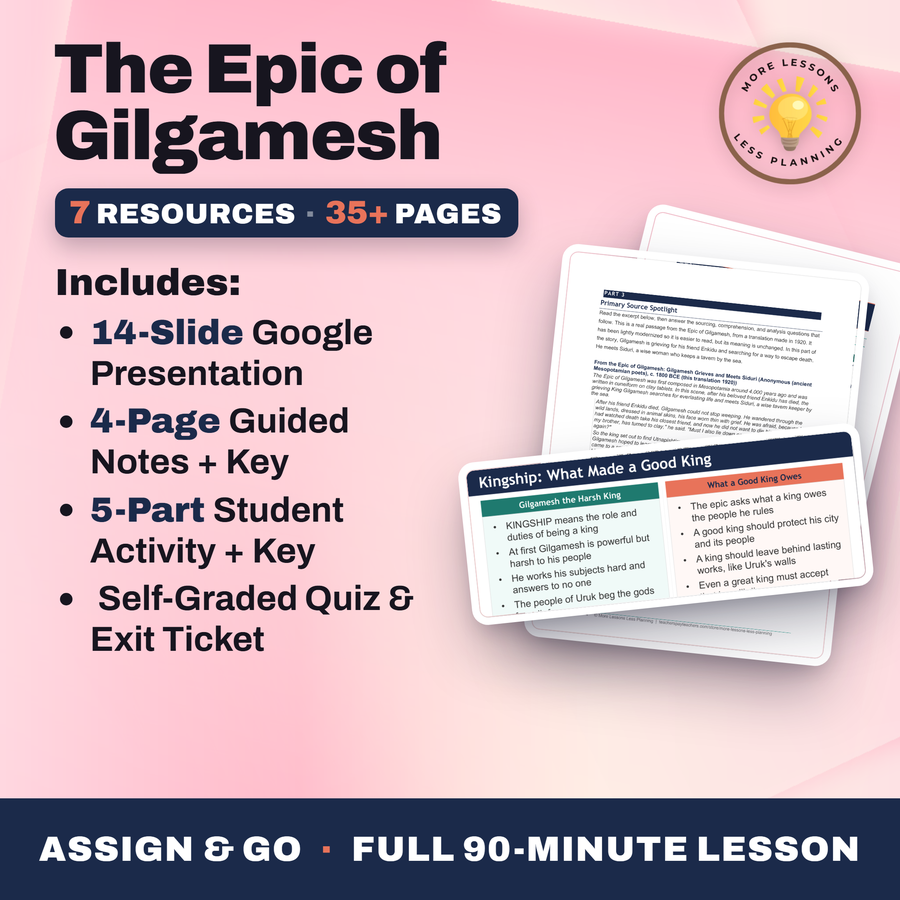
- 11 ready-to-teach files
- Format
- Word (.docx) · PowerPoint (.pptx)
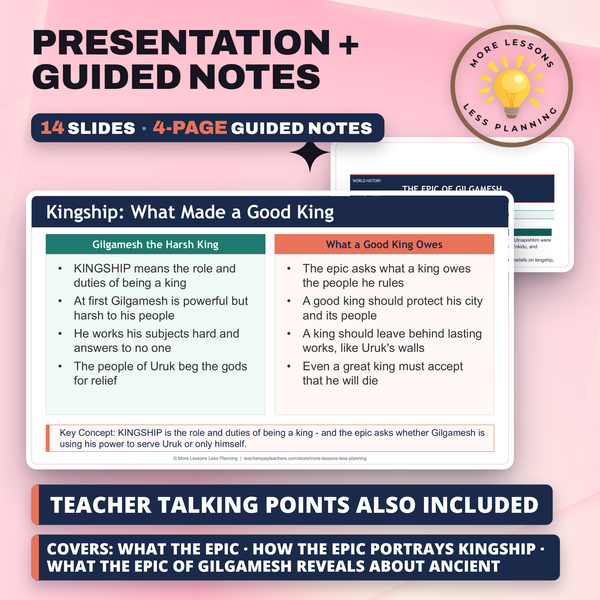
- Slide deck
- Guided notes
- Guided notes teacher key
- Activity + answer key
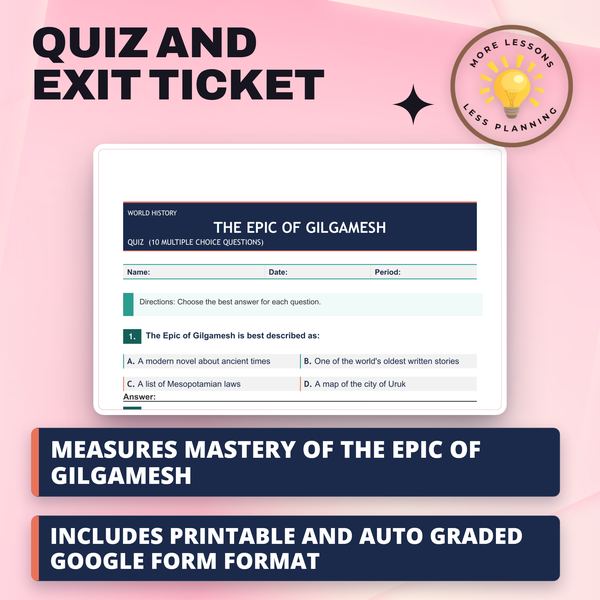
- Quiz + answer key
- Exit ticket + answer key
- Teacher guide
- Teacher presentation notes
What students do
- Trace how Gilgamesh changes from a harsh king to a wiser one after Enkidu's death
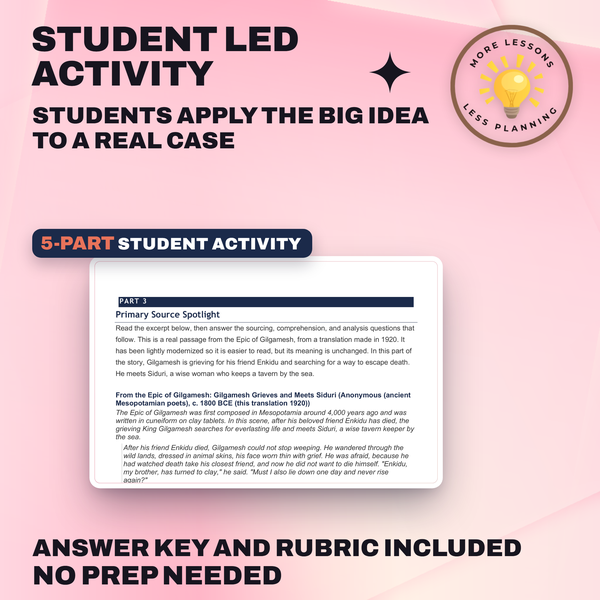
- Read a 1920 translation of the epic's grief and immortality scene as a primary source
- Explain what Siduri's advice to Gilgamesh reveals about Mesopotamian views of death
- Compare what the epic teaches about kingship, friendship, and mortality
What it covers
- Gilgamesh and Enkidu's friendship, and why Enkidu's death drives the whole plot
- The quest for immortality, and Utnapishtim, the one man who ever received it
- Siduri's advice to eat, dance, and hold the people you love instead of chasing forever
- Why cuneiform tablets let a 4,000-year-old poem still count as a historical source
Learning targets
- Explain what the Epic of Gilgamesh was and who Gilgamesh, Enkidu, and Utnapishtim were
- Describe how the epic portrays kingship, the friendship of Gilgamesh and Enkidu, and Gilgamesh's quest for immortality
- Analyze what the Epic of Gilgamesh reveals about ancient Mesopotamian beliefs on kingship, friendship, and death
Peek inside
The King
GILGAMESH was the legendary king of the city of URUK
In the story he is part man and part god
He is described as strong, proud, and larger than life
He is the hero of the Epic of Gilgamesh
The King and His City
was the legendary king of the city of Uruk and the hero of the epic, described in the story as part man and part god.
was the great walled city in Mesopotamia that Gilgamesh ruled and was proud to protect.
1. Who translated this version of the Epic of Gilgamesh, and in what year was the translation published? Using the note above, state what kind of text this is - a modern novel, a news report, or an ancient Mesopotamian story.
Why this matters
A king who fears nothing does not usually change his mind, but the death of a single friend is what turns Gilgamesh from a harsh ruler into a wiser one over the course of the story. Enkidu's death is the hinge the entire plot swings on.
Siduri tells Gilgamesh to eat well, dance, and hold onto the people he loves instead of chasing an immortality he will never reach, and that advice comes straight from a 1920 translation of the actual text, not a modern paraphrase of it. Students notice on their own that grief, not conquest, is what finally teaches this king something.
From one teacher to another
The world's oldest written story turns out to be about the exact thing every kid already worries about at 2 a.m., which is dying, and that's what makes this one land. I give students the actual 1920 translation of Gilgamesh grieving for Enkidu and meeting Siduri at her tavern, so the advice to eat well and hold the people you love comes from the source itself, not my paraphrase of it. We use it to trace how Gilgamesh changes from a king who fears nothing to one who's faced death and learned something from it. It's a good entry point for treating an ancient story as evidence of what real people believed, not just a myth to skim.
Every file in this toolkit
Download
Where should I send the next one?
Everything here is free and it stays that way. Leave your email and I'll send you the new lessons as they go up. You can unsubscribe from any one of them.
Related resources
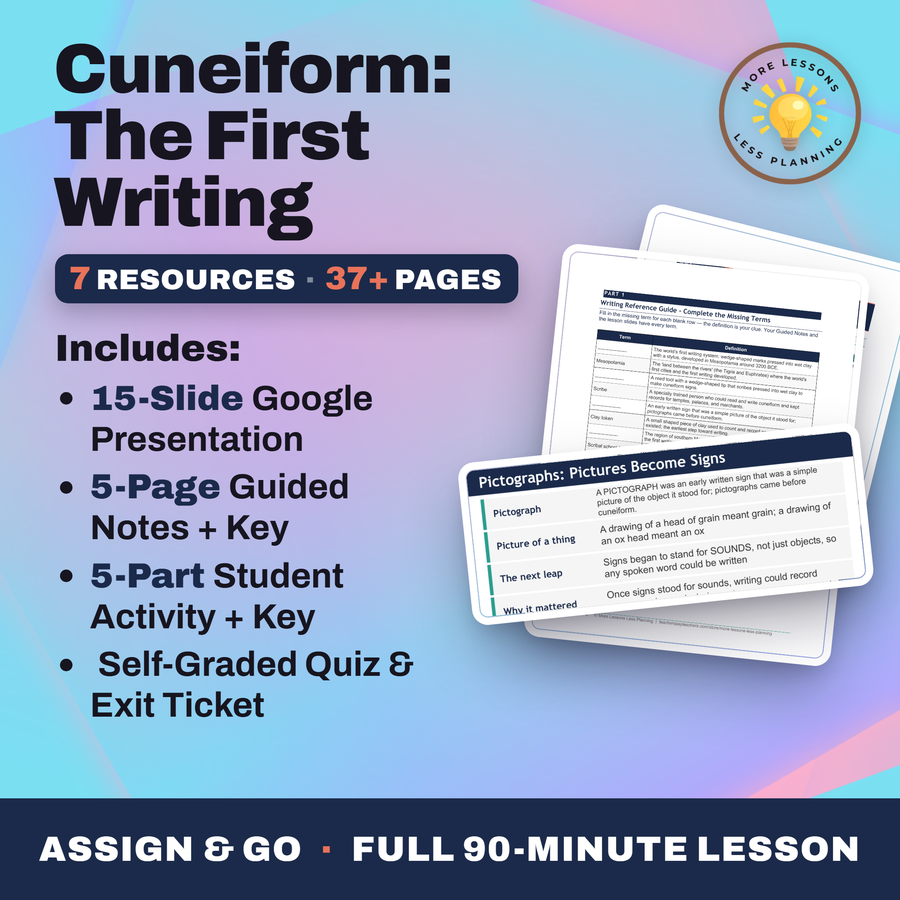
Cuneiform The First Writing
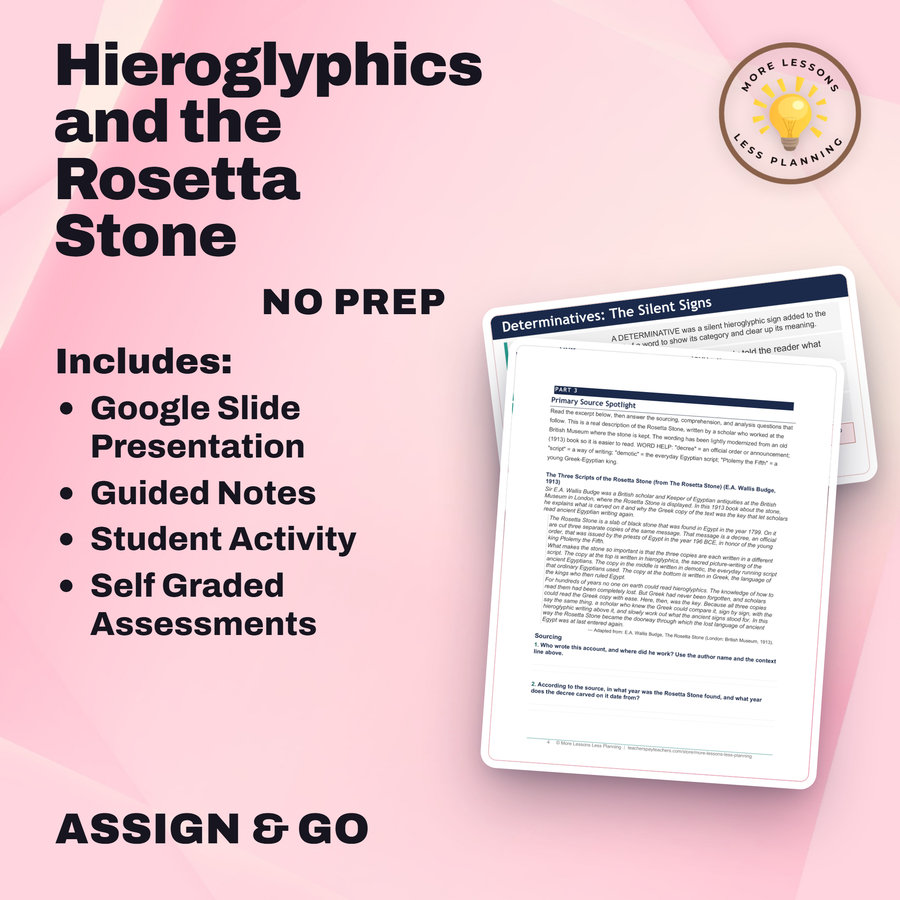
Hieroglyphics and the Rosetta Stone
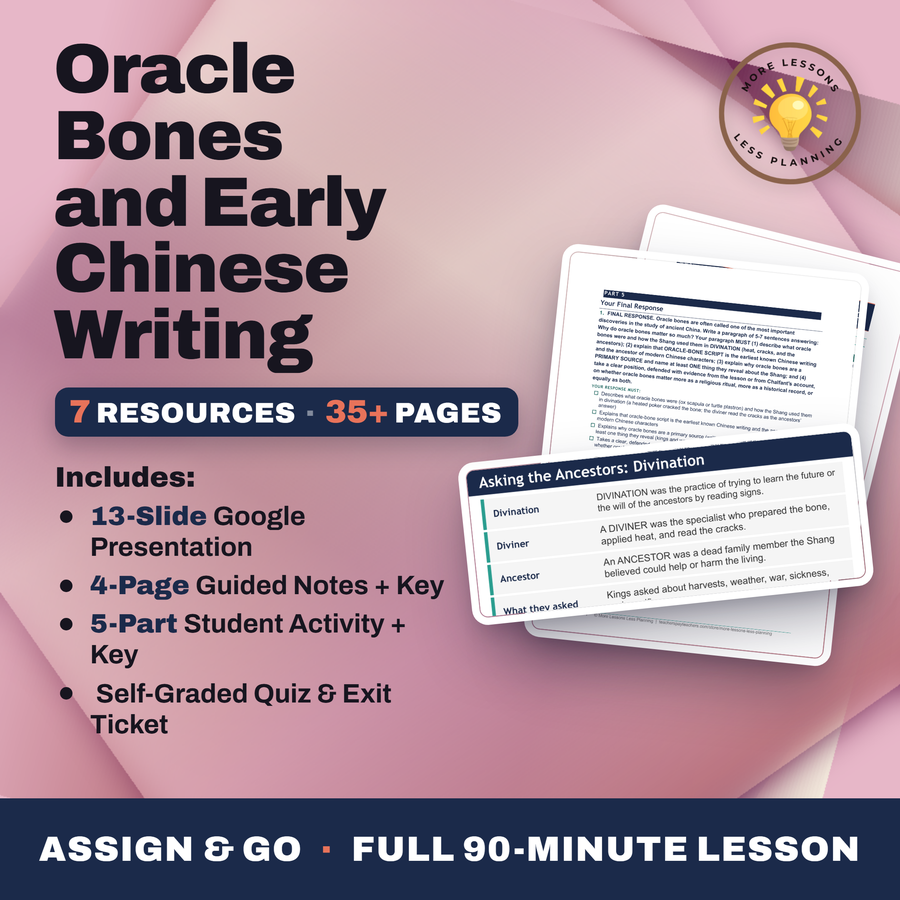
Oracle Bones and Early Chinese Writing
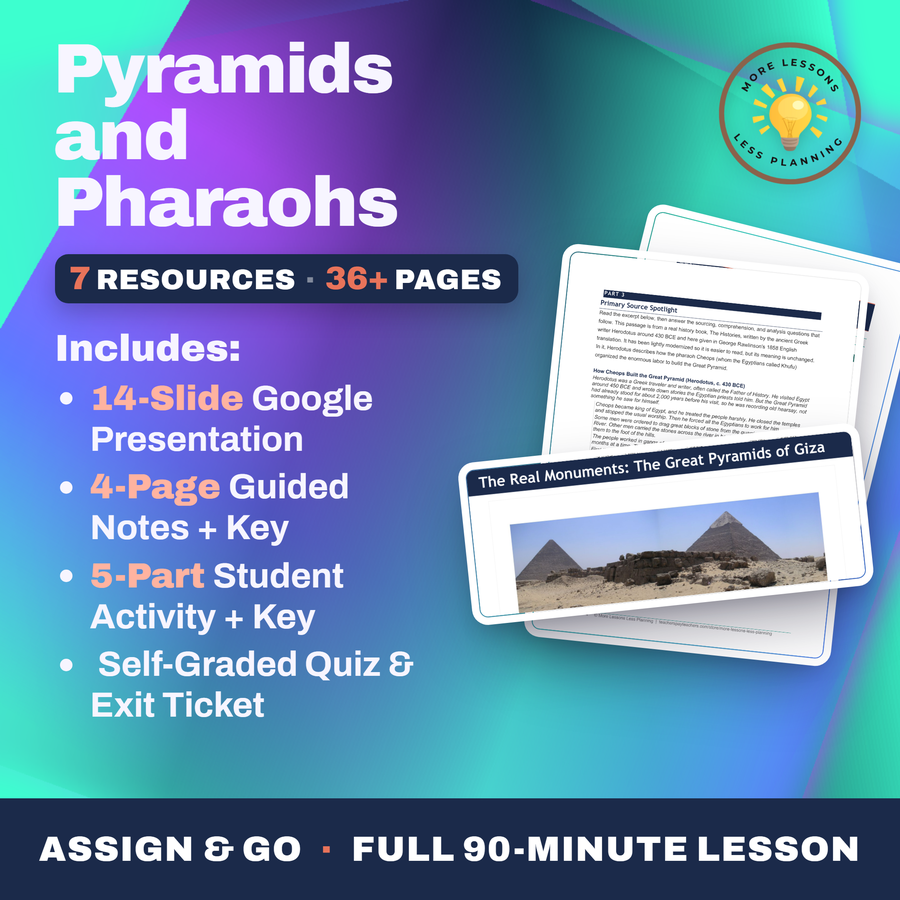
Pyramids and Pharaohs
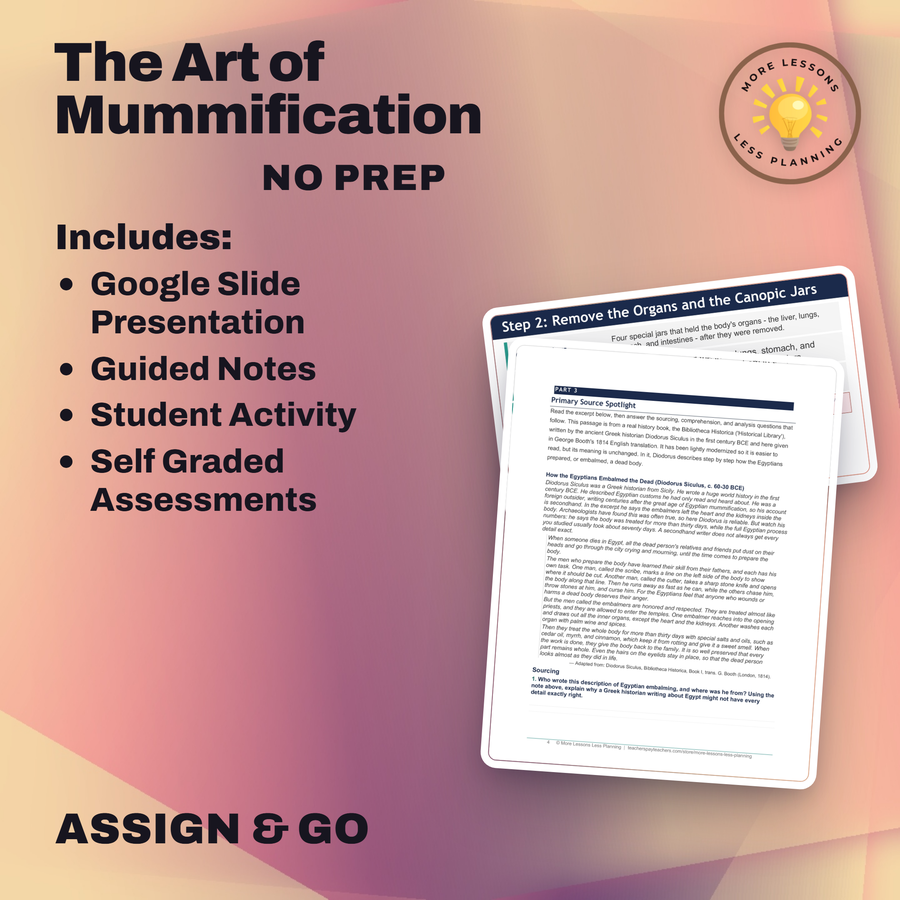
The Art of Mummification
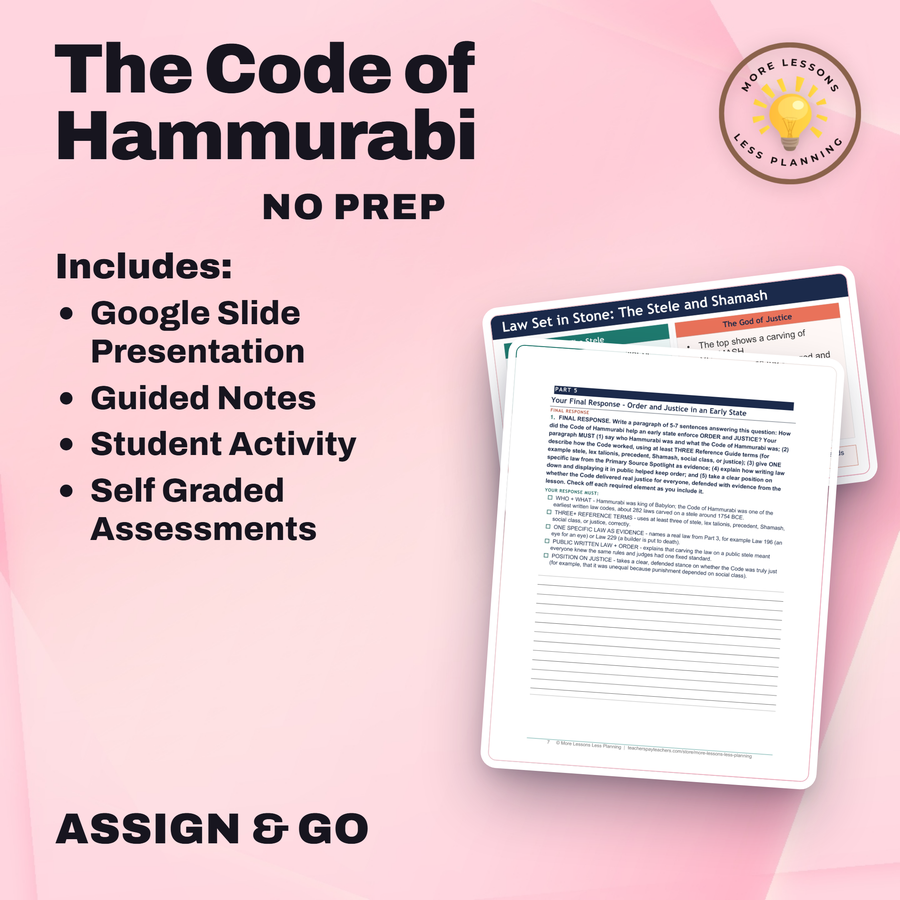
The Code of Hammurabi
Every lesson on this site is free to download and use. If one of them saved you a prep period, you can chip in a few bucks toward my three kids' daycare fund. That's genuinely where tips go.