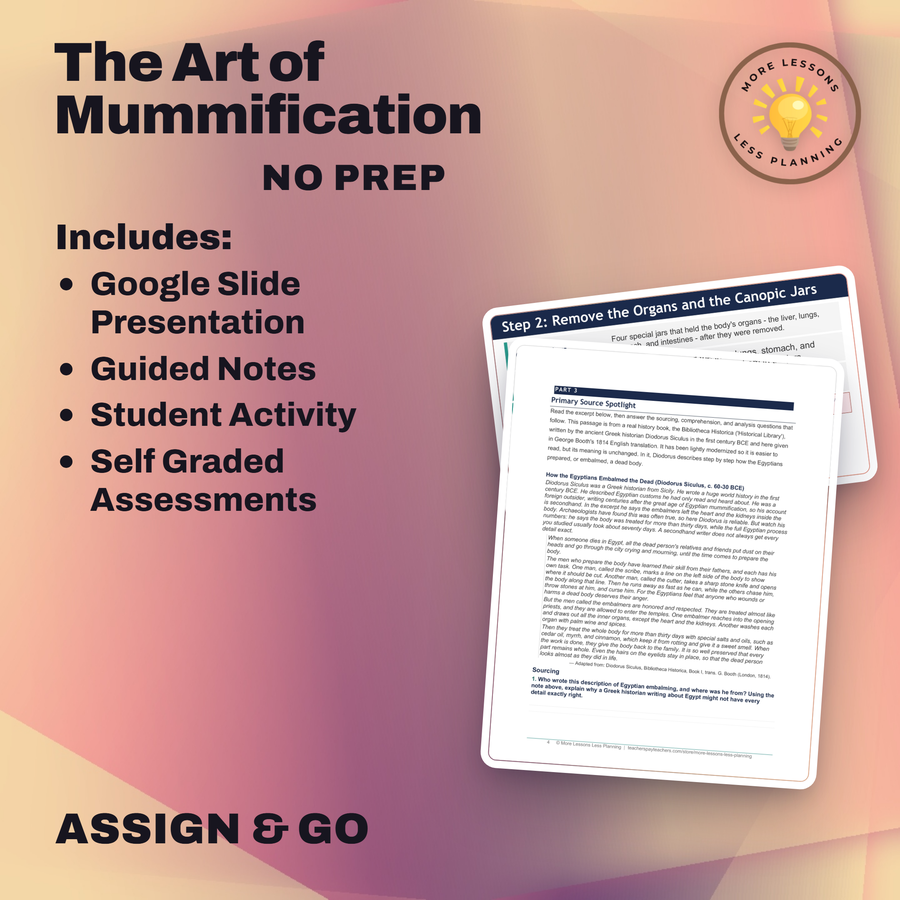

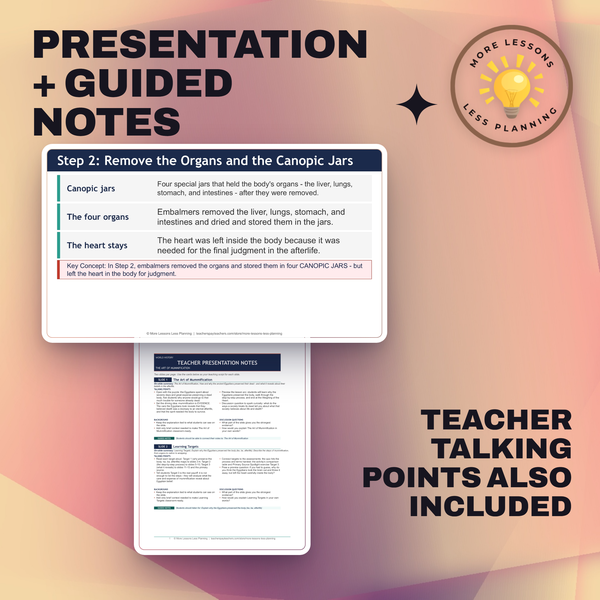

The Art of Mummification
Quality reviewed September 2026
- Subject
- World History
- Grades
- Grades 9-12
- Time
- About two 50-minute class periods
- Includes
- 11 ready-to-teach files
- Format
- Word (.docx) · PowerPoint (.pptx)
- Slide deck
- Guided notes
- Guided notes teacher key
- Activity + answer key
- Quiz + answer key
- Exit ticket + answer key
- Teacher guide
- Teacher presentation notes
What students do
- Map the four-step embalming process from purification through natron drying to wrapping
- Explain why the heart stayed inside the body while the brain was pulled out and discarded
- Analyze Diodorus Siculus's outsider account of Egyptian embalming against what they learned
- Argue what the Weighing of the Heart reveals about Egyptian ideas of right and wrong
What it covers
- The ka and the ba, and why the soul needed a preserved body as its home
- What natron is and why forty days of drying mattered more than any other step
- Canopic jars, amulets, and the priests of Anubis who led the seventy-day process
- The journey to Osiris and the final judgment against the feather of truth
Learning targets
- Explain why the ancient Egyptians preserved the body through mummification, using their beliefs about the ka, the ba, and the afterlife
- Describe the step-by-step process of mummification, from removing the organs and drying the body with natron to wrapping it with amulets over the roughly 70-day process led by the priests of Anubis
- Analyze what the care, expense, and rituals of mummification - including the journey to Osiris and the Weighing of the Heart - reveal about Egyptian beliefs, and weigh a primary source (Diodorus Siculus) against those beliefs
Peek inside
Why Preserve the Body?
The Egyptians believed in an AFTERLIFE, a life after death
A person could reach the afterlife only if the body was protected
So they invented MUMMIFICATION to preserve the dead body
Mummification dried and wrapped the body so it would not rot
A Life After Death
was the process of preserving a dead body by drying and wrapping it so the spirit could live on in the afterlife.
was the eternal life the Egyptians believed a person would enjoy after death if the body and spirit were protected.
1. Who wrote this description of Egyptian embalming, and where was he from? Using the note above, explain why a Greek historian writing about Egypt might not have every detail exactly right.
Why this matters
A body preserved for a soul that needs a home is a strange idea to sit with, but the ka and the ba only work once the body survives to receive them. Canopic jars kept the organs safe for that return: proof the practice was never horror for its own sake, only logistics for eternity.
Seventy days is a long stretch to spend on one body, and that length alone tells students how seriously the process mattered. Weighing the heart against a feather afterward turns the unit into a question about what a culture decides counts as a good life, not just how it handles the dead.
From one teacher to another
Nothing gets a room's attention like explaining that the Egyptians pulled the brain out through the nose and threw it away, while leaving the heart exactly where it was on purpose. That contrast does most of the teaching before we even reach natron, the forty days of drying, or the priests who ran the whole seventy-day process. By the Weighing of the Heart, students are reading Diodorus Siculus's outsider account against what they already mapped out, and they can point to exactly where he gets it right and where he doesn't.
Every file in this toolkit
Download
Where should I send the next one?
Everything here is free and it stays that way. Leave your email and I'll send you the new lessons as they go up. You can unsubscribe from any one of them.
Related resources
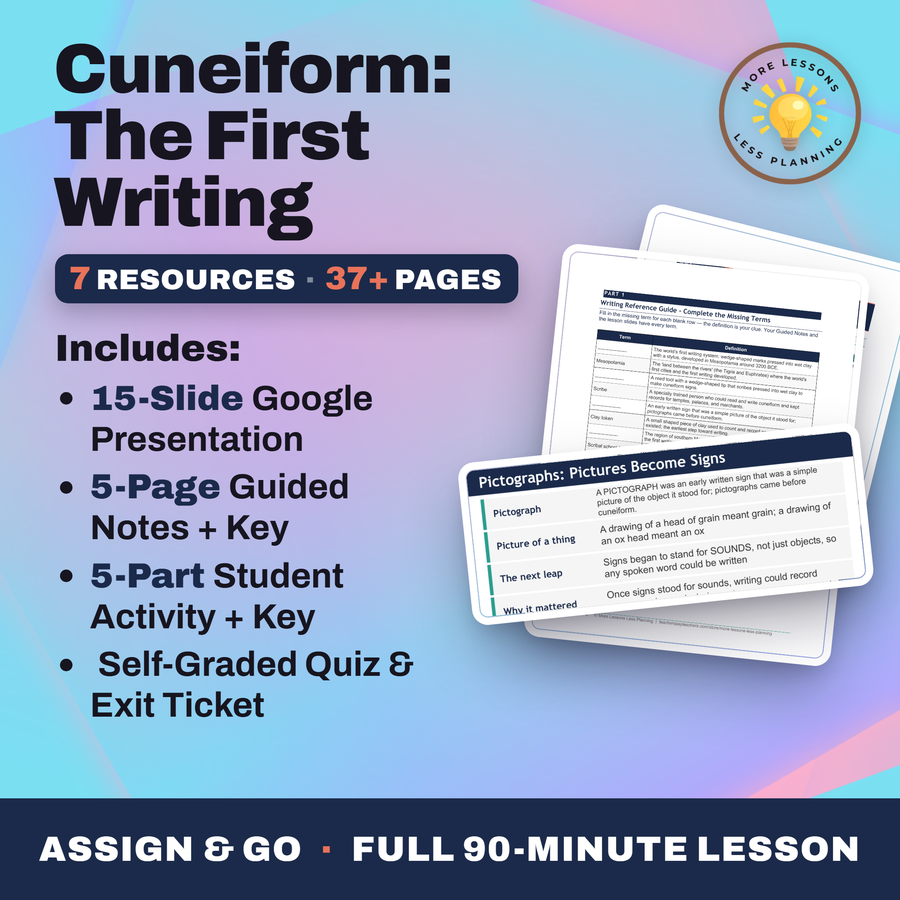
Cuneiform The First Writing
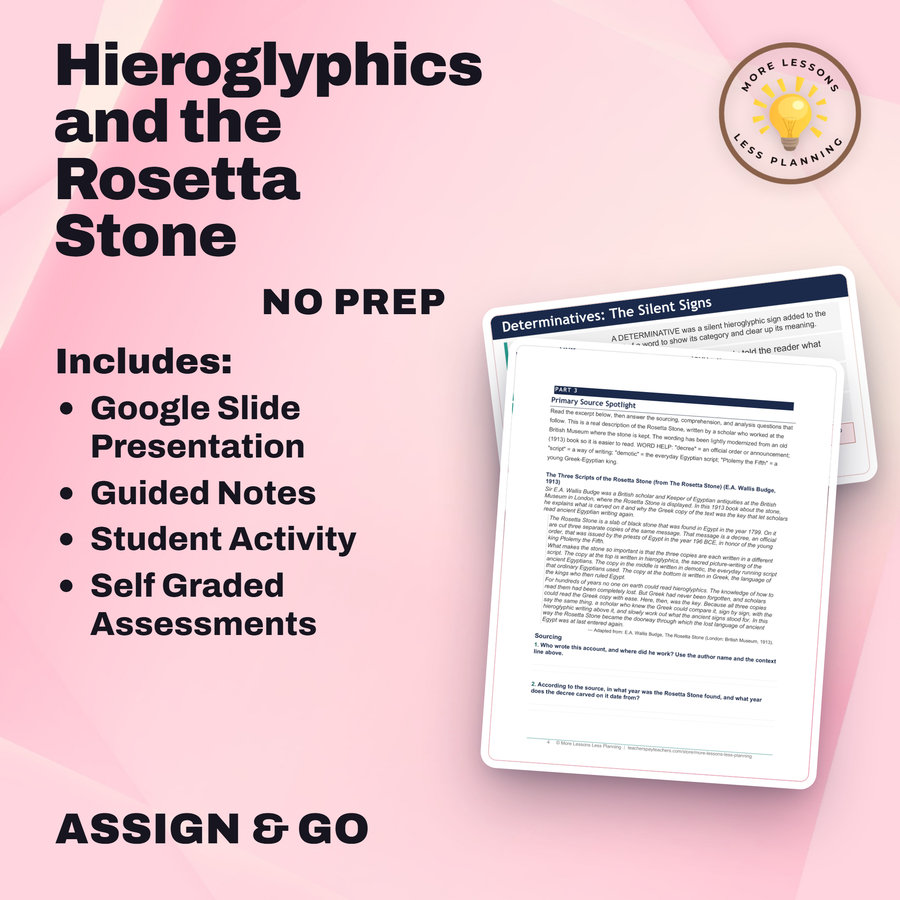
Hieroglyphics and the Rosetta Stone
Oracle Bones and Early Chinese Writing
Pyramids and Pharaohs
The Code of Hammurabi

The Epic of Gilgamesh
Every lesson on this site is free to download and use. If one of them saved you a prep period, you can chip in a few bucks toward my three kids' daycare fund. That's genuinely where tips go.