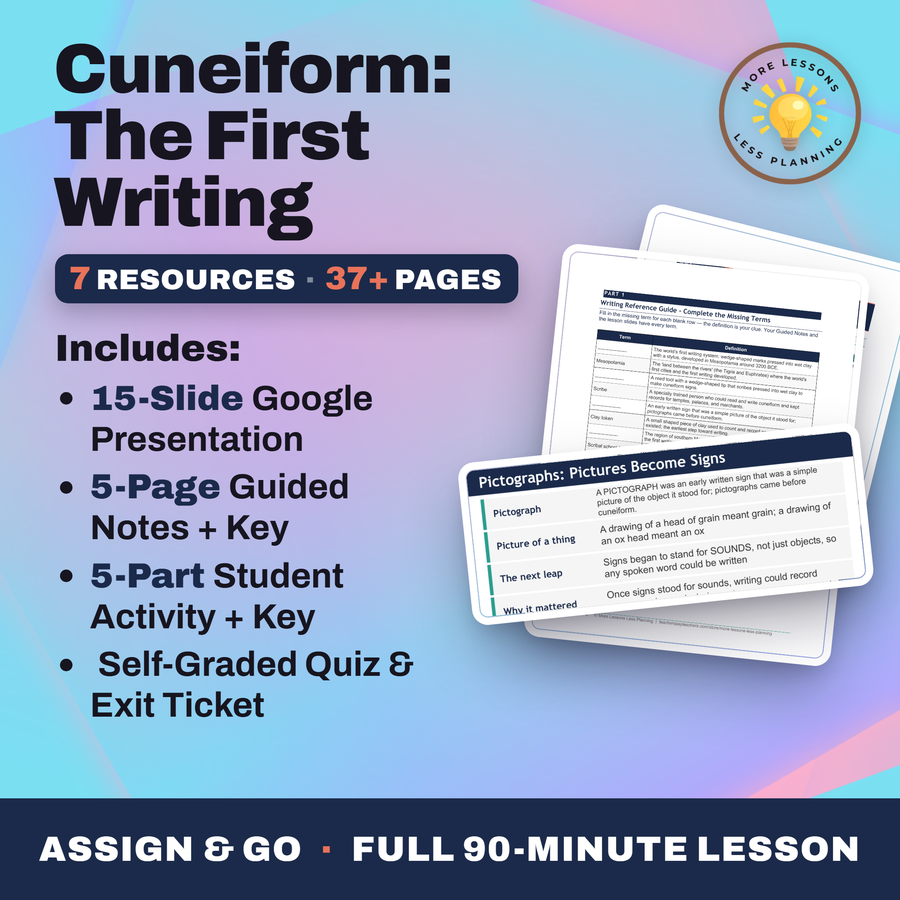

Cuneiform The First Writing
Quality reviewed September 2026
- Subject
- World History
- Grades
- Grades 9-12
- Time
- About two 50-minute class periods
- Includes
- 11 ready-to-teach files
- Format
- Word (.docx) · PowerPoint (.pptx)
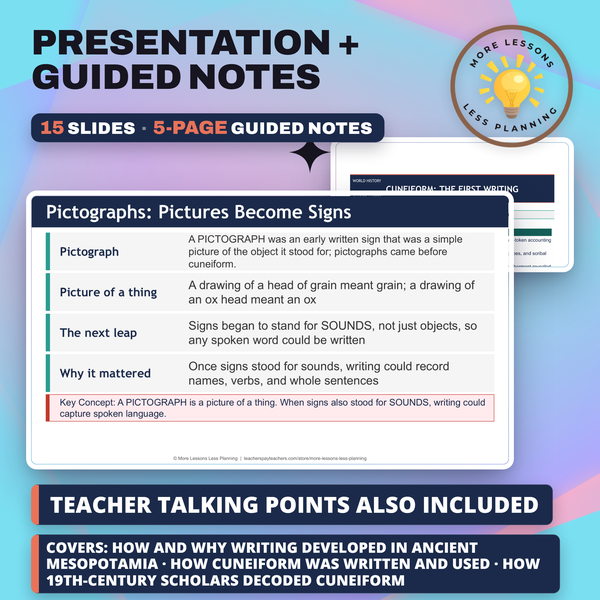
- Slide deck
- Guided notes
- Guided notes teacher key
- Activity + answer key
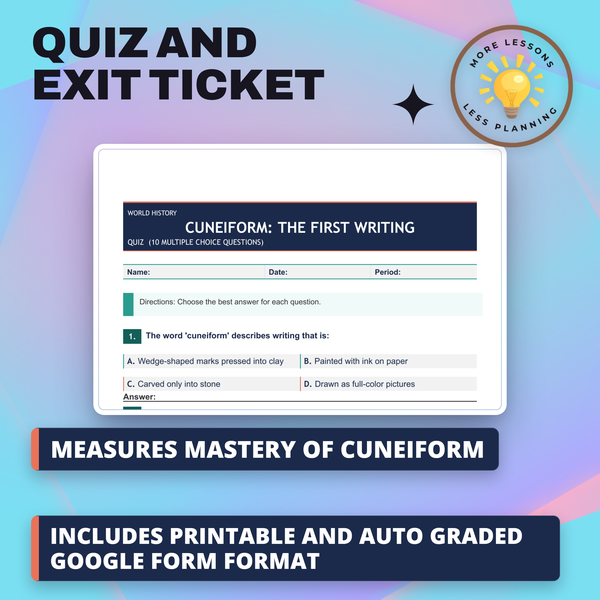
- Quiz + answer key
- Exit ticket + answer key
- Teacher guide
- Teacher presentation notes
What students do
- Trace how clay-token accounting in Mesopotamia evolved into pictographs and then full cuneiform script
- Explain how scribes trained for years in scribal schools to write cuneiform with a reed stylus on wet clay
- Read George Smith's own account of the moment he realized the Flood Tablet matched a story he already knew
- Compare clay tokens against full cuneiform writing across five features, from what each recorded to who used it
What it covers
- The accounting problem that pushed Mesopotamia from clay tokens to pictographs to wedge-shaped cuneiform
- The stylus, the wet clay tablet, and the years of training inside a scribal school (edubba)
- The Behistun Inscription and how Henry Rawlinson used its three languages to crack the cuneiform code
- George Smith's decoding of the Epic of Gilgamesh's flood story on a cuneiform tablet
Learning targets
- Explain how and why writing developed in ancient Mesopotamia, from clay-token accounting to full cuneiform script
- Describe how cuneiform was written and used - the wedge, the stylus, scribes, and scribal schools - and how the signs changed over time
- Analyze how 19th-century scholars decoded cuneiform and what the decipherment revealed about the ancient world
Peek inside
The Problem
In SUMER, southern MESOPOTAMIA, cities grew large
Temples and traders had to track grain, animals, goods
Human memory could not keep every count straight
They needed a permanent way to record amounts
Why Writing Was Invented
MESOPOTAMIA means the land between two (the Tigris and Euphrates).
was the region of southern Mesopotamia that was home to the first cities and the first writing.
Writing did not begin with stories - it began as .
As cities grew, temples and traders needed a permanent way to record of grain, oil, and livestock.
1. Who wrote this account, and what was his job when he made this discovery? Use the author name, the source title, and the context line above.
Why this matters
Henry Rawlinson cracked cuneiform by comparing the same royal message carved in three languages into a cliff face at Behistun, turning a wedge-shaped script nobody could read into an open book. Writing itself started even plainer than that, as clay tokens tracking how much grain a household owed.
Boys training in a scribal school copied the same signs for years before anyone trusted them with a real record, and I bring that detail up on purpose for students who think a skill either comes naturally or not at all. Cuneiform took the same kind of repetition any hard skill takes.
From one teacher to another
I tell my students that the first writing in human history wasn't poetry or law, it was inventory, since someone in Mesopotamia needed to remember how much grain was owed and clay tokens weren't cutting it anymore. We trace that accounting problem all the way to full cuneiform script, the stylus, and the scribal schools where boys copied the same signs for years before they were trusted with a real record. The payoff is George Smith's own account of sitting with a damaged tablet in the 1870s and realizing the flood story on it echoed something he already knew, which is the moment cuneiform stopped being just old marks in clay and became a message from someone real.
Every file in this toolkit
Download
Where should I send the next one?
Everything here is free and it stays that way. Leave your email and I'll send you the new lessons as they go up. You can unsubscribe from any one of them.
Related resources
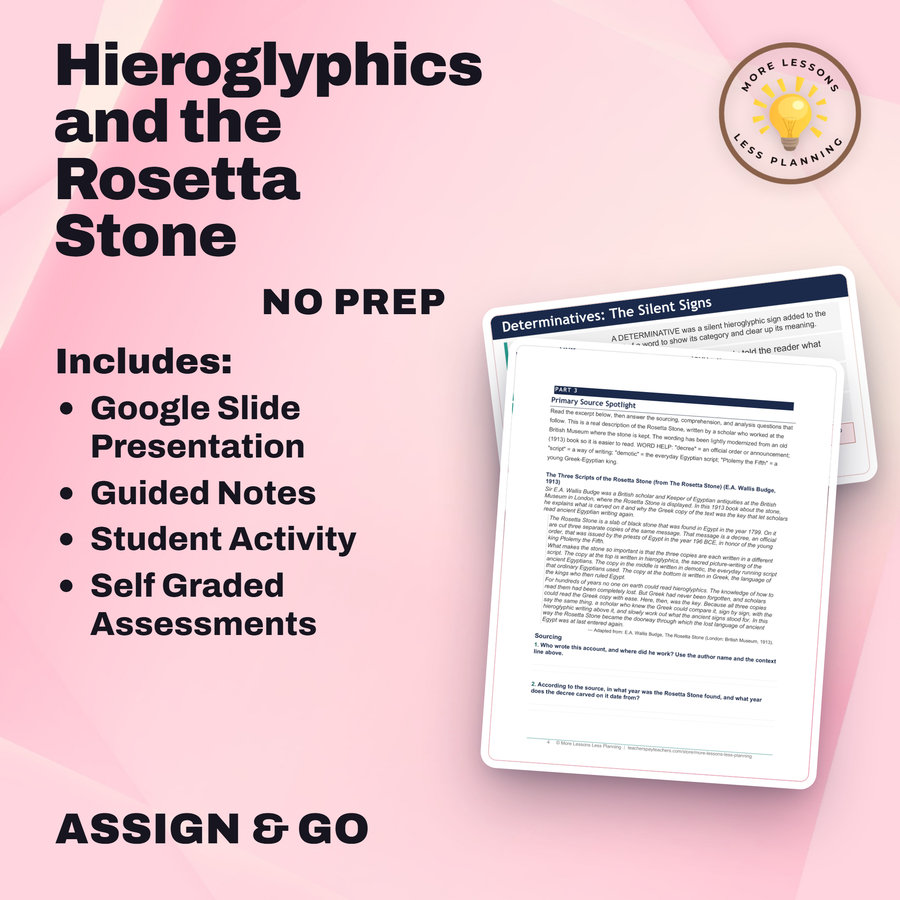
Hieroglyphics and the Rosetta Stone
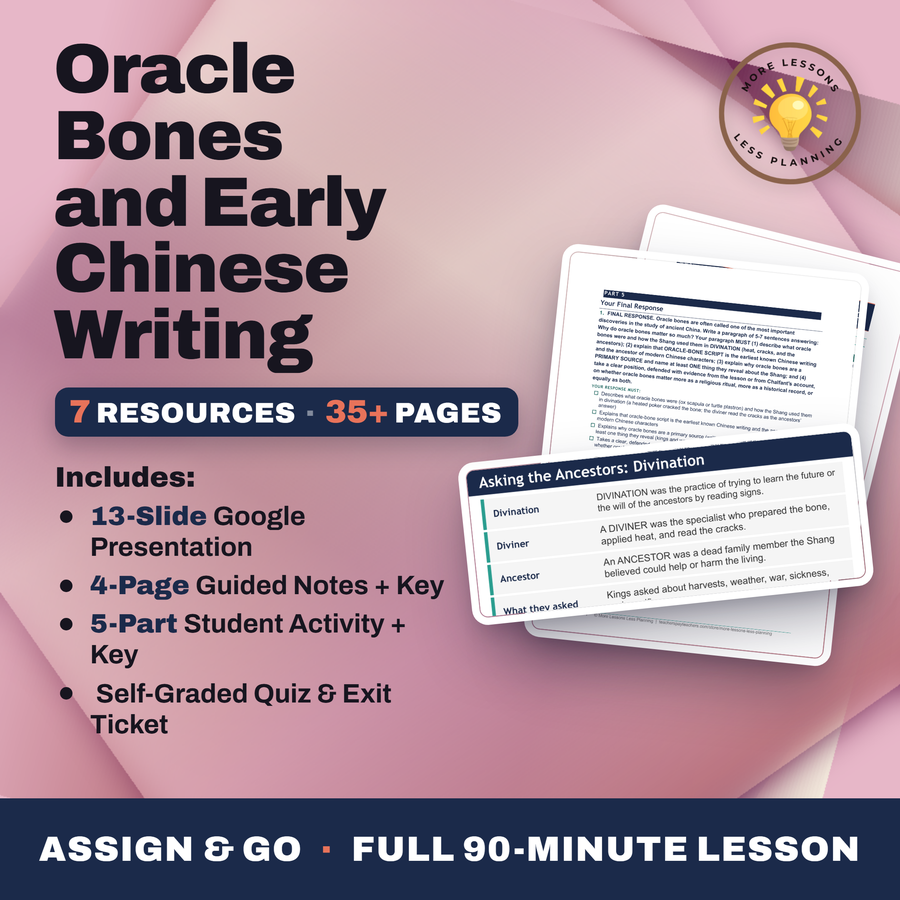
Oracle Bones and Early Chinese Writing
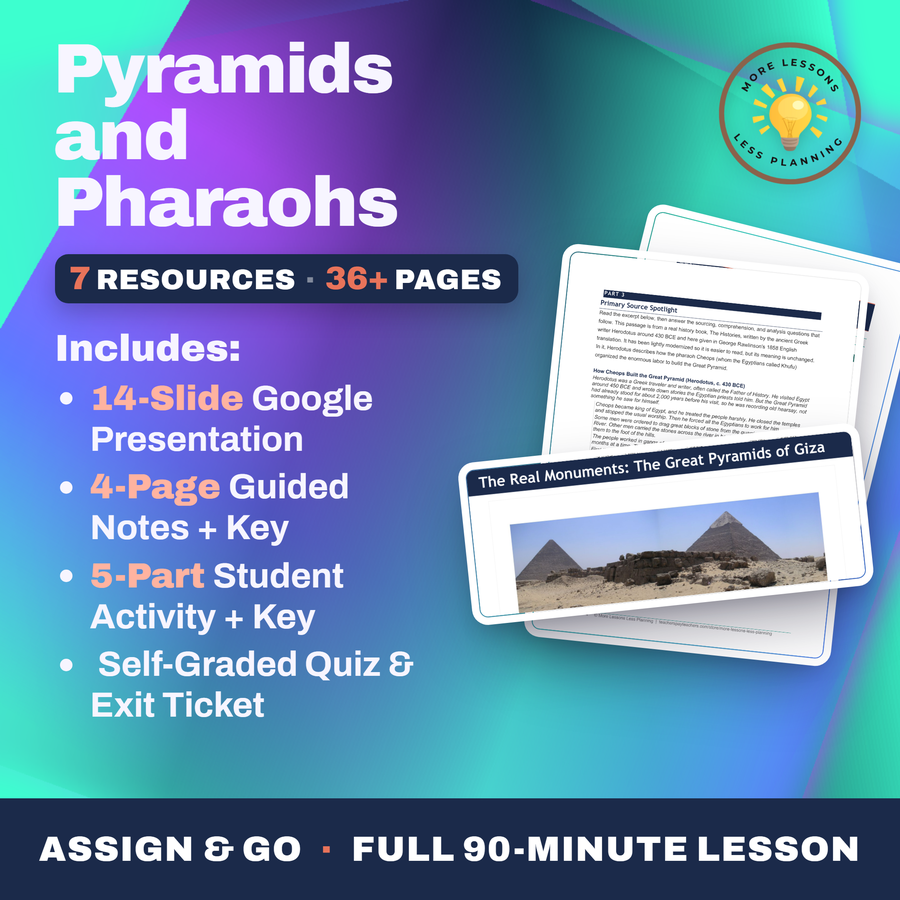
Pyramids and Pharaohs
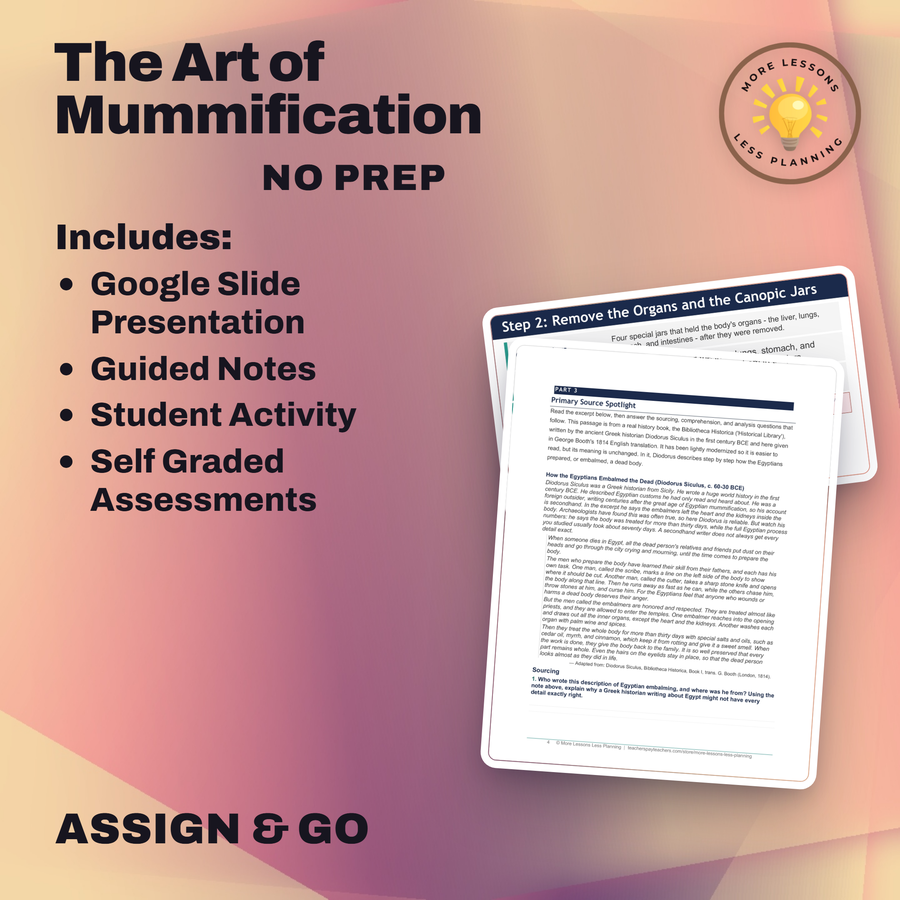
The Art of Mummification
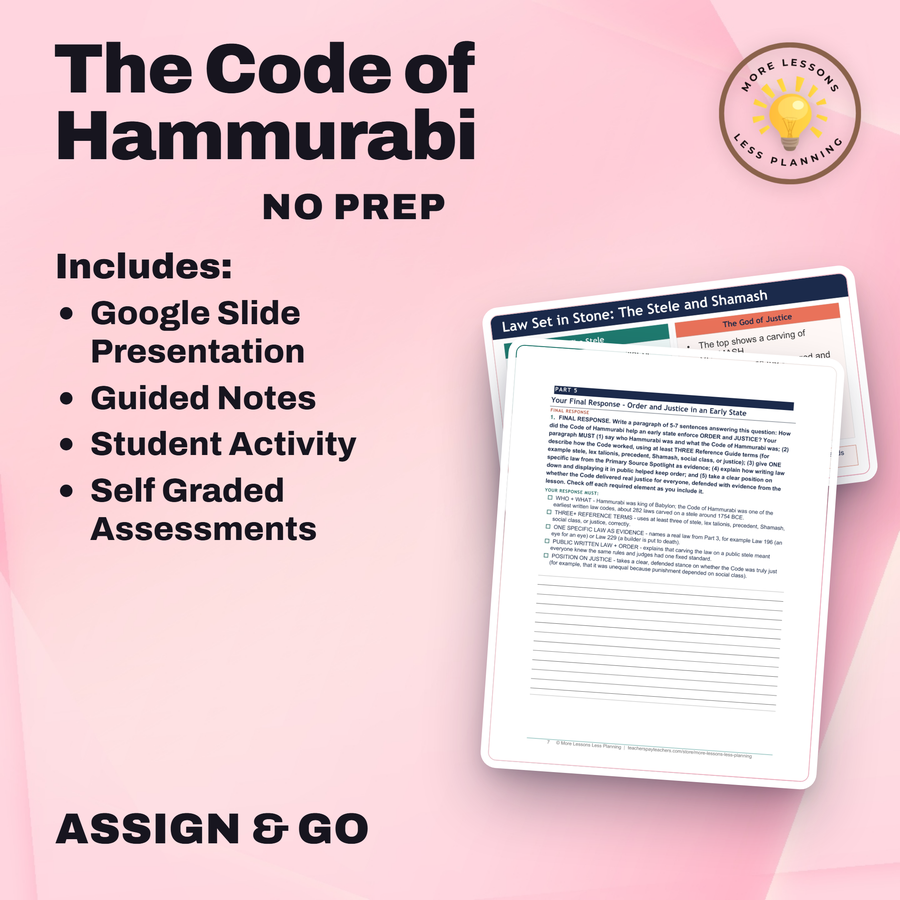
The Code of Hammurabi
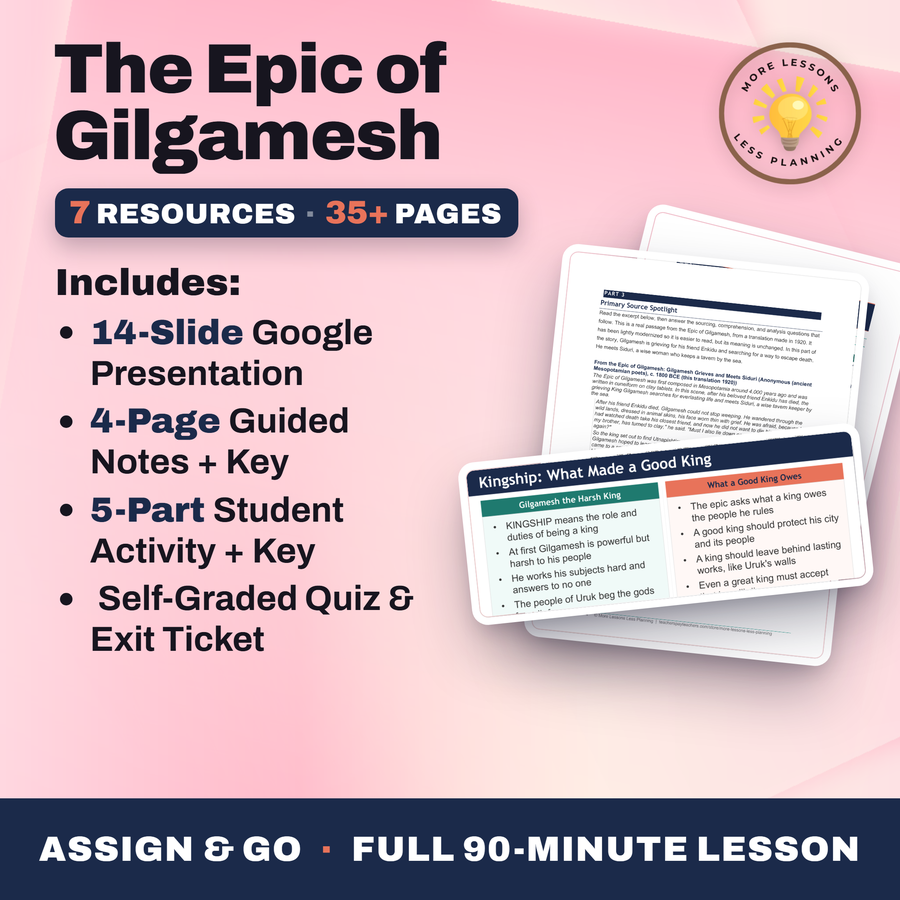
The Epic of Gilgamesh
Every lesson on this site is free to download and use. If one of them saved you a prep period, you can chip in a few bucks toward my three kids' daycare fund. That's genuinely where tips go.