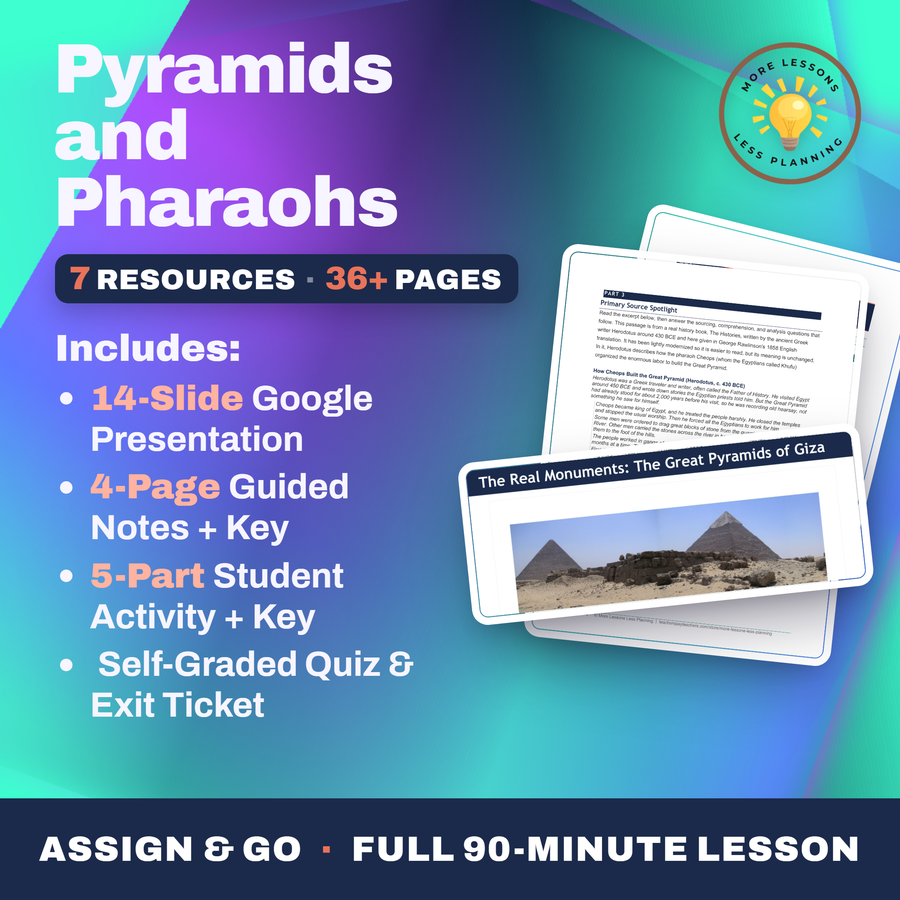

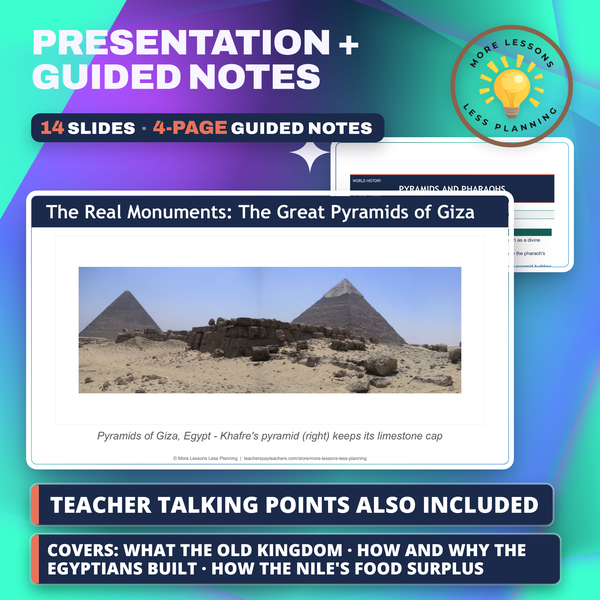
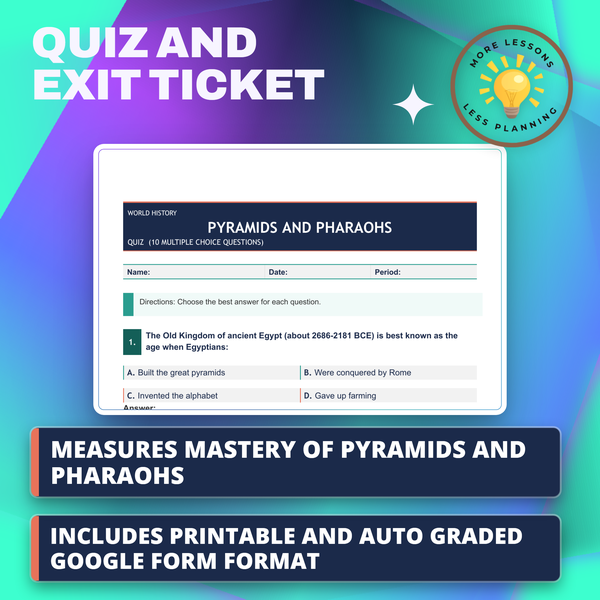
Pyramids and Pharaohs
- Slide deck
- Guided notes
- Guided notes teacher key
- Activity + answer key
- Quiz + answer key
- Exit ticket + answer key
- Teacher guide
- Teacher presentation notes
Where should I send the next one?
Everything here is free and it stays that way. Leave your email and I'll send you the new lessons as they go up. You can unsubscribe from any one of them.
Every file in this toolkit
Related resources
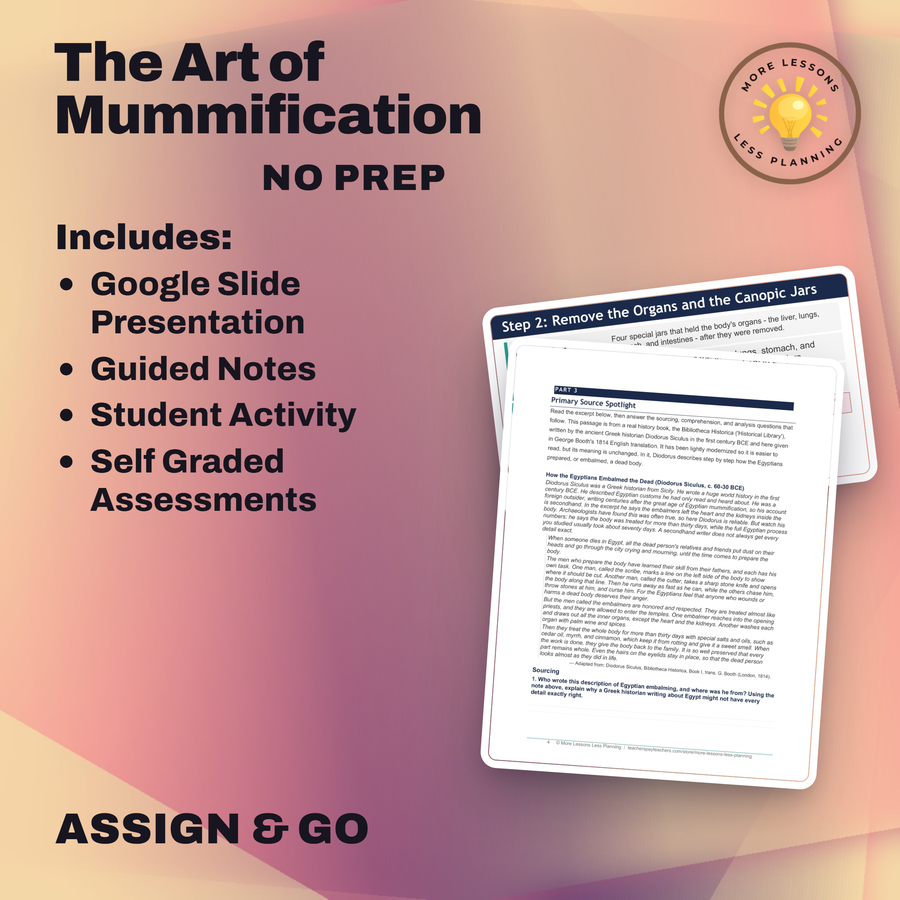
The Art of Mummification
Aggression and Appeasement
Alliances and the Causes of WWI

Blitzkrieg and the Fall of France
Causes of the French Revolution
Confucianism and Social Order
What students do
- Analyze Herodotus's account of how Khufu organized the labor to raise the Great Pyramid
- Compare that 1858-translated hearsay against what archaeologists found at the Giza workers' village
- Explain why the pharaoh was regarded as a living god who owned all of Egypt's land
- Trace how the Nile's yearly flood produced the surplus that fed the pyramid builders
What it covers
- The vizier's job collecting taxes, storing grain, and organizing the labor force
- The three-step build: quarrying, moving, and raising two-ton blocks with no machines
- How workers' tombs and villages at Giza overturned the old slave-labor story
- Mummification and the afterlife as the religious reason the tombs existed at all
Learning targets
- Explain what the Old Kingdom was and why the Egyptians saw the pharaoh as a divine god-king
- Describe how and why the Egyptians built the pyramids as tombs to secure the pharaoh's afterlife, using the Great Pyramid of Giza (Khufu) as the key example
- Analyze how the Nile's food surplus and a strong central government made pyramid-building possible, and weigh a primary source (Herodotus) against modern archaeology
From one teacher to another
Slaves built the pyramids under the whip, or so half my students believe on day one, and Herodotus's own account of Khufu organizing the labor gangs is half the reason why. I hold his telling up against what archaeologists actually found at the workers' village near Giza, where paid rations, real tombs, and seasonal shifts tell a different story. Once they've traced the vizier's job and the Nile's yearly surplus, they can explain why a project this size needed a functioning government, not a whip.
Every lesson on this site is free to download and use. If one of them saved you a prep period, you can chip in a few bucks toward my three kids' daycare fund. That's genuinely where tips go.