Hieroglyphics and the Rosetta Stone
Quality reviewed September 2026
- Subject
- World History
- Grades
- Grades 9-12
- Time
- About two 50-minute class periods
- Includes
- 11 ready-to-teach files
- Format
- Word (.docx) · PowerPoint (.pptx)
- Slide deck
- Guided notes
- Guided notes teacher key
- Activity + answer key
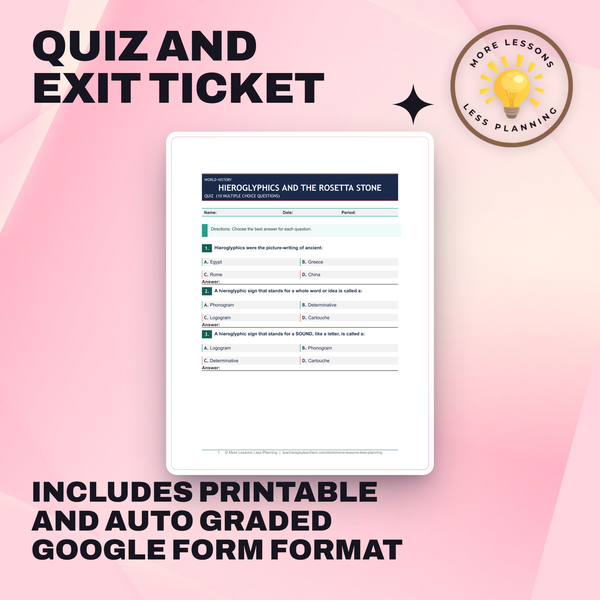
- Quiz + answer key
- Exit ticket + answer key
- Teacher guide
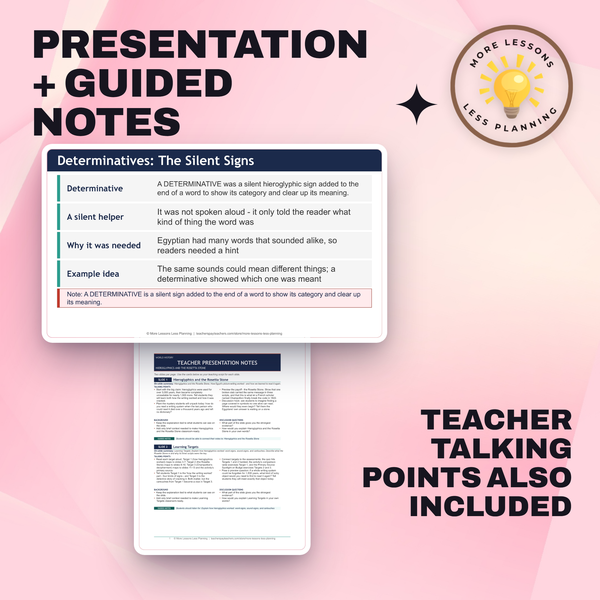
- Teacher presentation notes
What students do
- Distinguish logograms, phonograms, and determinatives as the three kinds of signs inside hieroglyphic writing
- Explain why a cartouche around a group of signs signals a royal name
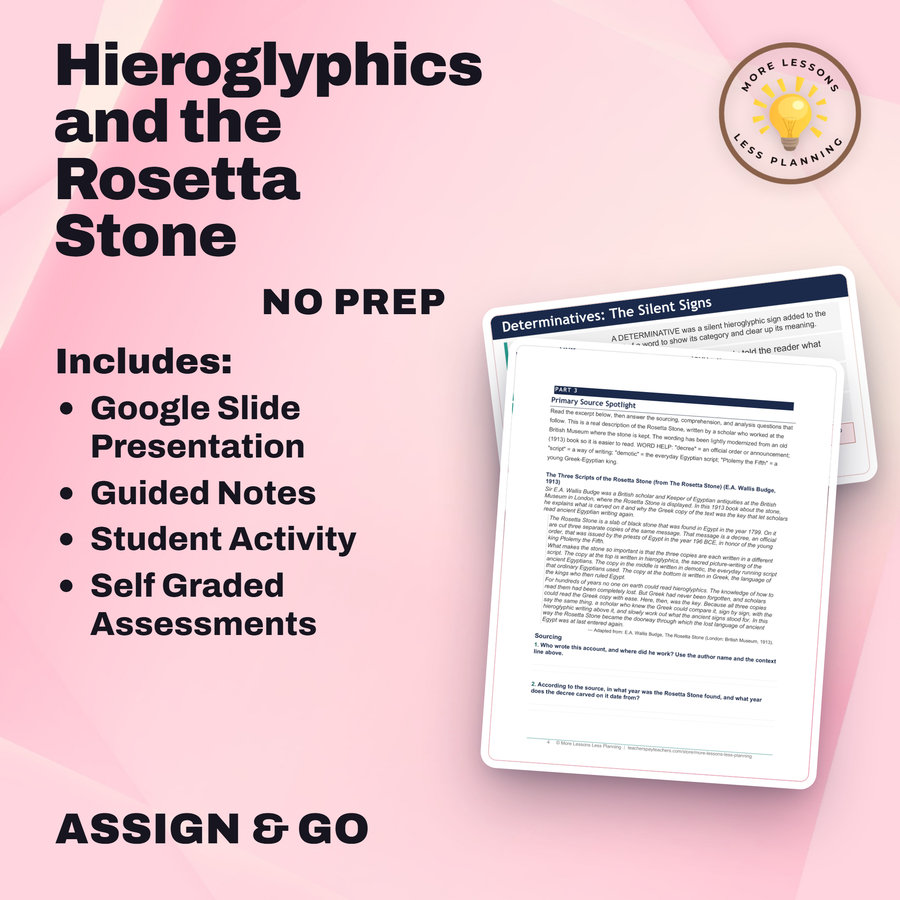
- Read E.A. Wallis Budge's account of the Rosetta Stone's three parallel scripts and explain why a bilingual object could crack a lost language
- Trace how Champollion used the Rosetta Stone to decipher hieroglyphics in 1822 after 1,500 years of silence
What it covers
- Logograms, phonograms, and determinatives as the building blocks of hieroglyphic writing
- Cartouches and how they marked out royal names like Ptolemy V's inside a string of signs
- The Rosetta Stone's three scripts, hieroglyphic, demotic, and Greek, carved for the same 196 BCE decree
- Champollion's 1822 decipherment and why a script frozen for 1,500 years suddenly became readable
Learning targets
- Explain how Egyptian hieroglyphics worked - word-signs (logograms), sound-signs (phonograms), silent determinatives, and cartouches for royal names
- Describe what the Rosetta Stone is and why its three parallel scripts made it the key to a lost language
- Analyze how Champollion deciphered hieroglyphics in 1822 and why a bilingual object can crack a script no one could read
Peek inside
The Sacred Picture-Writing
HIEROGLYPHICS = the sacred picture-writing of ancient Egypt
Made of hundreds of small picture-signs
Signs could stand for objects, sounds, or ideas
Carved on temples, tombs, and monuments
The Sacred Picture-Writing
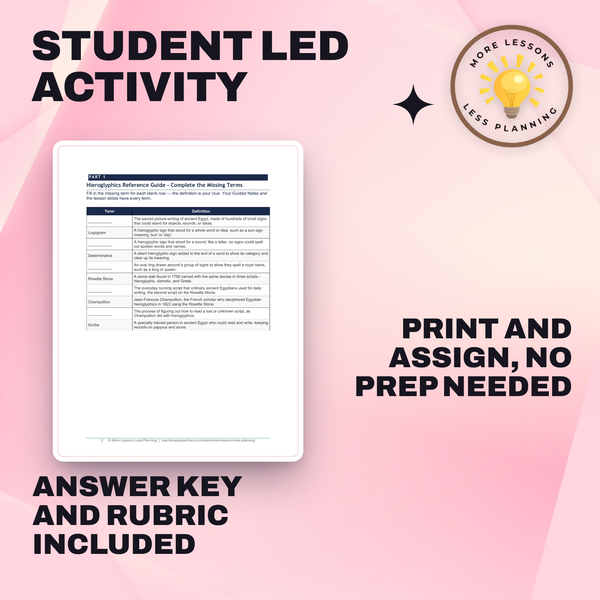
were the sacred picture-writing of ancient Egypt, made of hundreds of small signs.
Hieroglyphic signs could stand for objects, sounds, or .
A was a specially trained person in ancient Egypt who could read and write.
Scribes kept records on , a paper-like material made from a river reed.
1. Who wrote this account, and where did he work? Use the author name and the context line above.
Why this matters
Fifteen hundred years is how long hieroglyphics sat unread on temple walls, a script gone completely silent until a cartouche wrapped around a name gave readers their one deliberate clue, a built-in signal that royalty lives inside that string of marks.
Logograms, phonograms, and determinatives sound abstract until Ptolemy V's cartouche resolves into sounds students already half-recognize from Greek, and I let that click happen gradually instead of handing them Champollion's answer up front.
From one teacher to another
Ask my students how you'd read a language nobody has spoken in fifteen hundred years and most of them shrug, so I hand them the actual mechanism: a stone slab that happens to carve the same decree in three scripts, one of which anyone in 1799 could already read. Working through logograms, phonograms, and determinatives first means students already know what to look for by the time we get to the Rosetta Stone, so it reads as the key that let Champollion match signs he could see to sounds he could already read in Greek, not just a famous rock in a museum. E.A. Wallis Budge's own account of the three scripts closes the lesson out, so students hear the decipherment story from someone who studied the stone directly instead of from a textbook summary.
Every file in this toolkit
Download
Where should I send the next one?
Everything here is free and it stays that way. Leave your email and I'll send you the new lessons as they go up. You can unsubscribe from any one of them.
Related resources
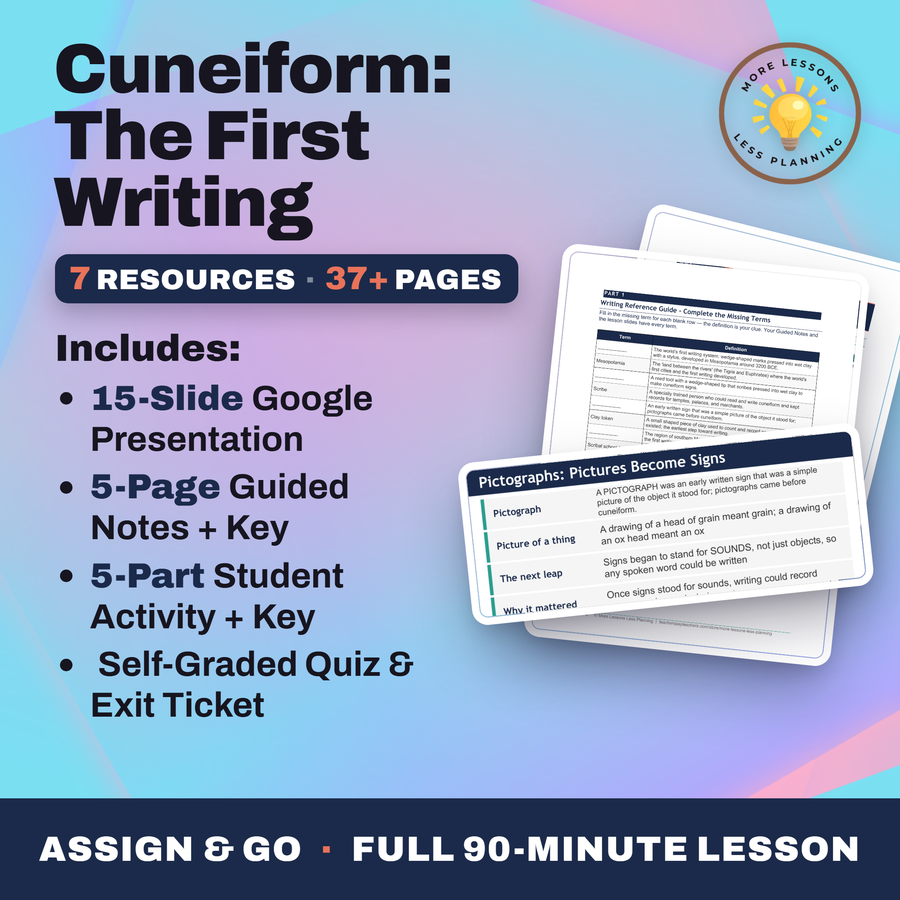
Cuneiform The First Writing
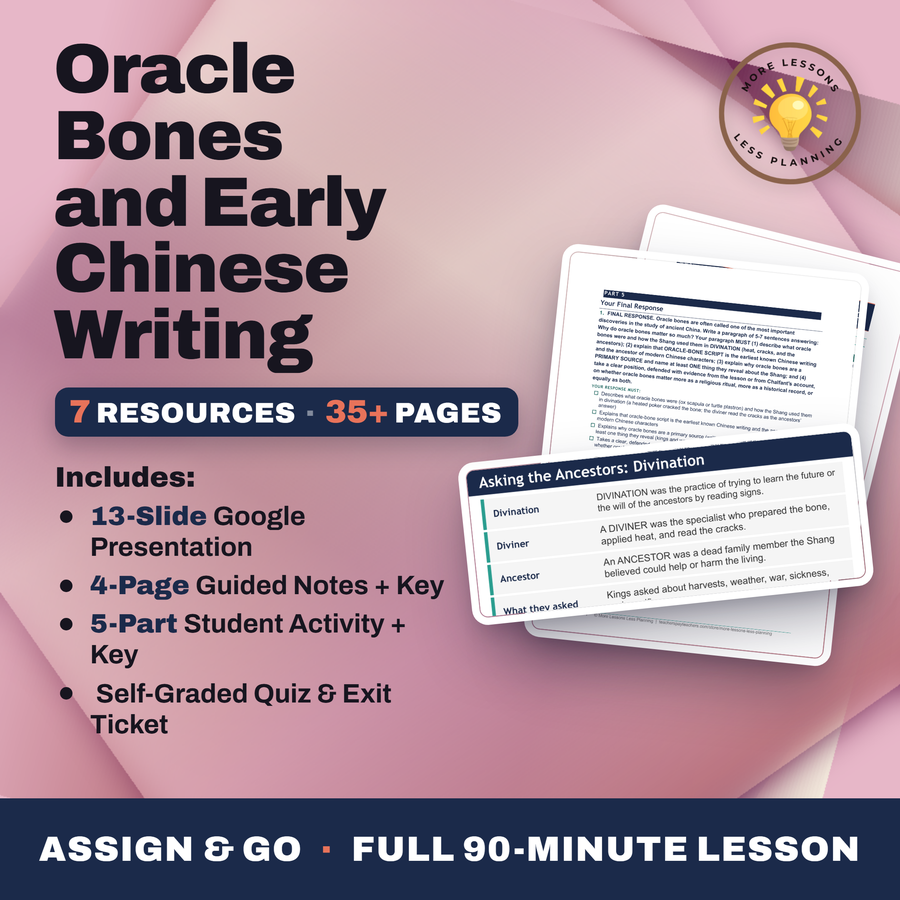
Oracle Bones and Early Chinese Writing
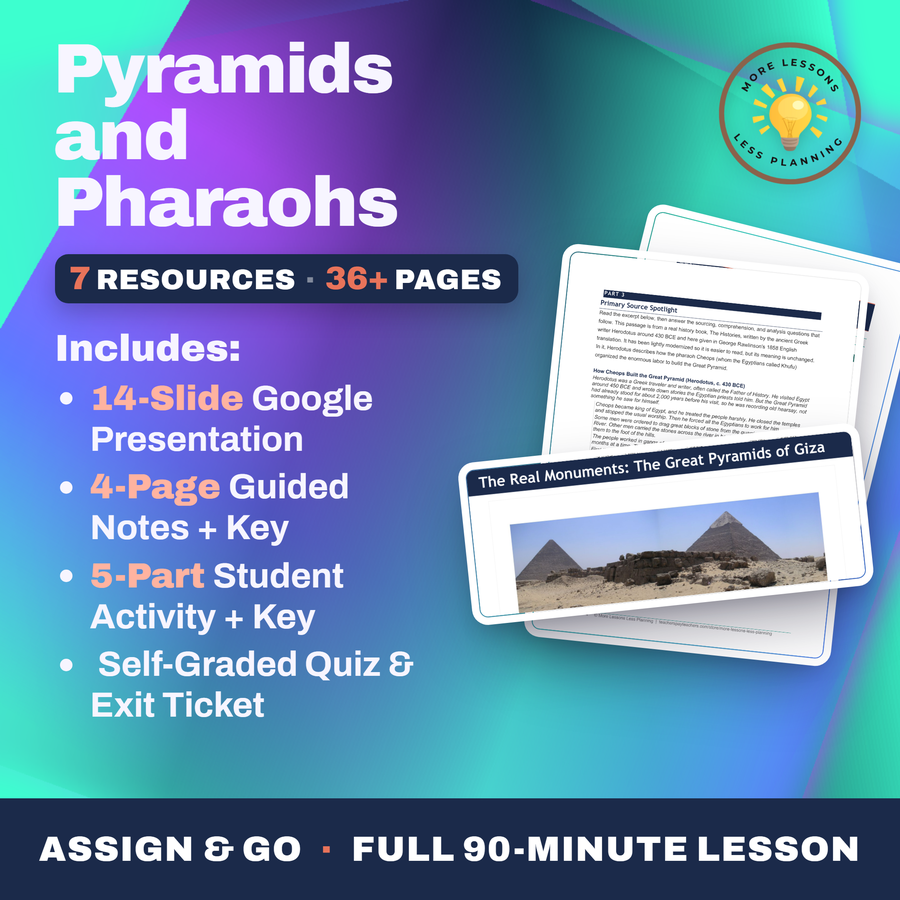
Pyramids and Pharaohs
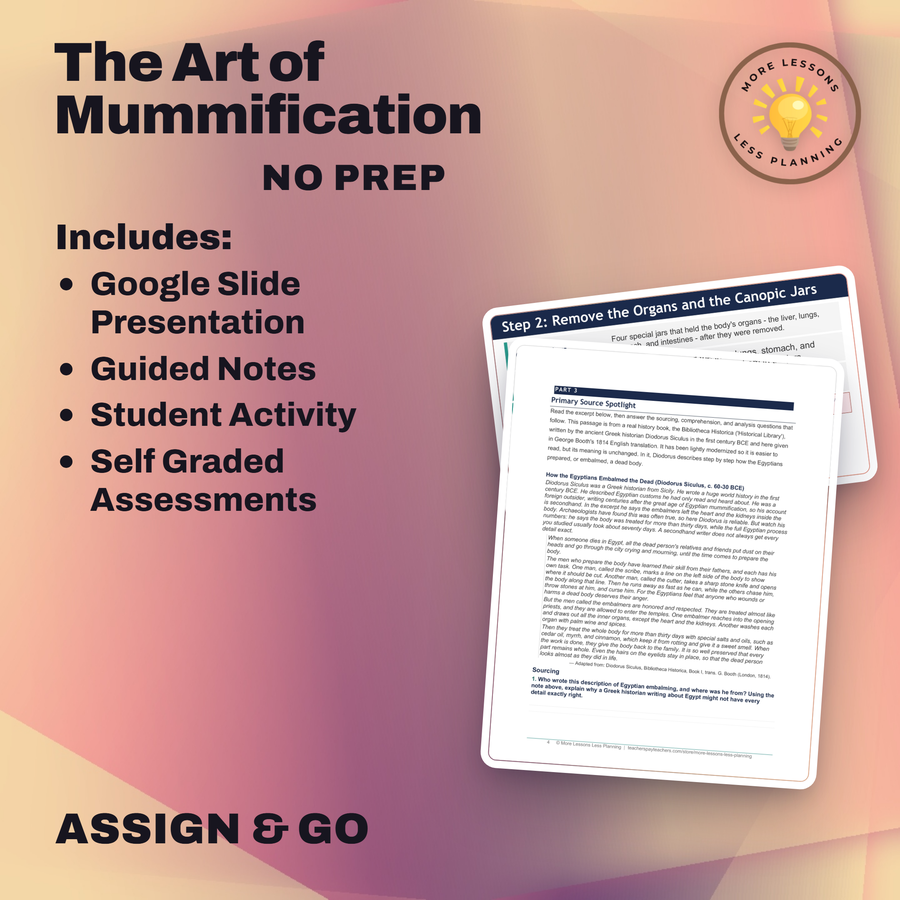
The Art of Mummification
The Code of Hammurabi
The Epic of Gilgamesh
Every lesson on this site is free to download and use. If one of them saved you a prep period, you can chip in a few bucks toward my three kids' daycare fund. That's genuinely where tips go.