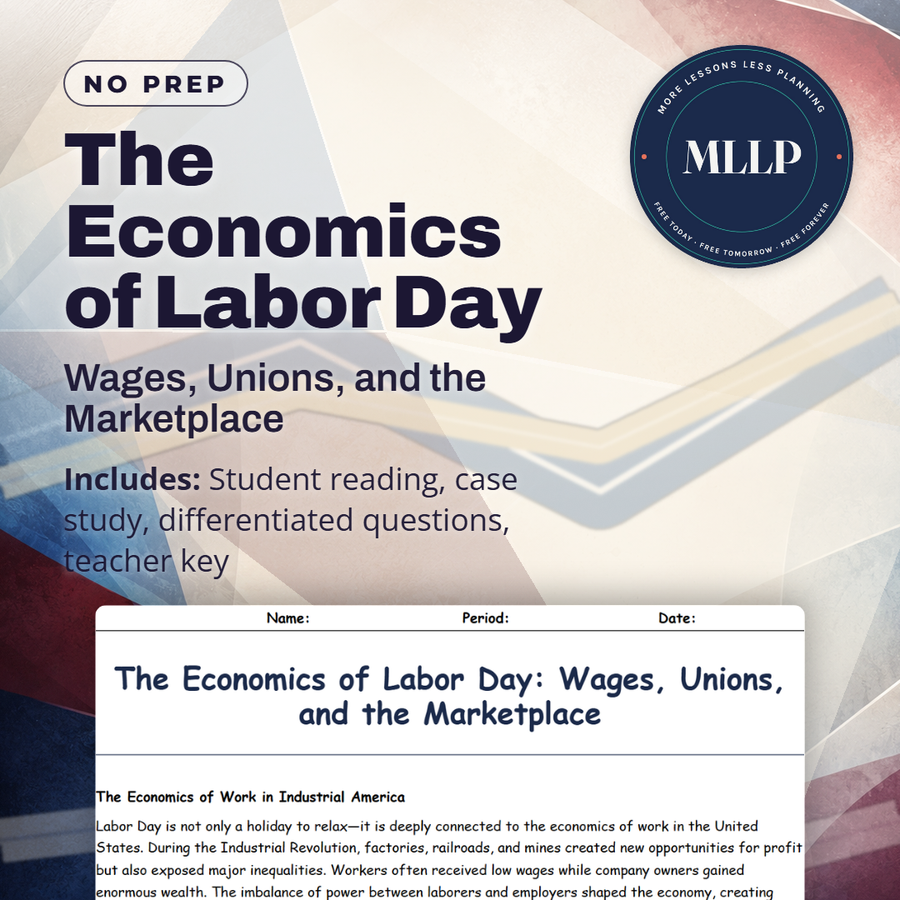
The Economics of Labor Day: Wages, Unions, and the Marketplace
Quality reviewed September 2026
Facts verified September 9, 2026
- Subject
- Social Studies
- Grades
- Grades 9-12
- Length
- 7-page student worksheet
- Time
- About one 50-minute class period
- Great for
- Sub plans and independent work
- Includes
- Reading passage, comprehension questions + full answer key
- Format
- Print-and-go PDF
What students do
- Apply supply and demand principles to explain why industrial wages stayed low before unions
- Evaluate Henry Ford's gamble: raising wages and shortening hours while boosting productivity
- Compare collective bargaining power before and after the Wagner Act
- Debate modern debates about minimum wage and gig economy worker protections
What it covers
- Supply and demand in labor markets
- Collective bargaining and union economics
- The eight-hour workday and wage history
Start reading this worksheet
The Economics of Work in Industrial America
Labor Day is not only a holiday to relax—it is deeply connected to the economics of work in the United States. During the Industrial Revolution, factories, railroads, and mines created new opportunities for profit but also exposed major inequalities. Workers often received low wages while company owners gained enormous wealth. The imbalance of power between laborers and employers shaped the economy, creating tension about how wealth should be distributed. The concept of supply and demand played a role in this imbalance. Because so many workers were competing for jobs, wages stayed low. Employers could replace unhappy workers easily, which gave them more control. At the same time, laborers could not survive without income, so they were forced to accept poor conditions. This cycle kept many families in poverty. As workers began organizing into labor unions, they introduced a new economic force—collective bargaining. By striking or threatening to withhold their labor, unions increased the “cost” to employers of ignoring worker demands. This shifted the balance of power in the labor marketplace. Labor Day was born out of this struggle, recognizing that the economy depends on both workers and business owners. Without labor, production stops; without employers, jobs vanish. This balance is at the heart of economic debates, both then and now.
Wages, Prices, and the Cost of Living
One of the main economic questions tied to Labor Day is the relationship between wages and the cost of living. In the late 1800s, a factory worker might earn $10 a week while rent, food, and clothing costs were far higher. Economists call this problem a “real wage gap,” where the money people earn does not stretch far enough to cover basic needs. Labor unions pushed for higher wages, arguing that a strong working class meant more consumers who could buy goods, which would help the economy grow. Employers countered that raising wages would cut into profits and reduce business investment. This debate continues today in modern conversations about the minimum wage. Supporters of raising it argue that workers need a living wage to meet rising costs, while critics claim higher wages could increase prices or reduce hiring. The tug-of-war between wages and prices illustrates the complexity of economic decision-making. Labor Day reminds us that wages are not just numbers; they affect families, communities, and the entire economy.
Like what you read? The full reading, the case study, and every question set are in the free download below, along with the answer key.
Why this matters
Henry Ford doubled his workers' pay and cut their hours in 1914, and every other factory owner in the country thought he had lost his mind. Productivity went up instead of down, his own employees could finally afford the cars they were building, and the whole logic of what a wage was supposed to do started to shift.
I assign this right when the unit is about to pivot from wages to organizing, because Ford's gamble breaks the assumption most students start with, that pay simply tracks how hard a job is. Once they see a company raise pay and come out ahead, the later fight over the eight-hour day stops looking like charity and starts looking like leverage.
From one teacher to another
Henry Ford paid workers double and cut hours in 1914, shocking every other company owner, but his gamble worked. Productivity soared, workers could afford Ford cars, and it changed how business viewed labor. I use this to show students that economics is about real families deciding whether they can afford food. The worksheet traces how unions used strikes as leverage to shift that balance.
What you get
Download
Where should I send the next one?
Everything here is free and it stays that way. Leave your email and I'll send you the new lessons as they go up. You can unsubscribe from any one of them.
Related resources

Forensic Files: Violence and Crime in America’s Labor Strikes
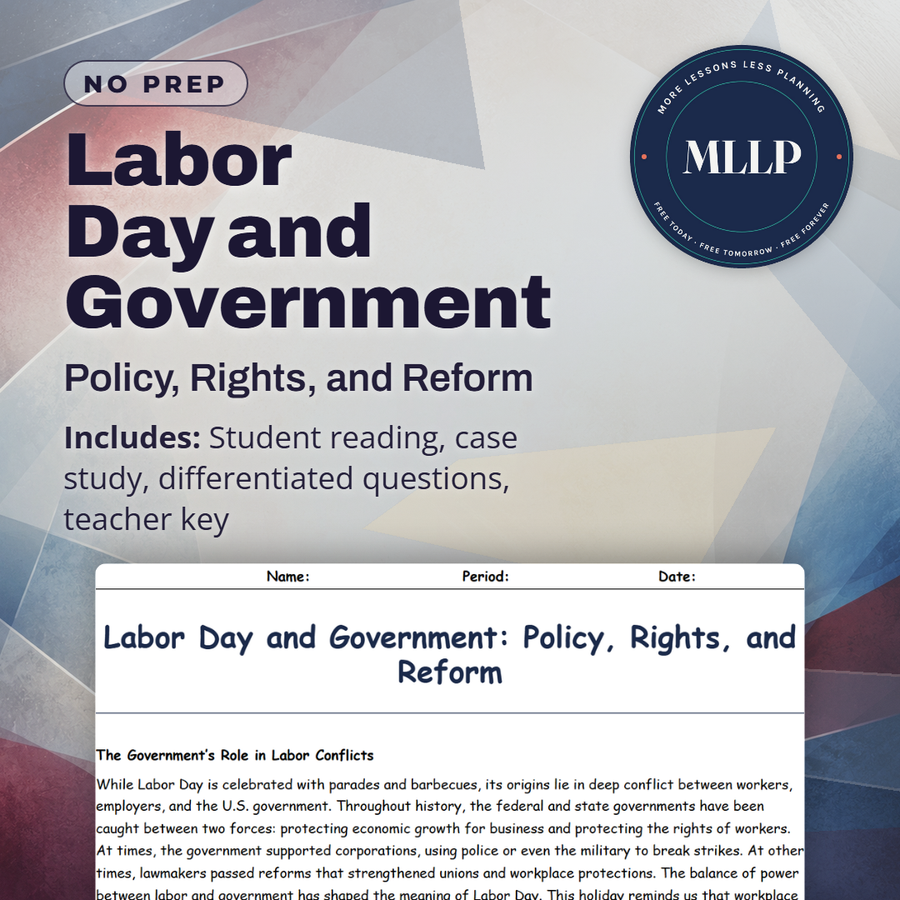
Labor Day and Government: Policy, Rights, and Reform
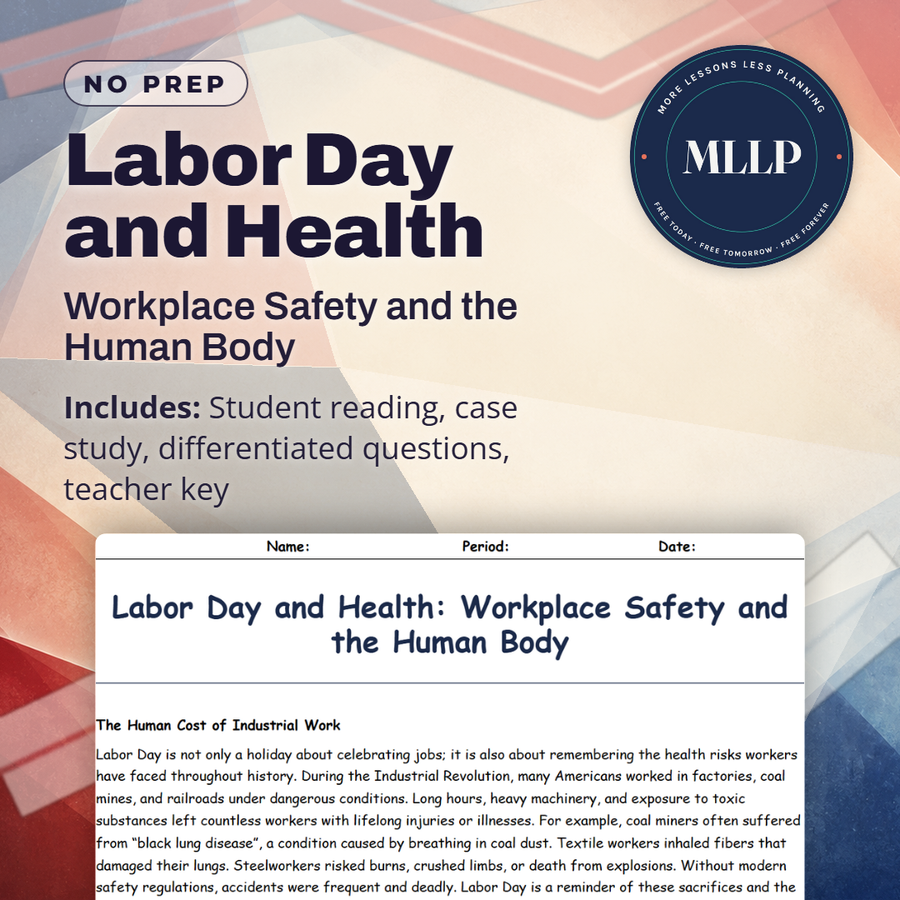
Labor Day and Health: Workplace Safety and the Human Body
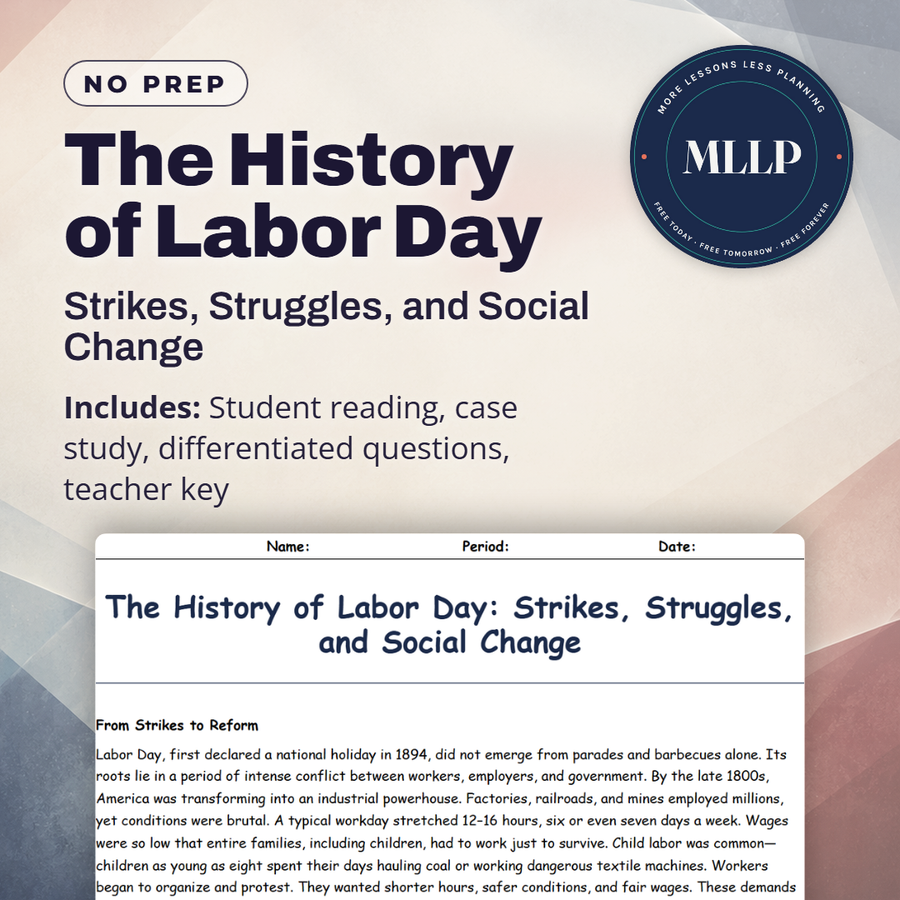
The History of Labor Day: Strikes, Struggles, and Social Change
Altitude, Cold Stress, and Human Adaptation: How the Body Stays in Balance

American History and Cinco de Mayo: Cultural Exchange and Historical Narratives
Every lesson on this site is free to download and use. If one of them saved you a prep period, you can chip in a few bucks toward my three kids' daycare fund. That's genuinely where tips go.