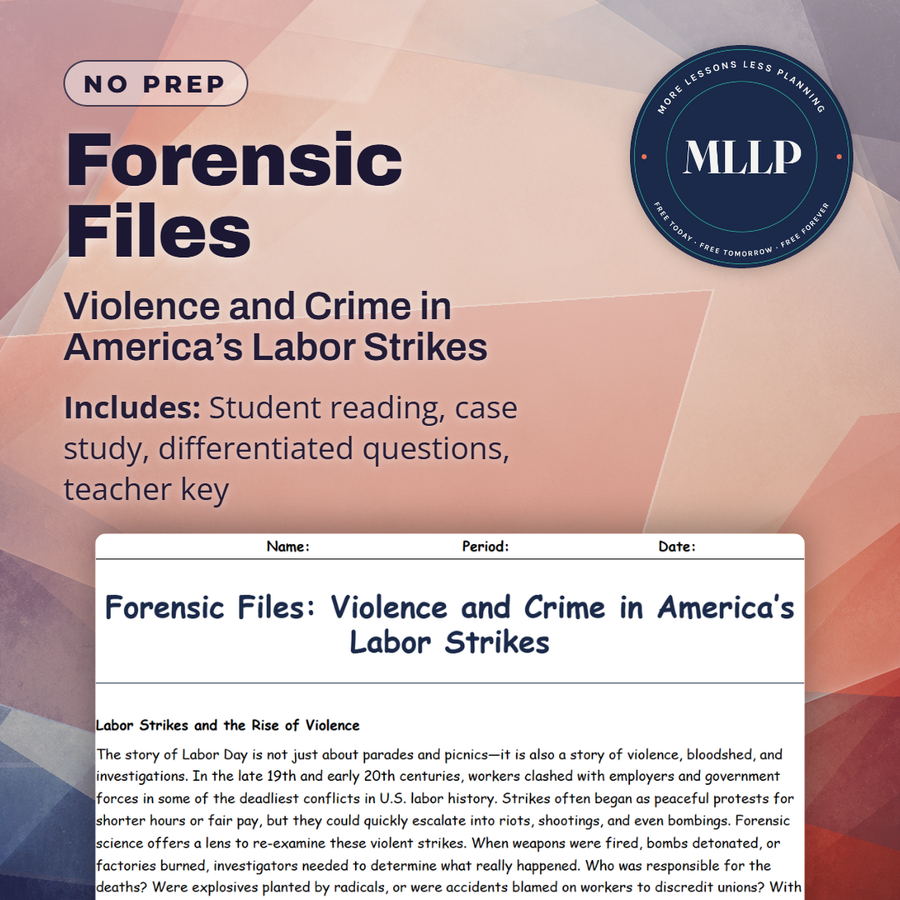
Forensic Files: Violence and Crime in America’s Labor Strikes
Quality reviewed September 2026
Facts verified September 9, 2026
- Subject
- Science
- Grades
- Grades 9-12
- Length
- 7-page student worksheet
- Time
- About one 50-minute class period
- Great for
- Sub plans and independent work
- Includes
- Reading passage, comprehension questions + full answer key
- Format
- Print-and-go PDF
What students do
- Analyze ballistics and blood evidence from shootouts like the Homestead Strike
- Explain how forensic fire analysis reveals causes of death in labor tragedies
- Compare official reports with forensic findings to uncover the truth about violent strikes
- Apply autopsy and chemical analysis techniques to historical labor conflicts
What it covers
- Forensic science and labor history
- Violence in labor strikes and worker organizing
- Methods for investigating historical tragedies
Start reading this worksheet
Labor Strikes and the Rise of Violence
The story of Labor Day is not just about parades and picnics—it is also a story of violence, bloodshed, and investigations. In the late 19th and early 20th centuries, workers clashed with employers and government forces in some of the deadliest conflicts in U.S. labor history. Strikes often began as peaceful protests for shorter hours or fair pay, but they could quickly escalate into riots, shootings, and even bombings. Forensic science offers a lens to re-examine these violent strikes. When weapons were fired, bombs detonated, or factories burned, investigators needed to determine what really happened. Who was responsible for the deaths? Were explosives planted by radicals, or were accidents blamed on workers to discredit unions? With emerging methods such as ballistics testing, fingerprinting, chemical analysis, and autopsy work, forensic scientists played a role in untangling fact from rumor. Labor Day, then, is not only a recognition of workers’ sacrifices—it is also a reminder of how violent these sacrifices often were, and how science was needed to make sense of the chaos.
Blood on the Pickett Lines: Forensics in Action
During major strikes, violence often erupted between strikers, strikebreakers (replacement workers), and armed guards hired by companies. One infamous example was the Homestead Strike of 1892, when steelworkers fought against wage cuts at Andrew Carnegie’s mill. The company hired private detectives from the Pinkerton Agency, who arrived by barge to break the strike. A gun battle broke out, killing at least nine strikers and seven Pinkertons. Forensic science was still primitive at the time, but modern methods can be retroactively applied to analyze such violence. Today, investigators would use ballistics to match bullets to specific weapons, reconstructing who fired first. Bloodstain pattern analysis could help determine how victims were shot, and autopsies could reveal whether deaths came from close-range gunfire or ricochets. These forensic methods bring clarity to events that were often clouded by propaganda, with each side blaming the other for starting the violence. In this way, forensics transforms historical labor conflicts into case files, helping students think like investigators when studying history.
Like what you read? The full reading, the case study, and every question set are in the free download below, along with the answer key.
Why this matters
Machine gun fire and burning tents killed miners and their families at Ludlow, and for decades the official record stopped there. Students apply ballistics, autopsy findings, and fire forensics to that event and to the Homestead Strike, treating both as cases still open rather than settled history.
Running the forensic evidence turns these strikes from a dispute over wages into a fight over survival, a distinction most students miss on a first pass through labor history. Comparing an official account against what the physical evidence shows builds a habit worth keeping: ask what the evidence says before trusting what got written down.
From one teacher to another
I use this one when we study labor history and forensics together. Students see how modern science can revisit events like the Ludlow Massacre, where machine gun fire and burning tents killed miners and their families. Ballistics, autopsies, and fire forensics aren't just crime-scene tools. They're history detectives that challenge biased accounts. The case study makes it clear that workers weren't just demanding fair wages; they were fighting for survival.
What you get
Download
Where should I send the next one?
Everything here is free and it stays that way. Leave your email and I'll send you the new lessons as they go up. You can unsubscribe from any one of them.
Related resources
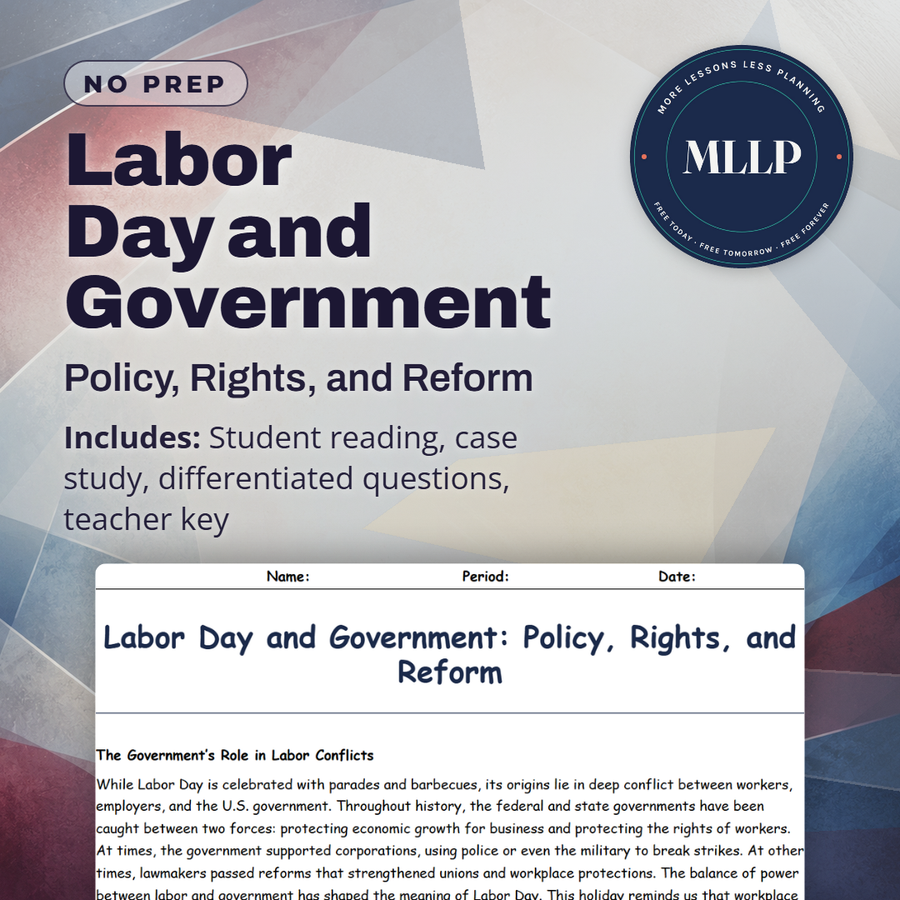
Labor Day and Government: Policy, Rights, and Reform
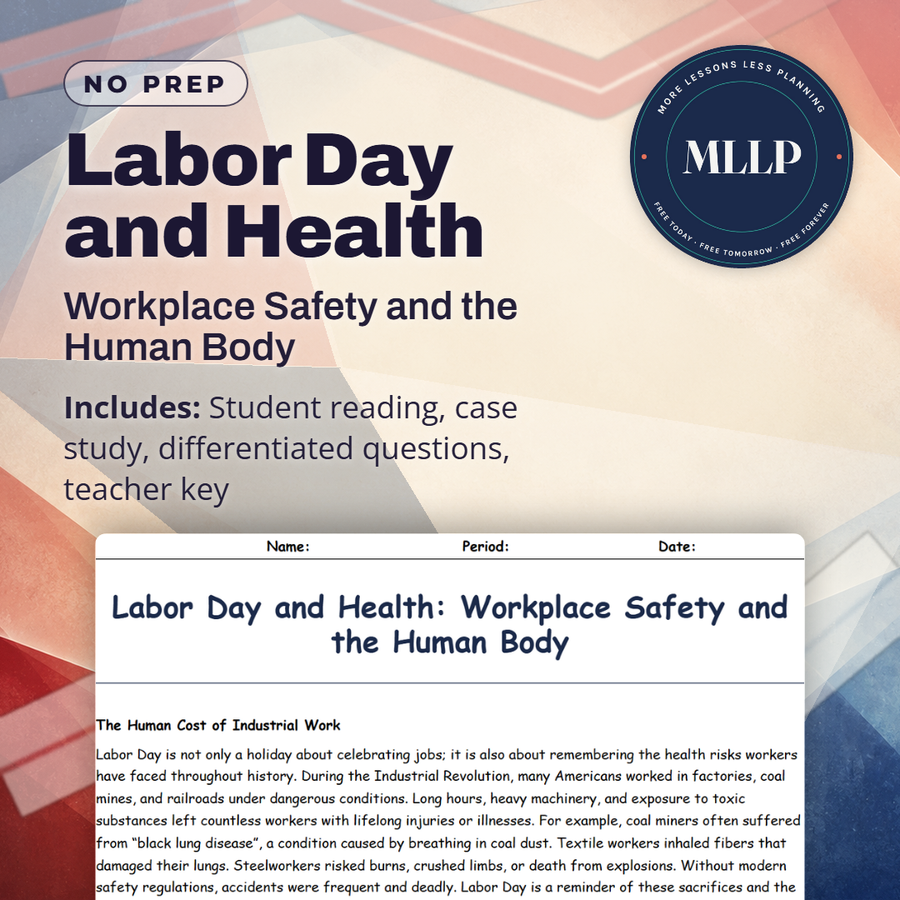
Labor Day and Health: Workplace Safety and the Human Body
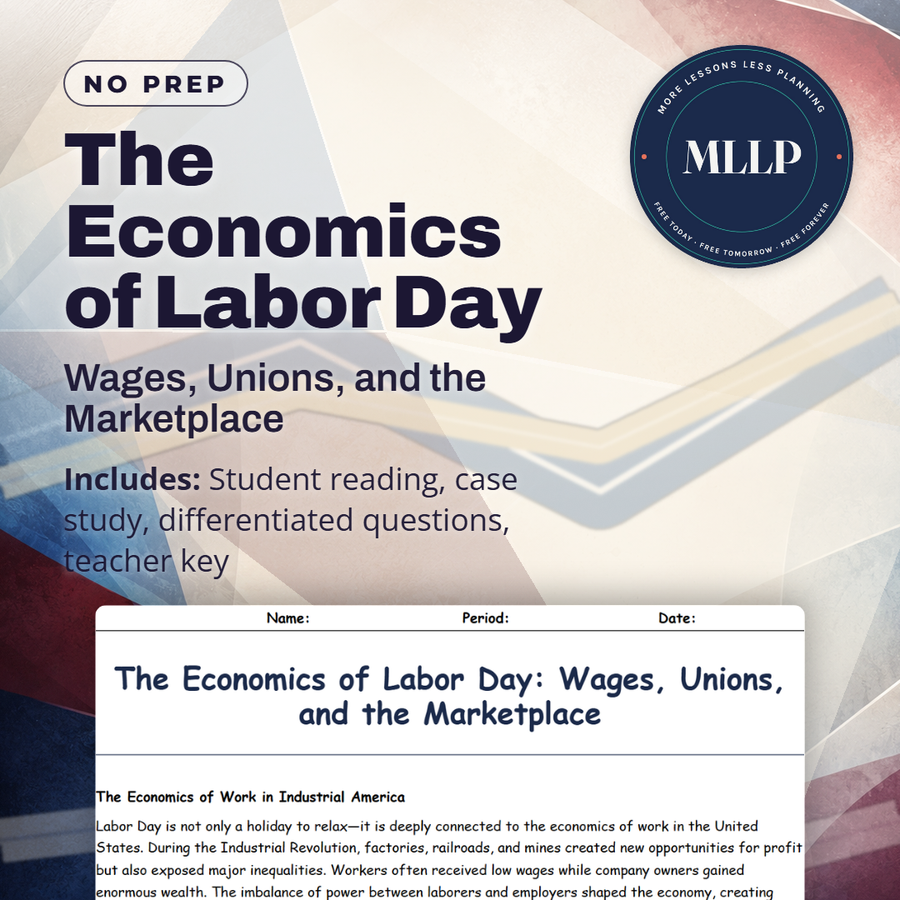
The Economics of Labor Day: Wages, Unions, and the Marketplace
The History of Labor Day: Strikes, Struggles, and Social Change
Altitude, Cold Stress, and Human Adaptation: How the Body Stays in Balance
American History and Cinco de Mayo: Cultural Exchange and Historical Narratives
Every lesson on this site is free to download and use. If one of them saved you a prep period, you can chip in a few bucks toward my three kids' daycare fund. That's genuinely where tips go.