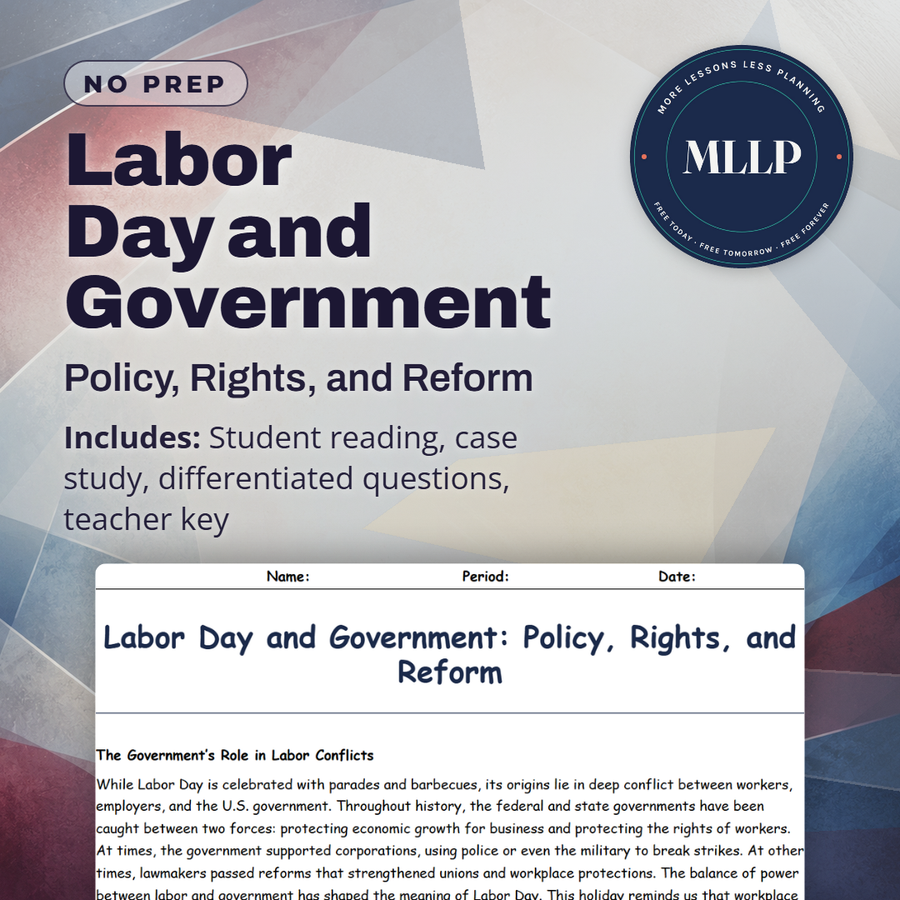
Labor Day and Government: Policy, Rights, and Reform
Quality reviewed September 2026
Facts verified September 9, 2026
- Subject
- Social Studies
- Grades
- Grades 9-12
- Length
- 7-page student worksheet
- Time
- About one 50-minute class period
- Great for
- Sub plans and independent work
- Includes
- Reading passage, comprehension questions + full answer key
- Format
- Print-and-go PDF
What students do
- Compare government responses to labor strikes across different time periods and administrations
- Explain how the Pullman Strike led to both deadly violence and Labor Day becoming a federal holiday
- Analyze the Wagner Act case study to show how one law shifted power toward workers
- Evaluate whether government policies today still balance business growth with worker rights
What it covers
- Government intervention in labor disputes
- The Pullman Strike and Memorial Day Massacre
- Labor legislation and worker protections
Start reading this worksheet
The Government’s Role in Labor Conflicts
While Labor Day is celebrated with parades and barbecues, its origins lie in deep conflict between workers, employers, and the U.S. government. Throughout history, the federal and state governments have been caught between two forces: protecting economic growth for business and protecting the rights of workers. At times, the government supported corporations, using police or even the military to break strikes. At other times, lawmakers passed reforms that strengthened unions and workplace protections. The balance of power between labor and government has shaped the meaning of Labor Day. This holiday reminds us that workplace rights are not automatic—they result from laws, policies, and enforcement created after years of struggle. Whether the issue is wages, hours, or safety, government decisions play a central role in how labor disputes are resolved.
Strikes, Troops, and Federal Power
One of the earliest examples of government involvement in labor disputes was the Pullman Strike of 1894. When railway workers walked out over wage cuts, the strike spread nationwide, halting mail delivery and rail traffic. President Grover Cleveland responded by sending federal troops to end the strike. Violence followed, with more than 20 workers killed. The government’s decision to side with business revealed how federal power could be used against labor. At the same time, however, Cleveland moved quickly to soften tensions by making Labor Day a national holiday in 1894. This was a symbolic gesture—an attempt to calm workers without addressing the deeper issues of low wages and poor conditions. The Pullman Strike is a perfect example of how the U.S. government walked a fine line between maintaining order and responding to the demands of workers. Later strikes, such as the Memorial Day Massacre of 1937, also showed the violent side of government intervention. In Chicago, police opened fire on steelworkers protesting outside a plant, killing ten and wounding dozens more. Incidents like these fueled public anger and pressured lawmakers to create more balanced labor policies.
Like what you read? The full reading, the case study, and every question set are in the free download below, along with the answer key.
Why this matters
Federal troops broke the Pullman Strike and left more than twenty workers dead, and Grover Cleveland's response was to make Labor Day a federal holiday, a gesture that felt hollow to workers who had just buried coworkers.
Students tend to think of workplace rights as something that was always there, not something written into law after specific deaths. Tracing the line from Pullman's violence to the Wagner Act's union protections shows them a pattern that keeps repeating in American labor history: policy moves only after people are hurt badly enough that ignoring the problem stops being possible.
From one teacher to another
This worksheet shows students that workplace rights didn't appear magically. They came from laws fought for after bloodshed. The Pullman Strike killed over 20 workers when federal troops broke it up, yet Cleveland's answer was making Labor Day a holiday, which felt hollow at first. But then the Wagner Act guaranteed union rights, OSHA created safety standards, and students see the pattern: violence pushes policy.
What you get
Download
Where should I send the next one?
Everything here is free and it stays that way. Leave your email and I'll send you the new lessons as they go up. You can unsubscribe from any one of them.
Related resources
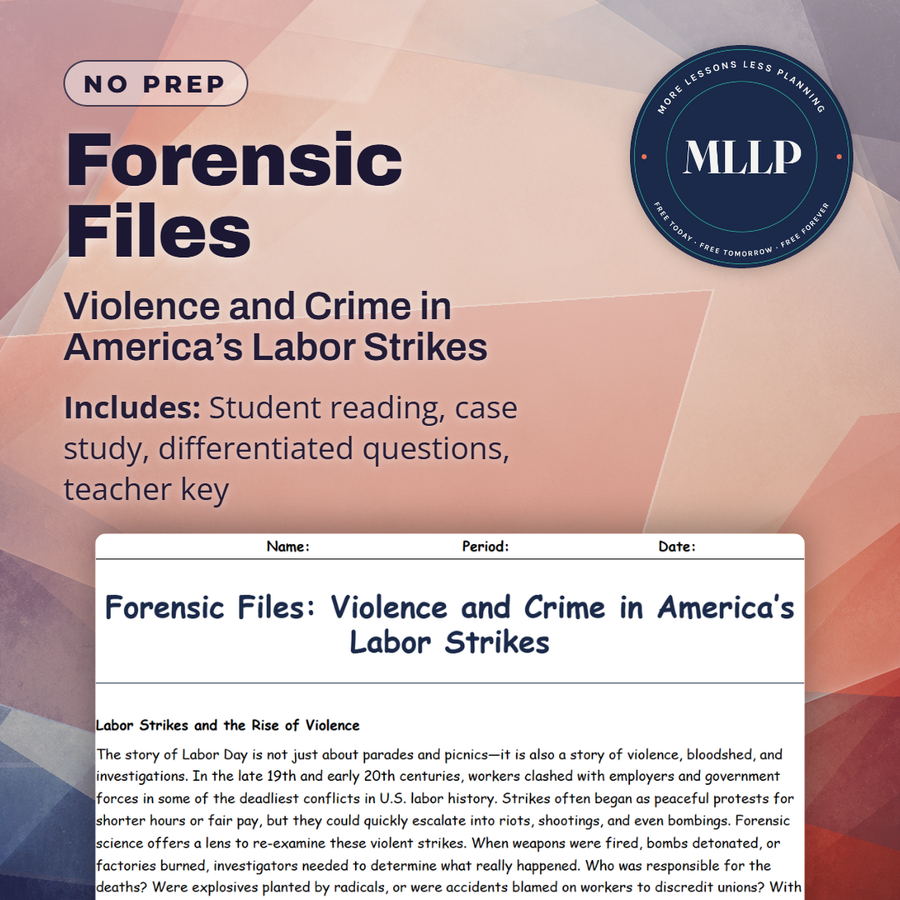
Forensic Files: Violence and Crime in America’s Labor Strikes
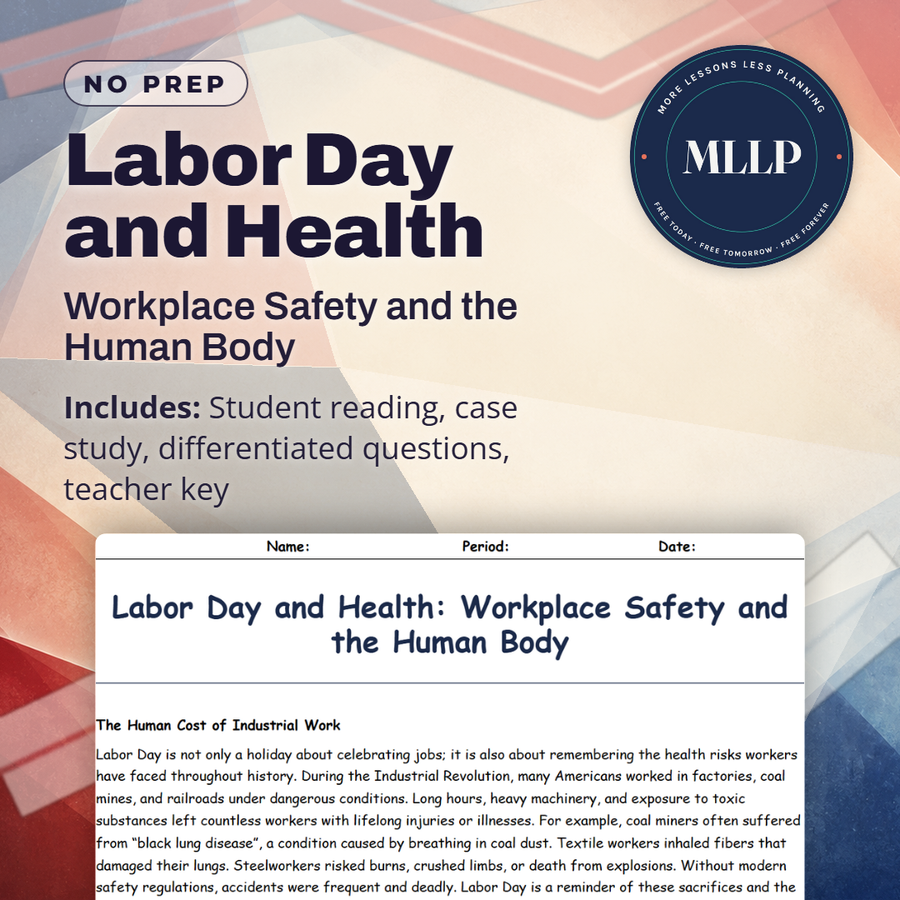
Labor Day and Health: Workplace Safety and the Human Body
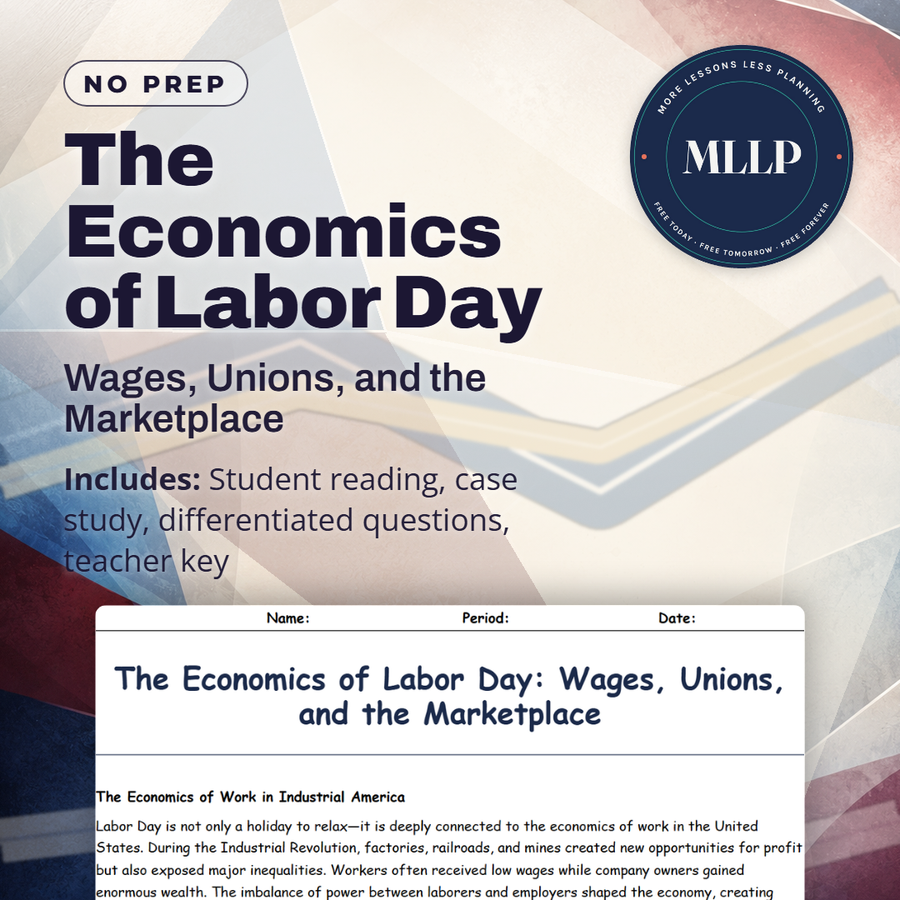
The Economics of Labor Day: Wages, Unions, and the Marketplace
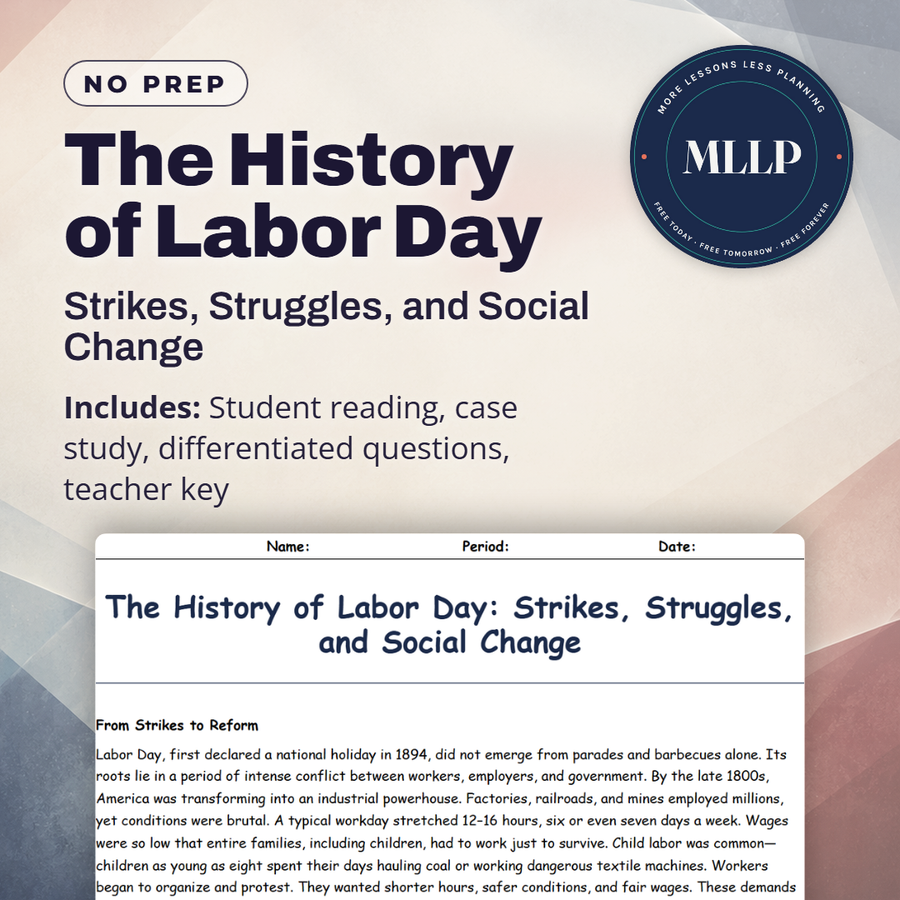
The History of Labor Day: Strikes, Struggles, and Social Change
Altitude, Cold Stress, and Human Adaptation: How the Body Stays in Balance
American History and Cinco de Mayo: Cultural Exchange and Historical Narratives
Every lesson on this site is free to download and use. If one of them saved you a prep period, you can chip in a few bucks toward my three kids' daycare fund. That's genuinely where tips go.