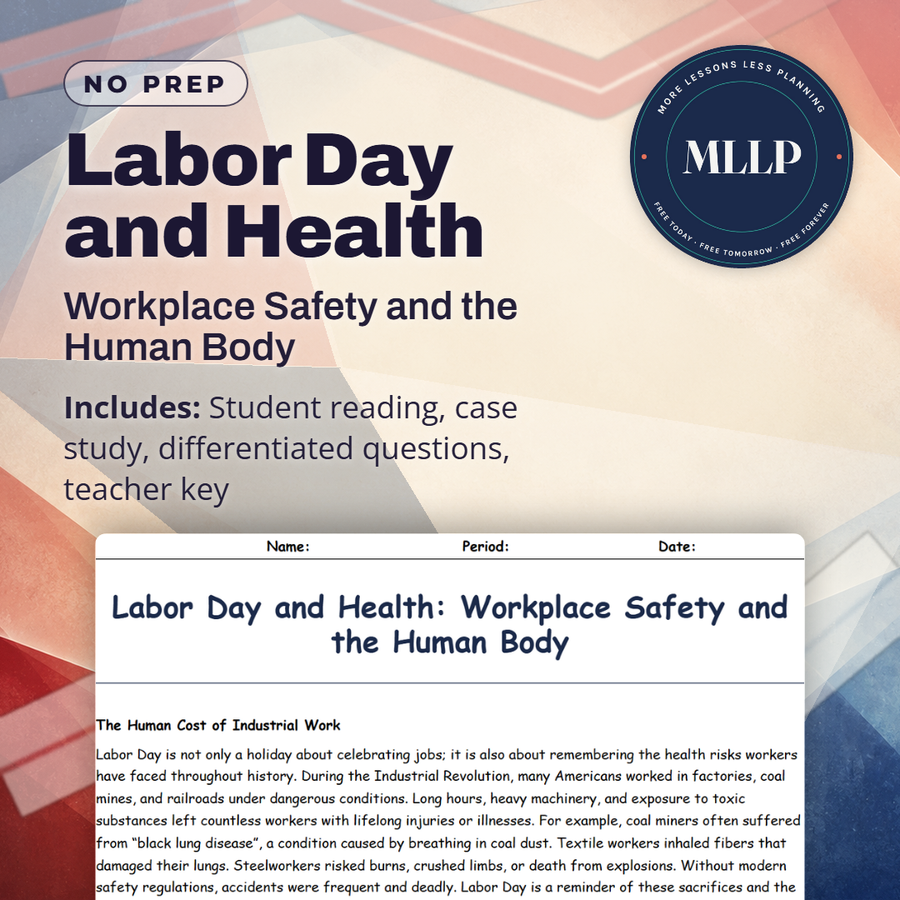
Labor Day and Health: Workplace Safety and the Human Body
Quality reviewed September 2026
Facts verified September 9, 2026
- Subject
- Health & PE
- Grades
- Grades 9-12
- Length
- 6-page student worksheet
- Time
- About one 50-minute class period
- Great for
- Sub plans and independent work
- Includes
- Reading passage, comprehension questions + full answer key
- Format
- Print-and-go PDF
What students do
- Identify workplace hazards and health risks like black lung disease, carpal tunnel, and chemical exposure
- Explain why the Triangle Shirtwaist Factory fire became a turning point for safety legislation
- Match historical hazards to the OSHA regulations and protections that followed
- Apply epidemiology to connect specific jobs with long-term health problems
What it covers
- Occupational health and industrial hazards
- The Triangle Shirtwaist Factory tragedy
- OSHA and modern workplace safety regulations
Start reading this worksheet
The Human Cost of Industrial Work
Labor Day is not only a holiday about celebrating jobs; it is also about remembering the health risks workers have faced throughout history. During the Industrial Revolution, many Americans worked in factories, coal mines, and railroads under dangerous conditions. Long hours, heavy machinery, and exposure to toxic substances left countless workers with lifelong injuries or illnesses. For example, coal miners often suffered from “black lung disease”, a condition caused by breathing in coal dust. Textile workers inhaled fibers that damaged their lungs. Steelworkers risked burns, crushed limbs, or death from explosions. Without modern safety regulations, accidents were frequent and deadly. Labor Day is a reminder of these sacrifices and the ongoing fight for safer workplaces. Today, the field of occupational health science studies how jobs affect the body. Scientists and doctors look at how repetitive motion, toxic chemicals, stress, and unsafe environments impact long-term health. The history of Labor Day shows why these protections are necessary.
Government Action and Workplace Safety
The government eventually stepped in to reduce workplace risks. The Occupational Safety and Health Act (OSHA) of 1970 was a turning point. For the first time, federal law required employers to provide a workplace free from serious hazards. OSHA inspectors could issue fines, shut down dangerous operations, and demand safety improvements. Before OSHA, many companies ignored worker health to save money. For instance, factory owners often refused to provide ventilation for workers handling asbestos, a material later linked to cancer. Government intervention forced businesses to prioritize safety, saving lives and preventing illnesses. Even today, debates continue about how much regulation is necessary. Some argue that strict safety rules slow down businesses, while others insist they are essential to protect human life. Labor Day highlights this ongoing struggle: work is important, but workers’ health must come first.
Like what you read? The full reading, the case study, and every question set are in the free download below, along with the answer key.
Why this matters
The Triangle Shirtwaist Factory fire killed one hundred forty six workers in twenty minutes because the exit doors were locked and there were no sprinklers, and that single tragedy did more to create workplace safety law than decades of complaints had managed.
Students usually file labor history under strikes and speeches, so connecting a locked door to modern OSHA regulations surprises them. Once they see carpal tunnel and chemical exposure sitting next to a fire from over a century ago, they start reading workplace safety as an ongoing science problem instead of a settled issue from the past.
From one teacher to another
The Triangle fire killed 146 workers in 20 minutes because exit doors were locked and there were no sprinklers. That tragedy shocked enough people to demand change, and OSHA exists because of it. This worksheet connects invisible hazards, the pesticides farmworkers breathe, the carpal tunnel typists develop, to the regulations meant to prevent them. Students learn that labor history includes science as much as it includes strikes.
What you get
Download
Where should I send the next one?
Everything here is free and it stays that way. Leave your email and I'll send you the new lessons as they go up. You can unsubscribe from any one of them.
Related resources
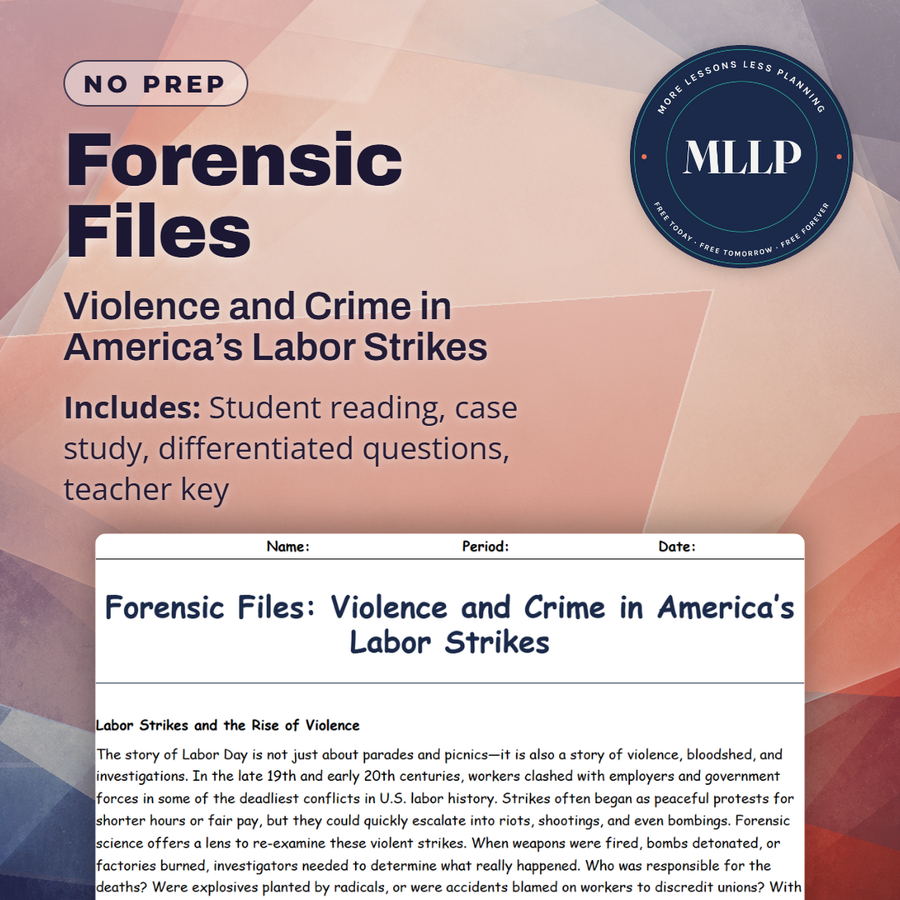
Forensic Files: Violence and Crime in America’s Labor Strikes
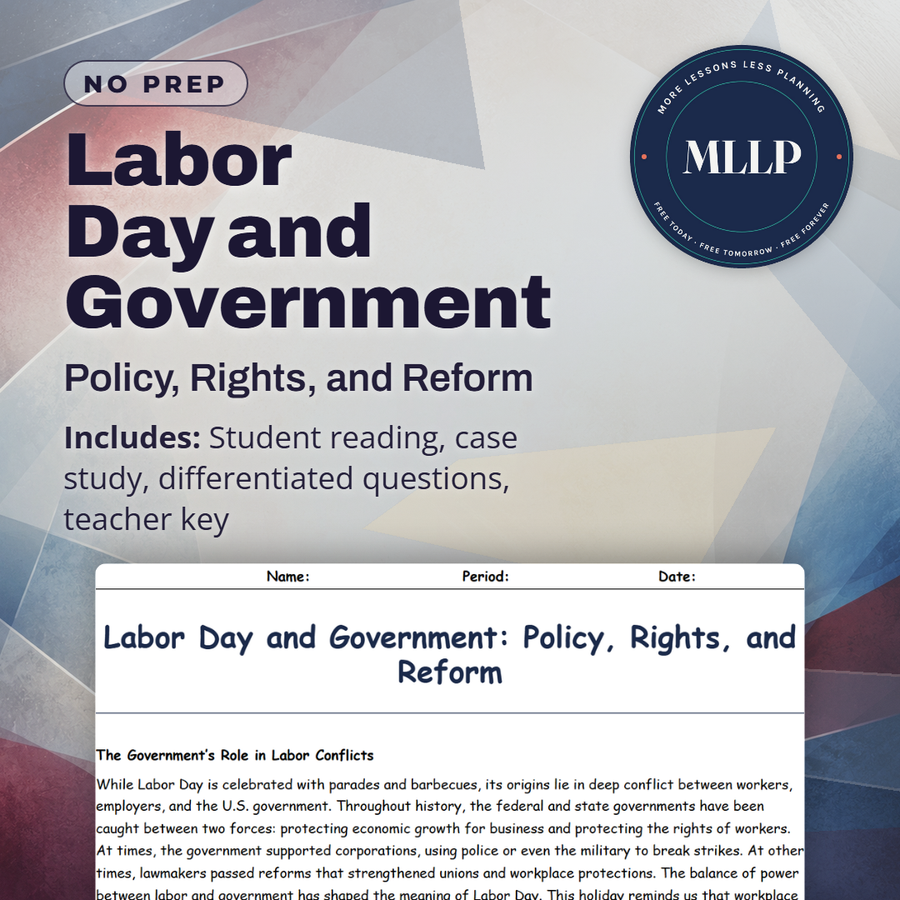
Labor Day and Government: Policy, Rights, and Reform
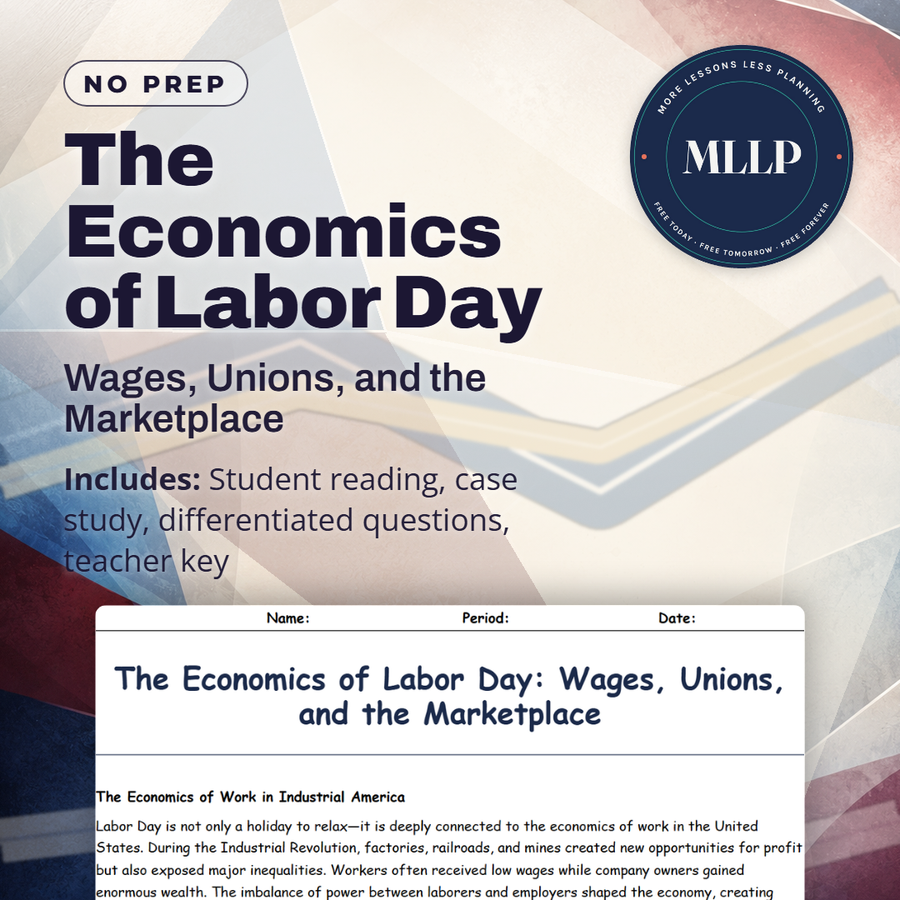
The Economics of Labor Day: Wages, Unions, and the Marketplace
The History of Labor Day: Strikes, Struggles, and Social Change
Altitude, Cold Stress, and Human Adaptation: How the Body Stays in Balance
American History and Cinco de Mayo: Cultural Exchange and Historical Narratives
Every lesson on this site is free to download and use. If one of them saved you a prep period, you can chip in a few bucks toward my three kids' daycare fund. That's genuinely where tips go.