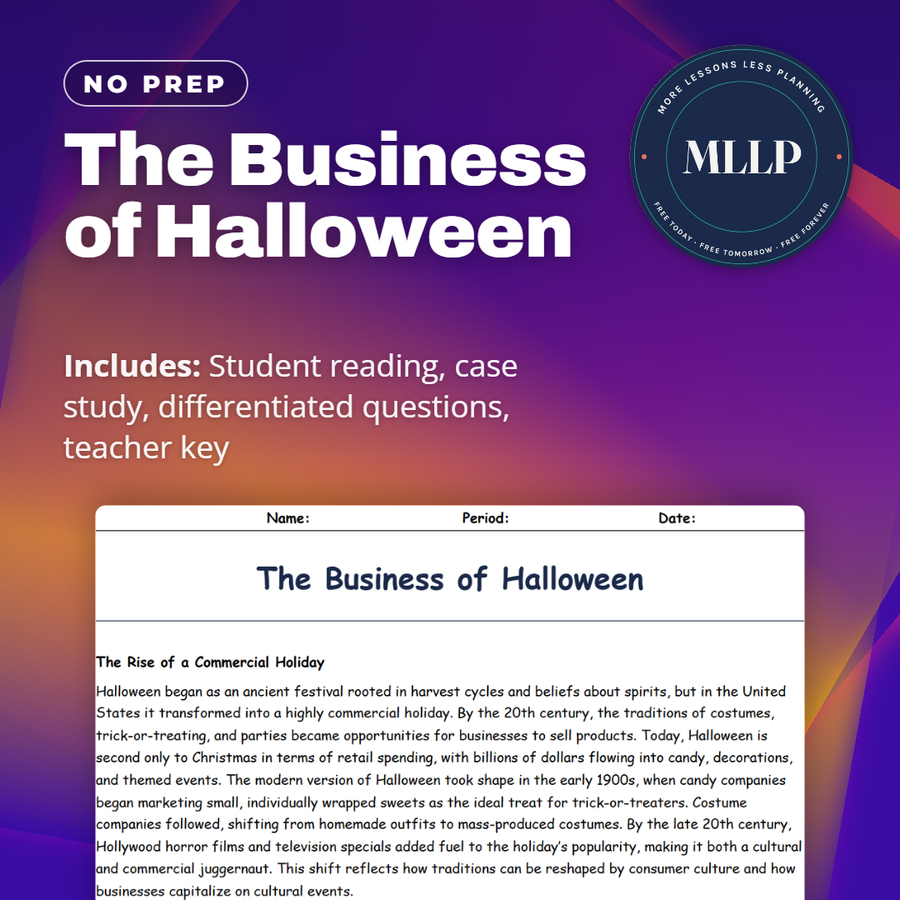
The Business of Halloween
Quality reviewed September 2026
Facts verified September 9, 2026
- Subject
- Social Studies
- Grades
- Grades 9-12
- Length
- 6-page student worksheet
- Time
- About one 50-minute class period
- Great for
- Sub plans and independent work
- Includes
- Reading passage, comprehension questions + full answer key
- Format
- Print-and-go PDF
What students do
- Analyze how candy companies shifted trick-or-treating from homemade to commercial
- Evaluate the economic impact of retail spending on the American economy
- Compare how traditions are reshaped by consumer culture and business strategy
- Assess the relationship between cultural practices and economic forces
What it covers
- Rise of commercial holidays and mass marketing
- Spending patterns and the holiday retail industry
- Culture, consumption, and identity formation
Start reading this worksheet
The Rise of a Commercial Holiday
Halloween began as an ancient festival rooted in harvest cycles and beliefs about spirits, but in the United States it transformed into a highly commercial holiday. By the 20th century, the traditions of costumes, trick-or-treating, and parties became opportunities for businesses to sell products. Today, Halloween is second only to Christmas in terms of retail spending, with billions of dollars flowing into candy, decorations, and themed events. The modern version of Halloween took shape in the early 1900s, when candy companies began marketing small, individually wrapped sweets as the ideal treat for trick-or-treaters. Costume companies followed, shifting from homemade outfits to mass-produced costumes. By the late 20th century, Hollywood horror films and television specials added fuel to the holiday’s popularity, making it both a cultural and commercial juggernaut. This shift reflects how traditions can be reshaped by consumer culture and how businesses capitalize on cultural events.
Spending Habits and Economic Impact
Halloween has grown into a multibillion-dollar industry. According to recent surveys, Americans spend more than $10 billion annually on the holiday. Candy alone accounts for nearly $3 billion, while costumes (ranging from children’s characters to elaborate adult designs) bring in even more. Decorations, haunted house admissions, and themed events also contribute to the spending frenzy. This consumer activity has broader economic effects. Retail stores rely on Halloween sales to boost profits in the fall, bridging the gap before the holiday shopping season. Pumpkin farmers, costume designers, candy manufacturers, and even local governments (through haunted attractions and festivals) benefit from the holiday. Halloween demonstrates how culture and economy are deeply intertwined, with traditions reshaped by what people are willing to buy.
Like what you read? The full reading, the case study, and every question set are in the free download below, along with the answer key.
Why this matters
Ten billion dollars a year is what Halloween generates now, a figure that did not exist when trick or treating meant walking to a neighbor for a homemade treat. Candy companies built that figure by turning a harvest ritual into an industry, and the machinery behind that shift is what most students never notice about a holiday they only ever experience as fun.
Before students reach the Marcus case study, I give them a quick look at their own spending habits, so the shift from ritual to industry is not just something that happened to other people. By the time they finish, they are asking whether they are celebrating a tradition or being marketed to inside one.
From one teacher to another
Students often see holidays as just about fun. They rarely think about the machinery behind them. This worksheet shows how Halloween transformed from a harvest ritual into a multibillion-dollar industry, and why that matters. I pair it with a quick look at their own spending habits. By the time they reach the Marcus case study, they start asking themselves whether they're celebrating or being marketed to. That's the kind of critical thinking that sticks.
What you get
Download
Where should I send the next one?
Everything here is free and it stays that way. Leave your email and I'll send you the new lessons as they go up. You can unsubscribe from any one of them.
Related resources
Every lesson on this site is free to download and use. If one of them saved you a prep period, you can chip in a few bucks toward my three kids' daycare fund. That's genuinely where tips go.