The Biology of Fear
Quality reviewed September 2026
Facts verified September 9, 2026
- Subject
- Science
- Grades
- Grades 9-12
- Length
- 6-page student worksheet
- Time
- About one 50-minute class period
- Great for
- Sub plans and independent work
- Includes
- Reading passage, comprehension questions + full answer key
- Format
- Print-and-go PDF
What students do
- Trace the body's automatic response when fear is triggered
- Identify hormones released during the fight-or-flight system
- Analyze why fear is both an emotion and a physical reaction
- Explain how the amygdala acts as the brain's alarm system
What it covers
- Fight-or-flight response and the nervous system
- Adrenaline and cortisol in stress reactions
- Purpose of fear in human survival
Start reading this worksheet
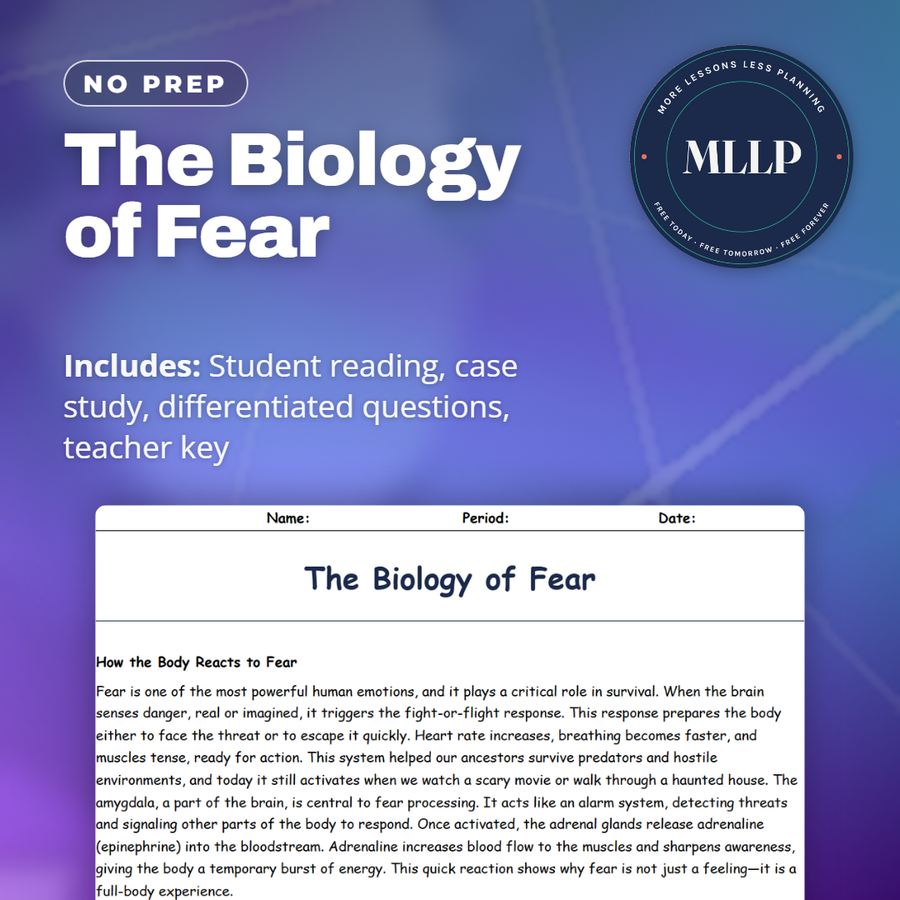
How the Body Reacts to Fear
Fear is one of the most powerful human emotions, and it plays a critical role in survival. When the brain senses danger, real or imagined, it triggers the fight-or-flight response. This response prepares the body either to face the threat or to escape it quickly. Heart rate increases, breathing becomes faster, and muscles tense, ready for action. This system helped our ancestors survive predators and hostile environments, and today it still activates when we watch a scary movie or walk through a haunted house. The amygdala, a part of the brain, is central to fear processing. It acts like an alarm system, detecting threats and signaling other parts of the body to respond. Once activated, the adrenal glands release adrenaline (epinephrine) into the bloodstream. Adrenaline increases blood flow to the muscles and sharpens awareness, giving the body a temporary burst of energy. This quick reaction shows why fear is not just a feeling—it is a full-body experience.
Adrenaline and the Fight-or-Flight System
Adrenaline is one of the body’s most important chemicals during fear. Known as a stress hormone, it prepares the body for fast responses. Along with adrenaline, another hormone called cortisol is released. Cortisol ensures the body has enough energy by releasing glucose into the bloodstream. Together, adrenaline and cortisol help individuals react quickly and effectively to danger. However, too much or too frequent fear can harm the body. Constant stress keeps these hormones active for long periods, which can lead to health problems such as high blood pressure or anxiety disorders. This explains why fear is useful in short bursts but harmful if experienced too often. Understanding how these systems work helps students see the biological basis for emotions they may feel every day.
Like what you read? The full reading, the case study, and every question set are in the free download below, along with the answer key.
Why this matters
A single jump scare in a haunted house sends a student's heart racing and palms sweating before they have consciously decided to be afraid. Carlos's reaction in the case study is the amygdala doing exactly what it evolved to do, flooding the body with adrenaline and cortisol faster than thought can keep up.
Students tend to file fear under purely emotional, something happening only in their own head. Watching Carlos's fight or flight response traced hormone by hormone shows the opposite: the feeling and the chemistry are the same event, and naming the mechanism does not make the experience any less real.
From one teacher to another
A haunted house is a perfect way to show students how real the body's fear response is. When they read about Carlos jumping at a scare, they can connect his racing heart and sweaty palms to the amygdala and adrenaline, which turns feelings into measurable biology. I use this worksheet to help students see that emotions have roots in chemistry, that understanding the mechanism doesn't make the experience less real. The case study keeps it grounded in something they've probably experienced, and the questions push them to explain why their own bodies react the way they do.
What you get
Download
Where should I send the next one?
Everything here is free and it stays that way. Leave your email and I'll send you the new lessons as they go up. You can unsubscribe from any one of them.
Related resources
Every lesson on this site is free to download and use. If one of them saved you a prep period, you can chip in a few bucks toward my three kids' daycare fund. That's genuinely where tips go.