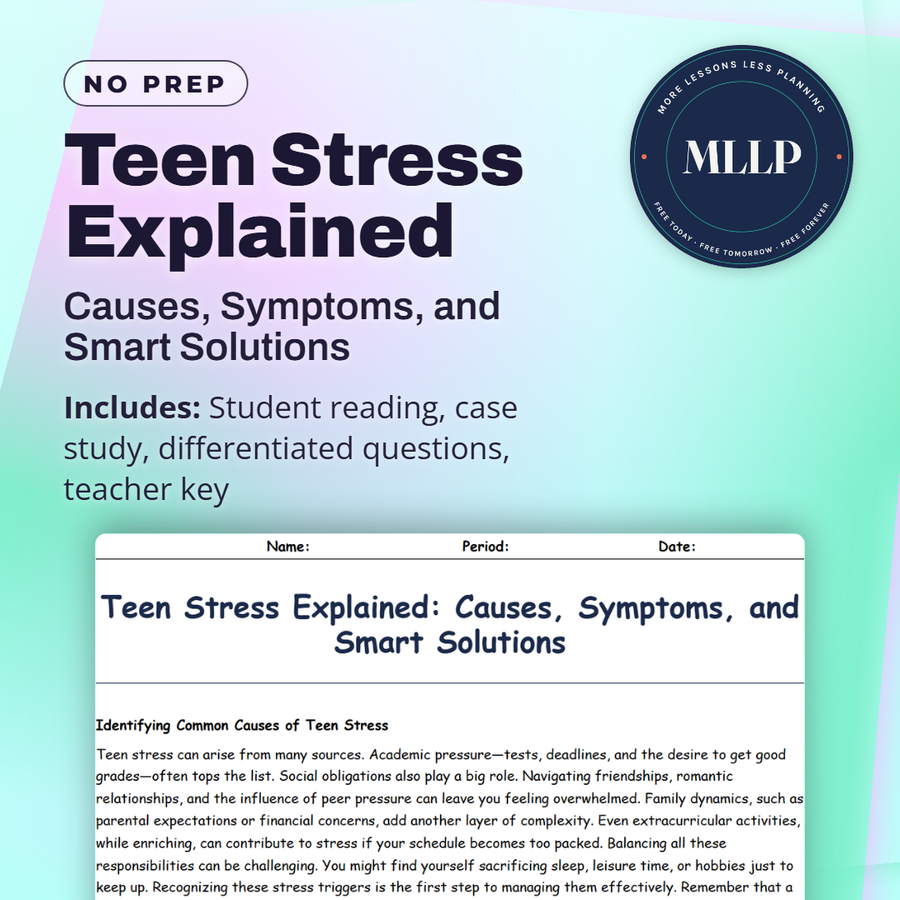
Teen Stress Explained: Causes, Symptoms, and Smart Solutions
Quality reviewed September 2026
Facts verified September 21, 2026
- Subject
- Career & Life Skills
- Grades
- Grades 9-12
- Length
- 7-page student worksheet
- Time
- About one 50-minute class period
- Great for
- Sub plans and independent work
- Includes
- Reading passage, comprehension questions + full answer key
- Format
- Print-and-go PDF
What students do
- Match terms like overcommitment, panic attack, and relaxation technique to their definitions.
- Answer multiple-choice questions on the physical symptoms of stress and how it differs from an anxiety disorder.
- Fill in the blank naming stress, stressor, and a support system in key sentences.
- Answer short-answer questions on how exercise helps manage stress and why catching symptoms early matters.
What it covers
- The main sources of teen stress, academics, social pressure, family expectations, and an overloaded schedule, and how each tends to show up physically or emotionally.
- Concrete tools for managing stress, including breaking tasks down, exercise, deep breathing, and leaning on a support system.
- A case study about a student juggling sports, music, and academic clubs who has to learn the difference between being busy and being stressed.
Start reading this worksheet
Identifying Common Causes of Teen Stress
Teen stress can arise from many sources. Academic pressure (tests, deadlines, and the desire to get good grades) often tops the list. Social obligations also play a big role. Navigating friendships, romantic relationships, and the influence of peer pressure can leave you feeling overwhelmed. Family dynamics, such as parental expectations or financial concerns, add another layer of complexity. Even extracurricular activities, while enriching, can contribute to stress if your schedule becomes too packed. Balancing all these responsibilities can be challenging. You might find yourself sacrificing sleep, leisure time, or hobbies just to keep up. Recognizing these stress triggers is the first step to managing them effectively. Remember that a bit of stress can be motivating, pushing you to meet a deadline or prepare for an important exam. However, chronic or excessive stress can negatively affect your mental and physical health, leading to headaches, mood swings, or feelings of anxiety.
Physical, Emotional, and Behavioral Symptoms
Stress doesn’t just live in your mind; it often shows up in your body. Common physical symptoms include headaches, stomachaches, muscle tension, and fatigue. Emotionally, stress can manifest as irritability, sudden mood swings, or difficulty concentrating. You might find that you’re more reactive to small annoyances or that you feel anxious about tasks you used to handle with ease. On a behavioral level, people sometimes withdraw from activities they normally enjoy, or they may experience changes in eating or sleeping patterns. It’s easy to ignore these symptoms, especially when you’re busy with school and social life. However, paying attention to these signals can prevent stress from escalating. Even mild, persistent stress can lead to bigger problems if left unchecked. If you notice yourself feeling constantly wound up or exhausted, it may be time to explore stress management techniques or reach out for guidance.
Effective Stress Management Tools
One of the most effective ways to handle stress is by planning and organization. If your schedule feels overwhelming, try breaking tasks down into smaller steps and using a calendar or planner. This simple habit can reduce the anxiety of not knowing where to start. Another powerful tool is regular exercise: it helps burn off nervous energy and releases endorphins that improve mood. Even something as simple as a 20-minute walk can work wonders. Relaxation techniques like deep breathing, progressive muscle relaxation, or meditation can also be beneficial. Deep breathing involves inhaling slowly, holding the breath for a few seconds, and exhaling gently. This type of focused breathing signals your body to calm down. Meanwhile, having a support system (friends, family, mentors) provides an outlet for venting worries and brainstorming solutions. Sometimes just talking about your day can lighten an emotional load.
Like what you read? The full reading, the case study, and every question set are in the free download below, along with the answer key.
Why this matters
A lot of students wear a packed schedule like a badge of honor, the same way Isabella did before she broke down over a missed homework assignment, so this reading gives them permission to notice when "busy" has quietly turned into something that needs a fix. The distinction between stress and an anxiety disorder in the last passage also matters for a very practical reason: it tells a student when a feeling is worth managing on their own and when it's worth telling someone about. That's not a distinction most teens get taught directly.
If you or someone you know is struggling, call or text 988 (Suicide & Crisis Lifeline, US) or talk to a trusted adult right away.
From one teacher to another
Nearly every student in my classroom is already living some version of what this reading describes, even if they'd never call it stress. The passages separate a normal, motivating amount of pressure from the kind that starts showing up as headaches, snapping at a sibling, or trouble sleeping, then hand students concrete tools for managing it. Isabella's case study, a student stretched across sports, music, and academic clubs, gives them a real moment to measure their own habits against.
What you get
Download
Where should I send the next one?
Everything here is free and it stays that way. Leave your email and I'll send you the new lessons as they go up. You can unsubscribe from any one of them.
Related resources
Coping Strategies: Healthy vs. Unhealthy Reactions to Stress
Depression and Anxiety in Teens: Signs, Symptoms, and Support
Finding Strength in Others: Support Systems and Community Resources
Getting Help: When to Reach Out and Who to Turn To
Grief and Loss: Helping Teens Understand and Heal
Mindfulness for Teens: Simple Habits for Mental Wellness
Every lesson on this site is free to download and use. If one of them saved you a prep period, you can chip in a few bucks toward my three kids' daycare fund. That's genuinely where tips go.