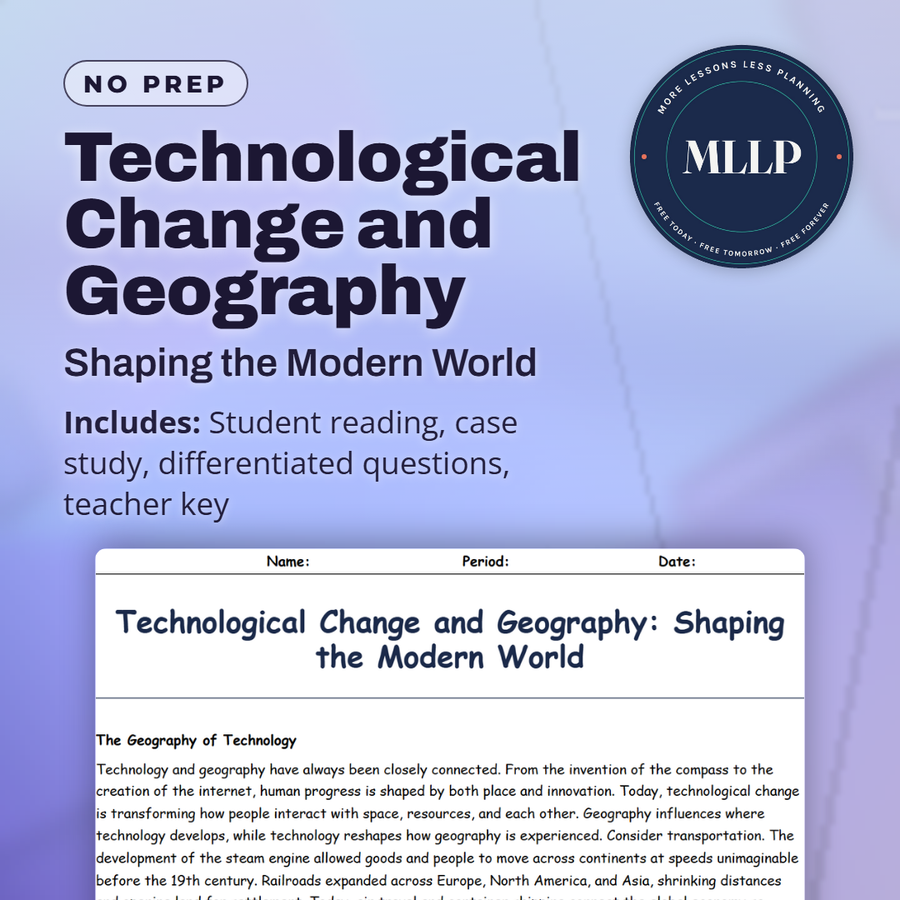
Technological Change and Geography: Shaping the Modern World
Quality reviewed September 2026
Facts verified September 14, 2026
- Subject
- Social Studies
- Grades
- Grades 9-12
- Length
- 7-page student worksheet
- Time
- About one 50-minute class period
- Great for
- Sub plans and independent work
- Includes
- Reading passage, comprehension questions + full answer key
- Format
- Print-and-go PDF
What students do
- Match terms like Silicon Valley, smartphones, and container shipping to their correct definitions
- Fill in the blank sentences on the steam engine, the digital divide, and where most smartphones are assembled
- Answer multiple choice questions on which invention reduced travel time across continents, what the digital divide means, and which resource is mined in Africa for smartphone batteries
- Write short answers on how communication technology has reshaped distance, why geography still matters in a digital age, and what smartphone production reveals about inequality
What it covers
- How technology from the steam engine to the internet has reshaped distance, trade, and communication across geography
- The uneven geography of innovation, comparing tech hubs like Silicon Valley to manufacturing centers in Bangladesh and Vietnam
- A case study on smartphones, tracing how design, assembly, and raw materials like cobalt span multiple continents
Start reading this worksheet
The Geography of Technology
Technology and geography have always been closely connected. From the invention of the compass to the creation of the internet, human progress is shaped by both place and innovation. Today, technological change is transforming how people interact with space, resources, and each other. Geography influences where technology develops, while technology reshapes how geography is experienced. Consider transportation. The development of the steam engine allowed goods and people to move across continents at speeds unimaginable before the 19th century. Railroads expanded across Europe, North America, and Asia, shrinking distances and opening land for settlement. Today, air travel and container shipping connect the global economy so closely that a product might be designed in the United States, manufactured in China, and sold in Africa within weeks. Communication technology also reshapes geography. The telegraph, telephone, and internet transformed how people connect across space. Digital networks erase distance, allowing someone in Tokyo to video chat with someone in Nairobi instantly. This creates a sense of global closeness while also raising new questions about power and inequality. Regions with limited internet access face disadvantages in education, trade, and political participation. Thus, the “digital divide” becomes a form of geographic inequality.
Economic and Social Transformations
The rise of industrialization linked technology and geography in powerful ways. In the 18th and 19th centuries, factories were built near rivers for water power or coal mines for fuel. Cities like Manchester, Pittsburgh, and Essen grew rapidly because of their access to natural resources. Geography helped determine which regions became industrial leaders. Today, the story has shifted. Globalization and digital technology mean that industrial production often happens in one region while services and innovation happen in another. Silicon Valley, in California, is the world’s technology hub because of its skilled workforce, universities, and access to capital. Meanwhile, countries like Bangladesh or Vietnam host large garment factories, tied into global supply chains. This uneven geography of technology creates both opportunity and dependency. Technology also transforms societies. Social media connects billions but also spreads misinformation. Renewable energy technologies like solar panels and wind turbines create new geographic possibilities by allowing communities in remote areas to generate power without central grids. At the same time, technological change can leave people behind. When machines replace human labor, unemployment or migration can follow. Thus, technology’s impact depends not only on the invention but on how societies choose to use it.
Like what you read? The full reading, the case study, and every question set are in the free download below, along with the answer key.
Why this matters
The phone in a student's pocket was designed in one place, assembled in another, and built partly from cobalt mined in a third, and that spread is the whole lesson in miniature. This reading starts with the steam engine cutting travel time across continents, then shows how technology, container shipping included, redraws the map of who is close to whom.
Silicon Valley versus manufacturing hubs in Bangladesh and Vietnam is the comparison that lands hardest, because it complicates the idea that technology flattens the world. The digital divide section makes the same point differently: the internet reaches unevenly, and geography decides who ends up on which side of that gap.
From one teacher to another
This one traces a straight line from the steam engine to the smartphone in your pocket, showing students that technology and geography have always shaped each other. The key info table pairs five technologies with their real-world geographic impact, from container shipping to solar panels. The smartphone case study is a great hook, since most students carry the example in their own pocket. This pairs well with a unit on economic geography or globalization.
What you get
Download
Where should I send the next one?
Everything here is free and it stays that way. Leave your email and I'll send you the new lessons as they go up. You can unsubscribe from any one of them.
Related resources
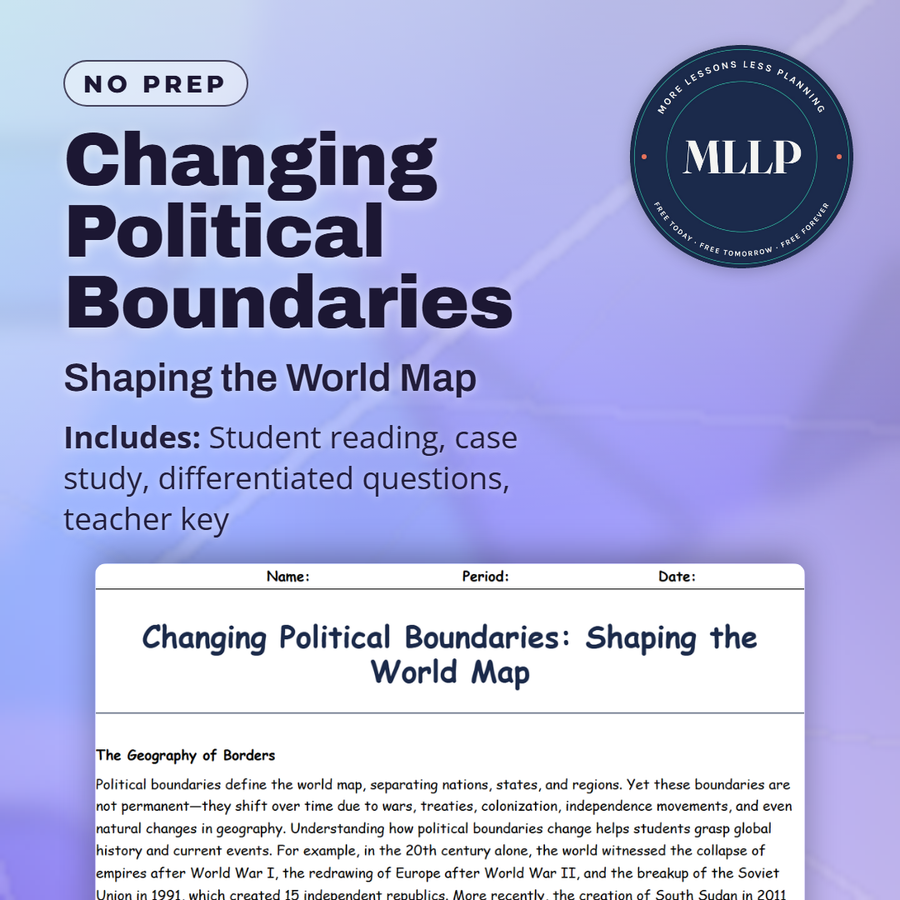
Changing Political Boundaries: Shaping the World Map
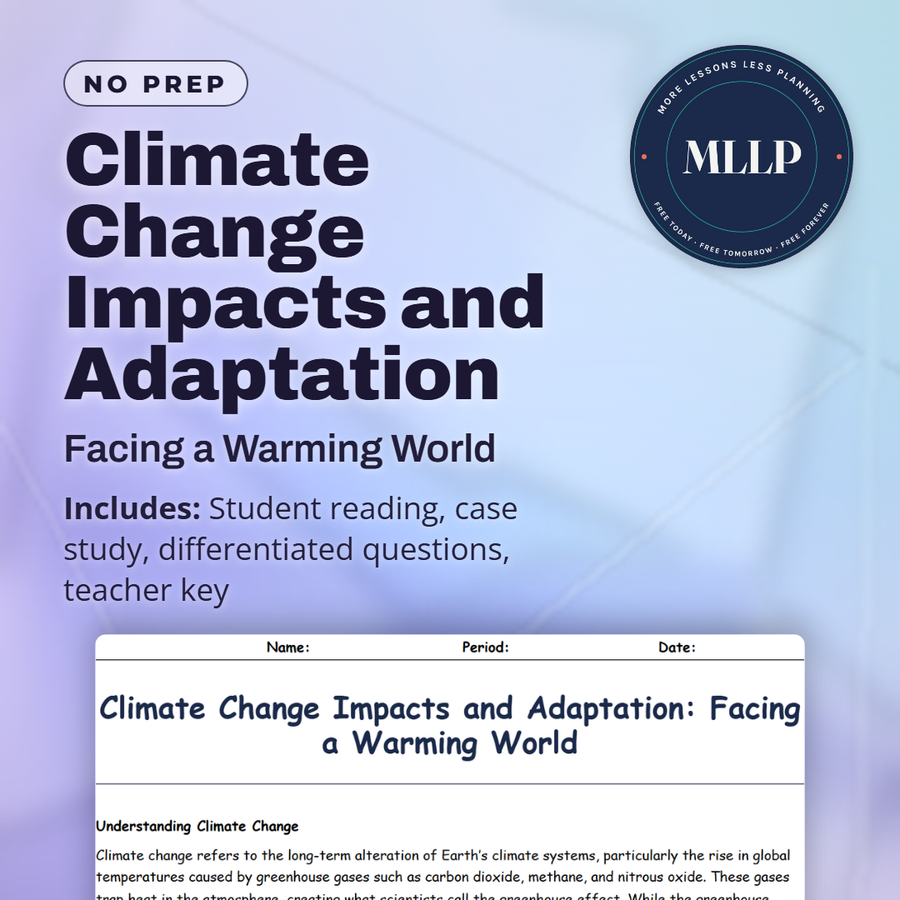
Climate Change Impacts and Adaptation: Facing a Warming World
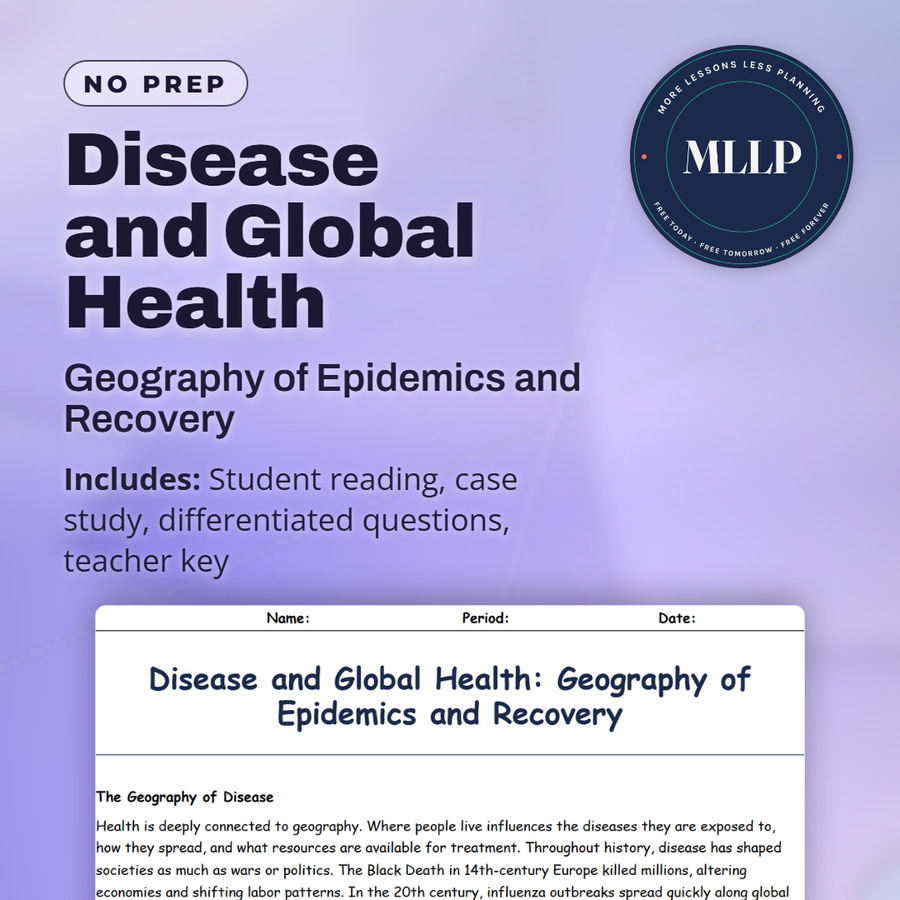
Disease and Global Health: Geography of Epidemics and Recovery
Globalization and Interdependence: How the World is Connected
International Cooperation and Sustainability: Working Together for a Better Future
Migration Crises: Movement in a Changing World
Every lesson on this site is free to download and use. If one of them saved you a prep period, you can chip in a few bucks toward my three kids' daycare fund. That's genuinely where tips go.