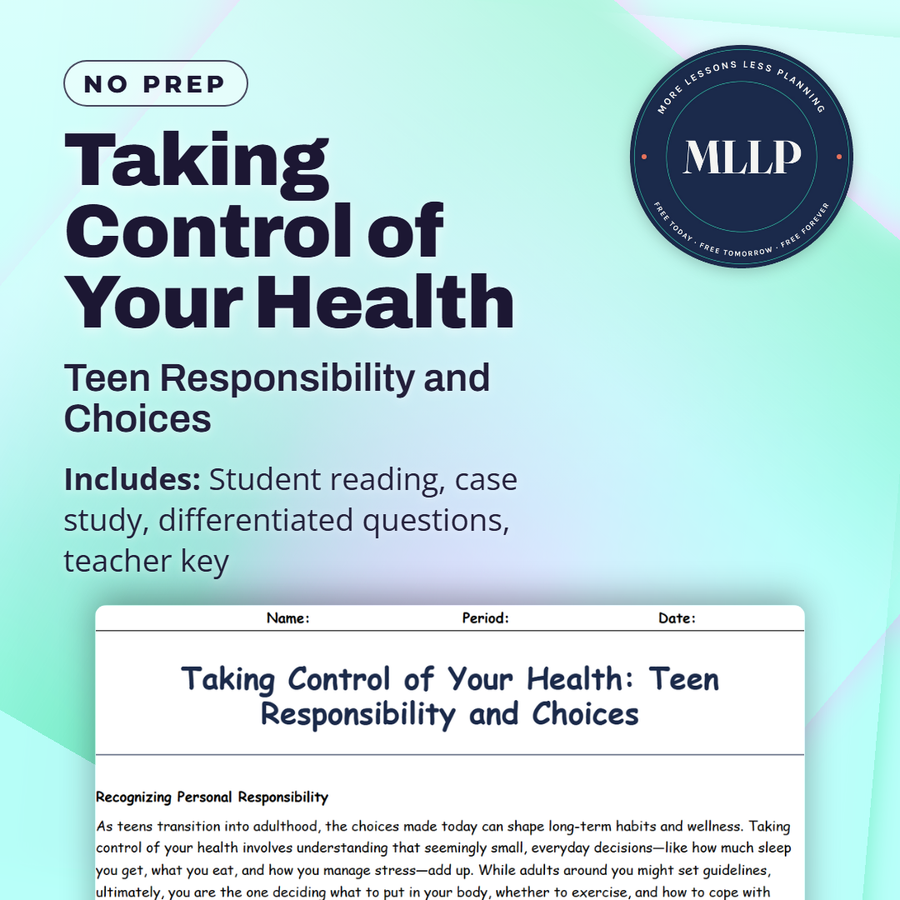
Taking Control of Your Health: Teen Responsibility and Choices
Quality reviewed September 2026
Facts verified September 21, 2026
- Subject
- Career & Life Skills
- Grades
- Grades 9-12
- Length
- 6-page student worksheet
- Time
- About one 50-minute class period
- Great for
- Sub plans and independent work
- Includes
- Reading passage, comprehension questions + full answer key
- Format
- Print-and-go PDF
What students do
- Answer three multiple-choice questions on what taking control of your health actually means, from sleep to setting boundaries
- Match five terms, including accountability and coping strategy, to their definitions
- Fill in three blanks naming sleep, exercise, and a structured schedule as tools for staying balanced
- Answer three short-answer questions on what stops teens from noticing they need to change and why slip-ups are part of staying healthy
What it covers
- Why health decisions that once belonged to parents now belong to the teen making them, and what that responsibility looks like day to day
- How to protect sleep and downtime inside a schedule crowded with AP classes, sports, and a job
- A case study following a student who redesigned her schedule after headaches, mood swings, and falling grades caught up with her
Start reading this worksheet
Recognizing Personal Responsibility
As teens transition into adulthood, the choices made today can shape long-term habits and wellness. Taking control of your health involves understanding that seemingly small, everyday decisions (like how much sleep you get, what you eat, and how you manage stress) add up. While adults around you might set guidelines, ultimately, you are the one deciding what to put in your body, whether to exercise, and how to cope with emotional challenges. This sense of responsibility marks a pivot point where you begin governing your own well-being rather than merely following instructions. Responsibility also means recognizing consequences. Skimping on sleep to watch late-night shows or play online games might seem harmless until fatigue influences your ability to concentrate in class. Over time, chronic sleep deprivation can affect mood, cognitive function, and even hormone levels. Similarly, reaching for sugary snacks or fast food whenever you’re hungry might initially appear convenient, but it can lead to nutritional deficiencies, weight gain, or energy crashes. By staying aware of how lifestyle choices affect both your current state and future self, you gain control over your trajectory.
Balancing Academics, Activities, and Health
High school can be a whirlwind: assignments, sports practices, part-time jobs, and social gatherings often collide in a busy schedule. Mastering time management becomes vital, especially if you want to sustain healthy lifestyle practices. Consider mapping out your week and setting aside specific time slots for important tasks like exercise, meal planning, and relaxation. Even a 20-minute walk or quick workout session can significantly boost your energy levels and mood. Teens who spread themselves too thin risk burnout, which can manifest as persistent stress, anxiety, or even depression. Learning to say “no” to certain commitments might feel tough, especially if you fear missing out. Yet drawing boundaries can protect your physical and mental health. Balancing social activities with adequate rest allows your body to recharge. Rather than an afterthought, self-care should be an integral part of your daily or weekly plan. By adopting a balanced approach, you not only improve your well-being but also often perform better in academics and extracurriculars.
Like what you read? The full reading, the case study, and every question set are in the free download below, along with the answer key.
Why this matters
Most health advice aimed at teenagers assumes someone else is still in charge of the decisions, but this reading is built around the opposite assumption: the teen is the one deciding what to eat, when to sleep, and how to handle stress. It also makes room for the fact that nobody does this perfectly, treating a skipped workout or a late night of studying as a normal setback rather than a failure. For a student juggling a job, a sport, and college applications at once, that permission to recover instead of restart matters as much as any of the specific habits the reading recommends.
From one teacher to another
The premise of this reading is simple: at some point the decisions about sleep, food, and stress stop belonging to a parent and start belonging to the student making them. The first two passages lay out what that responsibility looks like in practice, including how to protect exercise and rest inside a schedule stacked with AP classes, practices, and a part-time job. Eva's case study closes things out, following a volleyball player whose five-hour nights and fast-food habit caught up with her in the form of headaches and falling grades before she rebuilt her schedule around sleep and meal prep. I use this with juniors and seniors who are starting to make more of these calls on their own for the first time.
What you get
Download
Where should I send the next one?
Everything here is free and it stays that way. Leave your email and I'll send you the new lessons as they go up. You can unsubscribe from any one of them.
Related resources
First Aid Basics and CPR: A Teen’s Guide to Helping Others
Handwashing and Sanitation: Your First Line of Defense
Health Screenings and Check-Ups: What Teens Should Know
Oral Health for Teens: Why Your Smile Matters
Personal Hygiene for Teens: Habits That Keep You Healthy
Preventing Illness: How Teens Can Avoid Infectious Diseases
Every lesson on this site is free to download and use. If one of them saved you a prep period, you can chip in a few bucks toward my three kids' daycare fund. That's genuinely where tips go.