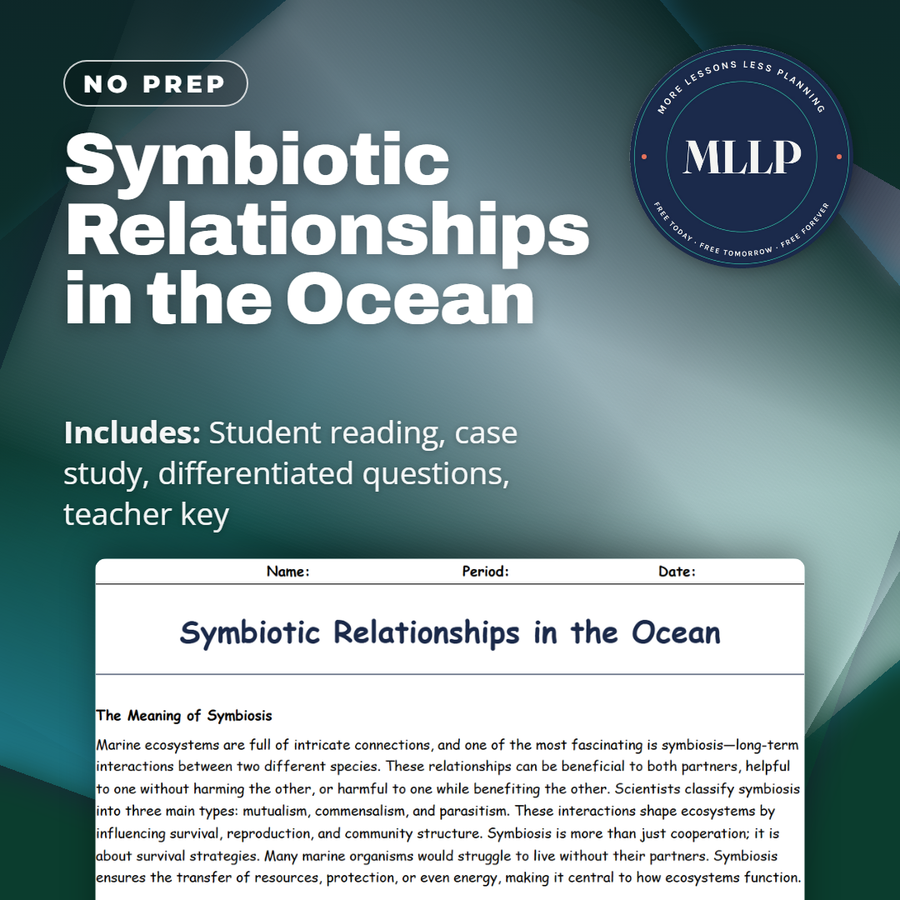
Symbiotic Relationships in the Ocean
Quality reviewed September 2026
Facts verified September 14, 2026
- Subject
- Science
- Grades
- Grades 9-12
- Length
- 6-page student worksheet
- Time
- About one 50-minute class period
- Great for
- Sub plans and independent work
- Includes
- Reading passage, comprehension questions + full answer key
- Format
- Print-and-go PDF
What students do
- Match terms like mutualism, commensalism, parasitism, coral-algae, and remora-shark to their correct definitions
- Fill in the blank sentences on remoras, coral bleaching, and parasites
- Answer multiple choice questions on the difference between mutualism and commensalism and what happens during coral bleaching
- Write short answers and case study questions on the coral and zooxanthellae mutualism and why parasitism regulates populations
What it covers
- The three types of marine symbiosis, mutualism, commensalism, and parasitism
- Specific examples like cleaner fish, remoras, and shrimp-goby partnerships
- A case study on the mutualism between corals and zooxanthellae algae, and what happens when it breaks down
Start reading this worksheet
The Meaning of Symbiosis
Marine ecosystems are full of intricate connections, and one of the most fascinating is symbiosis—long-term interactions between two different species. These relationships can be beneficial to both partners, helpful to one without harming the other, or harmful to one while benefiting the other. Scientists classify symbiosis into three main types: mutualism, commensalism, and parasitism. These interactions shape ecosystems by influencing survival, reproduction, and community structure. Symbiosis is more than just cooperation; it is about survival strategies. Many marine organisms would struggle to live without their partners. Symbiosis ensures the transfer of resources, protection, or even energy, making it central to how ecosystems function.
Mutualism: Both Partners Benefit
Mutualism occurs when both species benefit from the relationship. One of the most well-known examples is between corals and the microscopic algae called zooxanthellae that live inside their tissues. The algae provide sugars to the coral through photosynthesis, while the coral offers the algae protection and access to sunlight. Without this mutualism, coral reefs could not exist at their current scale. Other examples include cleaner fish that remove parasites from larger fish. The cleaners get food, and the hosts enjoy better health. Similarly, shrimp and goby fish live together in burrows: the shrimp digs and maintains the shelter, while the goby keeps watch for predators. Mutualism strengthens ecosystems by boosting survival and growth for both species involved.
Commensalism and Parasitism
Commensalism benefits one species without harming the other. A classic marine example is the remora, a fish that attaches itself to sharks or whales using a suction disk. The remora gains free transportation and scraps of food, while the host is unaffected. Another example is barnacles attaching to whales; the barnacle benefits from mobility, while the whale is not significantly harmed. Parasitism, in contrast, benefits one species while harming the other. Marine parasites include isopods that feed on the tongues of fish, or tapeworms inside sharks. Though parasites rarely kill their hosts outright, they weaken them by stealing nutrients or causing stress. Parasitism can regulate host populations and influence the balance of ecosystems.
Like what you read? The full reading, the case study, and every question set are in the free download below, along with the answer key.
Why this matters
A remora rides along on a shark's skin while the shark does nothing to shake it off, which only makes sense once you know which of three relationships is happening. Mutualism benefits both sides, commensalism benefits one while the other is unaffected, and parasitism benefits one at the other's expense.
The coral and zooxanthellae partnership is where I spend the most time, because it's mutualism students can watch fall apart. Corals depend on the algae in their tissue for food and color, and when stress breaks that bond, the coral bleaches and starves. Naming the relationship only matters if students can explain what happens when it stops working.
From one teacher to another
Mutualism, commensalism, and parasitism are the three relationships covered in this worksheet on symbiosis in the ocean. Readings walk through examples like cleaner fish, remoras riding on sharks, and shrimp sharing burrows with goby fish, sorting each into the correct category. The case study returns to corals and their zooxanthellae algae, explaining how this partnership builds reefs and what happens to it during coral bleaching.
What you get
Download
Where should I send the next one?
Everything here is free and it stays that way. Leave your email and I'll send you the new lessons as they go up. You can unsubscribe from any one of them.
Related resources
Abiotic and Biotic Factors Shaping Marine Ecosystems
Biodiversity Hotspots in the Ocean
Ecological Niches and Competition in Marine Ecosystems
Ecosystem Principles: How Marine Life Interacts and Survives
Human Influences on Marine Ecosystems
Keystone Species and Their Role in Ecosystem Balance
Every lesson on this site is free to download and use. If one of them saved you a prep period, you can chip in a few bucks toward my three kids' daycare fund. That's genuinely where tips go.