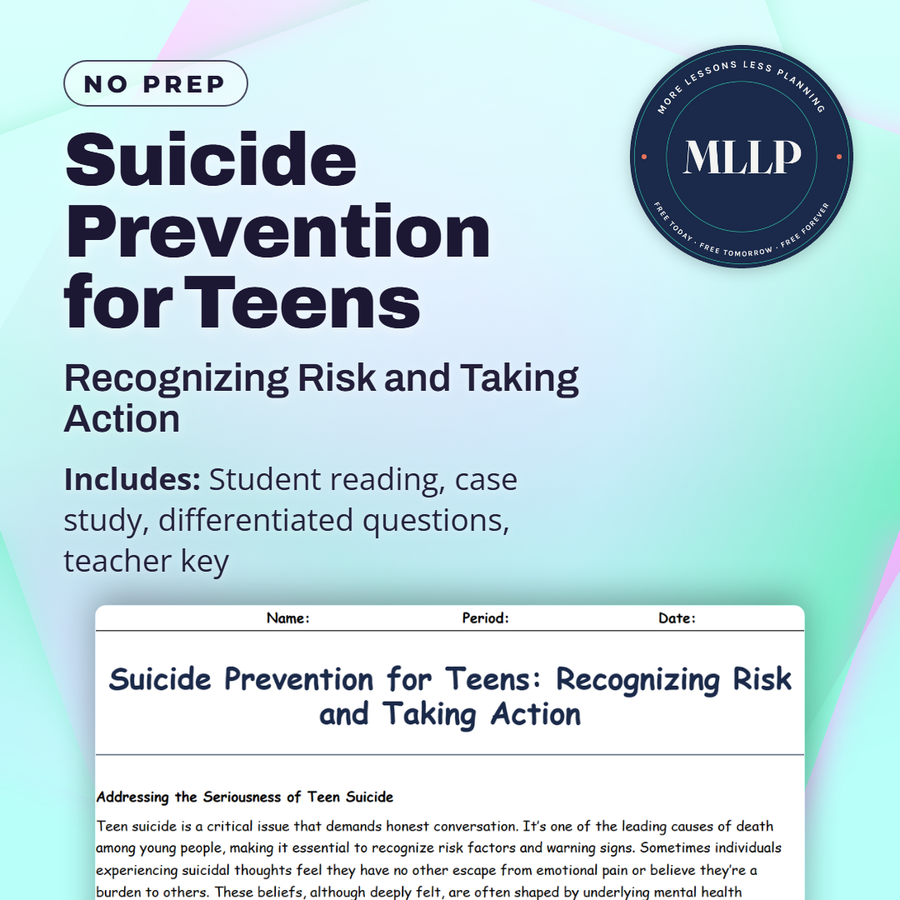
Suicide Prevention for Teens: Recognizing Risk and Taking Action
Quality reviewed September 2026
Facts verified September 21, 2026
- Subject
- Career & Life Skills
- Grades
- Grades 9-12
- Length
- 7-page student worksheet
- Time
- About one 50-minute class period
- Great for
- Sub plans and independent work
- Includes
- Reading passage, comprehension questions + full answer key
- Format
- Print-and-go PDF
What students do
- Match terms like risk factor, warning sign, and hotline to their definitions.
- Answer multiple-choice questions on what to do if a friend seems to be in immediate danger.
- Fill in the blank identifying lethal means, empathy, and hotline in sentences about prevention.
- Answer short-answer questions on why asking someone directly about suicide can help rather than harm.
What it covers
- Why suicidal thoughts are often driven by distorted thinking and unbearable pain rather than a single cause, and how to recognize the warning signs peers show.
- How to respond if you suspect a friend is at risk, asking a direct question, staying with them, and looping in a trusted adult or a hotline.
- A case study about a friend who noticed a text like "what's the point?" and got help instead of staying quiet.
Start reading this worksheet
Addressing the Seriousness of Teen Suicide
Teen suicide is a critical issue that demands honest conversation. It’s one of the leading causes of death among young people, making it essential to recognize risk factors and warning signs. Sometimes individuals experiencing suicidal thoughts feel they have no other escape from emotional pain or believe they’re a burden to others. These beliefs, although deeply felt, are often shaped by underlying mental health conditions and distorted thinking. Bringing up suicide with a friend or classmate doesn’t “plant” the idea in their head. On the contrary, it can offer them an opening to discuss what they’ve been feeling. Understanding that suicide can affect anyone, regardless of background, helps reduce the stigma. If you or someone you know expresses thoughts of hopelessness or wanting to die, it’s crucial to take it seriously and seek professional help immediately.
Recognizing Warning Signs in Yourself or Peers
Warning signs aren’t always obvious, but certain behaviors can signal increased risk. These may include talking or joking about death, expressing feelings of being trapped, isolating from friends, giving away prized possessions, or exhibiting extreme mood swings. Even seemingly casual comments like, “Everyone would be better off without me,” can be red flags. Physical changes, like a sudden drop in hygiene or a drastic change in eating or sleeping habits, can also be indicators. For some teens, these signs come on gradually, while for others they appear suddenly. If you notice a friend acting out of character (extremely withdrawn or repeatedly mentioning suicidal thoughts), do not dismiss it. Trust your instincts if something seems wrong. It’s far better to ask direct questions and be wrong than to stay silent and risk missing a chance to help.
How to Respond and Get Help
If you suspect someone is contemplating suicide, the first step is to take them seriously. Ask direct questions like, “Are you thinking about killing yourself?” While it may feel uncomfortable, direct communication often provides relief to the person in crisis, knowing someone cares enough to ask. Encourage them to talk to a mental health professional immediately or contact a suicide prevention hotline. If you ever feel someone is in immediate danger, don’t hesitate to call emergency services. Your role might also include reaching out to a trusted adult, such as a teacher, parent, or counselor, if your friend refuses to seek help on their own. Remember that you’re not betraying confidence by seeking professional assistance: you could be saving a life. You don’t have to handle the situation alone, and it’s not your job to be a therapist, but offering empathy and connection can make a critical difference.
Like what you read? The full reading, the case study, and every question set are in the free download below, along with the answer key.
Why this matters
Most teens who are struggling say something to a friend before they say anything to an adult, which means the people best positioned to catch a warning sign are sitting in this classroom, not a counselor's office. This reading gives students something more useful than concern: an actual script for what to ask and what to do next, including why keeping a promise of secrecy is the wrong call here. That's a skill worth practicing before a student needs it for real.
If you or someone you know is struggling, call or text 988 (Suicide & Crisis Lifeline, US) or talk to a trusted adult right away.
From one teacher to another
This reading walks students through exactly what to say if a friend seems to be struggling, which is the part most health units skip in favor of statistics. The passages cover why bringing up suicide directly doesn't plant the idea, how to recognize warning signs like giving away belongings or sudden withdrawal, and what to do if someone is in immediate danger. Amara's case study shows a friend noticing a text like "what's the point?" and asking a direct question instead of staying quiet.
What you get
Download
Where should I send the next one?
Everything here is free and it stays that way. Leave your email and I'll send you the new lessons as they go up. You can unsubscribe from any one of them.
Related resources
Coping Strategies: Healthy vs. Unhealthy Reactions to Stress
Depression and Anxiety in Teens: Signs, Symptoms, and Support
Finding Strength in Others: Support Systems and Community Resources
Getting Help: When to Reach Out and Who to Turn To
Grief and Loss: Helping Teens Understand and Heal
Mindfulness for Teens: Simple Habits for Mental Wellness
Every lesson on this site is free to download and use. If one of them saved you a prep period, you can chip in a few bucks toward my three kids' daycare fund. That's genuinely where tips go.